The comparison
Similar premise, different practice
Access Bars and Reiki both belong to the broad category of energy healing: practices built on the idea that a subtle, unmeasured energy can be influenced through touch to affect a person's wellbeing. That shared premise is where the similarity mostly ends.
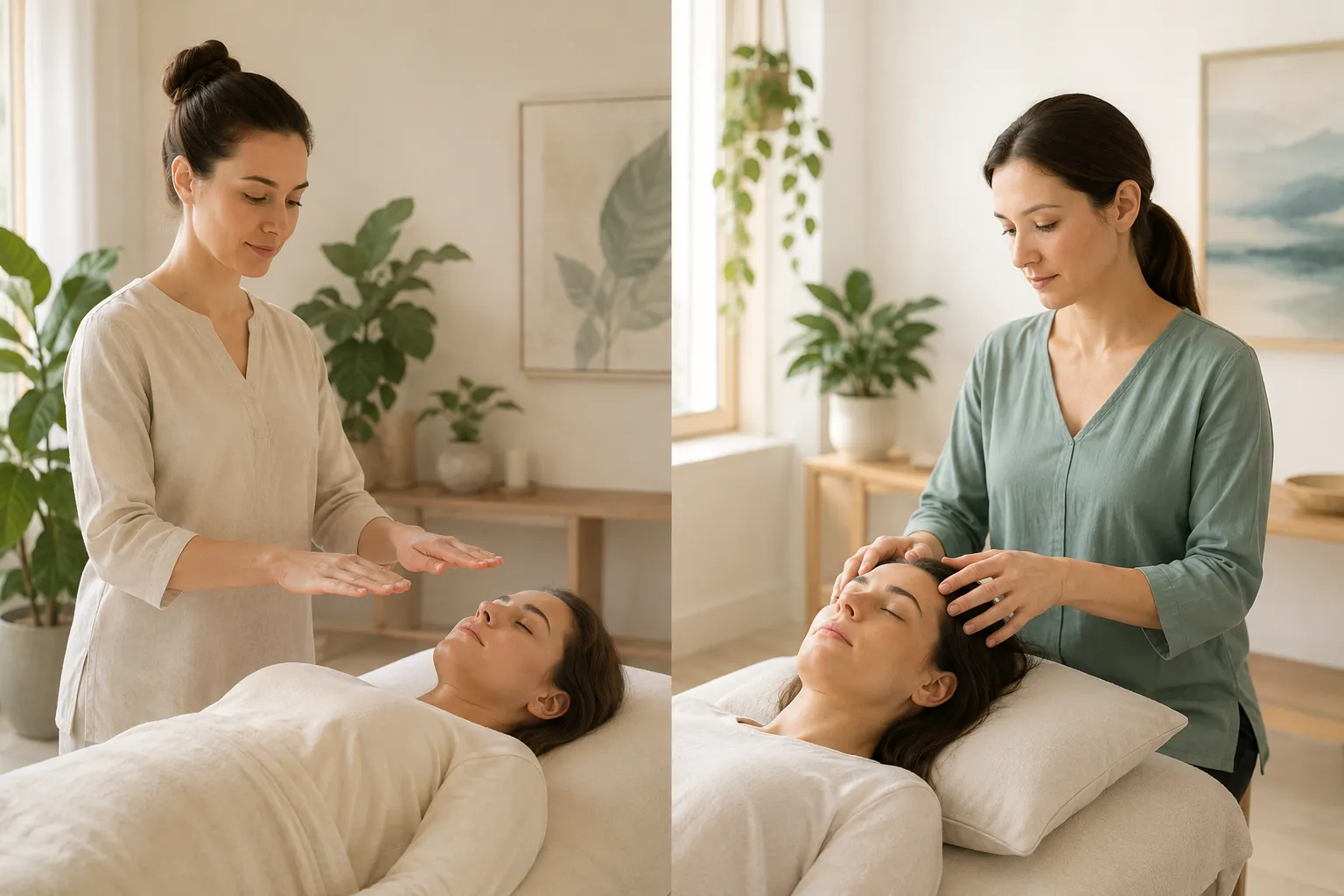
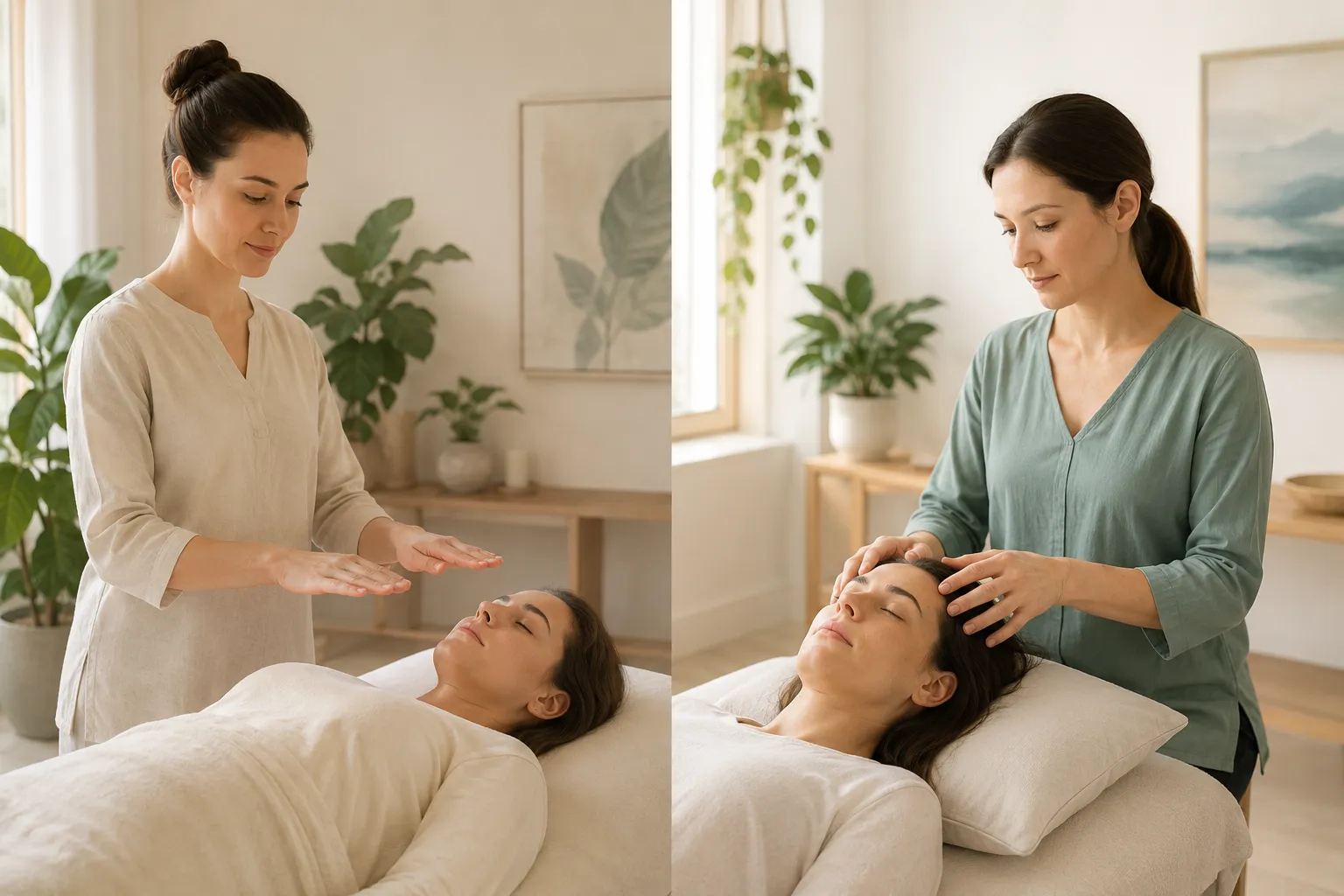
Reiki dates back to early 20th-century Japan, developed by Mikao Usui, and has spread into a wide range of styles and lineages over more than a century. A Reiki practitioner typically places their hands lightly on or just above different areas of the whole body in a sequence, aiming to direct what's described as universal life energy toward the person's own healing response.
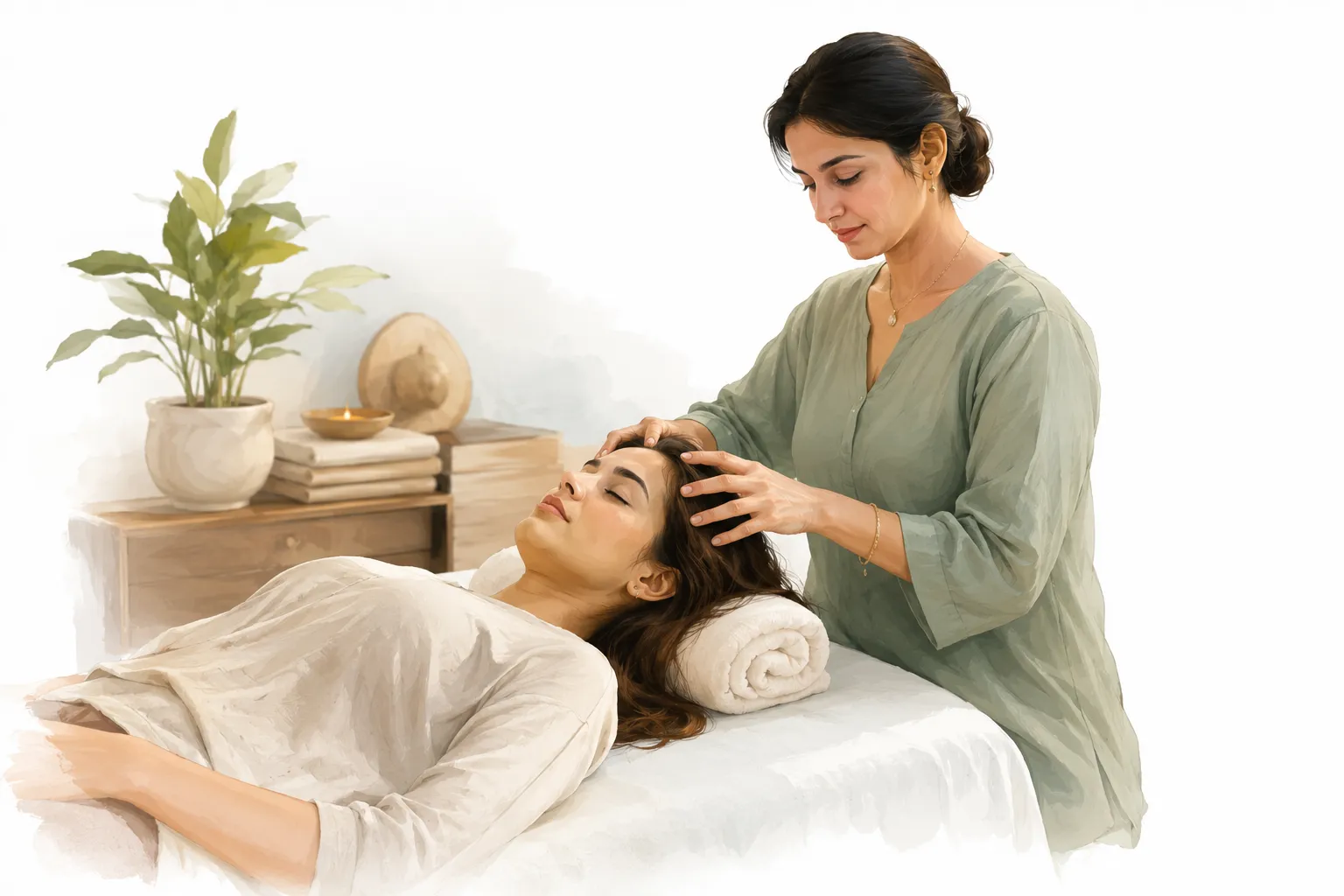
Access Bars, by contrast, is a much newer practice, introduced by Gary Douglas in Santa Barbara, California, in 1990 as the founding technique of Access Consciousness. It focuses exclusively on 32 named points on the head, each assigned a specific life theme, and the stated goal is releasing stored thought patterns rather than generally supporting the body's healing response.
The evidence picture also differs, mostly because of how much research attention each has received. Reiki has been the subject of a meaningful number of published studies, including some randomized designs, though the U.S. National Center for Complementary and Integrative Health still concludes it hasn't been clearly shown to be effective for any health-related purpose, largely because much of that research is low quality. Access Bars has received far less independent research attention, and the studies most often cited by supporters are affiliated with the organization itself rather than conducted independently.
Skim first
Key takeaways
The shortest useful version of this page.
Access Bars and Reiki share a general energy-healing premise but differ in technique.
Access Bars touches 32 head points; Reiki works across the whole body.
Reiki predates Access Bars by several decades.
Reiki has more research behind it, though still of generally low quality.
Neither practice has clearly demonstrated its specific claimed mechanism.
Access Bars and Reiki, side by side
A direct comparison across the aspects people most often ask about.
Origin
Gary Douglas, Santa Barbara, 1990
Mikao Usui, Japan, early 1900s
Core technique
Light touch on 32 named head points
Light touch or hovering over the whole body
Session length
Typically 60–90 minutes
Typically 30–60 minutes
Claimed mechanism
Release of stored "electromagnetic charge" tied to thoughts
Channeling universal life energy to support the body's own healing
Clothing
Fully clothed
Fully clothed
Independent research volume
Very limited
Larger, but still mostly low quality
Official health-agency conclusion
Not independently assessed by a major health agency
"Hasn't been clearly shown to be effective for any health-related purpose" — NCCIH
Reality check
Common misunderstandings
- Myth
Access Bars and Reiki are basically the same thing.
RealityThey share a general energy-healing premise but use different techniques, histories, and terminology.
- Myth
Because Reiki has more research, it's proven to work.
RealityMore research exists, but the overall quality is still low, and major health agencies haven't concluded it's effective for any specific condition.
- Myth
You have to choose one over the other based on effectiveness.
RealityNeither has strong independent evidence of clinical effectiveness; the choice is more about personal preference for technique and setting.
What to remember
Both practices share the general premise of energy healing.
Access Bars focuses on 32 head points; Reiki works across the whole body.
Reiki is older and has more research behind it, though the quality remains low.
Access Bars has considerably less independent research.
Neither practice has clearly demonstrated its claimed mechanism through rigorous, independent research.
Verdict
Our comparison verdict
insufficient-evidence
Access Bars and Reiki are related in premise but distinct in technique and history. Neither has strong independent evidence confirming its specific claimed mechanism, though Reiki has received considerably more research attention.
What we know
- Both are light-touch, fully clothed, complementary practices.
- Access Bars focuses on the head; Reiki works across the whole body.
- Reiki has a larger, though still inconclusive, research base.
What we do not know
- Whether either practice's claimed energy mechanism is physically real
- Whether either produces effects beyond general relaxation
Choose based on which format appeals to you as a relaxation experience, not on a belief that either is scientifically proven to treat a condition.
Quick answers
Frequently asked questions
Is Access Bars the same as Reiki?
No, though both are light-touch energy healing practices, they use different techniques and come from different origins.
Which is better, Access Bars or Reiki?
Neither has strong independent evidence of clinical effectiveness; the choice mostly comes down to personal preference.
Does Reiki have more scientific backing than Access Bars?
Reiki has more published research, but even that hasn't clearly established effectiveness for any specific condition.
Can a practitioner offer both?
Some practitioners train in both systems and may offer either or combined sessions.
Sources
Reiki. National Center for Complementary and Integrative Health (NCCIH). Accessed 2026-07-17
Government health agency description of Reiki, its origins, and its evidence base.
Access Bars. garymdouglas.com. Accessed 2026-07-17
Official description of the Access Bars technique and origin for comparison.
Access Consciousness. Wikipedia. Accessed 2026-07-17
Independent background on the founding and history of Access Bars, used to establish the comparison timeline.