The basic shape of a session
A predictable structure, even if the explanation behind it isn't
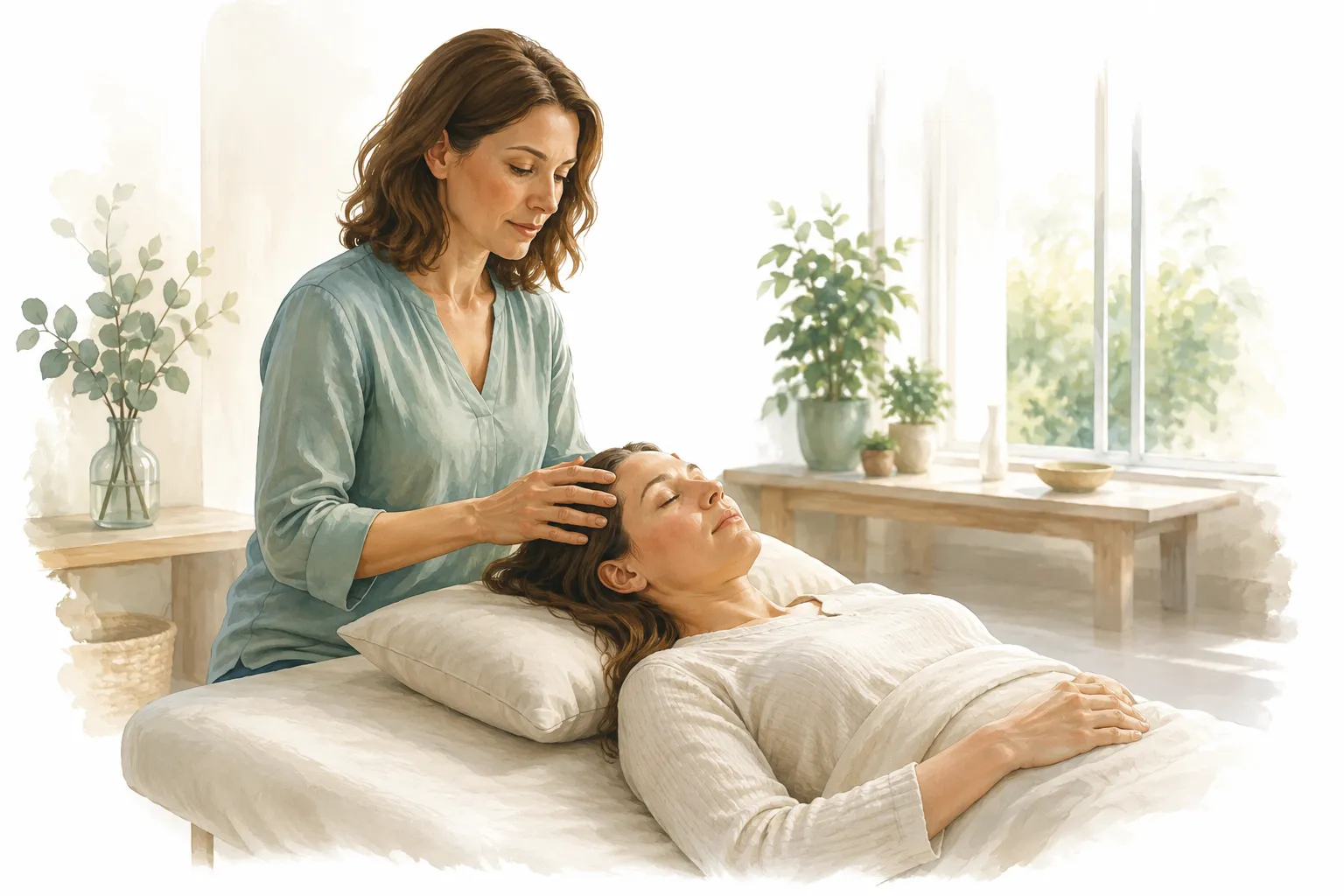
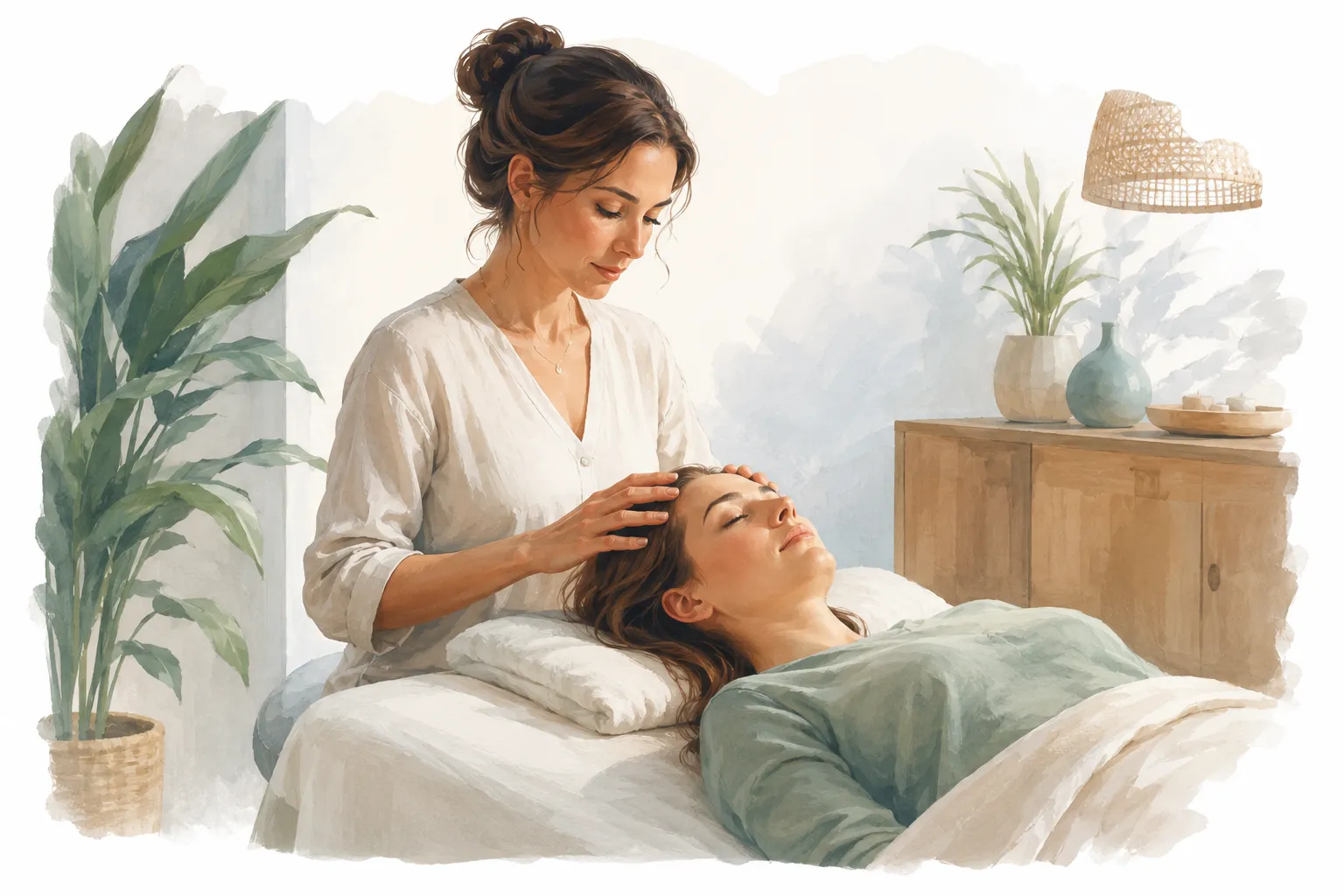
An Access Bars session follows a fairly consistent shape regardless of which practitioner you see. You arrive, usually have a short conversation about what brought you in and how you're feeling, then lie down on a padded table, fully clothed, while the practitioner works through a sequence of light touches on your head.
The touch itself is the defining feature. Rather than kneading or applying pressure the way a massage therapist would, the practitioner rests fingertips gently on combinations of points, often holding two at once for a period before moving to the next combination. This continues for most of the appointment.
What you experience during that time varies a lot from person to person. Some people fall asleep. Others stay alert and chatty. Some report emotional shifts, tingling, or a sense of mental quiet; others notice nothing in particular. None of these reactions is considered right or wrong by practitioners : the session is generally framed as being different for everyone.
The session sequence
A step-by-step view of what usually happens during the appointment itself.
Arrival
The client and practitioner clarify expectations and touch preferences.
Resting position
The client settles on the table, often with quiet or minimal conversation.
Bars sequence
The practitioner lightly holds combinations of head points.
Afterward
The client may feel relaxed, sleepy, unchanged, or emotionally reflective.
Skim first
Key takeaways
The shortest useful version of this page.
Access Bars sessions are performed fully clothed, usually lying face-up.
Most of the appointment involves light, sustained fingertip contact on designated head points.
Typical sessions run 60 to 90 minutes.
Reported experiences range from sleepiness and relaxation to no noticeable effect.
Style, pacing, and add-ons like music vary by practitioner.
The typical session, step by step
Practitioners vary in style, but most sessions follow roughly this sequence.
1. Check-in conversation
The practitioner asks what brought you in, explains what to expect, and discusses comfort and consent around touch.
5 to 10 minutes2. Getting comfortable
You lie down fully clothed on a padded table, often with a blanket or bolster available.
A few minutes3. The point sequence
The practitioner moves through combinations of head points using light, sustained fingertip contact, following the order taught in their training.
45 to 70 minutes4. Rest and observation
You may doze, stay alert, or simply notice how your body feels as the sequence continues.
Throughout the session5. Closing check-in
The practitioner finishes the sequence and asks how you're feeling, without treating any sensation as a diagnosis.
5 to 10 minutes
What the point-touching actually involves
Two separate things are happening: the physical technique, and the explanation given for why it's done.
Locating the points
The practitioner follows a taught map of areas on the head associated with different life themes within Access Consciousness.
Light, sustained contact
Fingertips rest on one or more points at a time, generally without pressure or movement, for a period before shifting to the next combination.
The claimed effect
Access Consciousness materials describe this as releasing stored thoughts, beliefs, or emotional "charge" connected to each point's theme.
Supporters compare it to clearing accumulated clutter, though this remains a claim from within the system rather than an established mechanism.
What can vary between practitioners
Some practitioners talk throughout the session, checking in periodically or discussing what you're feeling; others work largely in silence unless you initiate conversation. Music, dim lighting, and aromatherapy are common but not universal additions.
Session length and price also vary . Some practitioners offer shorter introductory sessions around 45 minutes, while full sessions commonly run closer to 90 minutes. It's reasonable to ask a practitioner in advance what their specific session includes.
Reality check
Common misunderstandings
- Myth
You need to undress for an Access Bars session.
RealityNo . Sessions are performed while fully clothed.
- Myth
The practitioner uses pressure like a massage.
RealityThe touch is light and sustained, not the kneading or pressure used in massage therapy.
- Myth
You have to fall asleep or feel something dramatic for the session to "work."
RealityReactions vary widely, and practitioners generally don't treat any particular response as required.
What to remember
Sessions are performed fully clothed, usually lying down.
Most of the appointment is spent in a light-touch sequence on head points.
Sessions typically last 60 to 90 minutes.
Reactions range from sleepiness to no noticeable effect.
Style and pacing vary between practitioners.
Quick answers
Frequently asked questions
What actually happens during an Access Bars session?
You lie down fully clothed while a practitioner lightly touches combinations of head points for most of the appointment, typically 60 to 90 minutes.
Do you remove clothing for Access Bars?
No . Sessions are performed while fully clothed.
Is Access Bars painful?
No : the touch is light, not forceful, and most people describe it as neutral or relaxing.
What should I expect to feel?
Reactions vary widely; relaxation and sleepiness are commonly reported, though some people notice little change.
Sources
Access Consciousness. Wikipedia. Accessed 2026-07-14
Background on the technique and its claimed mechanism.
Access Bars. EFT International. Accessed 2026-07-14
Independent summary describing session format and duration.