A guide to the language
Key Access Bars terms, defined
Access Bars comes with its own vocabulary. Some terms are unique to the Access Consciousness system. Others are borrowed from everyday language but used in specific ways.
This glossary is designed to help you understand these terms without getting lost in jargon. The definitions are straightforward and neutral—they explain what the terms mean within the system, without adopting the system's claims as facts.
If you're new to Access Bars, starting here can save you a lot of confusion. And if you're already familiar with the practice, this glossary can help you explain it to others more clearly.
Key Access Bars terminology at a glance
A visual overview of the most important Access Bars terms and how they relate to each other.
Access Consciousness
The broader system that includes Access Bars.
Access Bars
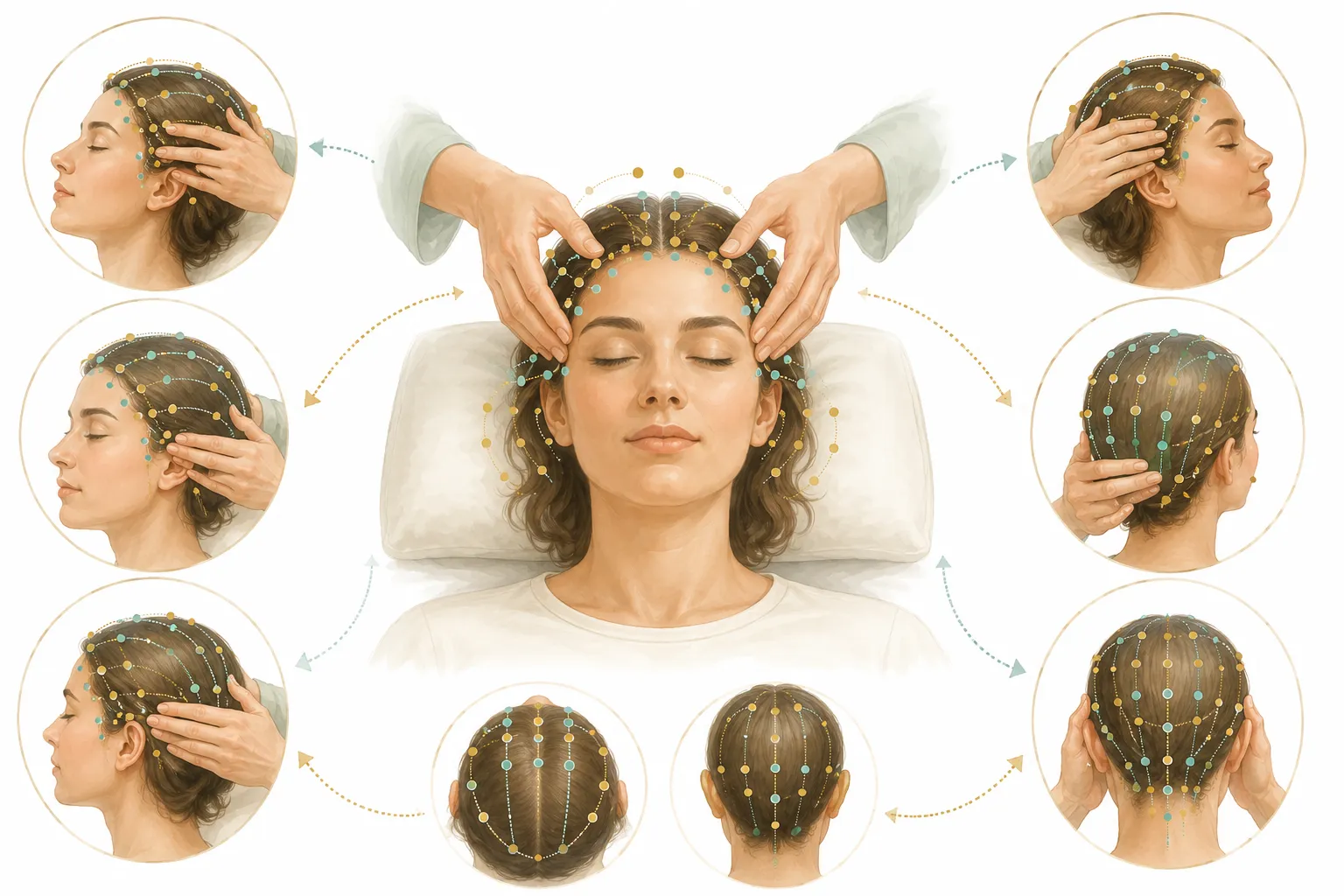
The light-touch practice on 32 head points.
Practitioner
Trained to offer Access Bars sessions.
Clearing
The claimed release of stored patterns.
Skim first
Key takeaways
The shortest useful version of this page.
Access Bars has its own vocabulary.
The glossary helps you understand the terminology.
Terms include Bars, clearing, practitioner, consciousness, and limiting beliefs.
The terminology comes from the Access Consciousness system.
Understanding the language does not validate the claims.
A quick guide
How to use this glossary
This glossary is organized alphabetically for easy reference. Each entry includes the term, a plain-English definition, and context about how it's used in the Access Bars and Access Consciousness system.
Some terms have multiple meanings. Where that's the case, the Access Bars-specific meaning is highlighted.
The glossary is designed to be useful whether you're a complete beginner or someone who's already had a session or two.
Remember: understanding the language is not the same as endorsing the claims. The glossary is a translation tool, not a validation.
Access Bars glossary
Glossary of terms
The following terms are used in Access Bars and Access Consciousness sessions, classes, and materials.
They are presented in neutral language to help you understand the terminology without necessarily adopting the system's claims.
Find the term you're looking for in alphabetical order.
Read the definition and context.
Use the term with awareness of its system-specific meaning.
Important Access Bars terms
Access Bars: A light-touch practice involving 32 designated points on the head.
Access Consciousness: The broader system created by Gary Douglas, which includes Access Bars and other processes.
Bars: The 32 specific points on the head that are touched during a session.
Clearing: The claimed process of releasing stored thoughts, beliefs, emotions, or patterns.
Consciousness: Awareness and presence. In Access Consciousness, it often refers to being fully present and aware.
Limiting Beliefs: Thoughts or patterns that hold a person back from their potential.
Practitioner: A person trained to offer Access Bars sessions.
Run the Bars: The act of performing an Access Bars session (touching the points).
Session: An Access Bars appointment, typically lasting 60-90 minutes.
Point of View: A perspective or belief. In Access Consciousness, this often refers to patterns that can be "cleared."
Charge: Stored emotional or mental energy associated with a thought or belief.
Foundation: A foundational Access Consciousness class that includes Access Bars and other processes.
The Bars: Another way of referring to the 32 Access Bars points.
Definitions A–Z
Detailed glossary of Access Bars terms
This section provides more detailed definitions for key terms, with additional context and usage notes.
Access Bars: The flagship practice of Access Consciousness. It involves gently touching 32 specific points on the head. The points are associated with different areas of life, such as money, control, creativity, and communication.
Access Consciousness: The broader system created by Gary Douglas in the 1990s. It includes Access Bars, other processes, classes, books, and a global network of practitioners.
Bars: Short for "Access Bars." Refers to the 32 points on the head that are the focus of the practice.
Clearing: The process of releasing stored thoughts, beliefs, emotions, or patterns that are said to hold a person back. This is the core claimed benefit of Access Bars.
Consciousness: A term used in Access Consciousness to describe awareness, presence, and being fully engaged with life. It's used differently from academic or philosophical uses of the term.
Limiting Beliefs: Thoughts, decisions, or points of view that are said to restrict a person's potential or happiness. Access Bars claims to release these.
Practitioner: Someone who has completed Access Bars training and is authorized to offer sessions. Practitioners may range from newly trained to highly experienced.
Run the Bars: A phrase used by practitioners to describe performing an Access Bars session. "I'm going to run your Bars" means "I'm going to do a session."
Session: An Access Bars appointment. The recipient lies down fully clothed while the practitioner gently touches the 32 points. Sessions typically last 60-90 minutes.
Point of View: A perspective or belief held by a person. In Access Consciousness, points of view can be "cleared" or released through processes like Access Bars.
Charge: Stored energy associated with a thought, belief, or memory. The Access Consciousness system claims that "charge" can be released through the Bars.
Foundation: A foundational class in Access Consciousness that introduces the Bars and other processes. It is often the first class people take after an introductory session.
The Bars: An alternative way of referring to the Access Bars points. Used interchangeably with "Bars."
Gary Douglas: The founder of Access Consciousness and creator of Access Bars. He developed the practice in the 1990s.
Dain Heer: A co-facilitator in Access Consciousness who works alongside Gary Douglas. He is also a prominent teacher in the system.
Reality check
Common misunderstandings about Access Bars terminology
- Myth
"Bars" means the points have been scientifically identified.
RealityThe 32 Bars are part of the Access Consciousness teaching system, not recognized anatomical structures.
- Myth
"Clearing" is a proven medical process.
Reality"Clearing" is a term from Access Consciousness, not a scientifically established mechanism.
- Myth
"Consciousness" in Access Bars means the same as in science or philosophy.
RealityAccess Consciousness uses the term in its own way, not necessarily aligned with academic definitions.
- Myth
"Practitioner" means the same as a doctor or therapist.
RealityAn Access Bars practitioner is trained in the Bars technique, not in medicine or psychotherapy.
Verdict
Our verdict on Access Bars terminology
not-applicable
Access Bars terminology is the language of a proprietary system. Understanding the terms can help you navigate sessions, classes, and discussions. But the terms do not make the claims true. The glossary is a translation tool, not an endorsement.
What we know
- Access Bars has a specific vocabulary.
- The terms come from the Access Consciousness system.
- Understanding the language helps with communication.
What we do not know
- Whether the claims behind the terms are scientifically valid.
- Whether the processes described actually work as claimed.
Use the glossary to understand what people are saying. But remember: the words are from a proprietary system, not from science or medicine.
Bottom line
Words are tools, not truths
Access Bars terminology helps you communicate about the practice. But the words themselves don't make the claims true. Use them to understand, not to validate.
Quick answers
Frequently asked questions
What is the most important Access Bars term to know?
"Bars" is the most fundamental term—it refers to the 32 points on the head that are the focus of the practice.
Is "clearing" a medical term?
No. "Clearing" is a term from Access Consciousness, not a medically recognized process.
What's the difference between a practitioner and a therapist?
A practitioner is trained in Access Bars. A therapist is a licensed mental health professional. They are different.
Can I learn all the terms in one read?
The glossary is a reference. You can browse it and come back when you need a definition.
Sources
Access Consciousness. Access Consciousness Official Website - About Access Bars. Access Consciousness, REPLACE_IF_AVAILABLE. Accessed 2026-07-17
Use to establish the official terminology and definitions.
REPLACE WITH AUTHOR IF AVAILABLE. REPLACE WITH VERIFIED ACCESS BARS GLOSSARY SOURCE. REPLACE WITH PUBLISHER, REPLACE_IF_AVAILABLE. Accessed 2026-07-17
Use for additional terminology and definitions.