Reading the reports
A genuinely wide range of experiences
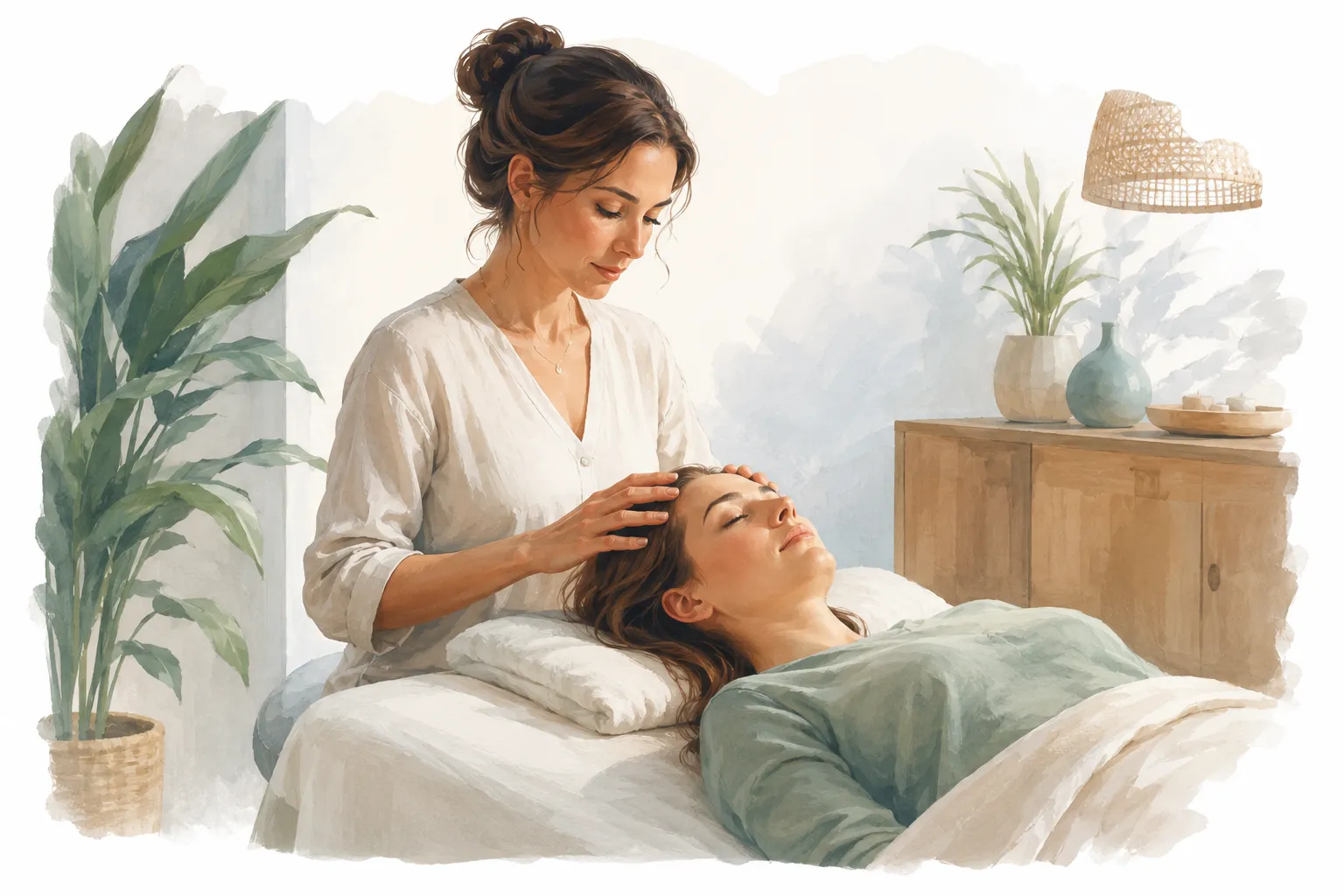
The most frequently reported sensation during an Access Bars session is straightforward relaxation : the kind that comes from lying still, in a quiet room, with someone's calm and undivided attention on you for an extended period. Many people describe drifting toward sleep partway through.
Some people also report more specific physical sensations tied to the head-touch itself: tingling, warmth, a feeling of heaviness, or subtle pressure where the practitioner's fingers rest. These reports are common but far from universal, and they aren't consistent enough between people to point to a single, predictable physiological cause.
Emotional responses vary too. Some people feel a kind of mental quiet or clarity; a smaller number report unexpected tearfulness or a rush of emotion during the session. And a meaningful number of people report feeling essentially nothing distinctive at all : no tingling, no strong relaxation, nothing beyond lying still for an hour. Practitioners generally frame this as an equally valid outcome.
Skim first
Key takeaways
The shortest useful version of this page.
Relaxation and drowsiness are the sensations people report most consistently.
Physical sensations like tingling or warmth are common but not universal.
Emotional responses vary from calm to occasional tearfulness.
Feeling little or nothing at all is a normal, commonly reported outcome.
No controlled research has identified one consistent physical sensation unique to the technique.
How different people describe the sensation
- Practitioner
Practitioners often describe guiding people through a state of deep rest, sometimes comparing it to the drowsy state just before sleep.
- Participant
Participant reports range widely , from deep relaxation and tingling to complete neutrality, with no single sensation being typical for everyone.
- Balanced view
The variety of reports is consistent with what's known about how people respond to quiet rest and attentive touch generally, rather than pointing to one specific, reproducible physical sensation.
- Evidence view
No controlled research has established a consistent, measurable physical sensation unique to Access Bars beyond what's associated with relaxation generally.
Why the same technique produces such different reports
A person's baseline stress level, how used they are to being touched by a stranger, how tired they were going in, and simple expectation all plausibly shape what a session feels like : the same factors that shape how any relaxation-oriented experience feels, from a massage to a guided meditation.
Because Access Bars sessions typically run close to 90 minutes of sustained stillness, some of what people report (drowsiness, mental drift, even mild disorientation) is consistent with what happens to most people during any extended period of quiet rest, regardless of the specific technique involved.
Reality check
Common misunderstandings
- Myth
You should feel a strong, specific sensation for the session to "count."
RealityPractitioners generally describe a wide range of experiences, including no noticeable sensation at all, as normal outcomes.
- Myth
Everyone reports the same tingling or energy sensation.
RealitySensation reports vary considerably from person to person; there's no single consistent physical signature.
- Myth
Falling asleep means the technique failed.
RealityFalling asleep is one of the most commonly reported responses and isn't treated as a negative outcome.
What to remember
Relaxation and drowsiness are the most commonly reported sensations.
Some people report tingling, warmth, or heaviness in the head.
Emotional responses range from calm to occasional tearfulness.
Feeling little or nothing at all is common and considered normal.
No controlled research has pinned down a single, consistent physical sensation.
Quick answers
Frequently asked questions
How does Access Bars feel during the session?
Most people report relaxation or drowsiness, with some describing tingling, warmth, or emotional shifts; others feel little at all.
Is it supposed to feel like anything specific?
No . Practitioners describe a wide range of normal responses, including no noticeable sensation.
Does everyone feel the same thing?
No , reports vary significantly from person to person.
Why do reactions vary so much?
Individual stress levels, comfort with touch, tiredness, and expectation all likely play a role, similar to other relaxation-based experiences.
Sources
Access Bars. EFT International. Accessed 2026-07-14
Summary of reported relaxation effects from the cited pilot study.
Access Consciousness. Wikipedia. Accessed 2026-07-14
Background on the technique and reported participant experiences.