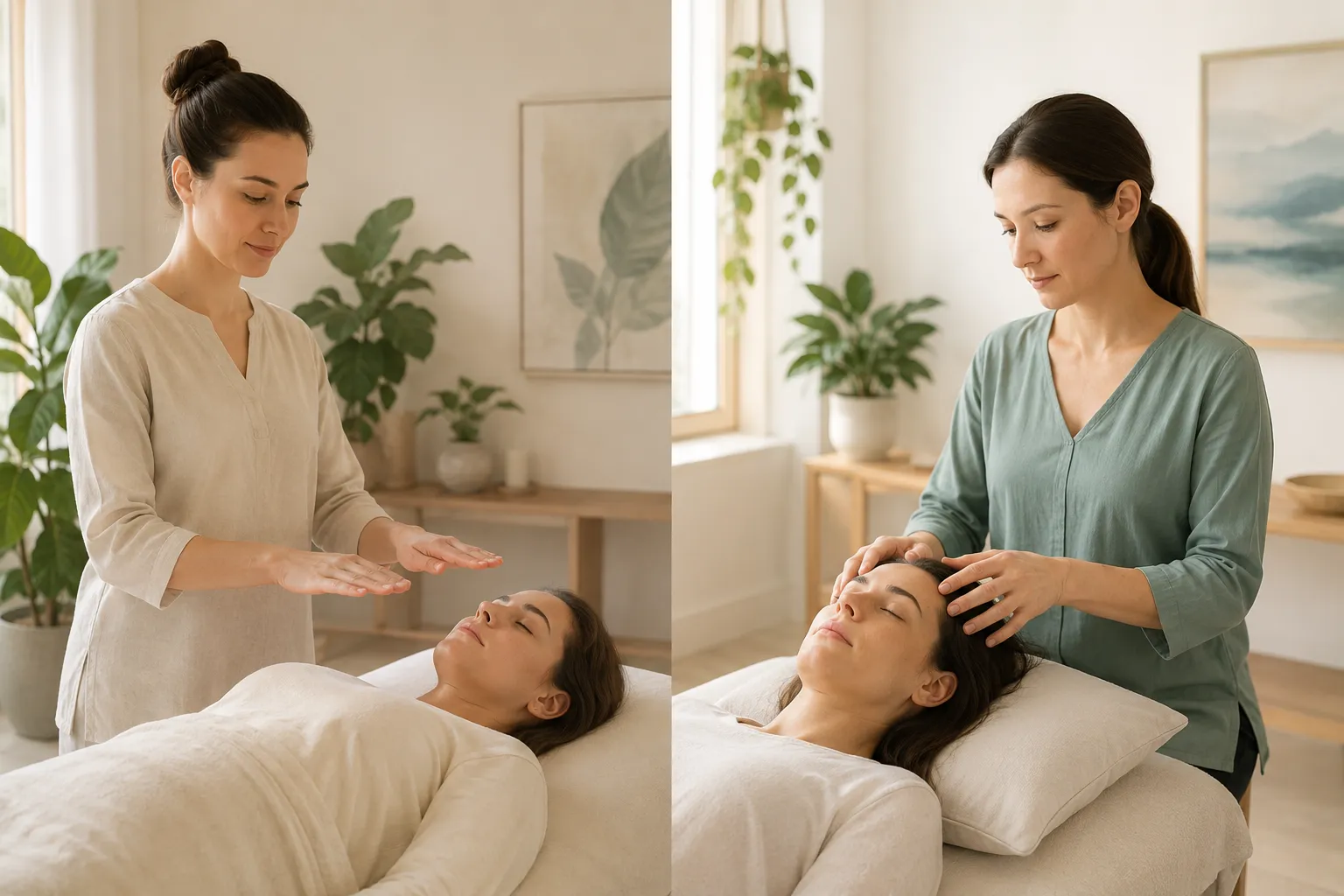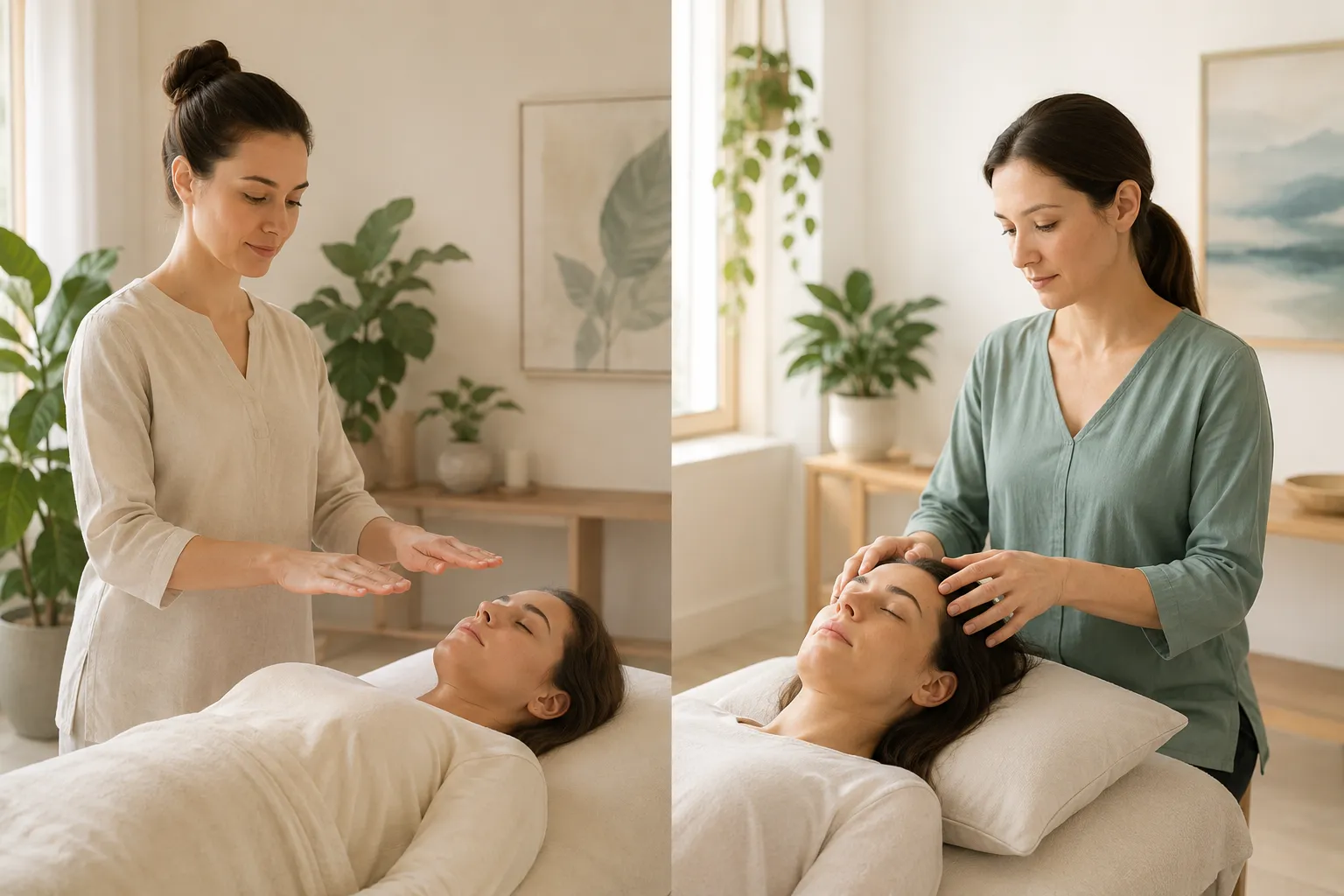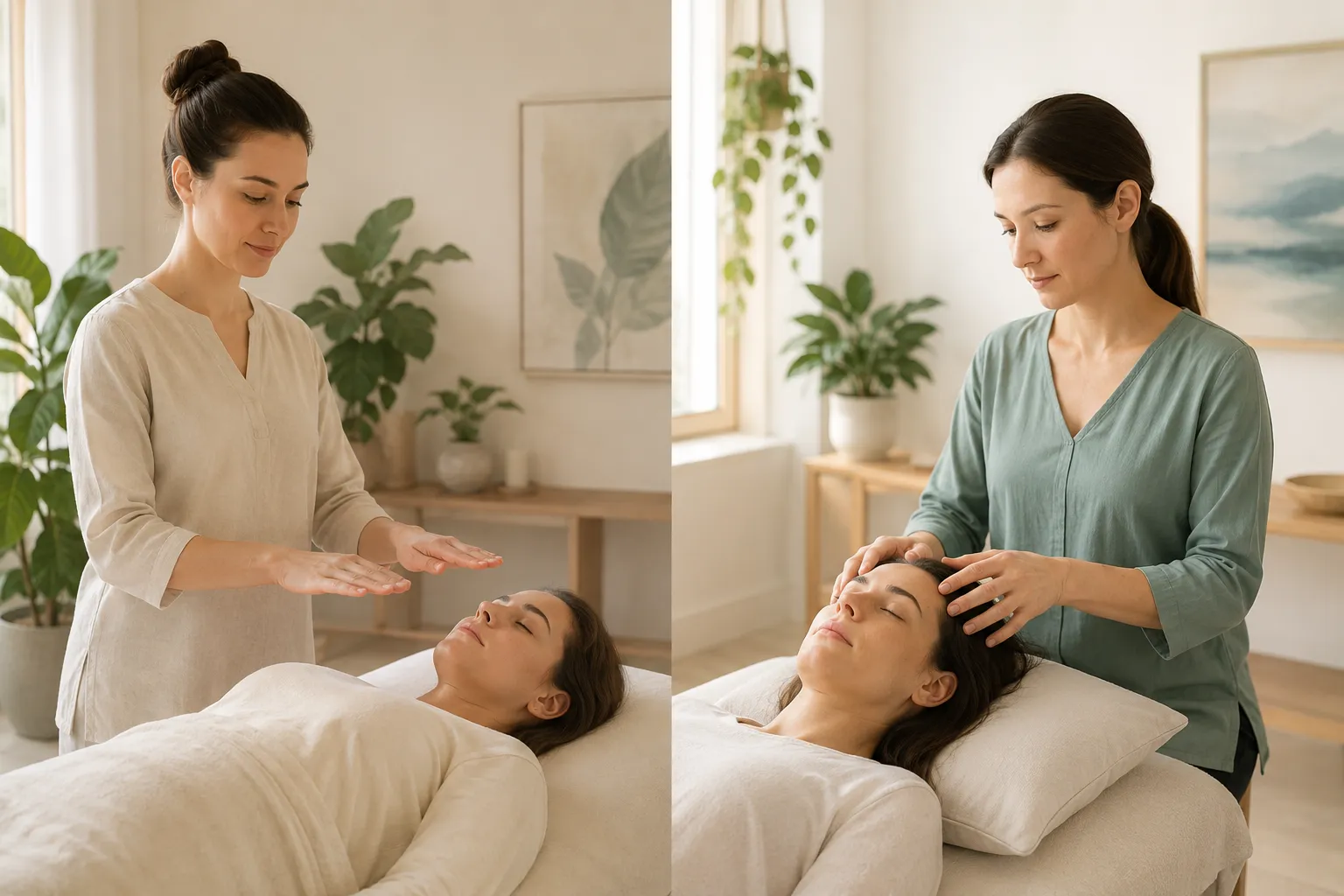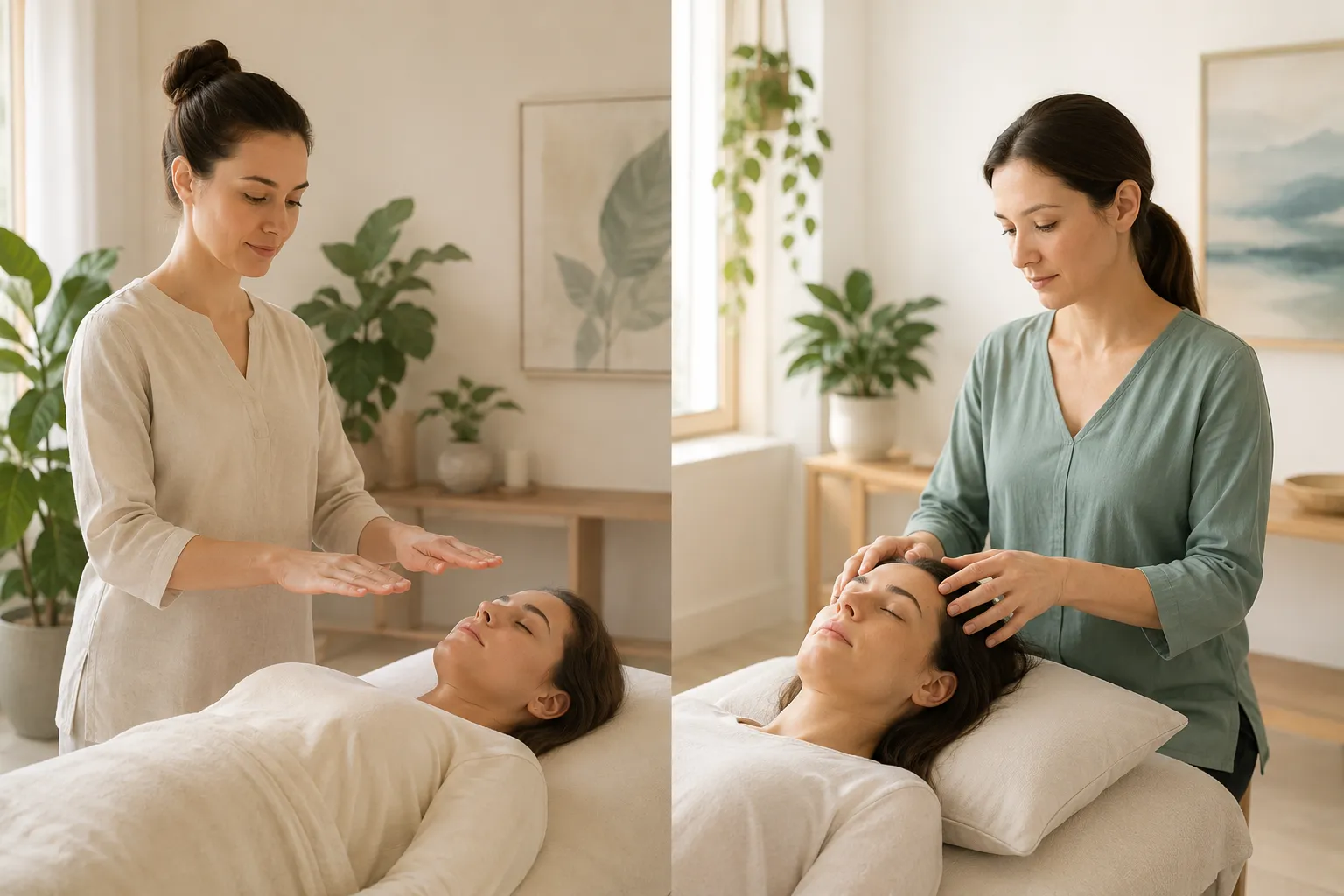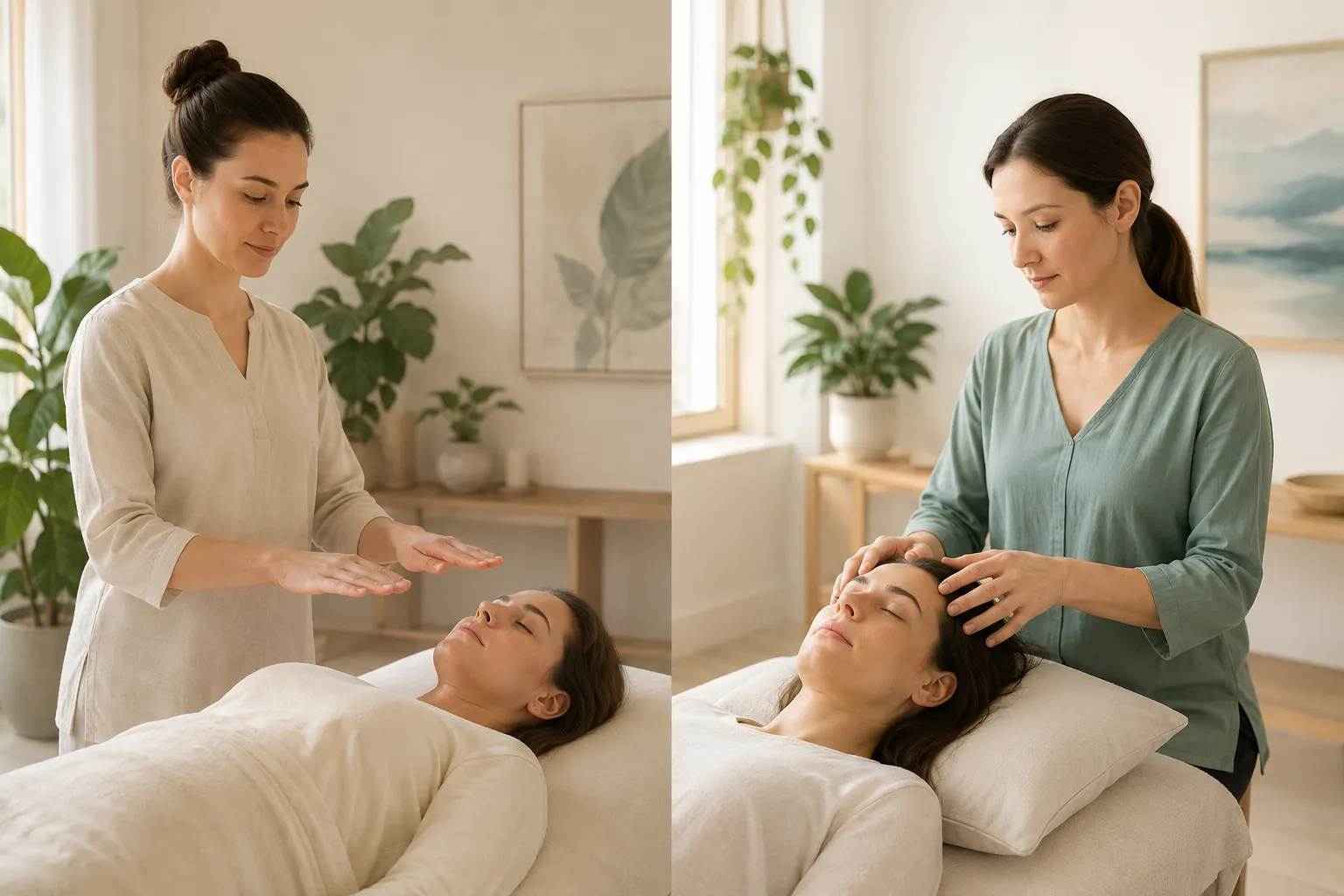
Two approaches to hands-on wellness
Access Bars and Massage Therapy: different targets, different touch
At first glance, Access Bars and Massage Therapy might look similar. Both involve lying down while someone uses their hands on you in a quiet room. But the technique and purpose are completely different.
Massage Therapy is a well-established practice that involves manipulating the body's soft tissues—muscles, tendons, ligaments, and fascia. The goals are to reduce tension, improve circulation, relieve pain, and promote relaxation. There is strong evidence for massage in treating pain, stress, and certain musculoskeletal conditions .
Access Bars is a newer practice that involves light touch on 32 specific points on the head. The points are said to correspond to different life areas. The claimed mechanism is releasing stored thoughts, beliefs, and emotions—not working with muscle tissue .
Massage can involve varying pressure and often covers the full body. Access Bars uses very light pressure and stays exclusively on the head. Massage has a large evidence base. Access Bars has very little.
Skim first
Key takeaways
The shortest useful version of this page.
Massage works on muscles and tissues.
Access Bars uses light touch on head points.
Massage has strong evidence for pain and stress.
Access Bars has limited evidence.
Massage can cover the full body. Access Bars is head only.
Both can be relaxing. Massage has more proven physical benefits.
Massage Therapy
What is Massage Therapy?
Massage Therapy is a hands-on practice that involves manipulating the body's soft tissues to reduce tension, improve circulation, and promote relaxation. It has been practiced for thousands of years across many cultures.
There are many types of massage: Swedish (gentle, relaxing), deep tissue (focused on deeper muscle layers), sports (for athletes), and many others. Each uses different techniques and pressures.
Massage has strong evidence for reducing pain, muscle tension, and stress. It is sometimes used in clinical settings for pain management and rehabilitation .
The experience of massage varies. Some people find it deeply relaxing. Others find deep tissue massage uncomfortable but helpful. The practitioner adapts the pressure to your comfort level.
Access Bars
What is Access Bars?
Access Bars is a complementary wellness practice that involves light touch on 32 specific points on the head. It was developed in the 1990s by Gary Douglas.
The points are said to correspond to different life areas: money, creativity, control, communication, and more. Practitioners believe that these points store the electromagnetic charge of thoughts, beliefs, and emotions .
Light touch on these points is said to release this stored charge. The recipient lies down fully clothed and does not need to do anything. Many people report feeling relaxed or falling asleep.
Access Bars is not a massage. It uses no manipulation of muscles or tissues. The touch is very light and stays only on the head.
Access Bars vs Massage Therapy: key differences
Both use hands, but on very different targets and with different techniques.
Method
Light touch on 32 head points
Manipulation of muscles and soft tissues
Area of work
Head only
Full body (or specific area)
Pressure
Very light
Varies: light to deep
Mechanism
Releases stored thoughts/beliefs
Releases muscle tension, improves circulation
Evidence status
Limited
Strong for pain, stress, tension
Regulation
Unregulated
Licensed in many regions
Healthcare use
Wellness only
Sometimes used clinically
Feel during/after
Relaxed, sleepy, mental clarity
Relaxed, less tense, sometimes sore
How practitioners describe the difference
- Practitioner
Massage therapists describe their work as physical: manipulating muscles, improving circulation, relieving pain. Access Bars practitioners describe their work as energy-based: releasing stored thoughts and beliefs.
- Balanced view
Both involve hands-on work and can be relaxing. Massage has a clearer physical effect. Access Bars has a more mental/emotional focus.
- Evidence view
Massage has strong evidence for pain, stress, and tension. Access Bars has very limited evidence.
Access Bars is not a substitute for massage therapy if you need physical tension relief. Access Bars is not a substitute for healthcare if you have an injury or condition.
Reality check
Common misunderstandings
- Myth
Access Bars is a type of head massage.
RealityNo. Access Bars uses very light touch and does not manipulate muscles. It is not massage.
- Myth
Massage Therapy works with energy.
RealityMassage works with muscles and tissues. Some massage incorporates energy concepts, but this is not the primary mechanism.
- Myth
Both are scientifically proven.
RealityMassage has strong evidence. Access Bars has very limited evidence.
- Myth
Access Bars can replace massage.
RealityNo. They are different practices for different purposes.
Verdict
Our evidence-based comparison
mixed
Massage Therapy has strong evidence for physical benefits like pain and tension relief. Access Bars has limited evidence and focuses on mental/emotional release through head touch. Choose based on your needs: physical vs mental/emotional.
What we know
- Massage has strong evidence for pain, stress, and tension.
- Access Bars has limited evidence.
- Massage works on muscles and tissues.
- Access Bars works on head points and stored beliefs.
What we do not know
- Whether Access Bars offers any specific physical benefits.
- Whether Access Bars works beyond relaxation and expectation.
If you have muscle tension or pain, get a massage. If you want a gentle, head-only experience for mental relaxation, Access Bars may be appealing—but know its evidence is limited.
Bottom line
Physical vs mental focus
Massage and Access Bars are both hands-on but serve different purposes. Massage works on the body's muscles. Access Bars focuses on what supporters describe as stored thoughts and beliefs.
Quick answers
Frequently asked questions
Is Access Bars a massage?
No. Access Bars uses very light touch on specific head points and does not manipulate muscles.
Which is better for back pain?
Massage Therapy has evidence for back pain. Access Bars does not.
Can I do both?
Yes. Massage for physical tension, Access Bars for mental relaxation.
Is massage more expensive?
Costs are similar, typically $60–$150 per session.
Which is more relaxing?
Both can be relaxing. Massage works on physical tension. Access Bars is a very gentle, passive experience.
Sources
Access Consciousness Bars | Beaverton Neurofeedback. Beaverton Neurofeedback. Accessed 2026-07-17
Provides a practitioner's description of Access Bars.
Access Bars for Children and Adults in Footscray. Rain & Me. Children's Therapy. Accessed 2026-07-17
Provides a clear description of Access Bars and what to expect.
Massage Therapy - Mayo Clinic. Mayo Clinic. Accessed 2026-07-17
Provides clinical information on massage therapy and its benefits.
Massage Therapy: What You Need to Know - NCCIH. National Center for Complementary and Integrative Health. Accessed 2026-07-17
Provides evidence-based information on massage therapy.