Two approaches to emotional release
Access Bars and EFT Tapping: different methods, similar goals
Access Bars and EFT Tapping are both energy-based approaches to emotional release and well-being. But they could not be more different in practice.
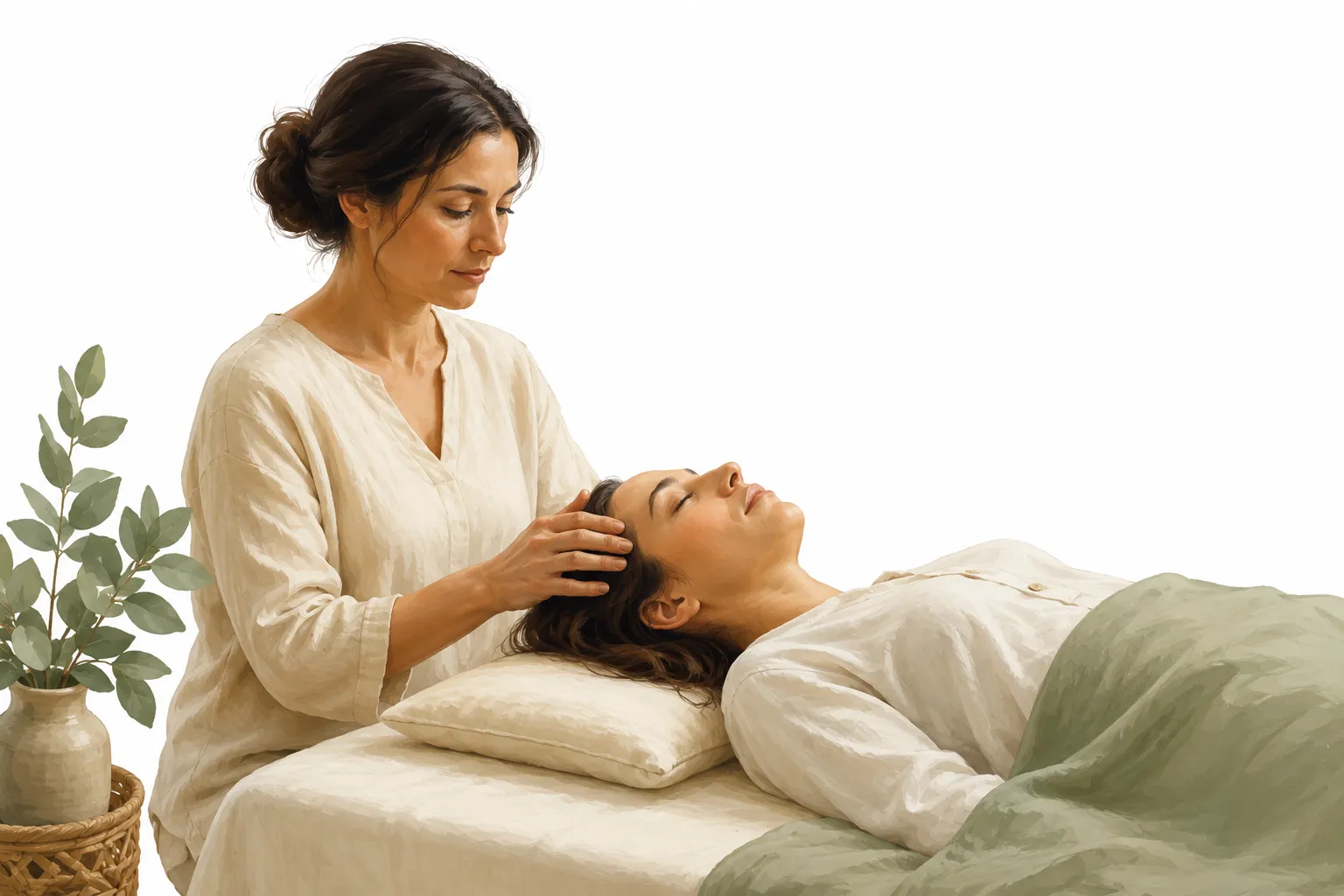
Access Bars is passive. You lie down fully clothed while a practitioner lightly touches 32 specific points on your head [citation:1]. The points are said to store the electromagnetic charge of thoughts, beliefs, and emotions. Light touch releases this charge. You do not need to talk or do anything.
EFT Tapping is active. You tap on specific meridian points on your body (head, face, hands, torso) with your fingertips while focusing on a specific issue or emotion. The approach combines elements of traditional Chinese medicine (meridian points) with psychological exposure techniques.
Both are used for stress, anxiety, and emotional release. Both have limited scientific evidence. The key difference is the experience: passive vs active.
Skim first
Key takeaways
The shortest useful version of this page.
Access Bars is passive touch on the head.
EFT Tapping is active tapping on body points.
EFT has a slightly larger evidence base, especially for anxiety.
Both aim to release emotional blockages.
Both are complementary, not medical, therapies.
Access Bars requires a practitioner. EFT can be self-applied.
EFT Tapping
What is EFT Tapping?
Emotional Freedom Techniques (EFT), often called "tapping," is a psychological acupressure technique. It involves tapping on specific meridian points on the body with fingertips while focusing on a problem or emotion.
The points used in EFT are based on traditional Chinese medicine's meridian system. The idea is that tapping on these points while verbalizing a "setup phrase" (such as "Even though I have this fear, I deeply and completely accept myself") helps release emotional blockages [citation:3].
EFT can be self-applied or performed with a practitioner. It is often used for anxiety, stress, phobias, and emotional regulation. It combines elements of cognitive therapy (verbal focus) with acupressure (tapping).
Some research supports EFT for anxiety and PTSD, though the evidence base is still developing. Critics note that the proposed energy mechanism is unproven and that effects may be due to placebo or psychological exposure.
Access Bars
What is Access Bars?
Access Bars uses light touch on 32 specific points on the head. Each point is said to relate to a different life area: money, creativity, control, communication, joy, sadness, aging, and more [citation:6].
Practitioners believe that these points store the electromagnetic charge of thoughts, beliefs, emotions, and decisions. Lightly touching them releases this stored charge [citation:1]. The recipient lies down and does not need to engage actively.
The practice is often compared to "deleting files" from a computer's hard drive. The experience is passive. Many people report deep relaxation or falling asleep during the session.
Access Bars vs EFT Tapping: key differences
One is passive. One is active. Both aim for emotional release.
Method
Light touch on 32 head points
Tapping on meridian points with fingertips
Experience
Passive—receive treatment
Active—tap on yourself
Mechanism
Releases electromagnetic charge
Balances energy meridians + psychological focus
Can it be self-applied?
No—requires practitioner
Yes—can be self-tapped
Origin
1990s, Gary Douglas
1990s, Gary Craig
Evidence status
Limited
Some evidence for anxiety, PTSD
What you do
Lie down and receive touch
Tap points while focusing on issues
How practitioners describe the difference
- Practitioner
Practitioners of both modalities describe them as tools for releasing emotional blockages. EFT is often described as more psychologically focused, with the verbal component and exposure element. Access Bars is described as more purely energy-based and receptive.
- Balanced view
Both have their place. EFT appeals to people who want to actively work through specific issues. Access Bars appeals to people who want a restful, hands-on experience without having to talk or process.
- Evidence view
EFT has a slightly larger evidence base, particularly for anxiety and PTSD. Access Bars has a smaller evidence base, though some brainwave studies exist. Both would benefit from more high-quality research.
Be cautious of practitioners who promise cures or guaranteed outcomes. Neither modality should replace professional medical or mental health care.
Verdict
Our evidence-based comparison
partially-supported
Access Bars and EFT Tapping offer different paths to emotional release. EFT has a somewhat stronger evidence base, especially for anxiety and PTSD. Access Bars has less research but may offer a more passive, restful experience. Both are complementary, not medical, therapies.
What we know
- Access Bars is passive touch on head points.
- EFT Tapping is active tapping on meridian points with verbal focus.
- EFT has more research support for anxiety and PTSD.
- Both can be used for stress and emotional release.
What we do not know
- Whether the proposed energy mechanisms of either exist.
- Whether Access Bars works beyond relaxation and expectation effects.
Choose Access Bars for a passive, restful experience. Choose EFT if you want an active, self-directed approach with a slightly larger evidence base. Neither should replace professional care.
Bottom line
Passive vs active emotional release
Access Bars and EFT Tapping offer different ways to work with emotional patterns. One is about receiving. The other is about actively engaging. Both can be valuable.
Quick answers
Frequently asked questions
What is the difference between Access Bars and EFT Tapping?
Access Bars is passive head-touch. EFT Tapping is active tapping on meridian points.
Which is better for anxiety?
EFT has more research support. Access Bars has less evidence but may offer a more restful experience.
Can I do Access Bars on myself?
No. Access Bars requires a trained practitioner. EFT can be self-applied.
Is EFT scientifically proven?
EFT has some evidence for anxiety and PTSD, but the evidence base is still developing. It is not considered a proven medical treatment.
Are both safe?
Both are considered low risk for most people. Neither should replace professional medical or mental health care.
Sources
Is It Permissible to Do EFT Tapping and Access Bars Therapy?. SeekersGuidance. Accessed 2026-07-17
Discusses EFT and Access Bars from an Islamic perspective.
Access Consciousness Bars | Beaverton Neurofeedback. Beaverton Neurofeedback. Accessed 2026-07-17
Provides a practitioner's description of Access Bars.
Access Bars for Children and Adults in Footscray. Rain & Me. Children's Therapy. Accessed 2026-07-17
Provides a clear description of Access Bars and what to expect.
Does Energy Healing Really Work?. Expatriates.com. Accessed 2026-07-17
Discusses energy healing modalities including Access Bars and research.