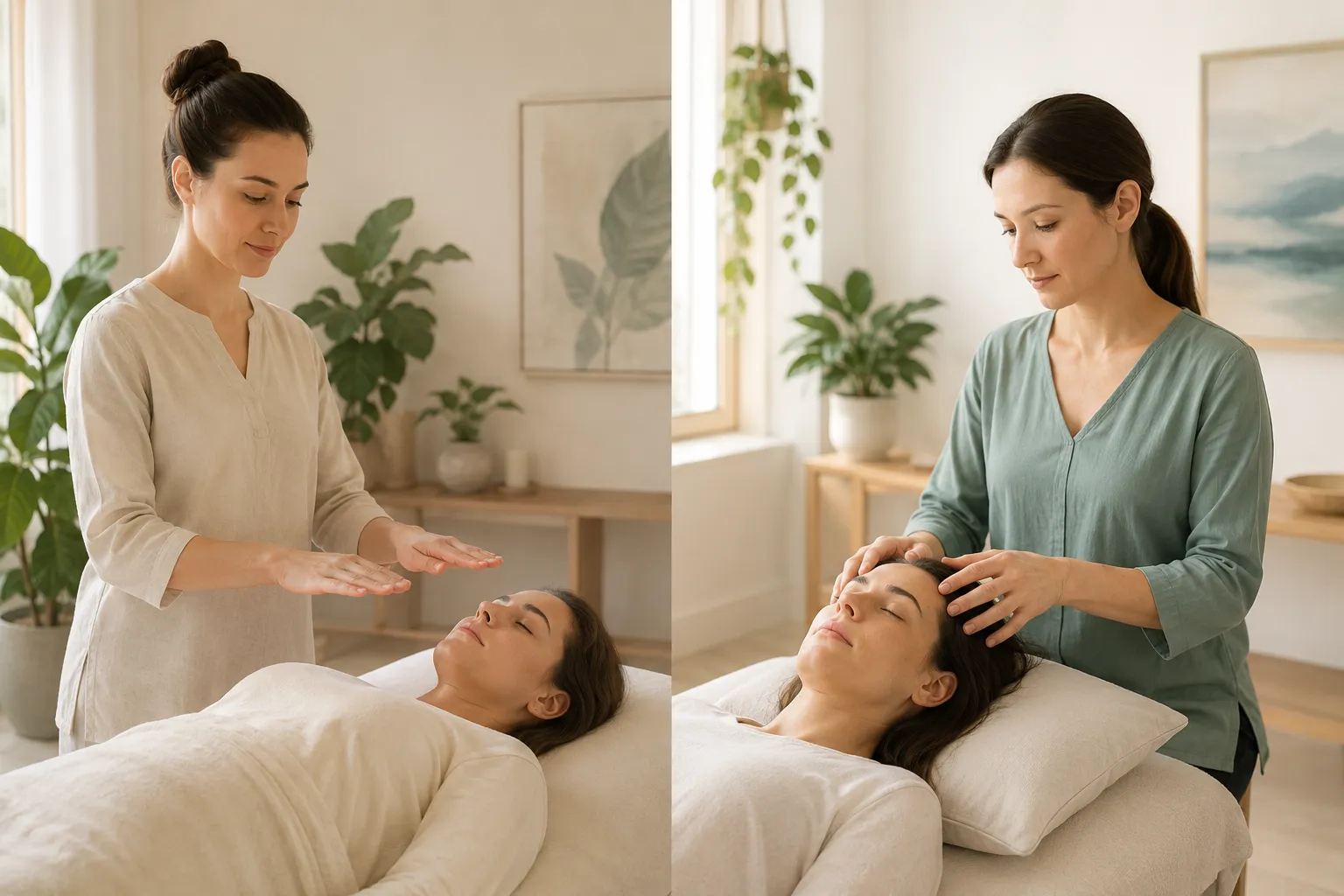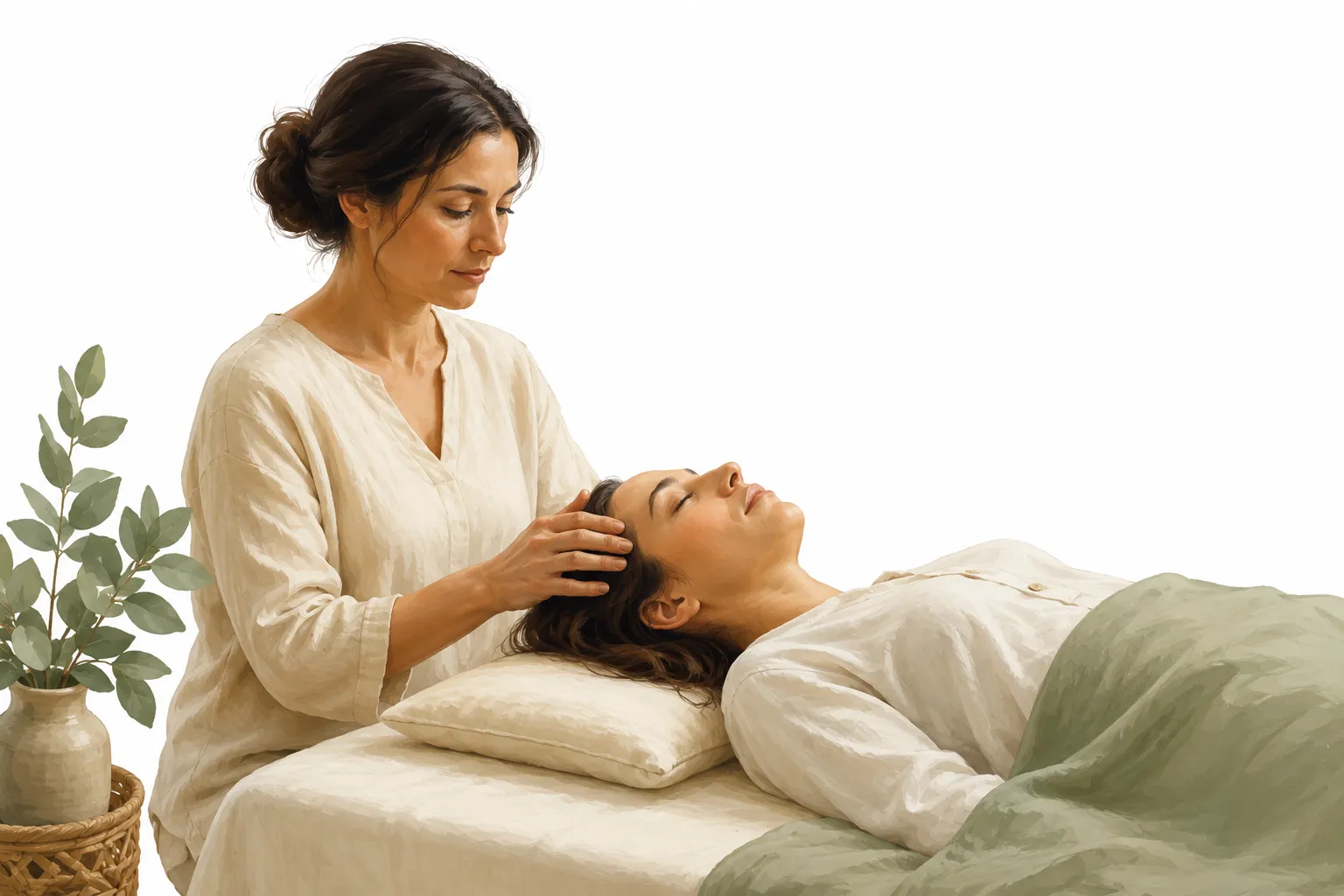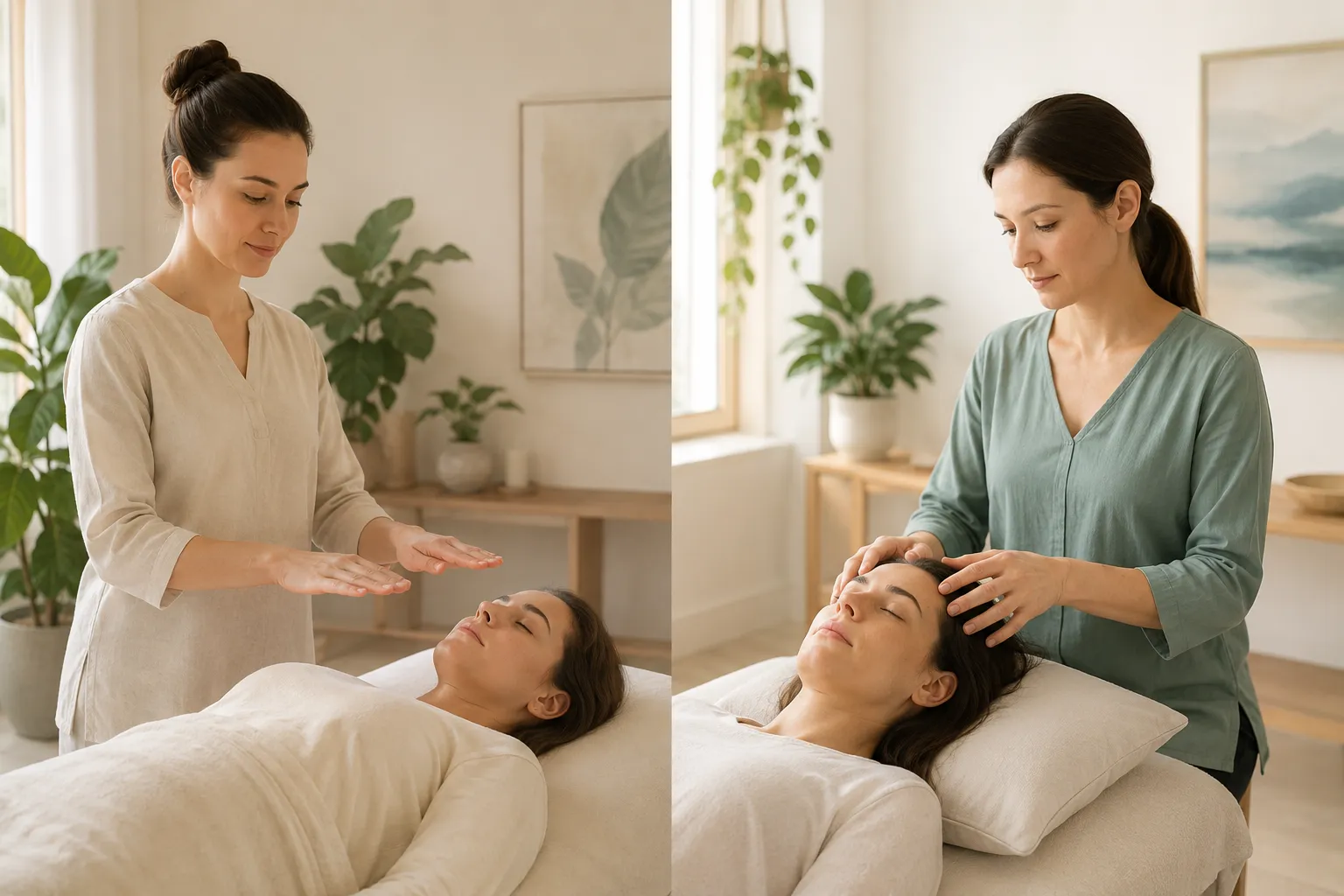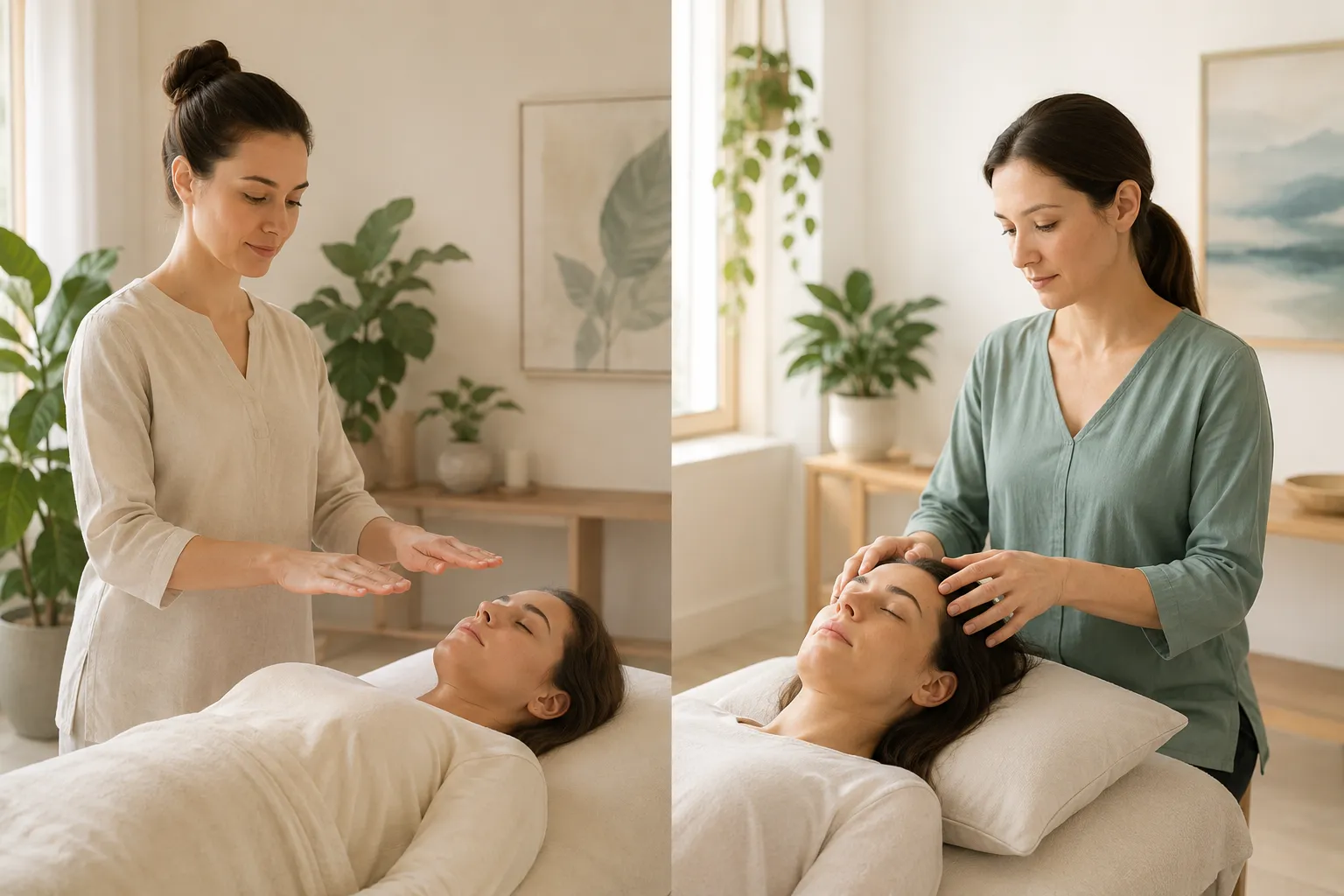
Two approaches to head-based therapy
Access Bars and Craniosacral Therapy: different systems, similar touch
Access Bars and Craniosacral Therapy (CST) are both gentle, hands-on practices that involve the head. But they come from very different traditions and work on very different principles.
Access Bars was developed in the 1990s by Gary Douglas as part of the Access Consciousness system. It involves light touch on 32 specific points on the head that are said to correspond to different life areas. The mechanism is described as releasing the electromagnetic charge of stored thoughts, beliefs, and emotions .
Craniosacral Therapy was developed in the 1970s by Dr. John Upledger, an osteopathic physician. It is based on the idea that the craniosacral system—the membranes and fluid that surround the brain and spinal cord—has a subtle rhythm. Practitioners use gentle touch to detect and release restrictions in this system, which is said to improve nervous system function .
CST has a somewhat more established place in complementary medicine and is sometimes used by physiotherapists, osteopaths, and other healthcare professionals. Access Bars is primarily offered by trained practitioners within the Access Consciousness network. Both have limited scientific evidence for broad therapeutic claims.
Skim first
Key takeaways
The shortest useful version of this page.
Access Bars uses 32 head points to release stored thoughts.
Craniosacral Therapy uses gentle touch on the craniosacral system.
CST has a somewhat larger evidence base and clinical presence.
Access Bars is energy-based; CST is physiology-based.
Both are complementary, not medical, therapies.
Both are gentle and considered low risk.
Craniosacral Therapy
What is Craniosacral Therapy?
Craniosacral Therapy (CST) is a gentle, hands-on therapy that focuses on the craniosacral system—the membranes and cerebrospinal fluid that surround and protect the brain and spinal cord.
Practitioners use a very light touch (about the weight of a nickel) to detect the subtle rhythm of the craniosacral system. They then use this touch to release restrictions in the system, which is said to improve the functioning of the central nervous system .
CST is used for a wide range of conditions, including headaches, neck pain, stress, anxiety, and some neurological conditions. It is sometimes used in physiotherapy, osteopathy, and other clinical settings. The evidence base is limited but includes some studies on specific conditions.
The mechanism is described in physiological terms—the craniosacral rhythm and cerebrospinal fluid—rather than in energy terms. This gives it a more clinical feel than Access Bars.
Access Bars
What is Access Bars?
Access Bars is a much newer practice. It was introduced in the 1990s by Gary Douglas. The practice involves light touch on 32 specific points on the head, each associated with a different life area: money, creativity, control, communication, joy, sadness, aging, and more .
Practitioners believe that these points store the electromagnetic charge of thoughts, beliefs, emotions, and decisions. Light touch on these points is said to release this stored charge .
The practice is described as "clearing files" from a computer's hard drive. Recipients lie down, fully clothed, and do not need to talk or do anything. Many people report relaxation, sleepiness, or a sense of mental clarity. The mechanism is energy-based, not physiological.
Access Bars vs Craniosacral Therapy: key differences
Both use gentle head touch but on different principles and different areas.
Origin
1990s, Gary Douglas
1970s, John Upledger
Core idea
Releases stored thoughts and beliefs
Releases restrictions in craniosacral system
Mechanism
Electromagnetic charge release
Cerebrospinal fluid rhythm
Touch area
32 points on head only
Head, spine, sacrum, sometimes full body
Touch weight
Light
Very light (5 grams)
Philosophy
Energy/consciousness-based
Physiology-based
Settings
Wellness, complementary therapy
Physiotherapy, osteopathy, wellness
Evidence status
Limited
Some studies but limited
How practitioners describe the difference
- Practitioner
CST practitioners often describe their work in clinical terms—releasing restrictions, improving nervous system function, supporting the body's self-regulation. Access Bars practitioners describe their work in energy terms—releasing stored beliefs, clearing mental "charge."
- Balanced view
Both approaches have their advocates. CST has a longer history and a stronger presence in some healthcare settings. Access Bars has a growing following in wellness communities.
- Evidence view
CST has a somewhat larger evidence base, particularly for some specific conditions like headache and neck pain. Access Bars has a smaller evidence base. Both need more research.
Be cautious of practitioners who promise cures or guaranteed outcomes. Neither modality is a substitute for professional medical care.
Verdict
Our evidence-based comparison
insufficient-evidence
Access Bars and Craniosacral Therapy are both gentle head-based therapies with different origins and mechanisms. Access Bars is energy-based and focuses on releasing stored thoughts. Craniosacral Therapy is physiology-based and focuses on the craniosacral system. Both have limited evidence.
What we know
- Access Bars uses 32 head points to release stored beliefs.
- CST uses gentle touch on the craniosacral system.
- CST has a somewhat larger evidence base and clinical presence.
- Both are considered low risk.
What we do not know
- Whether either mechanism exists as described.
- Whether either reliably treats specific conditions.
Choose Access Bars if you are drawn to energy work and mental release. Choose CST if you prefer a practice described in physiological terms and are open to clinical settings. Neither should replace medical care.
Bottom line
Energy vs physiology
Access Bars and Craniosacral Therapy offer different explanations for similar experiences. One speaks in energy terms. One speaks in physiological terms. Both can be deeply relaxing.
Quick answers
Frequently asked questions
What is the difference between Access Bars and Craniosacral Therapy?
Access Bars releases stored thoughts via head points. Craniosacral Therapy releases restrictions in the craniosacral system.
Which is better for neck pain?
Craniosacral Therapy is sometimes used for neck pain and has some evidence. Access Bars has less research but may be relaxing.
Can I do both?
Yes. Many people find value in both.
Is Craniosacral Therapy more scientifically proven?
CST has a slightly larger evidence base but is still considered limited. Access Bars has less research.
Are both safe?
Yes. Both use gentle touch and are considered low risk for most people.
Sources
Access Consciousness Bars | Beaverton Neurofeedback. Beaverton Neurofeedback. Accessed 2026-07-17
Provides a practitioner's description of Access Bars.
Access Bars for Children and Adults in Footscray. Rain & Me. Children's Therapy. Accessed 2026-07-17
Provides a clear description of Access Bars and what to expect.
What is Access Bars?. Beaverton Neurofeedback. Accessed 2026-07-17
Explains Access Bars and its points.
Therapies and Massages with Therapist Aline Paula. Templo Do Ser. Accessed 2026-07-17
Lists different therapies including Access Bars.