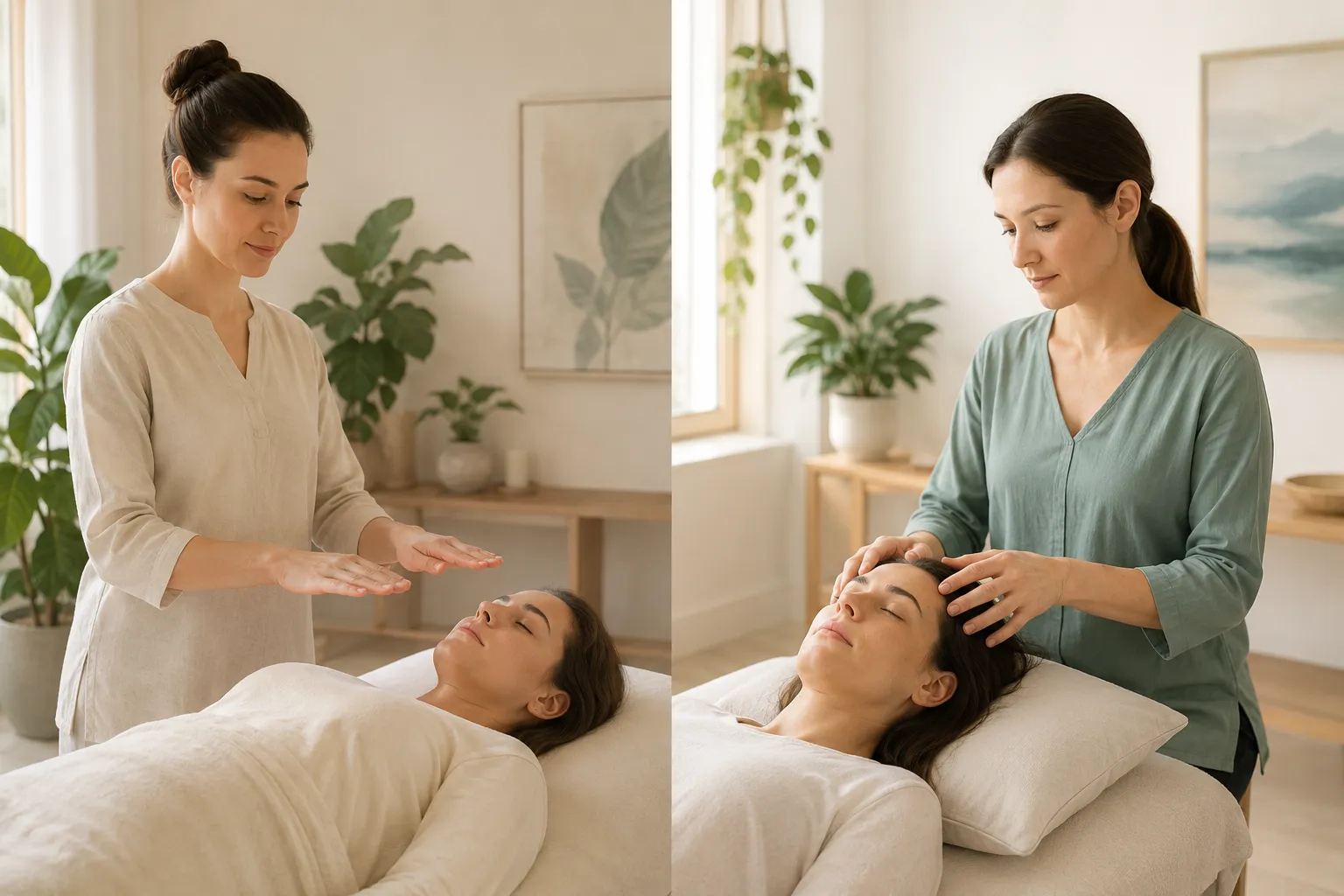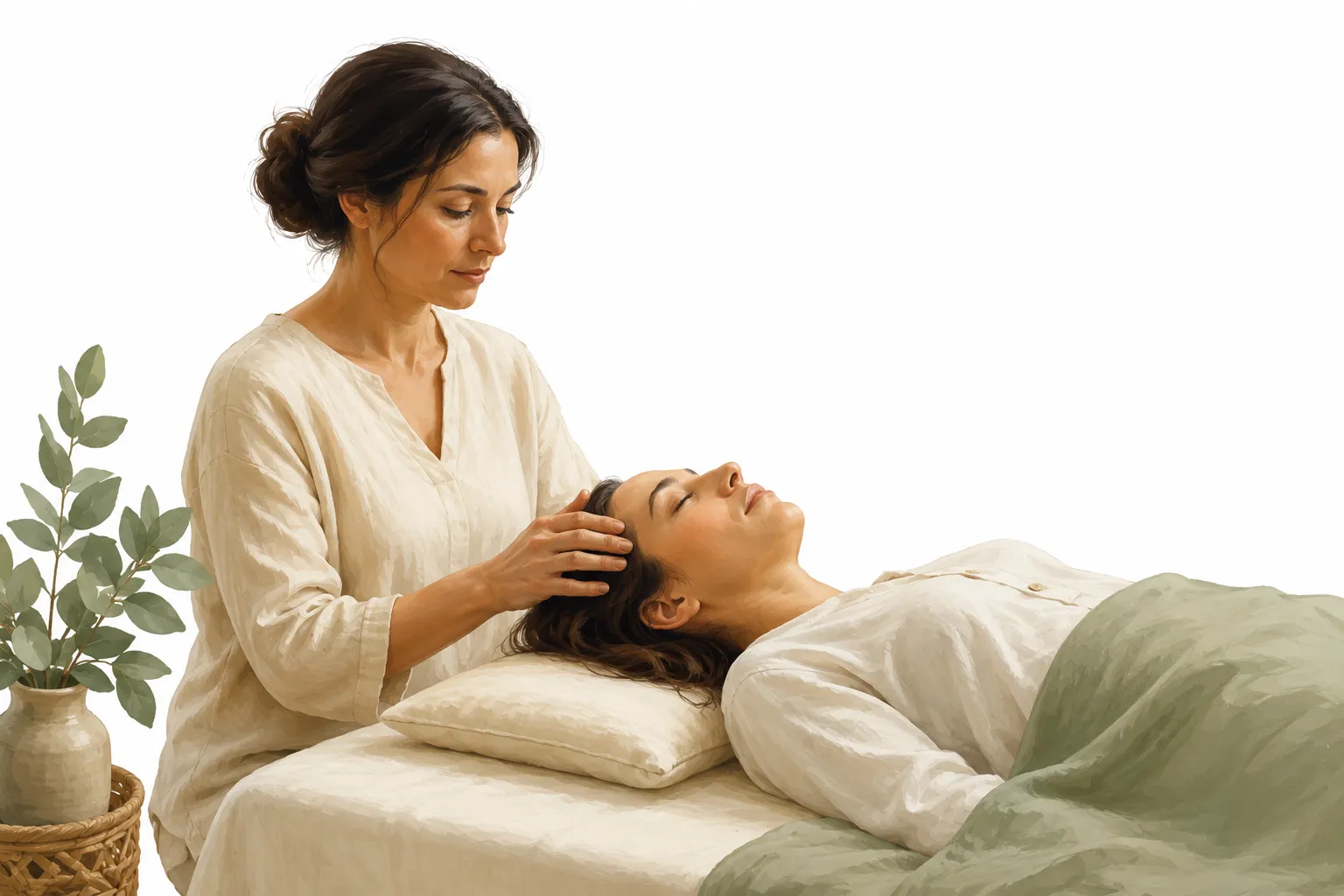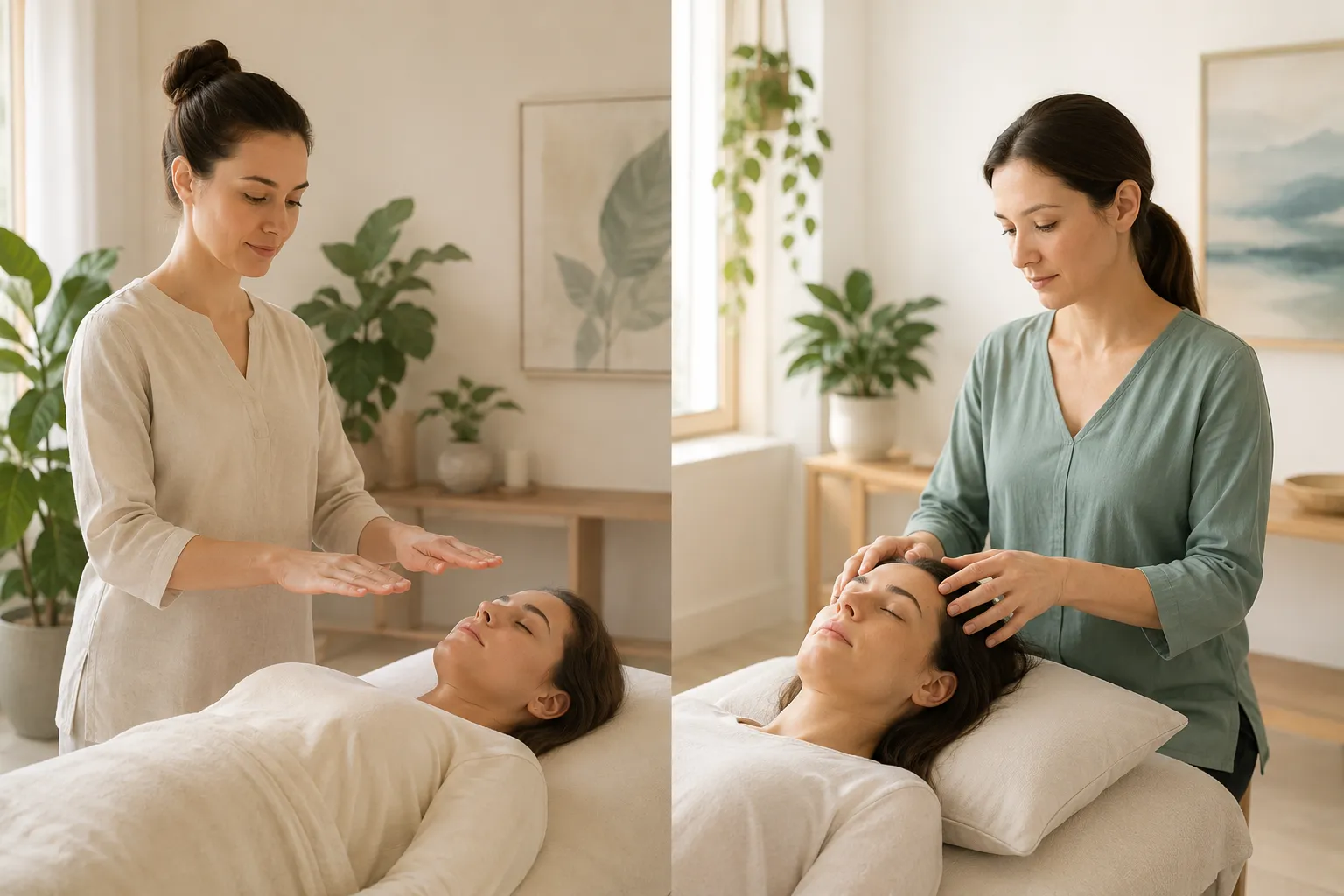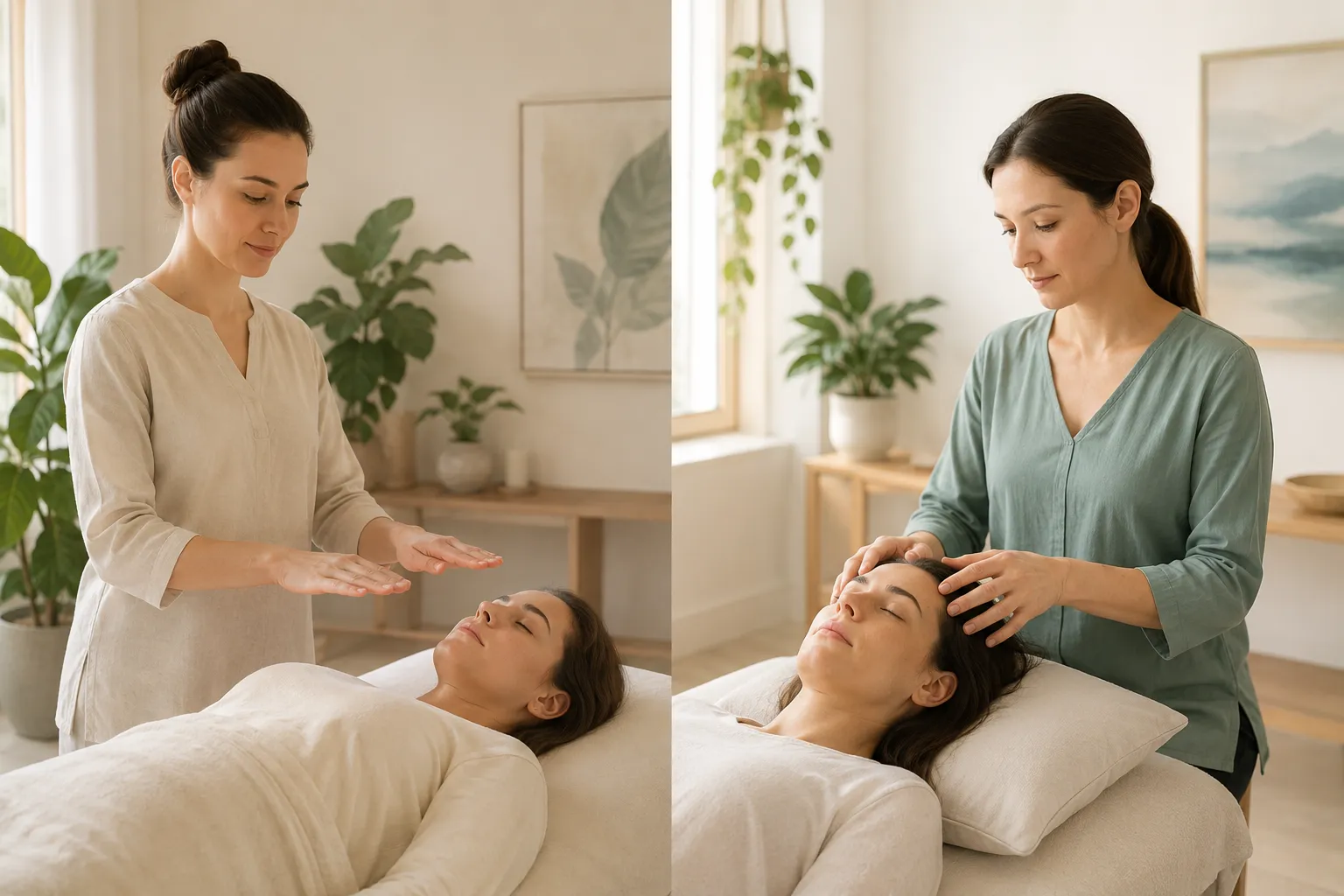
Two approaches to energy work
Access Bars and Acupuncture: ancient vs modern energy approaches
Acupuncture is one of the oldest healing practices in the world. It has been used in Traditional Chinese Medicine for over 2,000 years. Access Bars is a much newer practice, developed in the 1990s.
Acupuncture involves inserting fine needles into specific points on the body—called meridian points—to balance the flow of "qi" (vital energy). It is used for a wide range of conditions, including pain, nausea, anxiety, and fertility. It has some evidence for certain conditions, particularly chronic pain .
Access Bars uses light touch on 32 points on the head. These points are said to correspond to different life areas, such as money, creativity, and control. The mechanism is described as releasing the electromagnetic charge of stored thoughts, beliefs, and emotions .
Both are described as energy-based. Both are considered complementary therapies. But the experience is very different: needles vs touch, ancient vs modern, full body vs head only.
Skim first
Key takeaways
The shortest useful version of this page.
Acupuncture is ancient, needle-based, and has some evidence.
Access Bars is modern, touch-based, and has limited evidence.
Acupuncture works with qi energy flow.
Access Bars works with stored thoughts and beliefs.
Both are complementary therapies, not medical treatments.
Acupuncture is sometimes used in healthcare settings.
Acupuncture
What is Acupuncture?
Acupuncture is a key component of Traditional Chinese Medicine. It involves inserting very thin needles into specific points on the body, called acupoints, which lie along pathways called meridians.
The theory is that health and well-being depend on the smooth flow of "qi" (pronounced "chee"), or vital energy, through these meridians. Blockages or imbalances in qi are said to lead to illness and discomfort. Acupuncture aims to restore balance by unblocking the flow of qi .
Acupuncture is used for many conditions, including chronic pain, headaches, nausea, anxiety, and fertility issues. It has some evidence for certain conditions, particularly chronic pain . The World Health Organization recognizes acupuncture for a range of conditions.
The experience of acupuncture can be strange at first. Some people feel little or nothing. Others feel tingling, heaviness, or a mild ache around the needle. Most people find it relaxing once the needles are in place.
Access Bars
What is Access Bars?
Access Bars was developed in the 1990s by Gary Douglas. It is part of the Access Consciousness system. The practice involves light touch on 32 specific points on the head .
Each of the 32 points is said to relate to a different life area: money, creativity, control, communication, joy, sadness, aging, hope, dreams, and more . Practitioners believe these points store the electromagnetic charge of thoughts, beliefs, emotions, and decisions that limit a person's life.
Lightly touching these points is said to release this stored charge . The experience is passive and relaxing. Recipients often report feeling calm, sleepy, or experiencing mental clarity.
Access Bars vs Acupuncture: key differences
One uses needles and has ancient roots. The other uses touch and is modern.
Origin
1990s, USA
Ancient China (over 2,000 years ago)
Method
Light touch on 32 head points
Needles on meridian points
Mechanism
Releases electromagnetic charge
Balances qi energy flow
Touch/feeling
Gentle touch, deeply relaxing
Needle insertion, often relaxing once in place
Area of work
Head only
Full body (meridian points)
Evidence status
Limited
Some evidence for certain conditions
Healthcare status
Wellness/complementary
Used in some healthcare settings
Cultural context
Modern Western wellness
Traditional Chinese Medicine
How practitioners describe the difference
- Practitioner
Acupuncturists describe their work as balancing the body's energy flow and are often trained in Traditional Chinese Medicine. Access Bars practitioners describe their work as releasing stored mental and emotional charge.
- Balanced view
Acupuncture has a longer history and a larger evidence base. It is also sometimes integrated into mainstream healthcare. Access Bars is more niche and newer. Both can be relaxing and beneficial for different people.
- Evidence view
Acupuncture has more research support, particularly for chronic pain, headache, and nausea. Access Bars has very limited research.
Acupuncture should be performed by qualified, licensed practitioners. Access Bars should be performed by certified practitioners. Neither should replace professional medical care.
Reality check
Common misunderstandings
- Myth
Acupuncture and Access Bars are the same thing.
RealityThey are very different in origin, method, and philosophy.
- Myth
Both are scientifically proven.
RealityAcupuncture has some evidence for certain conditions. Access Bars has very limited evidence.
- Myth
Access Bars is a form of acupuncture.
RealityNo. Access Bars is a separate modality developed in the 1990s.
- Myth
Both work with energy.
RealityYes, but the energy concepts are different: qi vs electromagnetic charge.
Verdict
Our evidence-based comparison
mixed
Acupuncture and Access Bars are both energy-based therapies but with very different histories, methods, and evidence bases. Acupuncture has ancient roots, uses needles, and has some evidence for specific conditions. Access Bars is modern, uses gentle touch, and has limited evidence.
What we know
- Acupuncture is ancient, needle-based, and has some evidence.
- Access Bars is modern, touch-based, and has limited evidence.
- Acupuncture is sometimes used in healthcare settings.
- Access Bars is primarily found in wellness settings.
What we do not know
- Whether Access Bars works beyond relaxation and expectation effects.
- Whether the proposed mechanisms of either exist as described.
Choose acupuncture if you want a practice with ancient roots, some evidence, and are comfortable with needles. Choose Access Bars if you prefer non-invasive head touch and a modern energy approach. Both can be relaxing.
Bottom line
Ancient needles vs modern touch
Acupuncture and Access Bars offer very different paths to similar goals. One has tradition and some evidence. The other is modern and relaxing. Choose what suits you.
Quick answers
Frequently asked questions
What is the main difference between Access Bars and acupuncture?
Acupuncture uses needles on meridian points. Access Bars uses gentle touch on head points.
Which is better for pain relief?
Acupuncture has some evidence for chronic pain. Access Bars has less research.
Does acupuncture hurt?
Most people feel little or no pain. You may feel tingling or mild ache.
Can I do both?
Yes. Many people find value in both.
Which is more scientifically proven?
Acupuncture has a larger evidence base. Access Bars has very limited research.
Sources
Access Consciousness Bars | Beaverton Neurofeedback. Beaverton Neurofeedback. Accessed 2026-07-17
Provides a practitioner's description of Access Bars.
Access Bars for Children and Adults in Footscray. Rain & Me. Children's Therapy. Accessed 2026-07-17
Provides a clear description of Access Bars and what to expect.
Acupuncture - Mayo Clinic. Mayo Clinic. Accessed 2026-07-17
Provides clinical information on acupuncture, its uses, and evidence base.
What is Access Bars?. Beaverton Neurofeedback. Accessed 2026-07-17
Explains Access Bars and its points.