Separating fact from fiction
Is Access Bars real? The honest answer.
The question "Is Access Bars real?" is more nuanced than it first appears. If you're asking whether the practice exists (whether people actually do it, offer it, and receive it) the answer is clearly yes. Access Bars is a real practice with real practitioners and real participants.
If you're asking whether the experiences people have are real (the relaxation, calmness, clarity) the answer is also yes. Many people genuinely feel better after sessions. These are real experiences.
But if you're asking whether the claims about Access Bars are real: the idea that touching head points releases stored thoughts, that it treats anxiety or depression, that it's a form of healing, the answer is not supported by scientific evidence. The claims are real in the sense that people make them, but they are not real in the sense of being proven.
So the honest answer is: Access Bars is a real practice with real experiences, but many of the claims made about it are not supported by strong evidence.
Skim first
Key takeaways
The shortest useful version of this page.
Access Bars is a real practice with real practitioners and participants.
People have real experiences of relaxation and calm.
The claimed mechanism is not scientifically established.
Access Bars is not a proven treatment for any condition.
The practice is real; many claims are not.
Enjoy the practice for what it is, not what it claims to be.
The real parts of Access Bars
What about Access Bars is real?
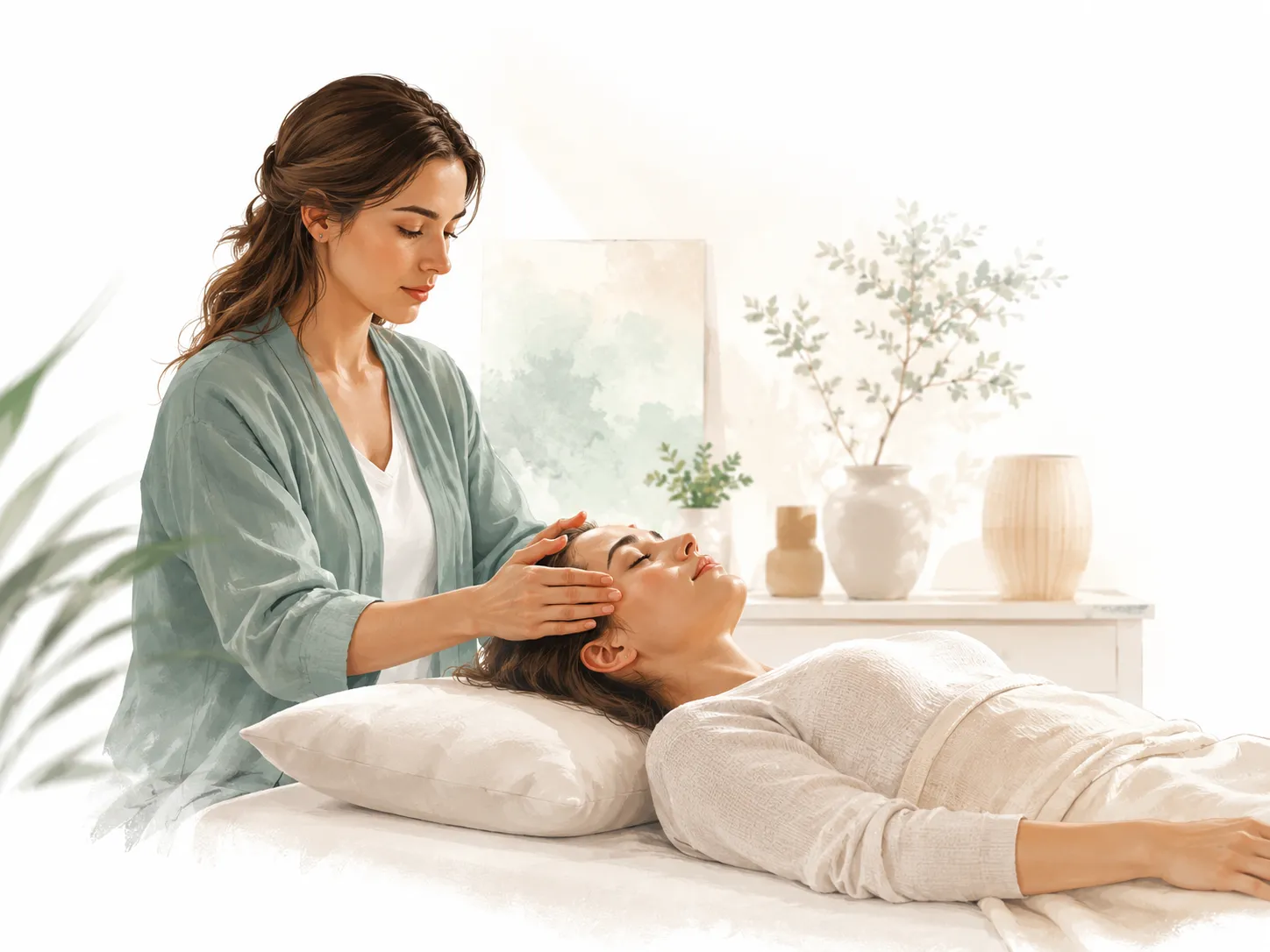
The Access Bars practice itself is real. People learn it in classes, offer it to clients, and receive it as a complementary wellness session. The physical technique (gentle touch on designated head points) is observable and teachable.
The experiences people have during and after sessions are also real. Many participants genuinely feel relaxed, calm, clear, or peaceful. These experiences are reported consistently and appear to be meaningful to those who have them.
The community around Access Bars is real. There are practitioners, facilitators, training programs, and a network of people who practice and value it.
All of these things exist and are real. The question is not whether Access Bars is real in this sense (it clearly is) but whether the bigger claims about what it does are real.
Evidence scan
What does the evidence say about whether Access Bars is real?
The evidence supports some aspects of Access Bars and fails to support others.
Overall: not enough evidence
Leans in favor
Points that support the claim
Access Bars is a real practice that people do.
Yes. The practice exists and is taught and offered.
Access Bars produces relaxation in many people.
Many participant reports support this. However, relaxation is common to many experiences.
Leans against
Points that do not support the claim
The claimed mechanism is real.
No scientific evidence supports the claimed mechanism of releasing stored thoughts from head points.
Access Bars is an effective treatment.
No. The evidence is insufficient to establish Access Bars as a treatment for any condition.
Reality check
Common myths about whether Access Bars is real
- Myth
Access Bars is completely fake.
RealityNo. The practice itself is real and people really do it and have real experiences.
- Myth
Access Bars is totally proven.
RealityNo. Many claims are not supported by evidence.
- Myth
If the practice is real, all the claims must be real.
RealityNo. The existence of the practice doesn't prove the claims.
- Myth
If the claims aren't proven, the practice is useless.
RealityNot necessarily. A practice can be relaxing and pleasant without being medically proven.
What is real and what is not
A clear breakdown of what's real about Access Bars and what isn't.
The practice exists
Yes
Observed
People learn and teach it
Yes
Observed
Participants have experiences
Yes
Reported
Relaxation and calm
Yes
Reported
The claimed mechanism
Not established
None
Treatment for conditions
Not established
Limited
Different perspectives on whether Access Bars is real
- Practitioner
Practitioners see Access Bars as real and valuable. They've seen it help people feel better and believe in its claimed effects.
- Balanced view
Both views have merit. Access Bars is a real practice with real experiences. But the claims made about it are not established.
Safety
Is it safe?
The physical practice is generally safe. The main risk is believing claims that aren't true.
Generally low-risk for
- Adults seeking relaxation
- People comfortable with head touch
Use caution if
- You're using it instead of medical care
- You believe unrealistic claims
Seek professional help if
- You have health or mental health concerns
Access Bars is a complementary wellness practice, not medical treatment.
What to remember about whether Access Bars is real
Access Bars is a real practice with real practitioners and participants.
People have real experiences of relaxation and calm.
The claimed mechanism is not scientifically established.
Access Bars is not a proven treatment for any condition.
The practice is real; many claims are not.
Enjoy the practice for what it is, not what it claims to be.
Verdict
Is Access Bars real? Our evidence-based verdict
insufficient-evidence
Access Bars is a real practice with real participants and real experiences of relaxation and calm. However, the broader claims about its mechanism, healing effects, and treatment of conditions are not supported by strong scientific evidence.
What we know
- Access Bars is a real, observable practice.
- Participants often report relaxation and calm.
- These experiences are genuine.
What we do not know
- Whether the claimed mechanism exists.
- Whether Access Bars has specific therapeutic effects.
- Whether it treats any condition.
Access Bars is real as a relaxation practice. It is not real as a proven treatment. Enjoy it for what it is, but don't believe the unproven claims.
Bottom line
The practice is real. The claims are not established.
Access Bars is a real practice that people do and enjoy. It can be a relaxing, pleasant experience. But the claims about what it does (the healing, the release, the treatment) are not supported by evidence. Know what's real and what's not.
Quick answers
Frequently asked questions
Is Access Bars real?
Yes, as a practice. No, the claims are not established.
Is Access Bars a scam?
Not necessarily. It's a real practice. But be careful of exaggerated claims.
Is Access Bars scientifically proven?
No. The evidence is limited and inconclusive.
Are the experiences real?
Yes. People really do feel relaxed and calm.
Should I try Access Bars?
You might enjoy it. But keep realistic expectations and don't replace medical care.
Sources
REPLACE IF AVAILABLE. REPLACE WITH VERIFIED OFFICIAL ACCESS BARS DESCRIPTION. Access Consciousness, REPLACE_IF_AVAILABLE. Accessed YYYY-MM-DD
Use to establish the real practice exists.
REPLACE WITH VERIFIED AUTHORS. REPLACE WITH VERIFIED RESEARCH ON ACCESS BARS. REPLACE WITH VERIFIED JOURNAL, REPLACE WITH VERIFIED DATE. Accessed YYYY-MM-DD
Use to assess evidence.