The basics
A simple physical process wrapped in a bigger philosophy
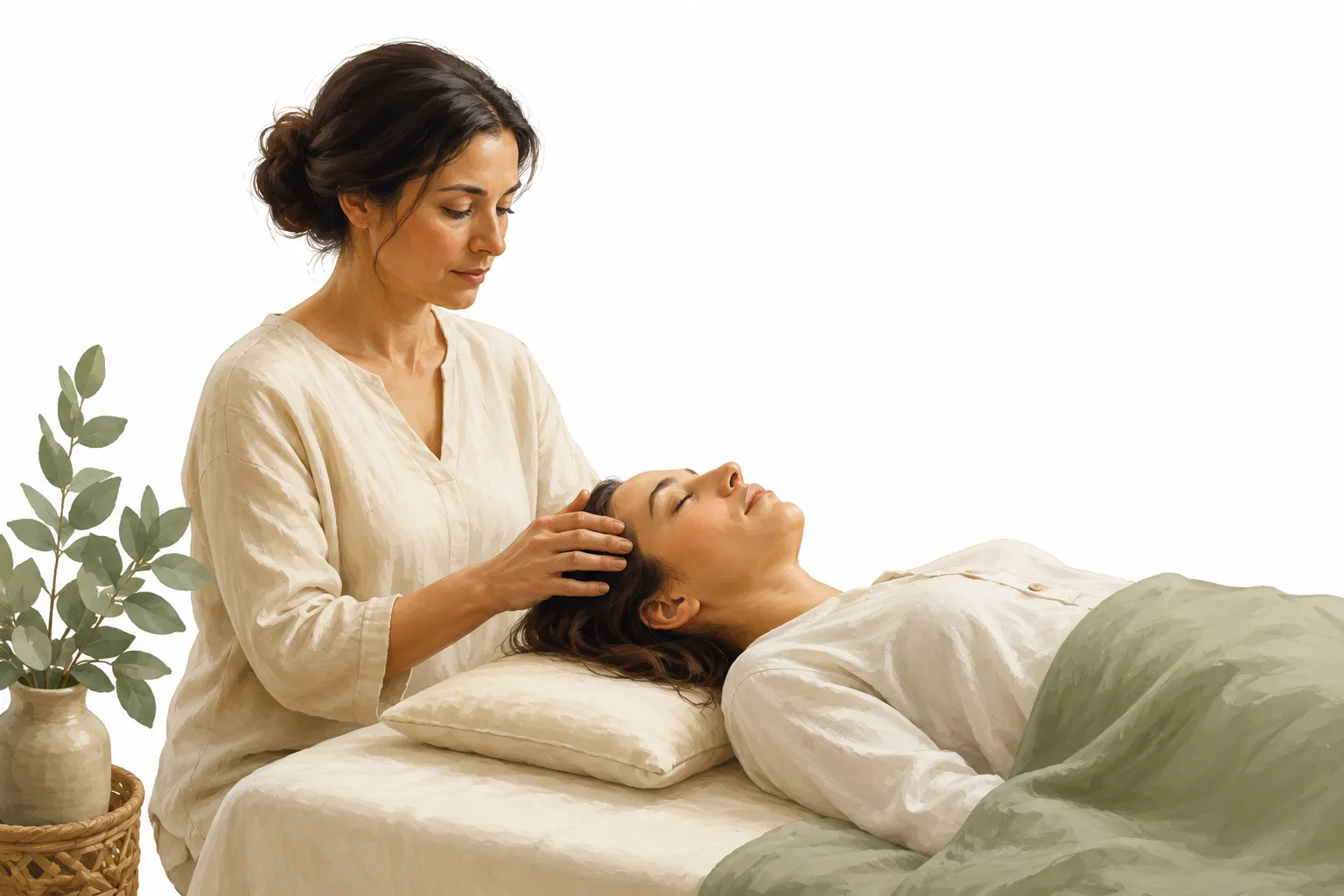
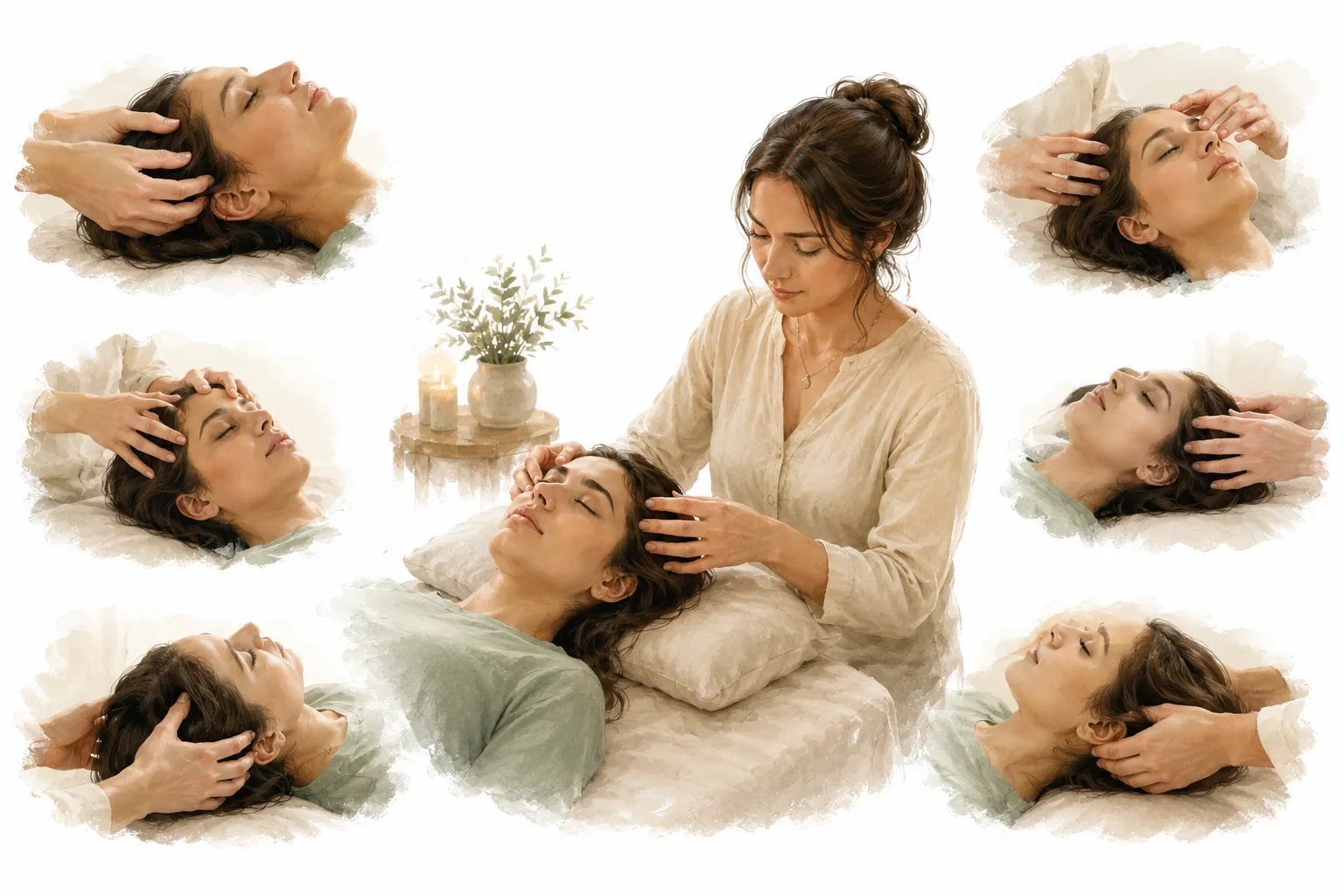
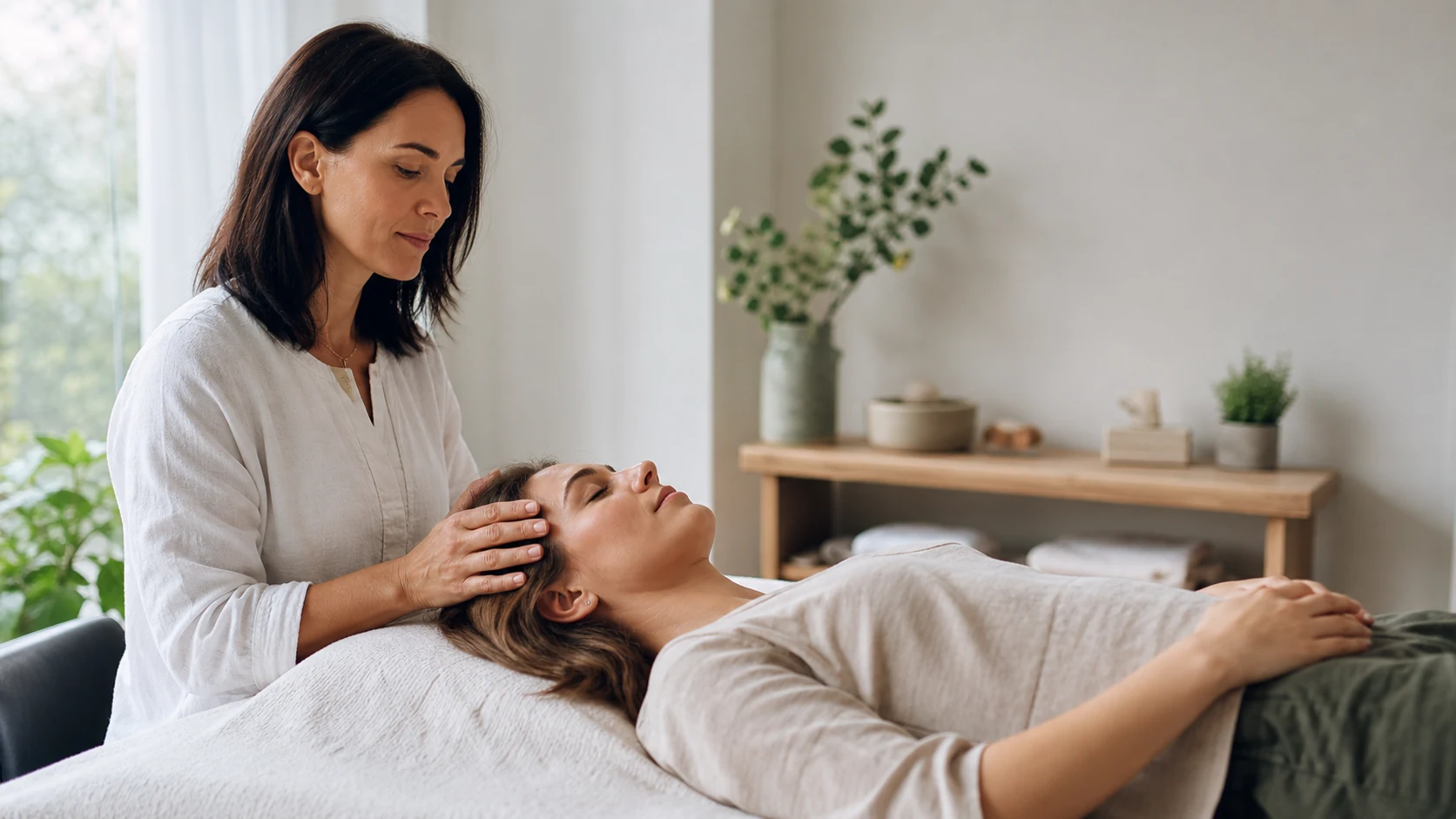
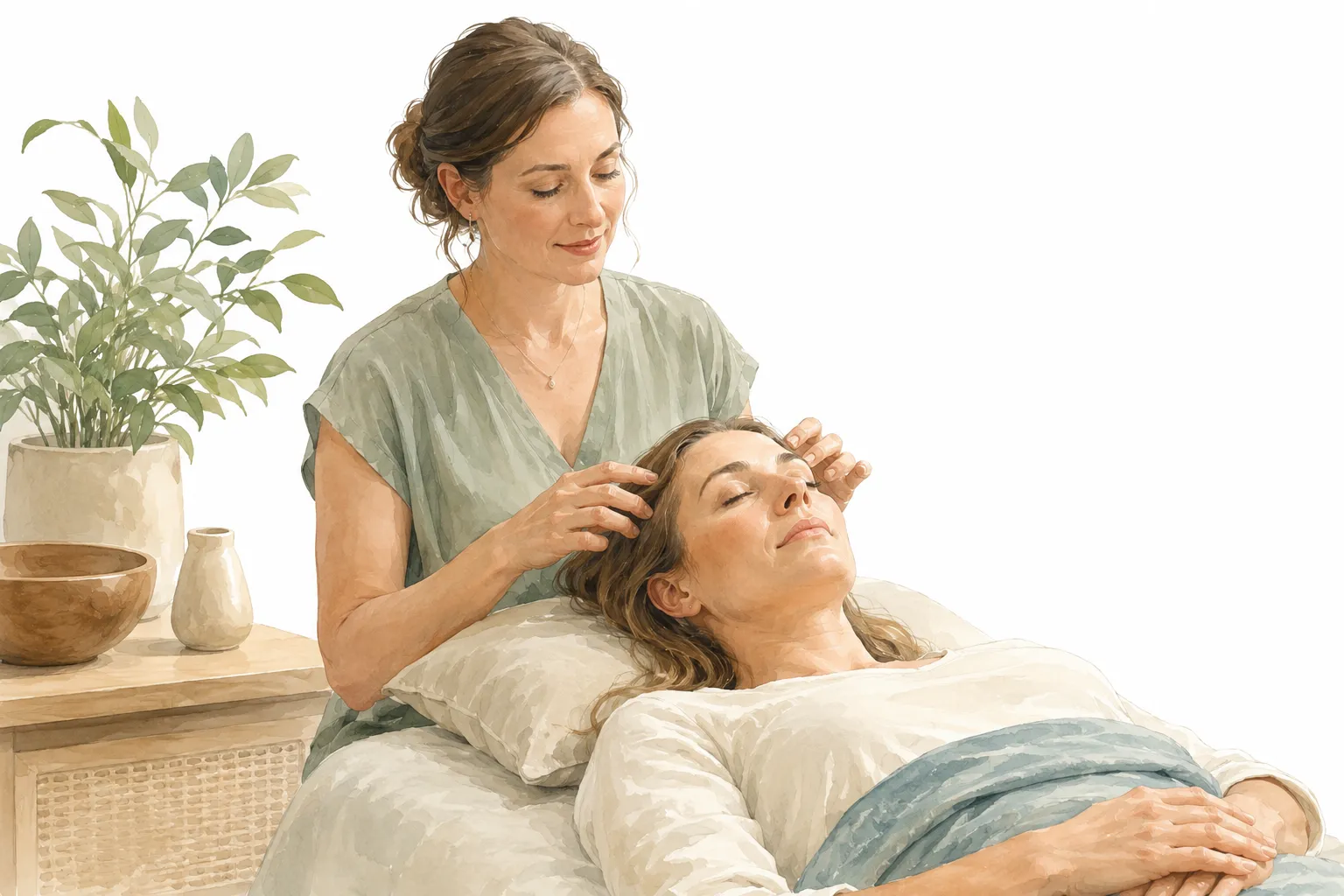
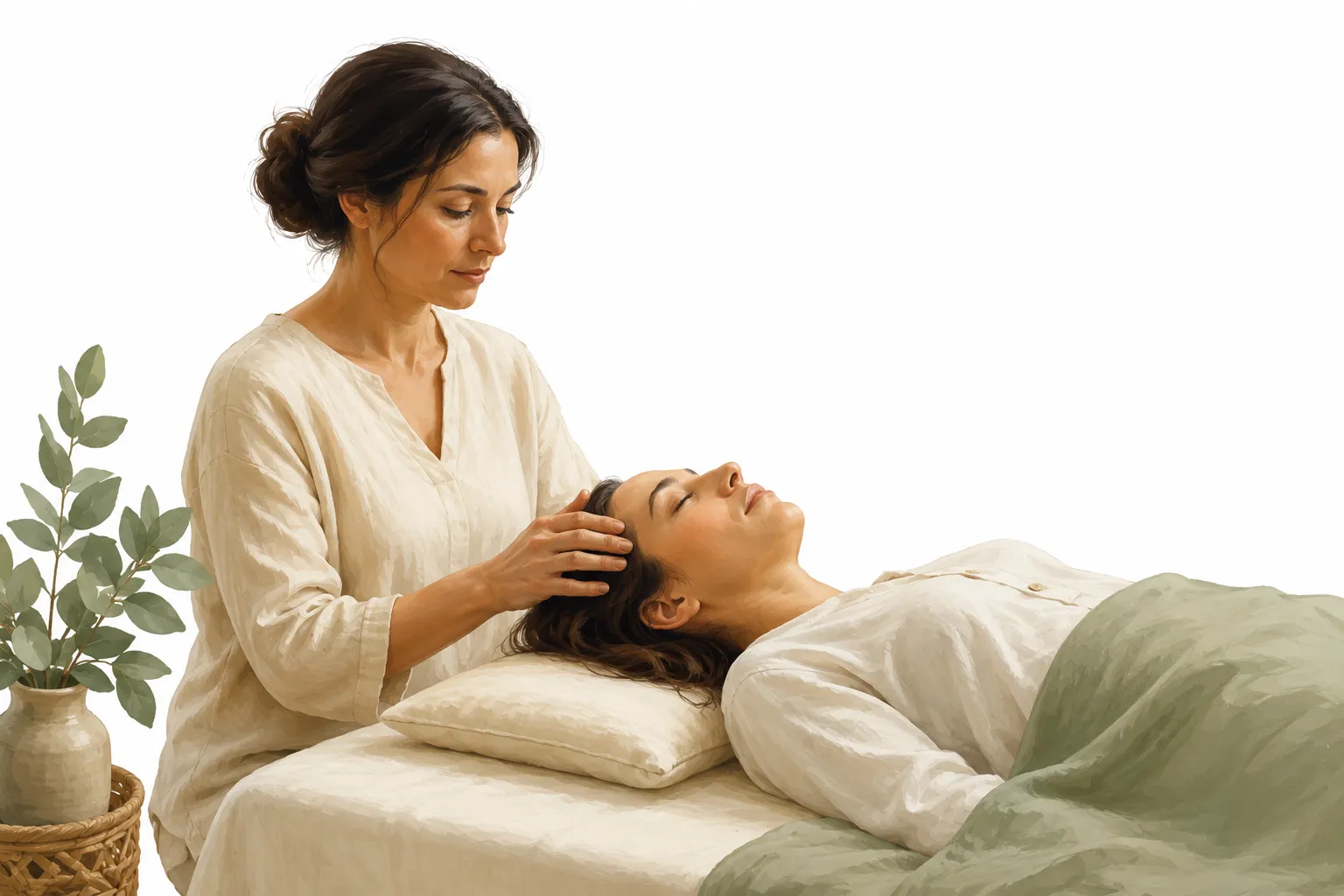
Strip away the terminology and Access Bars healing is fairly easy to picture: you lie down, stay dressed, and a practitioner spends the better part of an hour lightly resting their fingertips on different points around your head, sometimes holding two points at once.
What makes it "healing" in the eyes of practitioners isn't the touch itself but what the touch is said to do. Access Consciousness teaches that each of the 32 points corresponds to an area of life — money, creativity, control, sadness, and so on — and that gently activating them releases stored thought patterns that keep a person stuck.
That explanation is internal to the system; it hasn't been independently verified through controlled research. What can be said with more confidence is that lying still in a quiet room, receiving calm attentive touch from another person, tends to be relaxing for most people regardless of the explanation offered for why.
The practical question for someone considering a session isn't whether the experience is real — clearly, people do have sessions and do report feelings afterward — but whether the specific healing claims attached to it hold up, and whether it's being offered as a complement to normal life or as a replacement for care that shouldn't be skipped.
Skim first
Key takeaways
The shortest useful version of this page.
Access Bars healing involves roughly an hour of light touch on 32 head points.
"Healing" is used to mean releasing thoughts and emotions, not curing illness.
Relaxation is a commonly reported, plausible effect.
The specific claimed mechanism lacks independent scientific confirmation.
It should not replace medical or psychological care.
What actually happens, step by step
A session moves through a fairly predictable arc, even though individual practitioners add their own style.
Settling in
You lie down fully clothed, usually on a massage-style table, and get comfortable.
Locating the points
The practitioner works through a taught sequence of head points, often holding more than one at a time.
Sustained light touch
Each combination is held gently for a period before moving to the next, without pressure or manipulation.
Closer to resting a hand on someone's shoulder than to massage or acupressure.The claimed release
Access Consciousness describes this contact as discharging stored thoughts, emotions, and points of view associated with each point.
Rest and reflection
Many people become very relaxed or drowsy; some talk through the session, others stay quiet.
Separating claim from evidence
What's established and what isn't
It's well established that quiet rest, gentle touch, and focused attention from another person can be relaxing — this is true across many contexts, from massage to simple companionship, and doesn't require any energetic explanation.
What isn't established is the specific claim that these 32 points store thoughts and emotions that get released through touch. No independent, peer-reviewed research has confirmed this mechanism. A handful of studies produced by people affiliated with Access Consciousness report striking results, but they haven't been replicated by independent researchers using rigorous methods.
That gap between "people report feeling better" and "the proposed mechanism is scientifically confirmed" is the central thing to understand about Access Bars healing.
How practitioners and participants describe it
- Practitioner
Practitioners describe helping clients "get out of their head" and release fixed points of view they've been carrying, sometimes for years.
- Participant
Participants commonly describe deep relaxation or sleepiness; some describe emotional release or clearer thinking; others notice little.
- Balanced view
Both descriptions are honest accounts of subjective experience. Neither substitutes for controlled research into whether the practice reliably produces a specific effect.
- Evidence view
Current evidence is not strong enough to confirm broad healing claims beyond general relaxation effects.
Treat any claim that a session cured a medical condition with real skepticism, and don't let it replace appropriate care.
Reality check
Common misunderstandings
- Myth
Access Bars healing is the same as therapeutic massage.
RealityIt uses light touch rather than muscle work, and the goals described are emotional/energetic rather than physical.
- Myth
If you feel different afterward, the energy explanation must be true.
RealityFeeling different is consistent with rest and attention alone, and doesn't confirm the specific mechanism claimed.
- Myth
"Healing" means it treats diagnosed illness.
RealityThe term is used to describe releasing thoughts and emotions, not curing a medical condition.
Safety
Is it safe to try?
The physical procedure is gentle and generally low risk. The main concerns are about overstated claims and delayed medical care rather than the touch itself.
Generally low-risk for
- Adults comfortable with gentle touch near the head
- People seeking a relaxing complementary experience with realistic expectations
Use caution if
- You have a recent head injury or surgery
- A practitioner suggests stopping prescribed treatment or medication
- You dislike being touched around the head or face
Seek professional help if
- You have persistent physical symptoms
- You're experiencing a mental health crisis or suicidal thoughts
- You need an actual diagnosis or evidence-based treatment plan
Access Bars healing is a complementary wellness practice, not a substitute for medical or psychological care.
What to remember
A session involves light touch on 32 head points over roughly an hour.
Practitioners describe this as releasing stored thoughts and emotions.
Reported relaxation is common but doesn't confirm the specific mechanism.
Independent scientific evidence for the healing claim is lacking.
It shouldn't replace medical or mental health treatment.
Verdict
Our evidence-based verdict
insufficient-evidence
Access Bars healing is a gentle, low-risk relaxation session built around a claim — releasing stored thoughts through touch — that hasn't been independently confirmed.
What we know
- The session involves light touch on designated head points.
- Many participants report relaxation.
- Rest and attentive touch are known relaxants regardless of explanation.
What we do not know
- Whether the 32 points correspond to distinct stored beliefs
- Whether touching them produces effects beyond general relaxation
Consider it an optional relaxation experience with modest, realistic expectations — not a treatment for any diagnosed condition.
Quick answers
Frequently asked questions
What is Access Bars healing?
A complementary wellness session where a practitioner lightly touches 32 points on your head to claim release of stored thoughts and emotions.
How long does a session take?
Sessions commonly run 60 to 90 minutes.
Is Access Bars healing scientifically proven?
No. Independent, high-quality research confirming the claimed mechanism does not currently exist.
Can it replace therapy or medication?
No, it should be treated as a complementary experience, not a replacement for professional care.
Sources
Access Bars. garymdouglas.com. Accessed 2026-07-17
Official description of what happens during a session and how the organization frames its claimed effects.
Harriet Hall, MD. Access Consciousness: A New Version of Phrenology?. Science-Based Medicine. Accessed 2026-07-17
Independent medical-professional critique of the claims made about the practice.
Access Consciousness. Wikipedia. Accessed 2026-07-17
Background on the organization and independent characterization of its claims.