Two approaches to mind change
Access Bars and Hypnotherapy: different paths to change
Access Bars and Hypnotherapy both work with patterns of thought and belief. But the methods and experiences are very different.
Hypnotherapy is a form of psychotherapy that uses hypnosis to access the subconscious mind. A trained practitioner guides you into a relaxed, focused state and then uses suggestion, imagery, and metaphor to help you change patterns of thinking, feeling, or behavior . It has been used for anxiety, phobias, habits, and some other conditions. There is some research support for its effectiveness in specific areas .
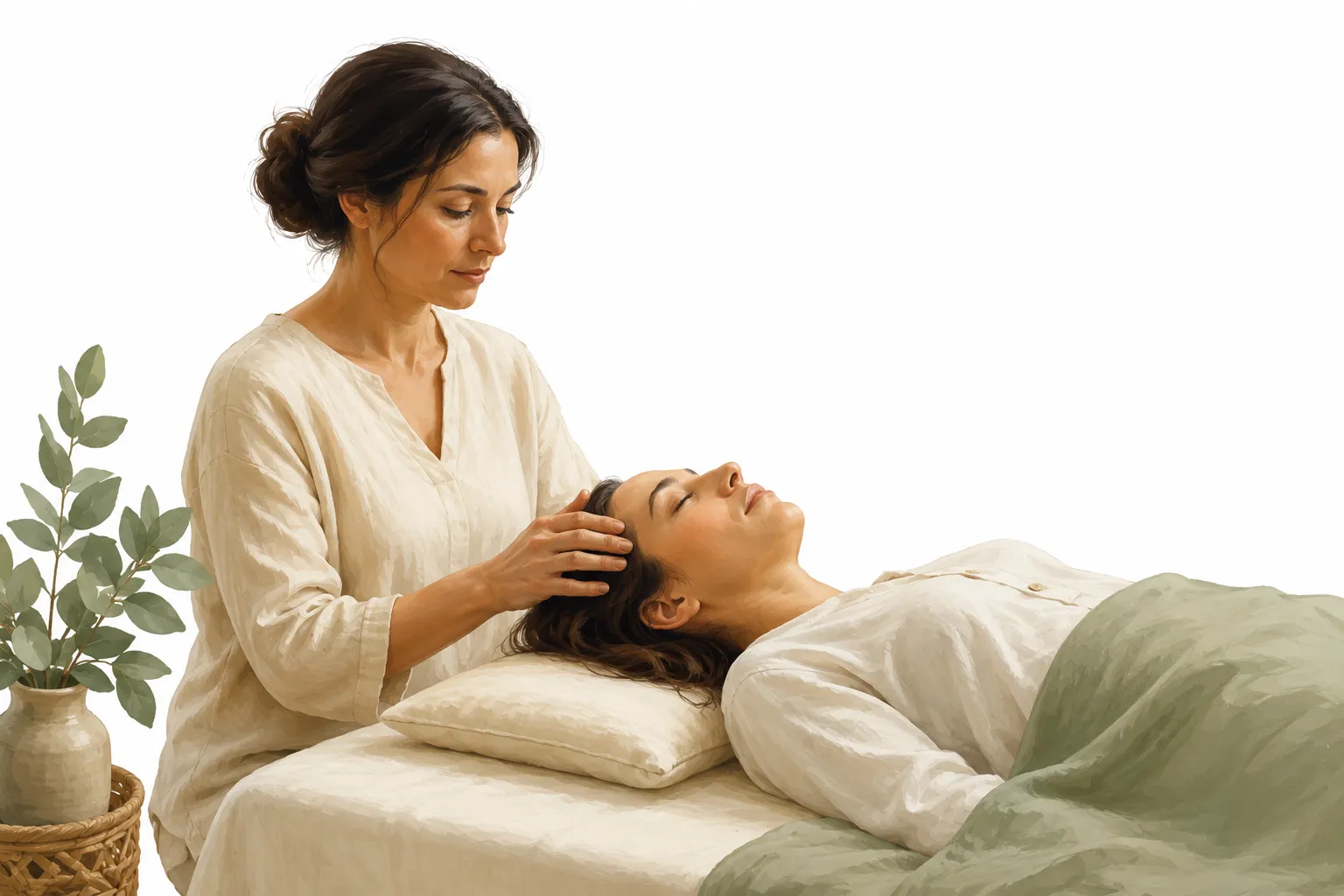
Access Bars is a passive practice. You lie down fully clothed and a practitioner lightly touches 32 points on your head. The touch is said to release the electromagnetic charge of stored thoughts, beliefs, and emotions . You do not need to talk, process, or engage in any active way.
Hypnotherapy is active and verbal. Access Bars is passive and non-verbal. Hypnotherapy has a larger evidence base and is sometimes used in clinical settings. Access Bars has a smaller evidence base and is mostly found in wellness settings.
Skim first
Key takeaways
The shortest useful version of this page.
Hypnotherapy uses suggestion and imagery.
Access Bars uses gentle head touch.
Hypnotherapy is active and verbal.
Access Bars is passive and non-verbal.
Hypnotherapy has more research support.
Both are complementary, not medical, therapies.
Hypnotherapy
What is Hypnotherapy?
Hypnotherapy is a therapeutic technique that uses hypnosis to access the subconscious mind. It is often used to help with anxiety, phobias, habits, pain, and other issues.
During a hypnotherapy session, the practitioner guides you into a relaxed, focused state (often called a trance). In this state, you are more open to suggestion and can more easily access subconscious thoughts and patterns.
The practitioner then uses suggestion, imagery, and sometimes metaphor to help you change patterns of thinking or behavior. You remain in control throughout—hypnosis is not mind control.
Hypnotherapy has some evidence for specific issues, particularly anxiety, pain, and irritable bowel syndrome . It is sometimes used in clinical settings by trained mental health professionals.
Access Bars
What is Access Bars?
Access Bars is a much newer practice. It was introduced in the 1990s by Gary Douglas. The practice involves light touch on 32 specific points on the head, each associated with a different life area .
Practitioners believe that these points store the electromagnetic charge of thoughts, beliefs, emotions, and decisions. Lightly touching them is said to release this stored charge .
The practice is passive. You lie down, fully clothed, and the practitioner works through the points. You do not need to talk, process, or engage actively. Many people report feeling deeply relaxed or falling asleep.
Access Bars vs Hypnotherapy: key differences
One uses suggestion and imagery. The other uses touch. Both target patterns of thought.
Method
Light touch on 32 head points
Hypnosis + suggestion + imagery
Experience
Passive—lie down and receive
Active—engage with suggestions
Role of practitioner
Provides touch
Provides verbal guidance
Role of recipient
Receive, relax
Engage, listen, imagine
Mechanism
Releases electromagnetic charge
Accesses subconscious mind
Evidence status
Limited
Some evidence for specific issues
Settings
Wellness/complementary
Clinical and wellness settings
If you have...
Prefer touch and quiet
Prefer talk and engagement
How practitioners describe the difference
- Practitioner
Hypnotherapists describe their work as accessing the subconscious to change patterns. Access Bars practitioners describe their work as releasing stored charge from thoughts and beliefs.
- Balanced view
Both can be meaningful for different people. Hypnotherapy appeals to people who want to actively engage with their patterns. Access Bars appeals to people who want a restful, passive experience.
- Evidence view
Hypnotherapy has more research support, particularly for anxiety, pain, and habits. Access Bars has limited research.
Both should be performed by trained, qualified practitioners. Neither should replace professional mental health care.
Reality check
Common misunderstandings
- Myth
Hypnotherapy is mind control.
RealityYou remain in control throughout hypnotherapy. You cannot be forced to do anything you do not want to do.
- Myth
Access Bars is a form of hypnosis.
RealityNo. Access Bars uses touch, not verbal suggestion. It does not involve a trance state.
- Myth
Both are proven medical treatments.
RealityHypnotherapy has some evidence for specific issues. Access Bars has limited evidence. Neither is a proven medical treatment.
- Myth
You need to believe in them for them to work.
RealityBoth may work regardless of belief, though expectation can influence experience.
Verdict
Our evidence-based comparison
mixed
Access Bars and Hypnotherapy offer different paths to change. Hypnotherapy is verbal, active, and has some evidence for specific issues. Access Bars is non-verbal, passive, and has limited evidence. Choose based on your preference for active vs passive experience.
What we know
- Hypnotherapy uses suggestion and imagery to access the subconscious.
- Access Bars uses touch on head points to release stored beliefs.
- Hypnotherapy has more research support.
- Both are considered complementary therapies.
What we do not know
- Whether Access Bars works beyond relaxation and expectation.
- Whether the mechanisms of either exist as described.
Choose hypnotherapy if you want an active, verbal process with more evidence. Choose Access Bars if you prefer a passive, non-verbal experience. Neither should replace professional mental health care.
Bottom line
Verbal vs non-verbal change
Hypnotherapy and Access Bars offer different ways to work with patterns of thought and behavior. One is active and verbal. The other is passive and non-verbal. Choose what feels right for you.
Quick answers
Frequently asked questions
What is the difference between Access Bars and hypnotherapy?
Hypnotherapy uses verbal suggestion. Access Bars uses gentle head touch.
Which is better for habits or phobias?
Hypnotherapy has some evidence for habits and phobias. Access Bars has limited research.
Can I do both?
Yes. Many people find value in both.
Is hypnotherapy safe?
Yes, when performed by a qualified practitioner.
Do I have to talk in Access Bars?
No. Access Bars is non-verbal. You can relax and receive.
Sources
Access Consciousness Bars | Beaverton Neurofeedback. Beaverton Neurofeedback. Accessed 2026-07-17
Provides a practitioner's description of Access Bars.
Access Bars for Children and Adults in Footscray. Rain & Me. Children's Therapy. Accessed 2026-07-17
Provides a clear description of Access Bars and what to expect.
Hypnotherapy - NHS. NHS. Accessed 2026-07-17
Provides clinical information on hypnotherapy and its uses.
What is Access Bars?. Beaverton Neurofeedback. Accessed 2026-07-17
Explains Access Bars and its points.