The classification question
Why Access Bars gets grouped with energy healing
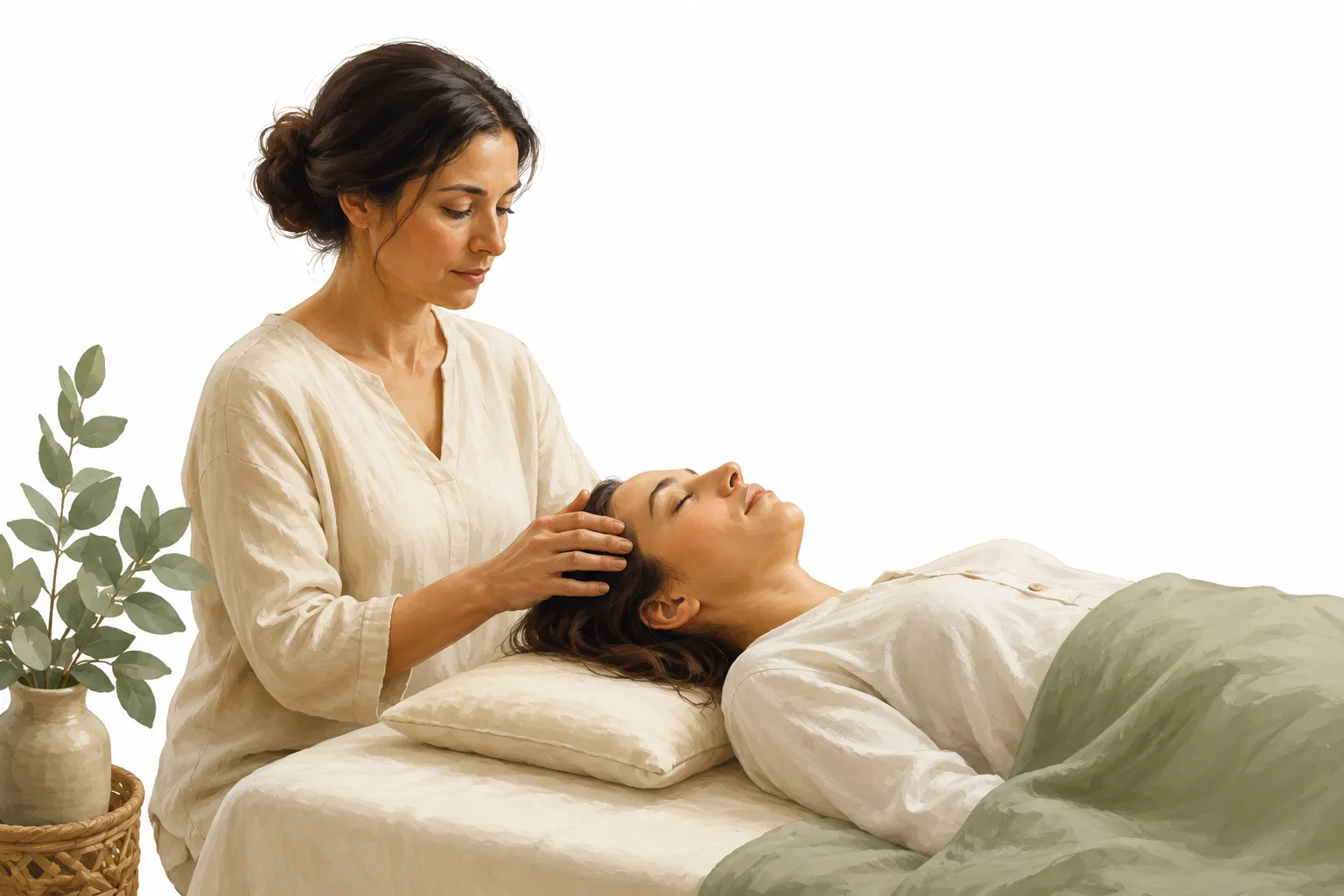
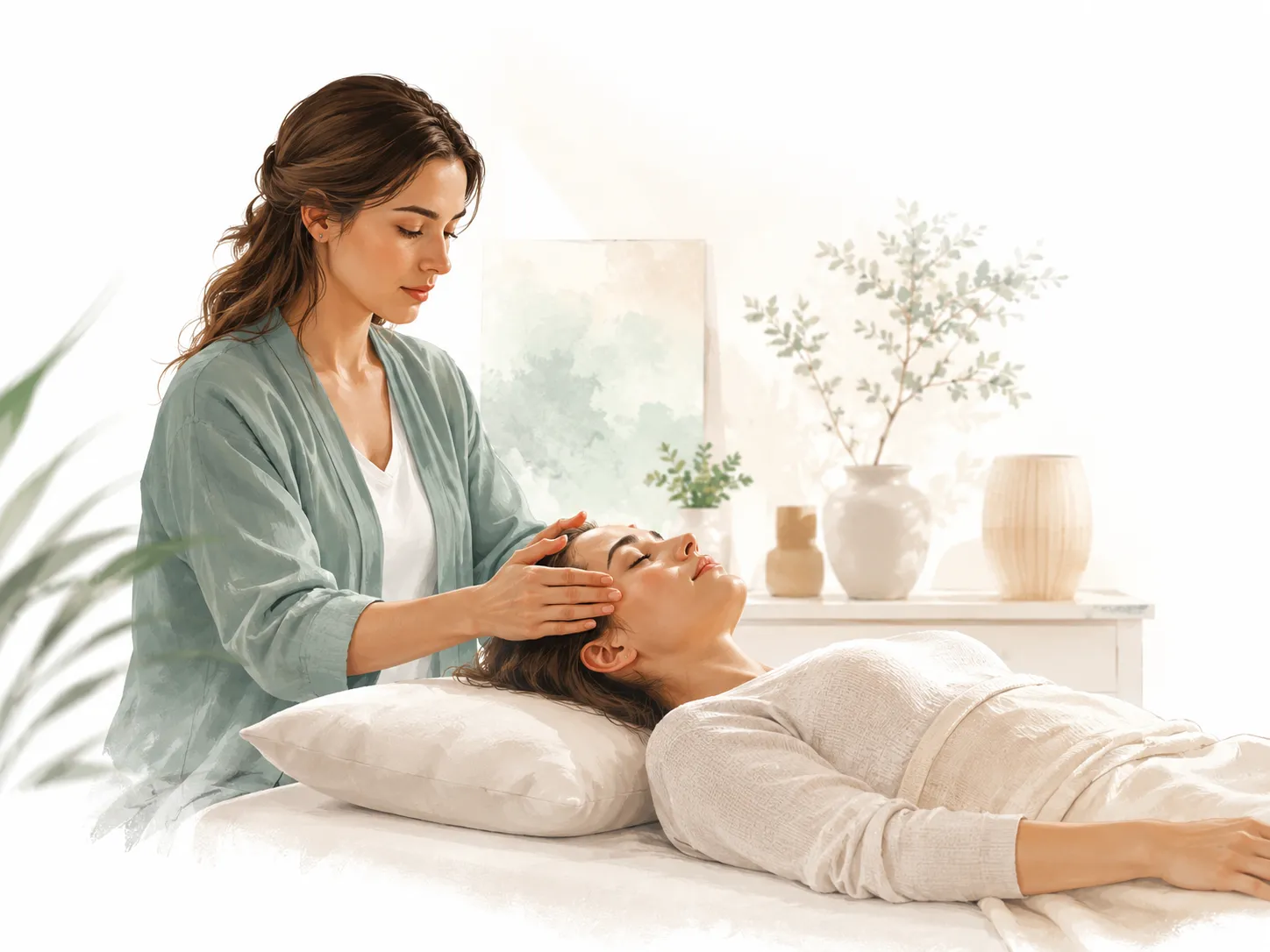
"Energy healing" is an umbrella term for practices that claim to work by influencing a subtle, unmeasured energy field in or around the body — Reiki, therapeutic touch, healing touch, and qigong-based healing all fall under it. Access Bars fits the same mold: practitioners describe touching designated head points as releasing "electromagnetic charge" tied to stored thoughts and emotions, a claim about an energetic process rather than a physical or chemical one.
That shared vocabulary is why review sites, directories, and skeptic organizations alike tend to place Access Bars in the same bucket as other energy-based modalities. The comparison is reasonable on its own terms — the underlying logic is similar even though the specific point map, terminology, and history are unique to Access Consciousness.
Where the comparison gets more nuanced is in evidence. Reiki, despite decades of research attention and a much larger body of published studies, still hasn't been shown to work for any specific health condition, according to the U.S. National Center for Complementary and Integrative Health (NCCIH). The agency notes that Reiki research has mostly been low quality with inconsistent results, and that there is no scientific evidence for the underlying energy field itself. Access Bars has received far less independent research attention than Reiki, so if anything, its evidence base is thinner still.
None of this means the touch itself is harmful — light touch is generally low risk regardless of the theory behind it. It does mean that calling something "energy healing" describes a tradition and a set of claims, not a confirmed scientific mechanism.
Skim first
Key takeaways
The shortest useful version of this page.
Access Bars is reasonably classified as a form of energy healing.
That classification reflects shared claims with practices like Reiki, not confirmed science.
No energy healing modality, Access Bars included, has demonstrated its specific energy field exists.
Access Bars has less independent research than more-studied energy practices.
The physical touch involved is generally low risk regardless of the theory behind it.
Access Bars alongside other energy healing practices
A side-by-side look at how Access Bars fits the broader energy healing category.
Access Bars
Releases stored thoughts via 32 head points
Light touch on the head
Very limited, mostly organization-affiliated
Not independently established
Reiki
Channels universal life energy
Light touch or near-body hovering
Larger body of studies, mostly low quality
"Hasn't been clearly shown to be effective for any health-related purpose" per NCCIH
Therapeutic touch
Rebalances a human energy field
Hands near the body, minimal contact
Studied and criticized, including a well-known 1998 test of practitioners' claims
Energy field detection not confirmed
Definitions
What "energy healing" actually claims
Energy healing practices share a specific structural claim: that a subtle, non-physical energy field exists, that it can become blocked, depleted, or disorganized, and that a trained person can influence it through touch or intention to improve health or wellbeing.
This is a testable claim in principle, and it has been tested. The most cited example is a 1998 study in which nursing student Emily Rosa found that trained therapeutic touch practitioners could not reliably detect her hand hovering above theirs, despite claiming to sense an energy field — a result widely cited in discussions of energy healing's evidentiary weaknesses.
Access Bars makes a structurally similar claim about an "electromagnetic charge" tied to thoughts and points on the head. As with other energy healing modalities, that specific energetic mechanism hasn't been independently confirmed using the same kind of controlled testing.
Evidence scan
What the evidence says about the energy claim
This looks specifically at whether the "energy" part of the classification holds up, not whether people report feeling relaxed.
Overall: not enough evidence
Unclear or mixed
Not clearly for or against
Participants report subjective relaxation after sessions.
Consistent with general effects of rest and attentive touch, regardless of the energy claim.
Leans against
Points that do not support the claim
An unmeasured energy field exists and can be influenced by touch to affect thoughts or health.
No scientific instrument has detected the specific energy field described by energy healing practices, and controlled tests of related claims (such as therapeutic touch) have not supported practitioners' ability to sense it.
Access Bars specifically has been shown to produce measurable, replicated effects.
Most available studies are small, organization-affiliated, or lack independent replication and rigorous controls.
Reality check
Common misunderstandings
- Myth
"Energy healing" is a scientific classification.
RealityIt's a category based on shared claims and traditions, not on confirmed physics or biology.
- Myth
Being classified as energy healing means Access Bars is identical to Reiki.
RealityThey share a structural claim, but use different point maps, terminology, and origin stories.
- Myth
If a practice has been researched at all, that research settles the question.
RealityQuantity of research doesn't equal quality — most energy healing studies, Access Bars included, have significant methodological limitations.
What to remember
Access Bars is commonly and reasonably classified as a type of energy healing.
That classification is based on shared claims, not on confirmed science.
The specific energy involved has not been detected or demonstrated in controlled tests.
Access Bars has less independent research behind it than more-studied energy practices like Reiki.
Physical risk from the light touch itself is generally low.
Verdict
Our verdict on the classification
insufficient-evidence
Access Bars accurately fits the "energy healing" category by its own claims, but that classification describes a tradition and a belief system, not a scientifically confirmed mechanism.
What we know
- Access Bars claims to work through an unmeasured energetic process.
- This structurally matches other recognized energy healing modalities.
- Light touch itself is generally low risk.
What we do not know
- Whether the specific energy or field described actually exists
- Whether touching the named points produces effects beyond general relaxation
Treat "energy healing" as an accurate label for what Access Bars claims, not as confirmation that the claim is scientifically true.
Quick answers
Frequently asked questions
Is Access Bars a type of energy healing?
Yes, it's typically classified alongside Reiki and therapeutic touch as an energy healing practice.
Does that mean it's scientifically validated?
No. The energy field it claims to work with hasn't been scientifically demonstrated, similar to other energy healing modalities.
How does it compare to Reiki specifically?
Both claim to work through an unmeasured energy, but Access Bars uses a different point system and has considerably less independent research behind it.
Is it safe as a form of energy healing?
The physical touch is generally gentle and low risk; caution mainly applies to overstated health claims.
Sources
Reiki. National Center for Complementary and Integrative Health (NCCIH). Accessed 2026-07-17
Government health agency assessment of Reiki and the broader energy-healing evidence base, used as the closest well-studied comparison.
Harriet Hall, MD. Access Consciousness: A New Version of Phrenology?. Science-Based Medicine. Accessed 2026-07-17
Independent professional critique addressing the energy claims specific to Access Bars.
Access Consciousness. Wikipedia. Accessed 2026-07-17
Background on how the organization and independent sources classify the practice.