Autism and Access Bars
What's the connection between Access Bars and autism?
Autism spectrum disorder (ASD) is a neurodevelopmental condition characterized by differences in communication, social interaction, and behavior. Each autistic person is unique, with their own strengths, challenges, and support needs.
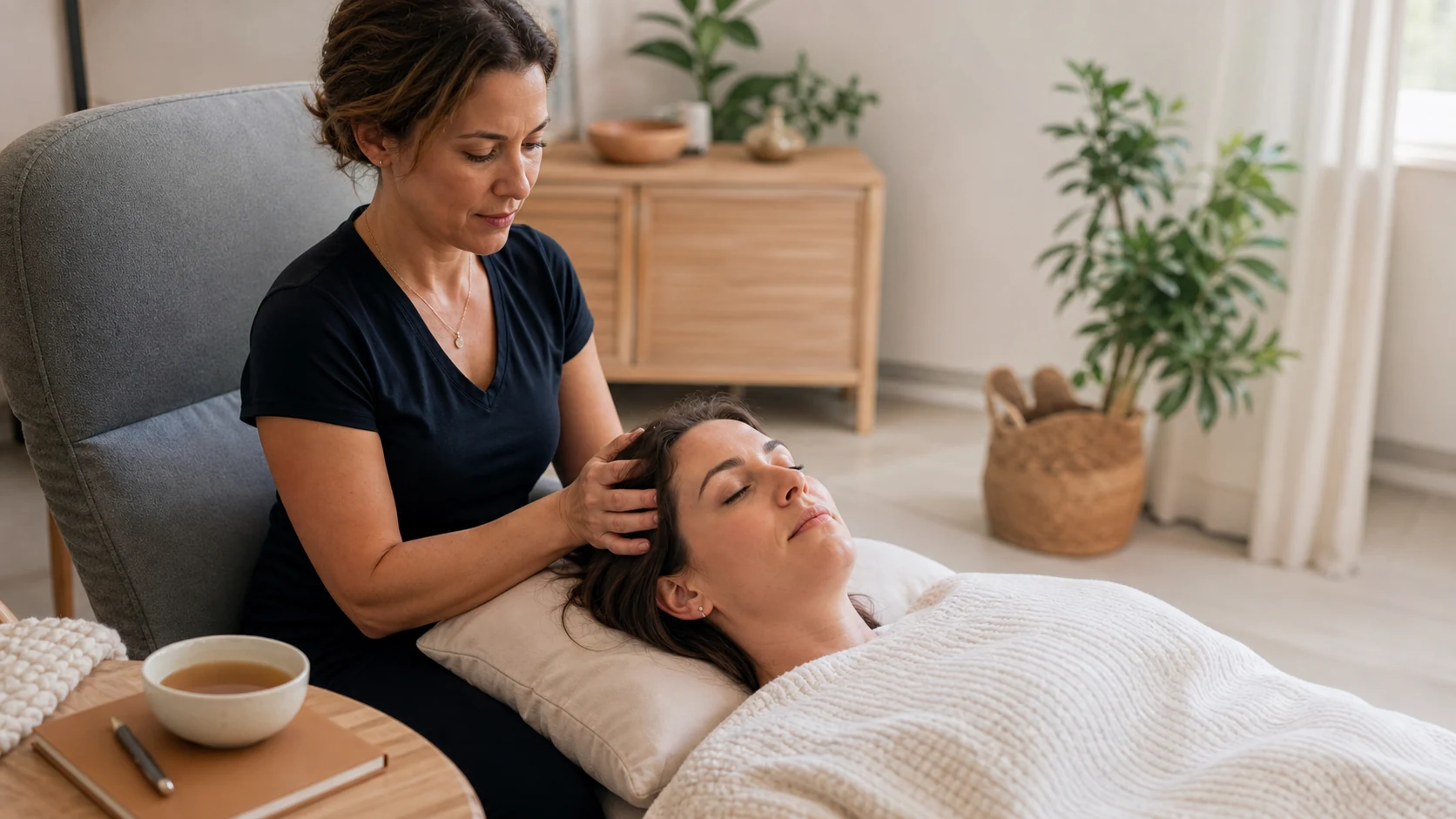
Access Bars has been suggested by some practitioners as a potentially helpful tool for autistic children and adults. The reasoning is that the deep relaxation produced by Access Bars may help reduce anxiety, improve sleep, and support emotional regulation [citation:13]. Some practitioners also claim it may help with focus and communication.
These claims are based on the Access Consciousness framework, which proposes that the Bars points hold stored thoughts and patterns that can be released through gentle touch. This explanation is not a medically recognized mechanism for autism or any other condition.
Families who have tried Access Bars for their children often report subjective improvements in mood, behavior, and sleep. These reports are meaningful to those families but do not constitute scientific evidence that Access Bars treats autism.
Access Bars for autism: claimed and actual effects
A diagram showing claimed effects versus what is actually supported by evidence.
Claimed effects
Reduced autism symptoms, improved communication, better focus.
Actual likely effect
Relaxation, stress reduction, improved mood.
Evidence status
Claimed effects are not scientifically verified.
Skim first
Key takeaways
The shortest useful version of this page.
Access Bars is not a treatment for autism.
Some families report relaxation benefits [citation:13].
Anecdotal reports are not scientific evidence.
Evidence-based therapies must remain the priority.
Access Bars may be tried as optional relaxation.
How Access Bars came to be used for autism
- Access Bars developed as a general wellness practice.It wasn't originally designed for autism or special needs.
- Some practitioners began offering it to families with autistic children.Anecdotal reports led to wider promotion in special needs communities.
- Access Bars is sometimes offered as a complementary tool for autism.Families seeking gentle interventions may consider it.
Autism basics
What is autism spectrum disorder?
Autism spectrum disorder (ASD) is a neurodevelopmental condition that affects how a person perceives and interacts with the world. It is characterized by differences in social communication, restricted interests, repetitive behaviors, and sensory sensitivities.
Autism is a spectrum, meaning it presents differently in each person. Some autistic people have significant support needs, while others live independently. Many autistic people have strengths such as exceptional focus, creativity, or attention to detail.
The cause of autism is not fully understood, but it is believed to involve a combination of genetic and environmental factors. There is no "cure" for autism, and many autistic advocates view autism as a natural variation in human neurology rather than a disorder to be treated.
Support for autistic people typically includes therapies such as speech therapy, occupational therapy, behavioral support, and educational accommodations. Medications may be used for co-occurring conditions like anxiety or ADHD.
The Access Bars explanation
How does Access Bars claim to help with autism?
Within the Access Consciousness framework, autism and other neurodevelopmental conditions are sometimes described as being related to stored thoughts, patterns, or energetic blockages. Practitioners claim that touching the 32 Bars points can release these blockages, potentially leading to improvements in behavior, communication, and emotional regulation [citation:13].
Some practitioners also suggest that Access Bars can reduce sensory overload and help autistic people feel more calm and grounded. This is described as helping "quiet the noise" of the mind.
These explanations are based on Access Consciousness philosophy, not on established neuroscience or medical understanding of autism. There is no scientific evidence that thoughts or patterns are stored in specific head points or that touching them affects autism.
A more straightforward explanation is that Access Bars provides deep relaxation, which can help anyone feel calmer and more regulated. For autistic people who experience high levels of stress and anxiety, relaxation may be beneficial.
What do practitioners and families say?
- Practitioner
Some Access Bars practitioners offer the practice specifically for children with autism and special needs. They describe it as a gentle, non-invasive way to help children relax, reduce anxiety, and improve behavior [citation:13].
- Participant
Families report a range of experiences. Some say their children seem calmer, sleep better, or have fewer outbursts after sessions [citation:13]. Others see no clear effect. Some children may not tolerate the touch aspect of the session.
- Balanced view
These reports are genuine but anecdotal. Relaxation and changes in behavior can occur for many reasons. It is not possible to conclude from these reports that Access Bars treats autism.
- Evidence view
Independent evidence for Access Bars as a support for autism is essentially nonexistent. No rigorous studies have been conducted.
Access Bars should not be used as a replacement for evidence-based therapies, educational support, or medical care for autistic individuals.
Evidence scan
What does the evidence say?
The evidence for Access Bars in autism is limited to anecdotal reports.
Overall: not enough evidence
Leans in favor
Points that support the claim
Access Bars is a safe relaxation tool for autistic individuals.
The physical procedure is gentle and low-risk. However, some autistic individuals may be sensitive to touch. The session should be adapted to the individual's comfort.
Unclear or mixed
Not clearly for or against
Access Bars reduces anxiety and improves sleep in autistic children.
Some families report these benefits anecdotally [citation:13]. There is no independent research to confirm or quantify these effects.
Leans against
Points that do not support the claim
Access Bars treats autism or reduces its core symptoms.
There is no scientific evidence to support this claim. Autism is a neurodevelopmental condition that is not treated by gentle touch.
Reality check
Common misunderstandings about Access Bars and autism
- Myth
Access Bars can cure autism.
RealityAutism is not a disease to be cured. Access Bars does not treat autism.
- Myth
Access Bars works by "releasing" stored patterns in autistic brains.
RealityThis is a belief-based explanation, not a scientific fact.
- Myth
If a child calms down, it proves the treatment works.
RealityRelaxation can be genuine without confirming a specific mechanism. Many things can help a child calm down.
- Myth
Access Bars is a proven therapy for special needs.
RealityIt is not a proven therapy. There is no strong evidence base.
Safety
Is Access Bars safe for autistic individuals?
The physical procedure is gentle, but there are important considerations for autistic people.
Generally low-risk for
- Autistic individuals who are comfortable with gentle touch
- Those who can lie still or sit for a session
- Those who understand what to expect
Use caution if
- The person is highly sensitive to touch
- The person has difficulty with new experiences or unfamiliar settings
- The person is unable to communicate discomfort
- A practitioner promises specific improvements
Seek professional help if
- There are concerns about the person's behavior, development, or mental health
- Evidence-based therapies are not being accessed
Access Bars is not a treatment for autism. It should never replace evidence-based therapies or educational support.
What to remember about Access Bars and autism
Access Bars is not a treatment for autism.
Some families report relaxation and calmer behavior [citation:13].
These reports are anecdotal, not scientific evidence.
The practice is not based on established autism research.
Evidence-based therapies should remain the priority.
Access Bars may be tried as optional relaxation support.
Verdict
Our verdict on Access Bars for autism
insufficient-evidence
Access Bars is not an evidence-based treatment for autism. It may offer relaxation for some individuals, but it should not replace proven therapies and support.
What we know
- Access Bars is a gentle touch practice.
- Some families report relaxation benefits [citation:13].
- It is generally low-risk as optional relaxation.
What we do not know
- Whether Access Bars produces any specific benefits for autism.
- Whether it affects anxiety, sleep, or behavior in a measurable way.
If you are a parent of an autistic child, focus on evidence-based therapies and support. Access Bars could be tried as a relaxation activity if your child enjoys it, but it is not a treatment.
Bottom line
Relaxation is not a treatment
Autism is a complex neurodevelopmental condition that requires appropriate support. Access Bars may offer a moment of calm, but it does not treat autism. Keep your focus on proven interventions and your child's individual needs.
Quick answers
Frequently asked questions
Can Access Bars cure autism?
No. Autism is not a disease to be cured. Access Bars does not treat autism.
Is Access Bars a proven therapy for special needs?
No. There is no strong evidence base for Access Bars in special needs.
What if my child enjoys Access Bars?
If your child enjoys it and finds it relaxing, it can be used as a relaxation activity, not a treatment.
Should I tell my child's doctor about Access Bars?
Yes, it is always good to inform healthcare providers about any complementary practices.
Sources
Access Consciousness. Access Consciousness Official Website - About Access Bars. Access Consciousness, REPLACE_IF_AVAILABLE. Accessed 2026-07-17
Use to establish official claims about Access Bars.
REPLACE WITH AUTHOR IF AVAILABLE. REPLACE WITH VERIFIED AUTISM RESEARCH OR GUIDANCE. REPLACE WITH PUBLISHER, REPLACE_IF_AVAILABLE. Accessed 2026-07-17
Use for evidence-based information on autism and special needs support.