The practical method
How to perform an Access Bars session
Running an Access Bars session is a learned skill, but the physical technique is straightforward. You'll need a quiet space, a comfortable surface for the recipient to lie or sit on, and a clear understanding of the 32 points.
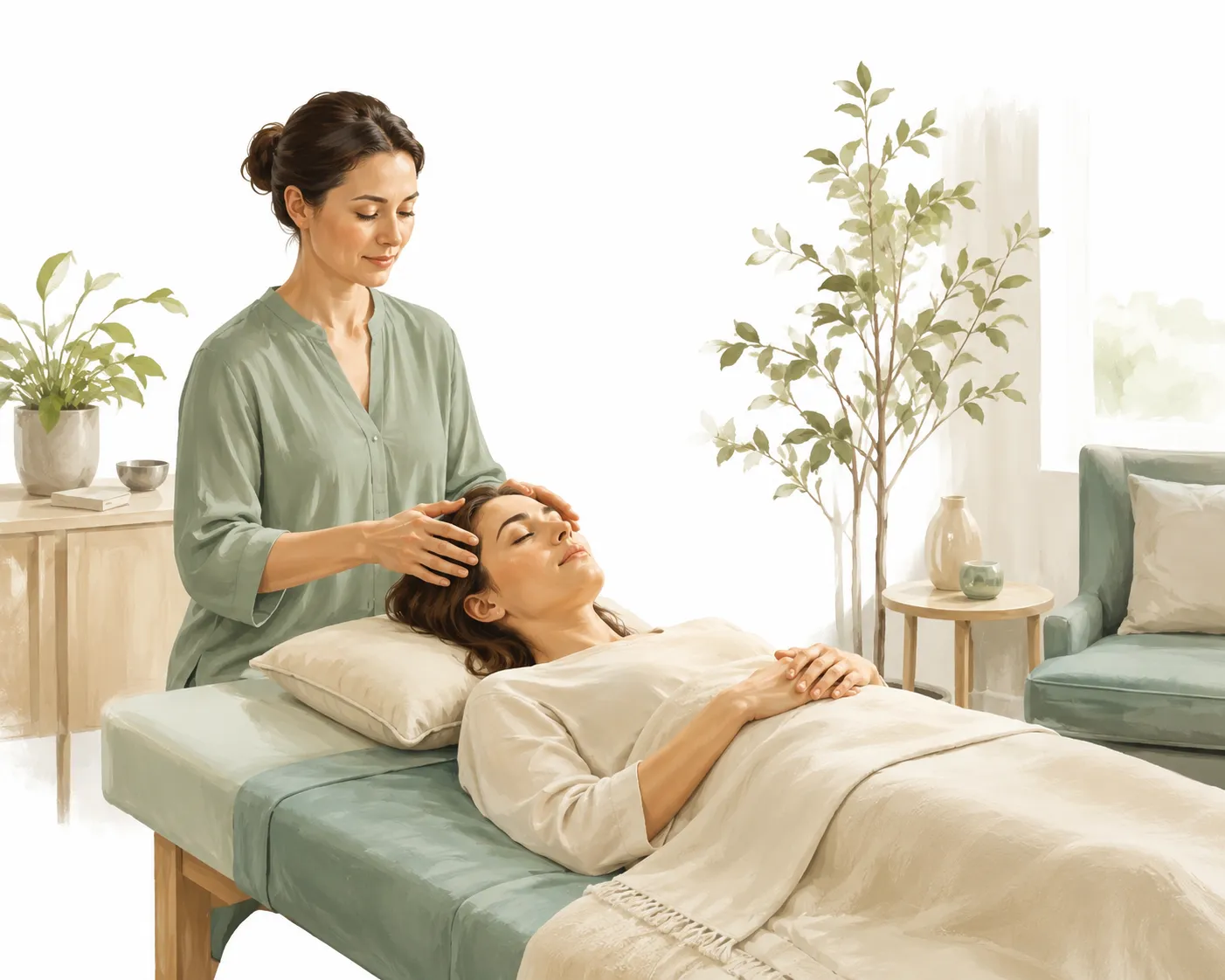
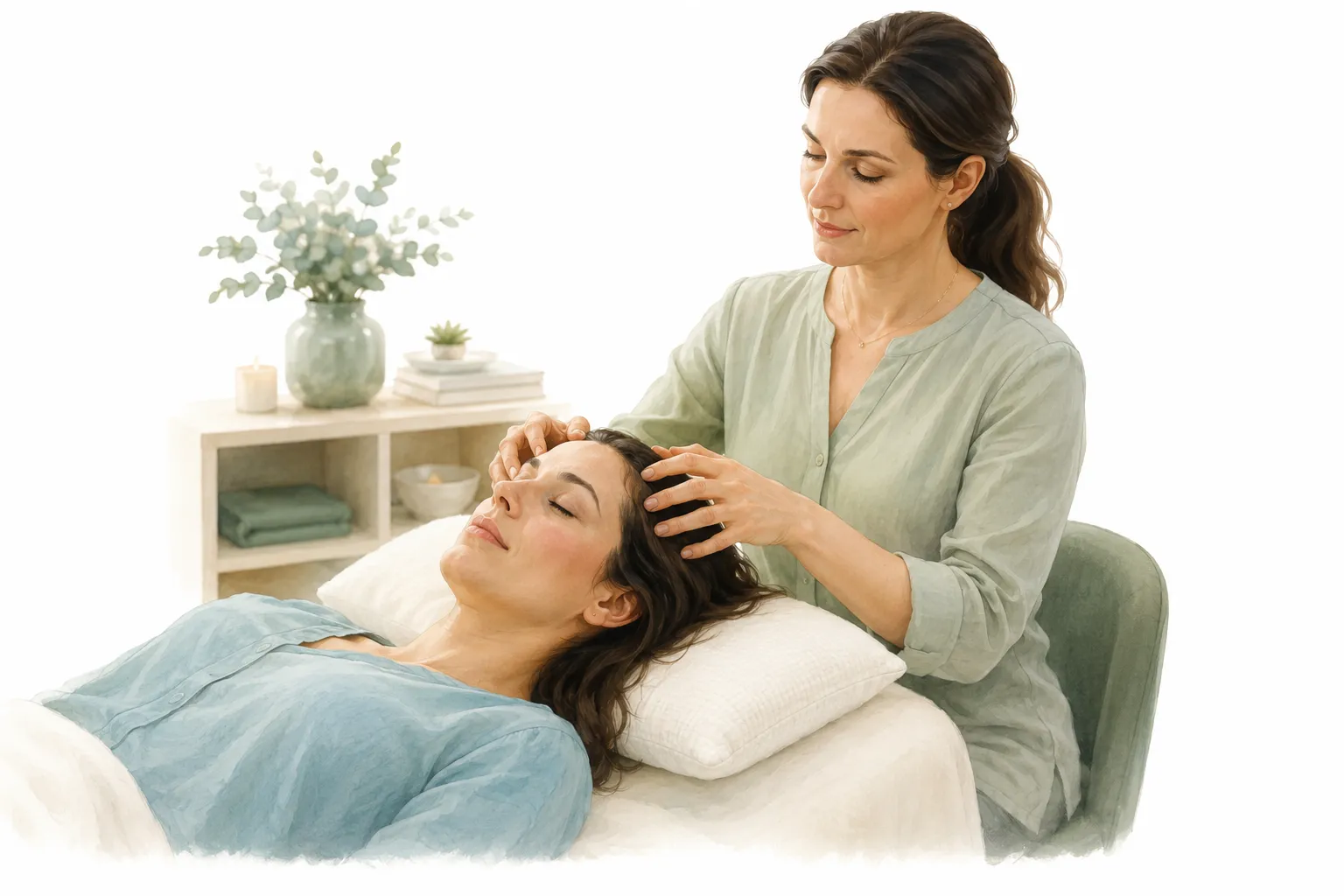
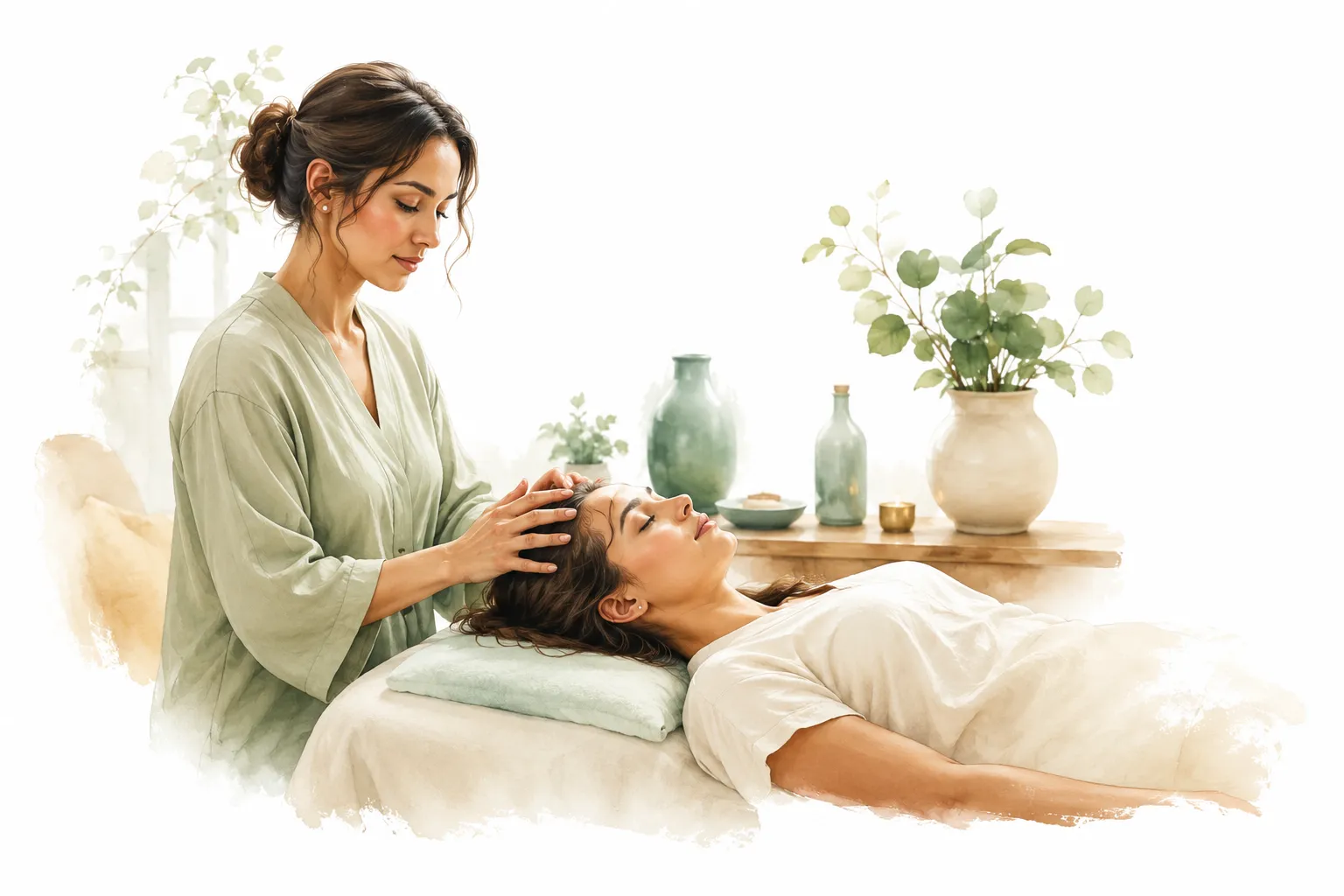
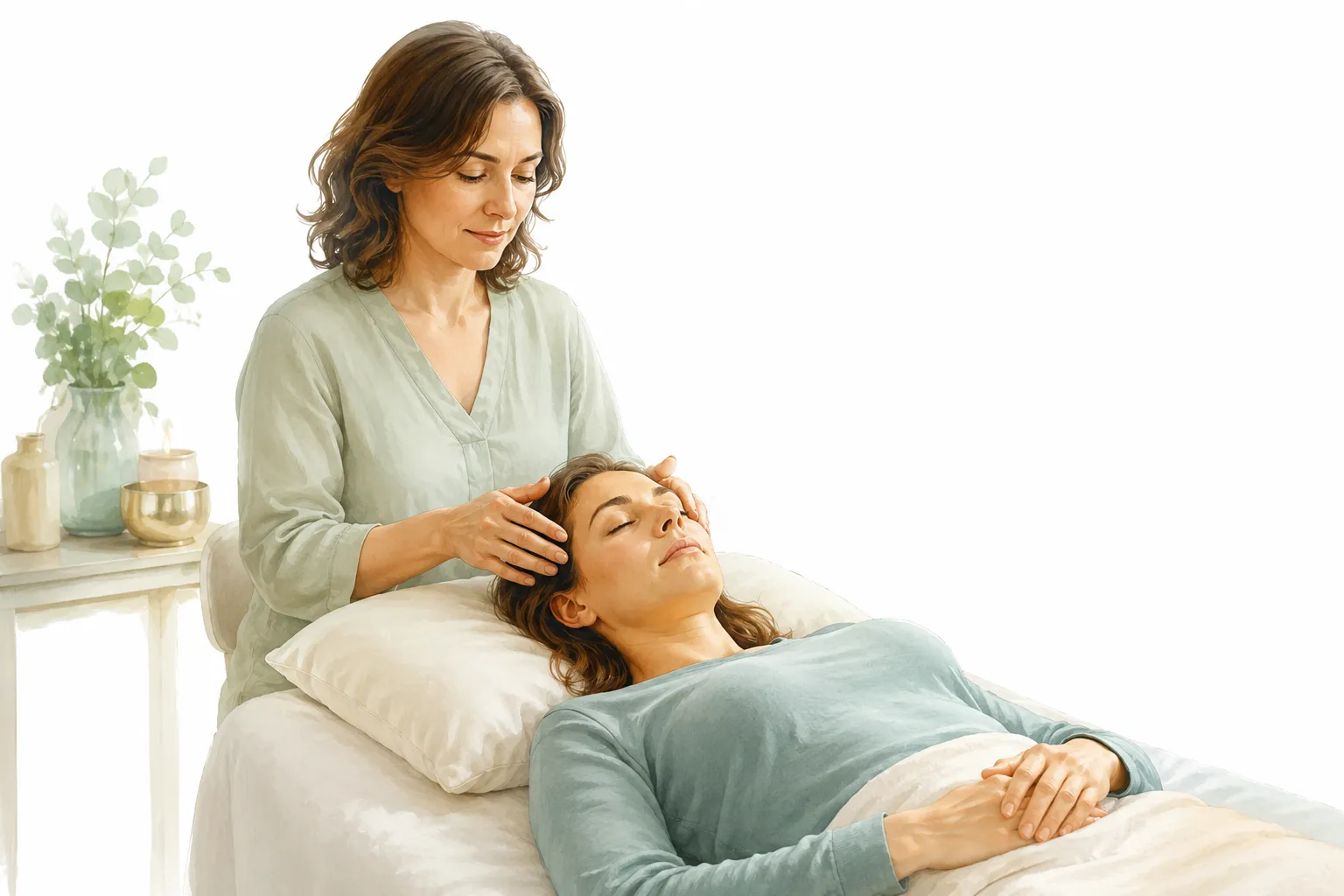
The practitioner's role is to make gentle, light contact with each point on the recipient's head, typically in a systematic sequence. The touch is very light, more like resting fingertips than pressing. The recipient remains fully clothed throughout [citation:3].
The Access Consciousness system teaches that the points correspond to different aspects of life, such as healing, control, creativity, awareness, power, aging, sexuality, and money [citation:10][citation:12]. Practitioners claim that touching these points helps release accumulated thoughts, emotions, and limiting beliefs stored in these "bars."
This explanation comes from within the Access Consciousness framework. It is not a scientifically established mechanism. The physical procedure itself (gentle touch on the head) is what you'll actually do. The claimed effects are what you and the recipient may or may not experience.
The guidance that follows describes the standard Access Bars method as taught in official training.
Skim first
Key takeaways
The shortest useful version of this page.
Access Bars involves light, gentle touch on 32 points of the head [citation:3].
The recipient remains fully clothed and is asked not to cross their hands [citation:3].
Sessions typically last 60 to 90 minutes in a quiet environment [citation:3].
The technique is simple and low-risk.
The claimed "release" mechanism is not scientifically established.
Offer the session as complementary wellness, not as treatment or cure.
Keep expectations realistic, relaxation is a reasonable outcome; specific therapeutic effects are not proven.
Step-by-step guide to running an Access Bars session
This is the typical sequence for an Access Bars session, based on practitioner descriptions and training materials [citation:3].
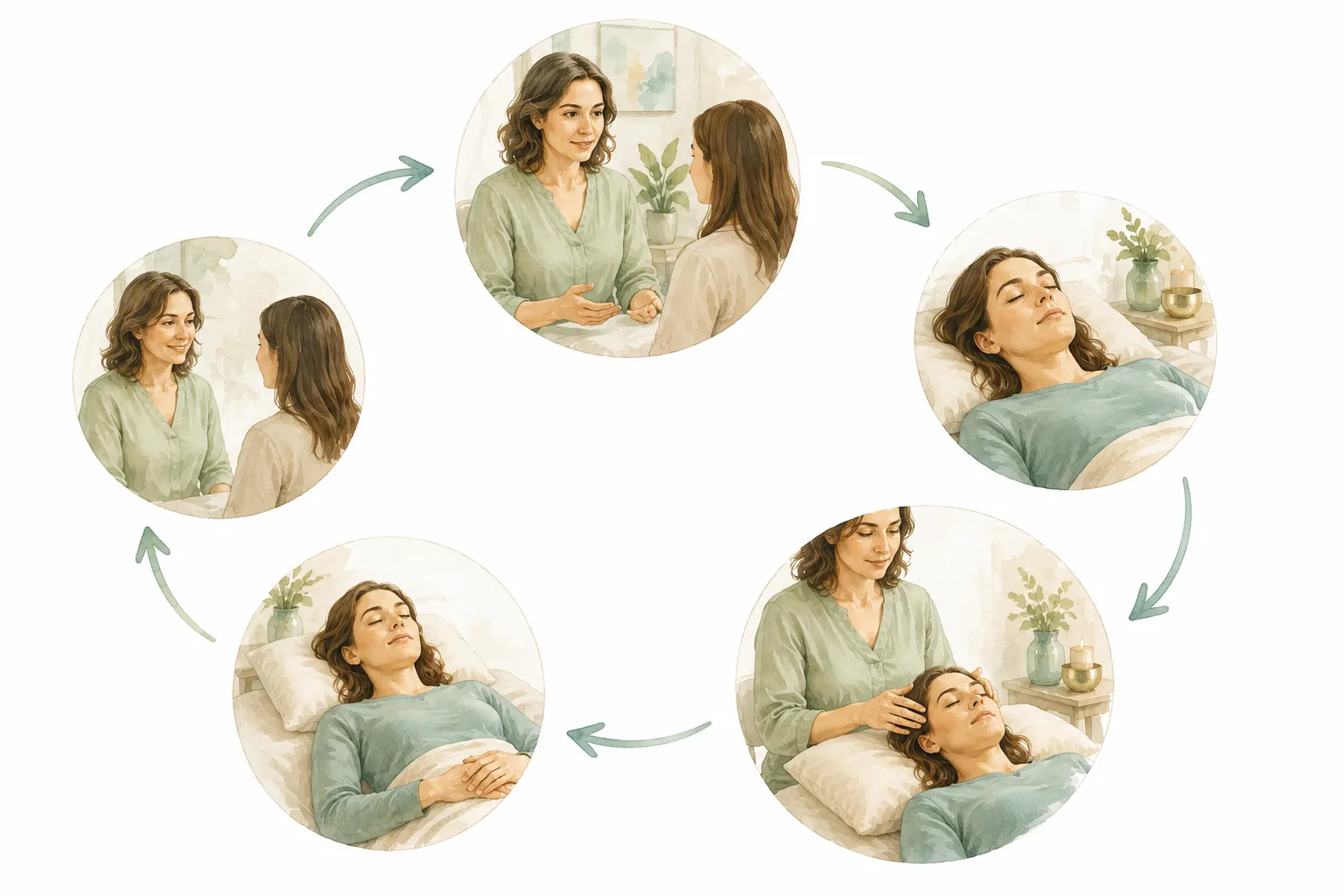
1. Set up the space
Choose a quiet, comfortable room. The recipient will need to lie down on a treatment table, massage table, or comfortable surface. A pillow or blanket can be provided for comfort. Ensure the room is warm enough.
A few minutes2. Brief the recipient
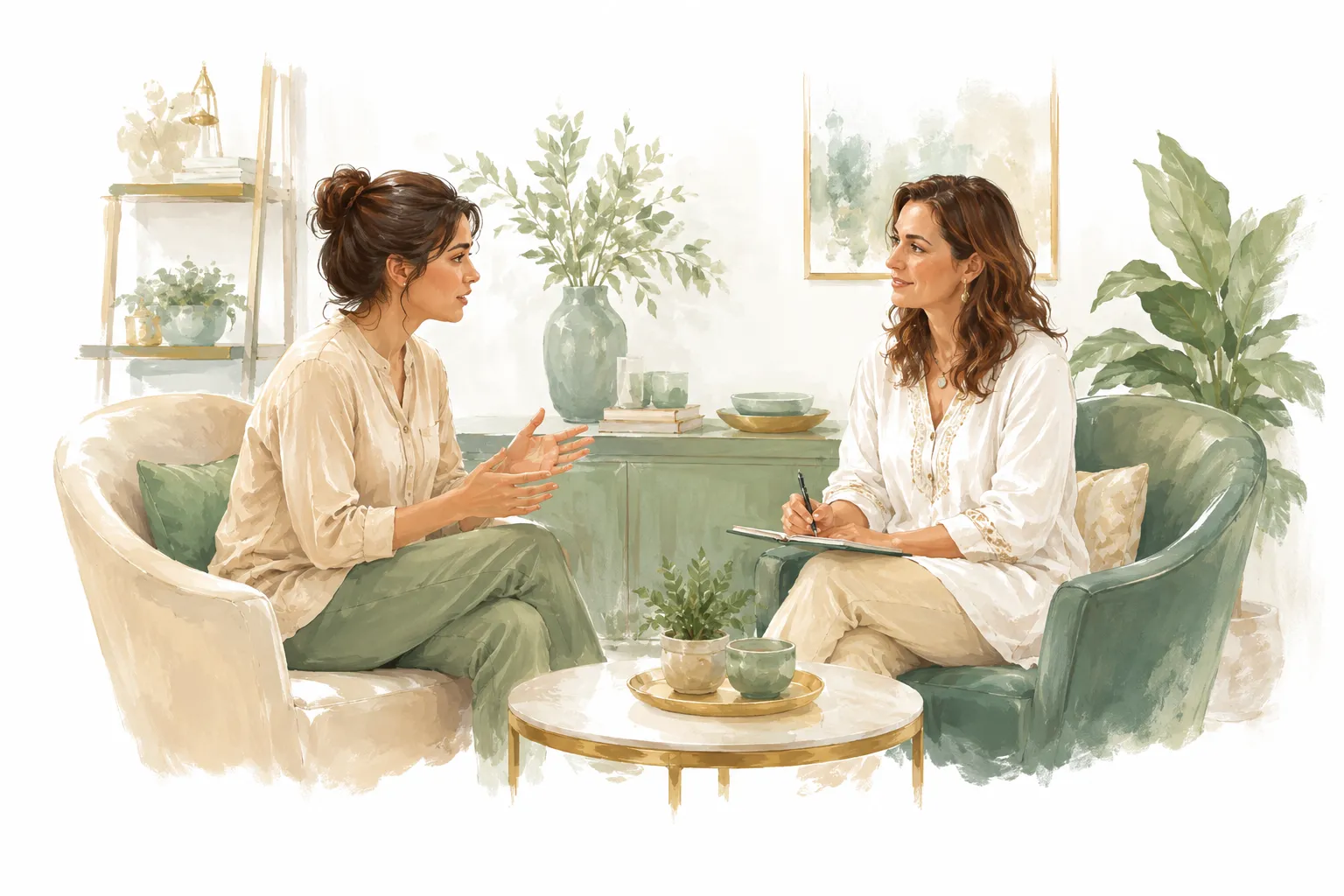
Ask the recipient what brought them to the session. Explain what will happen: light touch on the head points, the quiet environment, and ask them to refrain from crossing their hands during the session [citation:3]. Discuss any touch preferences or concerns.
5-10 minutes3. Position the recipient
Have the recipient lie down comfortably on their back, fully clothed. They should be as relaxed as possible. Some practitioners may ask them to close their eyes.
A few minutes4. Begin touching the points
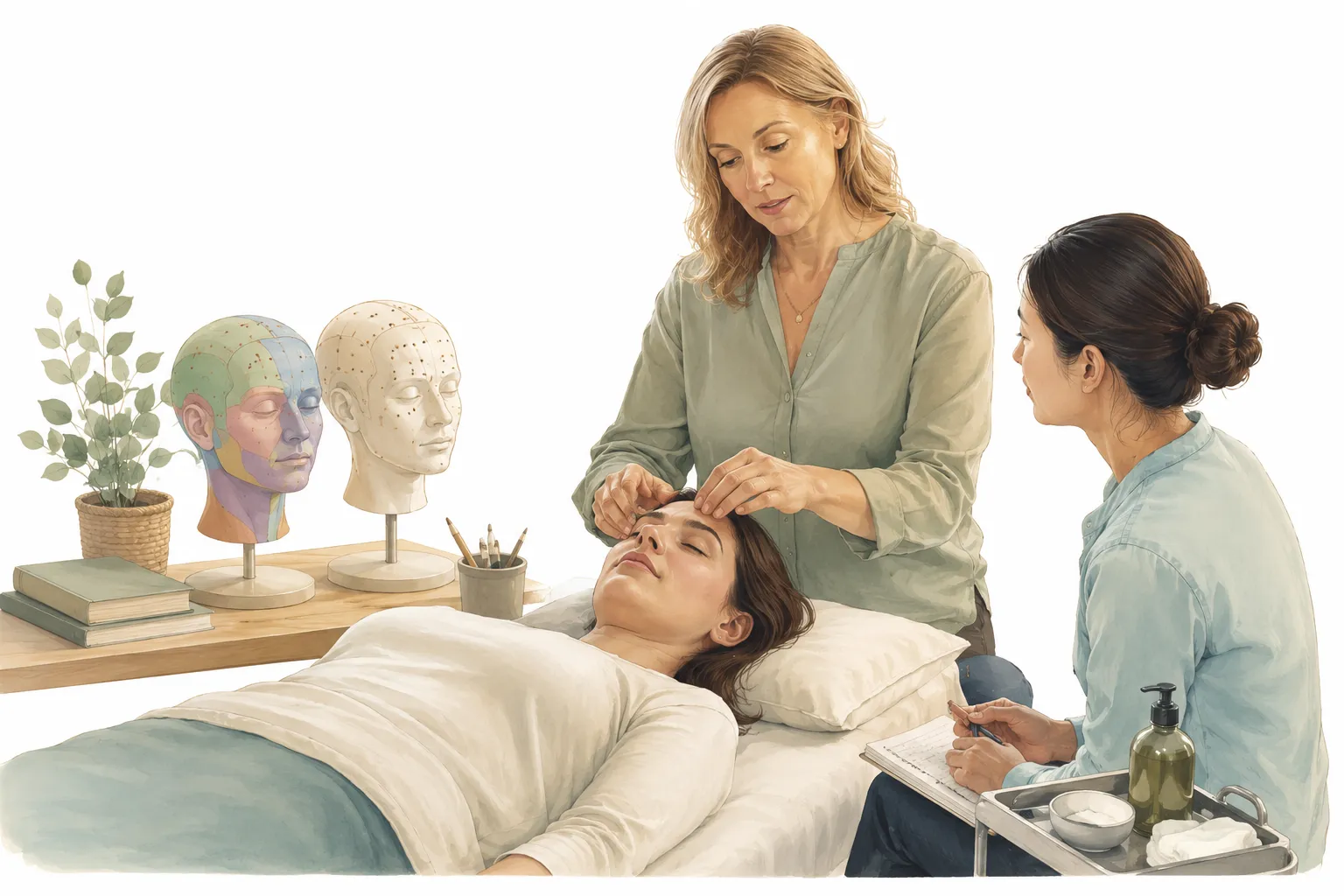
Starting near the top or front of the head, the practitioner lightly touches the first set of points. Hold each point with gentle fingertips for a few moments before moving to the next. A full session moves through all 32 points in sequence, often touching paired points [citation:3][citation:9].
60-90 minutes5. Maintain a quiet environment
According to Access Bars practice, no music should be playing, as this is believed to interfere with the brain activity occurring during the session [citation:3]. The practitioner may speak with the recipient or remain silent.
Throughout the session6. Complete the session
After the practitioner has covered all 32 points, they complete the session and allow the recipient to rest for a moment before slowly returning to full awareness. Ask how the recipient feels.
5-10 minutes7. Offer aftercare guidance
Encourage the recipient to drink water, rest if they feel tired, and observe any changes over the next few days.
A few minutes
The 32 points and their claimed meanings
Access Consciousness teaches a map of 32 points on the head, each associated with a different life theme. The exact sequence and point locations are taught in official training.
The names and meanings belong to the Access Bars system. There is no established scientific evidence that specific life themes are stored at particular head locations.
1. Healing
Top of the head (approximate)
Physical, emotional, and mental healing
Touched during a full Access Bars session as part of the sequence
No independent evidence supports the claimed association.2. Control
Side of the head (approximate)
Control-related thoughts and patterns
One of the points in the practitioner map
The claimed meaning is part of the system's philosophy.3. Creativity
Temple area (approximate)
Creativity and creative limitations
A theme practitioners may refer to
No evidence links this point specifically to creativity.4. Awareness
Front of the head (approximate)
Self-awareness and consciousness
Another theme in the Access Bars framework
The claimed effect has not been scientifically validated.5. Money
Top-sides of the head (approximate)
Financial thoughts and attitudes
One of the life themes mapped in Access Bars teaching
No established evidence links financial beliefs to this location.6. Power
Temple area (approximate)
Personal power and influence
A named thematic area in the Access Bars system
The claimed mechanism remains unproven.7. Aging
Around the crown (approximate)
Physical aging and attitudes toward it
A theme in the Access Bars framework
No established evidence supports this claim.8. Sexuality
Base of the head (approximate)
Sexual energy and expression
A named theme in the practitioner map
The claimed association has not been scientifically established.
What is the practitioner doing, and why?
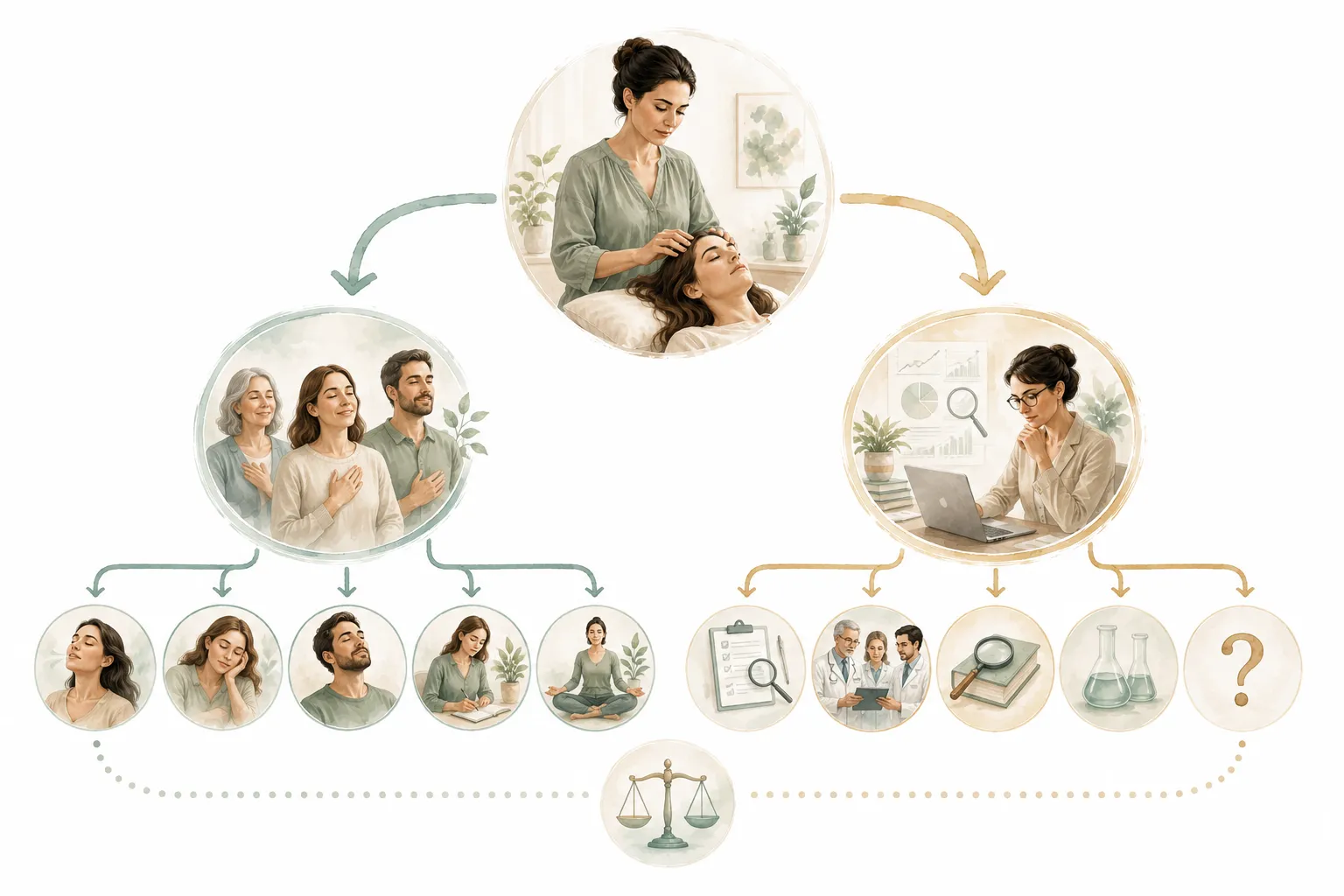
There is the practical method (what you do) and the claimed mechanism (what it's supposed to achieve). These are different things.
Physical method: light touch
The practitioner uses light fingertips to make contact with the 32 points. The touch is gentle and held for a few moments on each point. The practitioner moves in a systematic sequence, often touching paired points [citation:3][citation:9].
Like lightly pressing a series of buttons on a control panel, except there's no physical connection to the claimed effects.Claimed mechanism: releasing stored energy
Access Consciousness teaches that the points store the "electromagnetic charge" of thoughts, emotions, beliefs, and decisions accumulated over a lifetime. Touching these points is said to release this charge, clearing blockages and allowing the recipient to feel more relaxed and mentally clear [citation:9][citation:10].
Sometimes compared to running a "defragmentation program" on a computer, clearing old files so the system runs more efficiently [citation:9].Scientific perspective: not established
There is no established scientific evidence that specific thoughts or beliefs are stored in head points, or that touching them releases such material through a verified biological process. The proposed mechanism is not recognized by mainstream neuroscience or medicine.
What actually happens: rest and attention
What is undisputed is that the recipient lies in a quiet place, receives gentle touch, and often becomes deeply relaxed. This state of rest, plus the expectation of benefit, can itself produce feelings of calmness and well-being.
What practitioners say about running Access Bars sessions
- Practitioner
Practitioners often describe the session as a deeply relaxing experience for the recipient, with benefits that can include reduced stress, better sleep, and clearer thinking. They see themselves as facilitating a process of release and relaxation [citation:9].
- Participant
Recipients commonly report feeling deeply relaxed, falling asleep during the session, or experiencing tingling sensations in the body. Others feel little change initially [citation:3].
- Balanced view
Practitioners often speak positively about the method because they see results in their clients. People who feel calmer or more relaxed after sessions. But it's important to distinguish between subjective reports and proven mechanisms.
Practitioners should avoid promising specific outcomes. Claims such as "this will cure X" are not supported by evidence. The session should be offered as a complementary wellness practice, not a treatment or cure.
Reality check
Common misunderstandings about the technique
- Myth
Access Bars is a head massage.
RealityThe technique uses very light touch, not massage pressure or kneading. It's less like massage and more like resting fingertips on the head [citation:3].
- Myth
You need to press hard to make it work.
RealityThe touch is described as light and gentle. Pressure is not required or recommended [citation:3].
- Myth
Any head touching will do.
RealityAccess Bars teaches specific points and a specific sequence. The technique is structured, not arbitrary.
- Myth
You can run the Bars on yourself.
RealitySome practitioners suggest that receiving from another person is more effective, as you can fully relax and "let go" without having to concentrate on the technique yourself [citation:3].
- Myth
Feeling relaxed proves the point system works.
RealityRelaxation can be a genuine experience while the proposed mechanism remains unproven. Rest, quiet, and gentle touch are known to help people relax regardless of any specific point system.
Safety
Safety considerations for practitioners
The physical procedure is gentle and low-risk, but practitioners have responsibilities to their clients.
Generally low-risk for
- Adults who consent to the session and understand what it involves
- People comfortable with gentle touch around the head
- People who are not expecting it to replace medical treatment
Use caution if
- The recipient has a recent head injury, surgery, or severe head pain
- The recipient is uncomfortable with head touch
- The recipient has concerns about the practice
Seek professional help if
- The recipient reports persistent or worsening physical symptoms
- The recipient is experiencing a mental-health crisis
- The recipient needs a diagnosis or evidence-based treatment
Access Bars is a complementary wellness practice, not medical treatment. It should not be used as a substitute for professional care.
Key points for practitioners
The physical technique is gentle touch on 32 points of the head [citation:3].
No pressure is required: the touch is light and held for a few moments.
The recipient remains fully clothed.
The environment should be quiet and comfortable [citation:3].
The recipient is asked not to cross their hands [citation:3].
Sessions typically last 60 to 90 minutes [citation:3].
The claimed "release" mechanism is not scientifically established.
Offer the session as complementary wellness, not treatment or cure.
Verdict
Our practical verdict on the Access Bars technique
partially-supported
Access Bars is a straightforward, gentle technique that can provide a relaxing experience for recipients. The physical method (light touch on the head in a quiet environment) is simple and low-risk. The claimed mechanism (releasing stored thoughts and emotions from specific head points) is not scientifically established.
What we know
- The technique uses gentle fingertip touch on 32 points of the head [citation:3].
- Sessions typically last 60 to 90 minutes [citation:3].
- Recipients are fully clothed and asked not to cross their hands [citation:3].
- The environment is quiet, usually without music [citation:3].
- Many recipients report deep relaxation [citation:3].
What we do not know
- Whether the 32 points have a distinct effect from other forms of rest and touch.
- Whether the proposed "release" mechanism is real.
- Whether the technique produces specific benefits beyond relaxation.
If you've learned the Access Bars method, you can offer a gentle, relaxing session to recipients who understand its limitations. Keep expectations realistic, offer relaxation, not cures. And always encourage recipients to continue any necessary medical or psychological care.
Bottom line
A gentle technique with unproven claims
Access Bars is a gentle practice you can learn in a day and offer to others. The physical method is simple, safe, and many people find it deeply relaxing. But the claims about what it does (releasing stored thoughts from specific head points) remain unproven. The most honest approach is to offer the session as a quiet, restful experience, let the recipient's own body and mind respond, and avoid making promises that the evidence cannot support.
Quick answers
Frequently asked questions
What is the correct technique for Access Bars?
Light fingertip contact on 32 points of the head, held for a few moments on each point, moving in a systematic sequence. The recipient lies down fully clothed in a quiet room [citation:3].
How long should an Access Bars session last?
Typically 60 to 90 minutes [citation:3].
Should music be playing during the session?
In standard Access Bars practice, no music is played, as practitioners believe it can interfere with the process [citation:3].
What should the recipient do during the session?
Lie still, relax, close their eyes if they wish, and not cross their hands. They may fall asleep or stay awake and alert [citation:3].
Sources
SoulAdvisor. Access Bars therapy description. SoulAdvisor. Accessed 2026-07-17
Detailed description of the Access Bars session: 32 points, light touch, 60-90 minutes, quiet environment, no music, hands not crossed.
Sandy Page. Access Bars Practitioner description. Natural Therapy Pages. Accessed 2026-07-17
Description of the 32 points and the claimed mechanism of releasing stored thoughts and emotions.
Access Consciousness Bars information. Lakeside Therapies. Accessed 2026-07-17
Description of the Access Bars method, including the "defragmentation" analogy and reported benefits.
Access Bars . Pain & Health Solutions. Pain & Health Solutions, 2017-09-23. Accessed 2026-07-17
Description of the 32 "bars of energy" and the claimed effects on various life areas.