The basic idea
A quiet head-touch session with a much bigger story attached
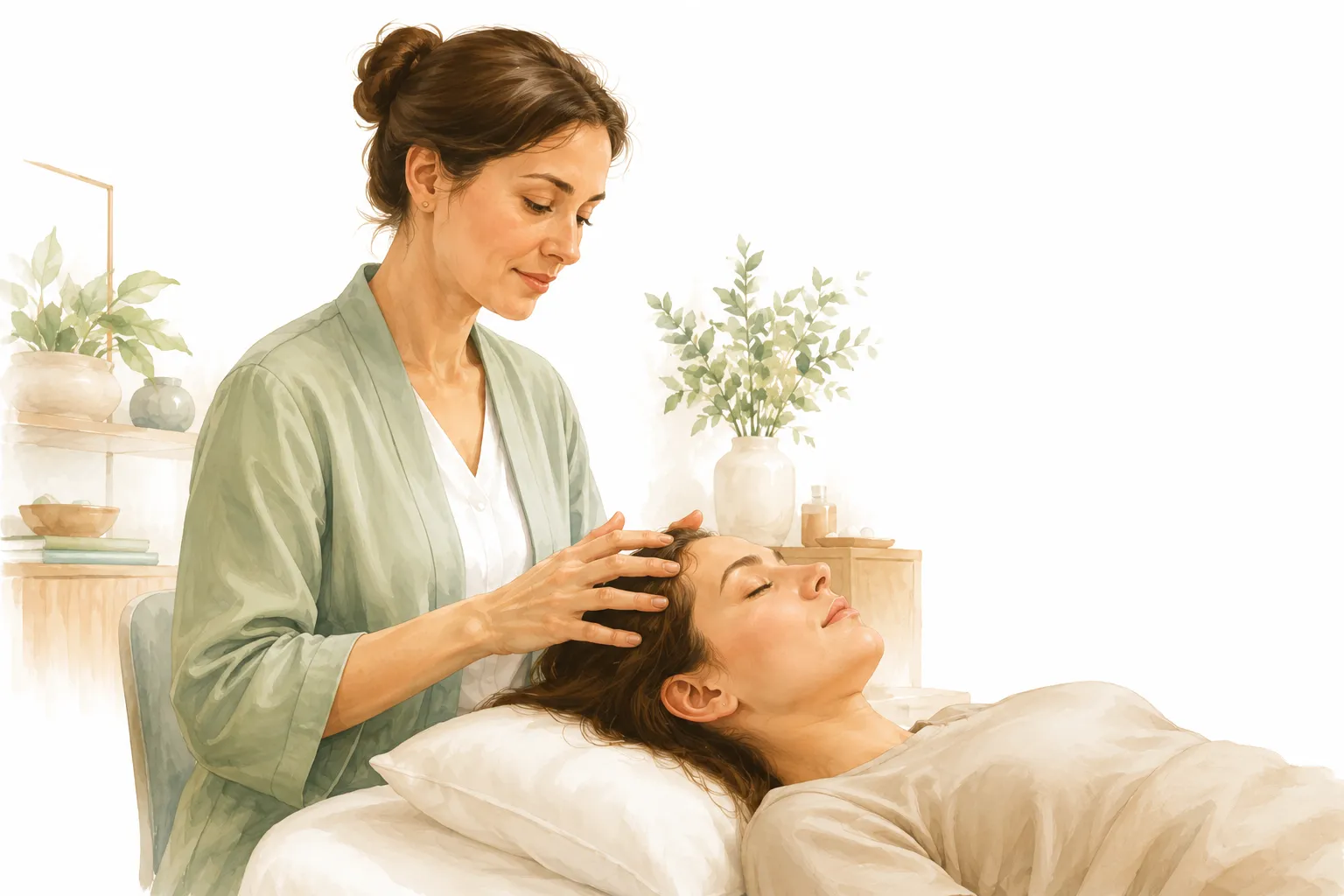
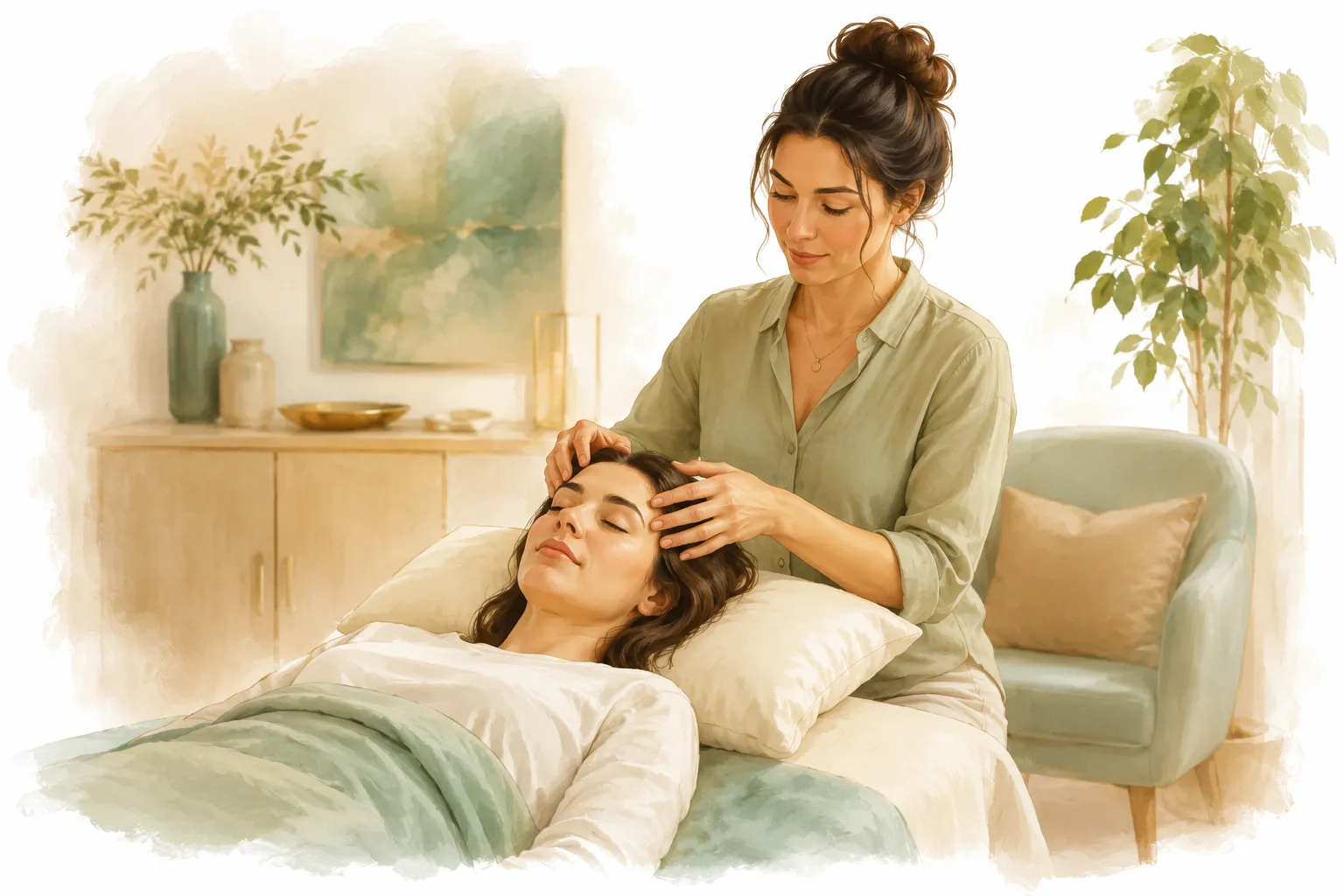
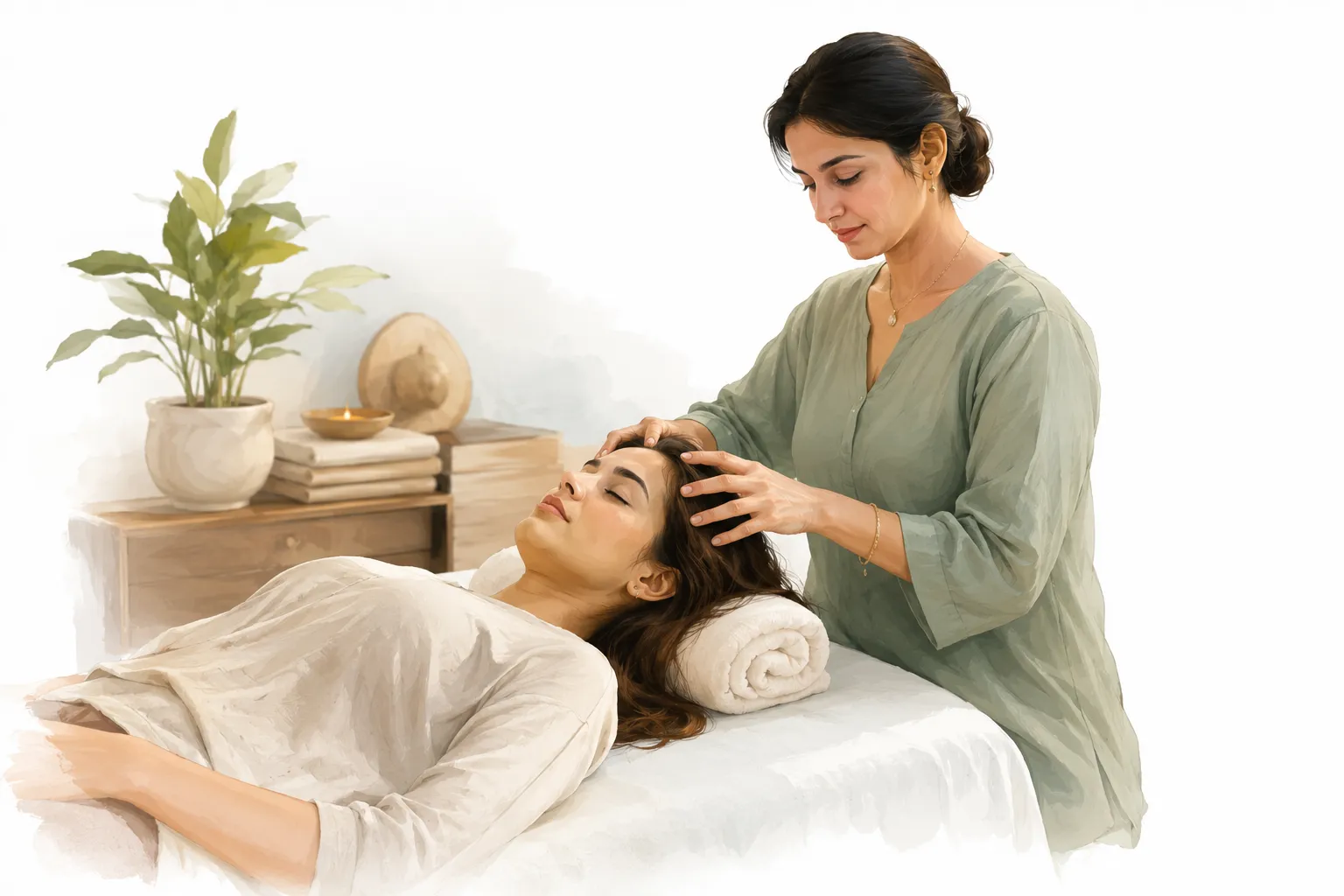
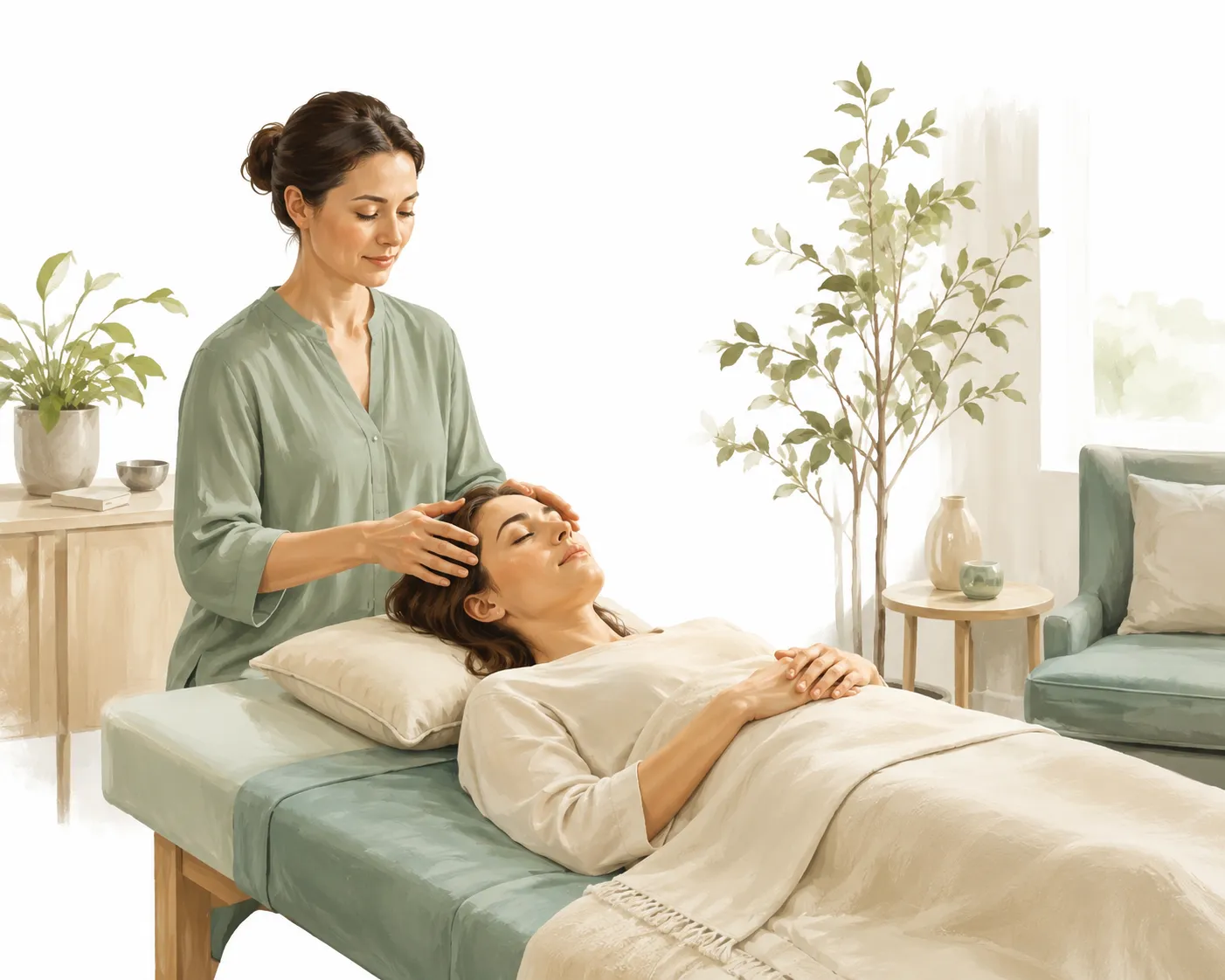
Strip away the branding and Access Bars therapy is fairly simple to describe: you lie down, fully dressed, and a trained practitioner lightly rests their fingers on combinations of 32 points across your scalp for around an hour. There's no pressure, no manipulation, and generally very little conversation required.
The "therapy" label comes from Access Consciousness, the broader self-development system the Bars belong to. According to the organization, each point corresponds to a theme in your life — money, creativity, control, sex, aging, and so on — and touching it lightly releases the accumulated "electromagnetic charge" of thoughts and decisions tied to that theme.
That's an explanation from inside the Access Consciousness worldview, not an established medical or neurological mechanism. It's a genuinely different thing to say "I felt calmer after lying still for an hour while someone gently touched my head" than to say "electromagnetic energy stored in my creativity point was released." The first is a plausible personal experience; the second is an unverified claim.
So when people ask what Access Bars therapy is, the honest answer has two layers: a straightforward relaxation-style session, and a set of much larger claims about consciousness and energy that current science hasn't confirmed.
Skim first
Key takeaways
The shortest useful version of this page.
Access Bars therapy involves light touch on 32 points on the head.
It comes from Access Consciousness, founded by Gary Douglas.
"Therapy" is a colloquial label, not a clinical or licensed one.
Sessions commonly last 60–90 minutes.
Relaxation is the most consistently reported effect.
Independent, peer-reviewed evidence for the wider claims is very limited.
It should not replace medical or psychological treatment.
Origins
Where does "Access Bars therapy" come from?
Access Bars is the flagship technique of Access Consciousness, a personal-development system created by Gary Douglas in the early 1990s. Douglas has described discovering the Bars points intuitively, and the practice has since spread through a global network of one-day practitioner classes.
The word "therapy" attached to Access Bars is a marketing and colloquial usage, not a clinical or legal designation. Practitioners are not required to hold a medical, nursing, psychology, or counseling license to offer sessions, and the technique itself is taught in a single day with no prerequisites.
That doesn't automatically make it worthless as a relaxation practice, but it does mean the word "therapy" shouldn't be read the way you'd read "physical therapy" or "cognitive behavioral therapy" — regulated fields with licensing boards, defined scopes of practice, and accountability structures.
How is Access Bars therapy supposed to work?
There's a claimed explanation from within Access Consciousness, and there's what can actually be observed and measured.
Locating the points
The practitioner uses a taught map of 32 head points, each associated with a theme such as money, creativity, or control.
Light, sustained touch
Fingertips rest gently on combinations of points, often for several minutes at a time, without pressure or manipulation.
Claimed "release"
Access Consciousness materials describe this as releasing the electromagnetic charge of thoughts, beliefs, and decisions tied to that theme.
Practitioners often compare it to deleting clutter from an overloaded computer.What can be observed
What's reliably observable is a person resting quietly, receiving calm attentive touch, in a low-stimulation setting — conditions already known to promote relaxation.
The unverified part
No independent, peer-reviewed research has confirmed that specific thoughts or beliefs are physically stored at these points, or that touching them "releases" them through a measurable biological process.
What happens during a typical session
Individual practitioners vary, but sessions commonly follow a similar shape.
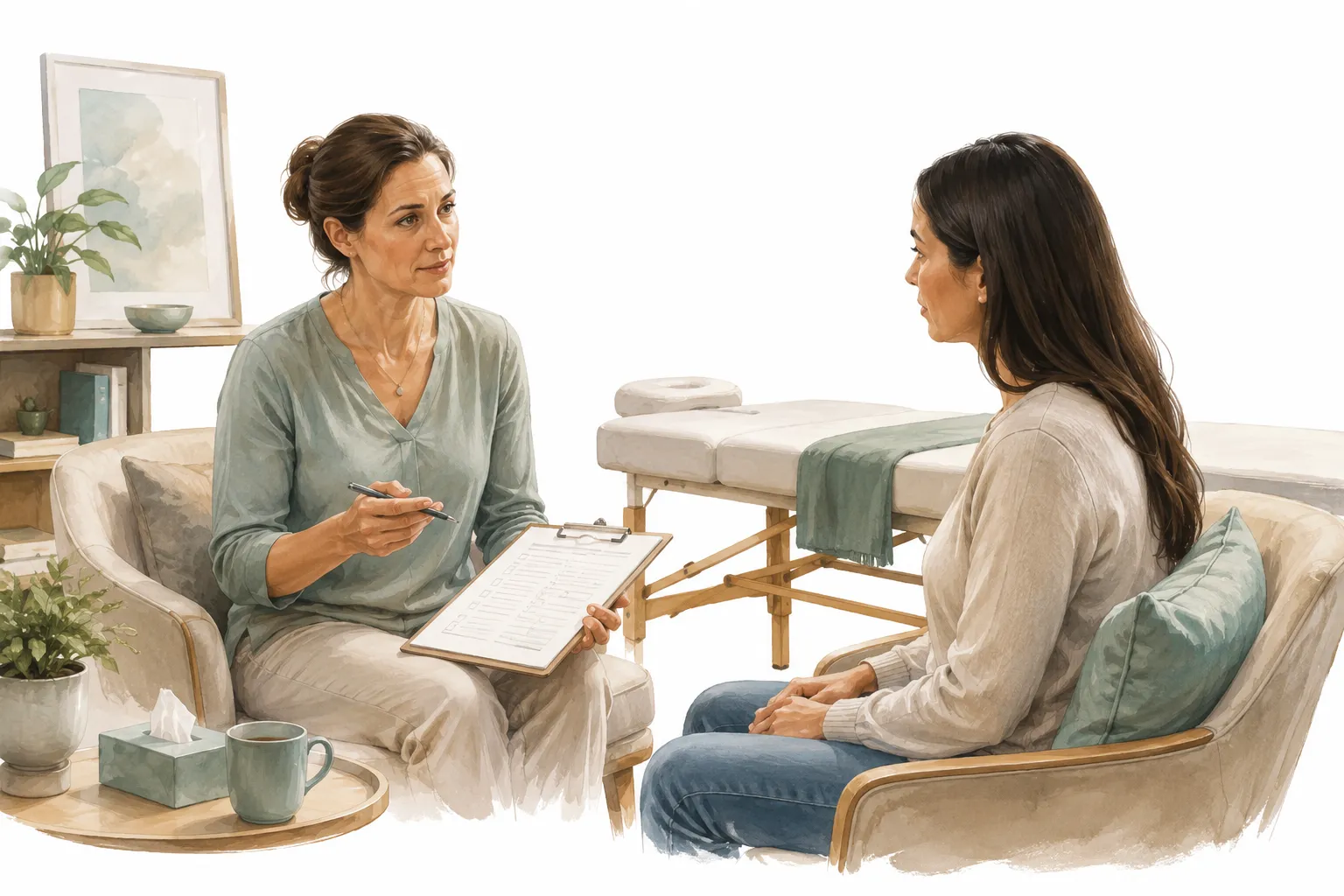
1. Brief intake
A short conversation about comfort, touch preferences, and what brought you in.
5–10 minutes2. Getting settled
You lie down fully clothed on a treatment table, often with a blanket or bolster for comfort.
A few minutes3. Running the Bars
The practitioner works through combinations of the 32 points with light, sustained contact.
45–75 minutes4. Rest
Many people become very relaxed or drowsy; some fall asleep; others stay alert throughout.
Throughout the session5. Wrap-up
A short check-in on how you're feeling before you leave, without a formal diagnosis or treatment plan.
5 minutes
Why people describe it so differently
- Practitioner
Practitioners often describe the session as a tool for releasing limiting beliefs and creating "space" in the mind.
- Participant
Recipients commonly report deep relaxation, sleepiness, or a quieter mind; others notice little to no change.
- Balanced view
Both descriptions can be accurate accounts of subjective experience without proving the underlying energy explanation.
- Evidence view
The strongest available studies are small, uncontrolled, and largely produced in collaboration with Access Consciousness itself, which limits how much weight they can carry as independent proof.
Enthusiastic testimonials shouldn't be mistaken for clinical evidence, especially around mental-health or medical claims.
Evidence scan
What does the research actually show?
A handful of small studies exist. Here's how they hold up.
Overall: not enough evidence
Unclear or mixed
Not clearly for or against
Access Bars sessions produce measurable changes in brainwave activity.
Small EEG studies, including work associated with neuroscientist Jeffrey Fannin, reported shifts toward calmer brainwave patterns after a single session, but sample sizes were tiny and unreplicated in independent, peer-reviewed journals.
Leans against
Points that do not support the claim
Access Bars meaningfully reduces anxiety and depression.
Reported reductions come from small, uncontrolled studies conducted by Access Bars-affiliated practitioners using self-report questionnaires; independent replication and peer review are lacking.
The Bars points correspond to genuine energy centers comparable to acupressure or meridian points.
Independent scientific and medical critics have compared the point system to phrenology, noting it lacks anatomical or physiological validation.
Reality check
Common misconceptions
- Myth
Access Bars therapy is a licensed medical treatment.
RealityIt's an unregulated complementary practice; practitioners need no medical or psychological license to offer sessions.
- Myth
It's basically the same as a head massage.
RealityThe touch is typically much lighter and more static than massage, without kneading or deep pressure.
- Myth
Feeling relaxed proves the "electromagnetic release" explanation is true.
RealityRelaxation is a real, common outcome of quiet rest and gentle touch; it doesn't by itself validate the specific energy mechanism claimed.
What to remember
Access Bars therapy involves light touch on 32 head points while fully clothed.
"Therapy" here is a marketing term, not a licensed clinical designation.
Practitioners train for a single day with no prerequisites.
Relaxation is commonly reported; the underlying energy claim isn't independently verified.
It shouldn't replace medical or mental-health care.
Verdict
Our evidence-based verdict
insufficient-evidence
Access Bars therapy is a gentle, low-risk relaxation practice built around a set of claims that current independent evidence doesn't support. Treat it as optional complementary wellness, not proven therapy.
What we know
- The physical procedure involves light, sustained head touch.
- The practice is unregulated and requires no clinical license.
- Many recipients report relaxation and calm.
What we do not know
- Whether the claimed 32-point energy system has any physiological basis.
- Whether reported benefits exceed what quiet rest and attentive touch alone would produce.
If you're curious, approach it as a relaxation experience rather than a medical treatment, and keep any existing medical or mental-health care in place.
Bottom line
A gentle session, a heavier name
Calling it "therapy" invites expectations the evidence can't yet back up. Judged as a quiet hour of rest and attentive touch, it's easier to make sense of.
Quick answers
Frequently asked questions
What is Access Bars therapy in simple terms?
A wellness session where a practitioner lightly touches 32 points on your head while you rest, fully clothed.
Who invented Access Bars therapy?
Gary Douglas, founder of Access Consciousness, in the early 1990s.
Is Access Bars therapy backed by science?
Only small, largely organization-affiliated studies exist; independent, peer-reviewed confirmation is lacking.
How is it different from massage?
It uses light, largely static fingertip contact rather than kneading or deep pressure.
Should I stop my medication or therapy to try Access Bars?
No. It should be treated as optional complementary wellness, never a replacement for prescribed medical or psychological care.
Sources
What Is Access Bars?. Access Consciousness. Accessed 2026-07-17
Official description of the technique and its claims.
Harriet Hall, MD. Access Consciousness: A New Version of Phrenology?. Science-Based Medicine. Accessed 2026-07-17
Independent critical medical commentary on the point system and its origins.
Access Bars Research. Access Possibilities. Accessed 2026-07-17
Practitioner-published summary of small, organization-linked studies; used to characterize evidence quality and limits.