Wellness in schools
What students and educators should know about Access Bars
Schools are complex environments where student wellbeing matters. Programs that claim to reduce stress, improve focus, or support mental health are often considered—but not all are backed by evidence.
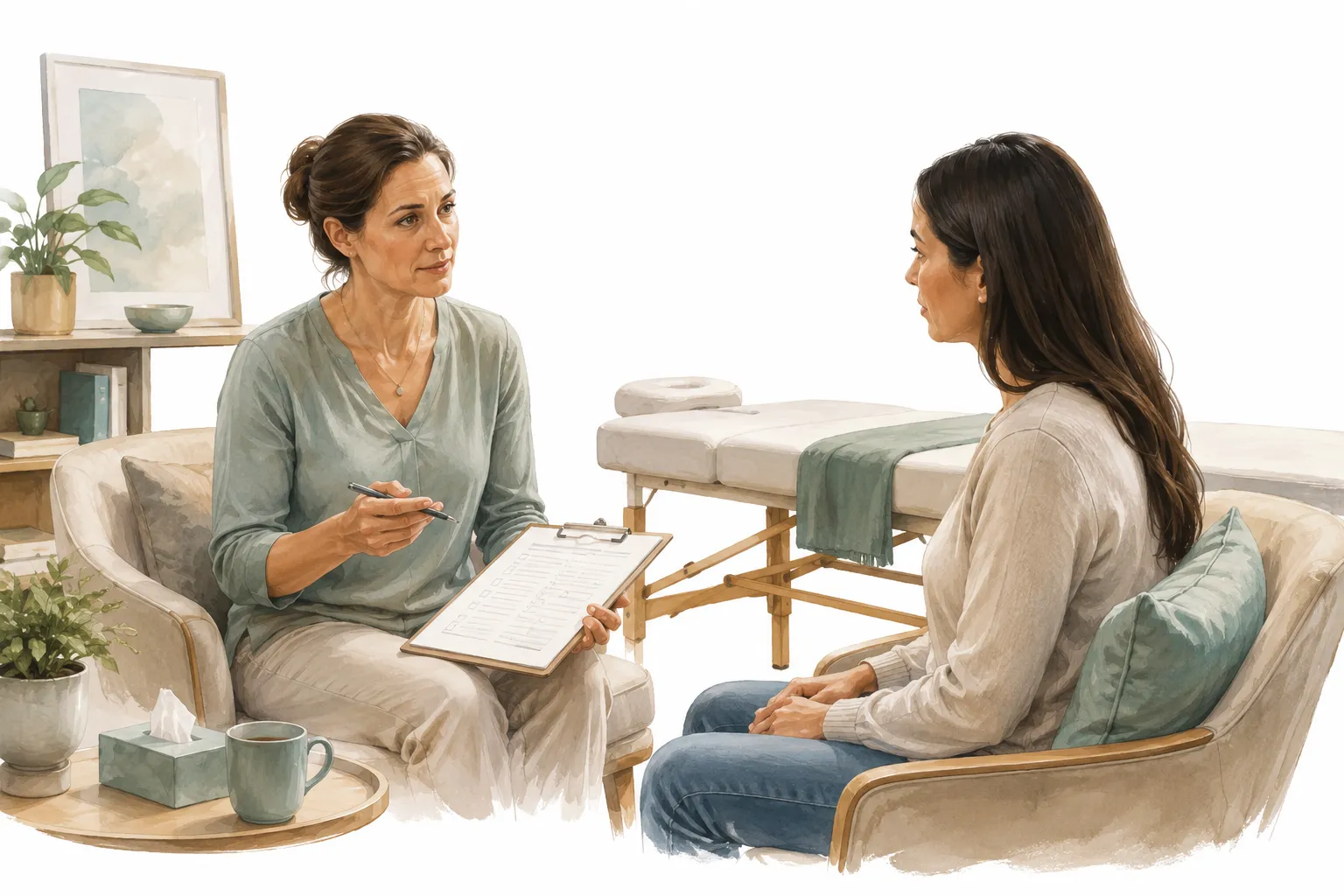
Access Bars is a practice that involves gentle touch on designated head points. It is sometimes presented as a wellness tool for stress relief or focus. Some practitioners have offered it in school settings.
There is no research on Access Bars in schools. The practice has not been shown to improve academic performance, behavior, or mental health in students. Schools should rely on evidence-based programs for these needs.
If a school is considering Access Bars, careful attention must be paid to consent, appropriateness, and the potential for replacing evidence-based care.
Skim first
Key takeaways
The shortest useful version of this page.
No research on Access Bars in schools.
Student consent is essential.
Do not replace evidence-based programs.
Professional support is essential.
Approach with caution.
Educational settings
Access Bars in schools: The context
Student stress, anxiety, and mental health challenges are significant concerns in education. Schools are right to look for ways to support students.
However, not every wellness practice belongs in a school. Programs should be evidence-based, appropriate for the age group, and respectful of student consent.
Access Bars has not been studied in schools. There is no evidence that it improves outcomes for students.
Schools that bring in practices like Access Bars risk investing resources in unproven approaches while students' real needs go unmet.
Safety
Safety and consent considerations for schools
Student safety, comfort, and consent are the top priorities. There is no research on Access Bars in schools.
Generally low-risk for
- Students who are comfortable with the practice
- Students with proper consent from parents/guardians
- Students who understand what the practice involves
Use caution if
- Students are uncomfortable with touch
- Students have underlying health conditions
- Parents are not fully informed
- The practice is presented as treatment or therapy
Seek professional help if
- Students have mental health or behavioral concerns
- A student experiences discomfort or distress
- The school is considering replacing evidence-based programs
Access Bars should not be presented as a mental health treatment or educational intervention in schools.
What practitioners, educators, and professionals say
- Practitioner
Some practitioners believe Access Bars can help students with focus and stress and may offer sessions in schools.
- Participant
Some students report feeling calmer, but this is anecdotal and not evidence.
- Balanced view
Anecdotal experiences are not sufficient for educational decision-making.
- Evidence view
Educators and school psychologists emphasize evidence-based programs and professional mental health support.
Bringing unproven practices into schools can waste resources and mislead students about what works.
Reality check
Common misunderstandings about Access Bars in schools
- Myth
Access Bars is a proven school program.
RealityNo research exists on Access Bars in schools.
- Myth
Access Bars can replace school counseling.
RealityNo. School counseling is professional support. Access Bars is not.
- Myth
All students would benefit from Access Bars.
RealityThere is no evidence for this. Individual comfort matters.
- Myth
Access Bars is harmless, so schools should try it.
RealityEven if physical touch is low-risk, investing in unproven programs has costs—including replacing proven ones.
Evidence-based student support versus Access Bars
Schools should prioritize approaches with proven benefits.
School counseling
Strong
Standard
Professional service
Social-emotional learning
Strong
Widespread
Curriculum-based
Mindfulness programs
Moderate
Increasing
Variable
Access Bars
None
Rare
Variable, unproven
Physical activity
Strong
Standard
Low
What to remember about Access Bars in schools
No research exists on Access Bars in schools.
Student consent and comfort are essential.
Do not replace evidence-based programs.
Professional mental health support is essential.
Approach with caution and transparency.
Verdict
Our evidence-based verdict on Access Bars in schools
not-supported
Access Bars has no evidence base in schools. Schools should prioritize evidence-based programs and professional support for student mental health, behavior, and wellbeing.
What we know
- The practice involves gentle touch.
- Some practitioners offer it in schools.
- Some students report feeling calm.
What we do not know
- Whether Access Bars helps students in any measurable way.
- Whether it is appropriate for school settings.
- What role, if any, it might play.
Schools should not invest in Access Bars. Evidence-based programs and professional support are what students need.
Bottom line
Students deserve evidence-based support
Access Bars has not been shown to help students. Schools should focus on what works—counseling, social-emotional learning, and professional support for mental health.
Quick answers
Frequently asked questions
Is Access Bars used in schools?
Rarely. There is no evidence base.
Should schools try Access Bars?
No. Schools should prioritize evidence-based programs.
Can Access Bars replace counseling?
No. Counseling is professional support.
Sources
REPLACE IF AVAILABLE. REPLACE WITH VERIFIED SCHOOL WELLNESS AND MENTAL HEALTH GUIDELINES. REPLACE WITH RECOGNIZED EDUCATIONAL ORGANIZATION, REPLACE IF AVAILABLE. Accessed 2026-07-17
Use for evidence-based school wellness standards.