Understanding certification
What Access Bars certification means—and what it doesn't
Access Bars certification is a credential that shows you have completed the basic training in the Access Bars technique. It is obtained by attending a one-day in-person class led by a certified Access Bars facilitator.
The certification indicates you have learned the practical aspects of the technique: the 32 point locations, the session sequence, and how to conduct a complete Bars session. It qualifies you to offer Access Bars sessions to clients.
However, certification is not a clinical license. It does not qualify you to diagnose, treat, or provide regulated medical or psychological services. The certificate is a training credential, not a professional healthcare qualification.
Understanding this distinction is essential. Certification gives you the basic skills to offer a wellness practice, but it does not make you a healthcare provider or therapist.
Skim first
Key takeaways
The shortest useful version of this page.
Access Bars certification is obtained through a one-day class.
No prior experience is required.
The class is in-person and hands-on.
Certification allows you to offer Access Bars sessions.
It is a training credential, not a clinical license.
It does not qualify you to diagnose, treat, or practice therapy.
The cost is typically $200–$500 USD.
Skill and confidence develop with practice after certification.
How to get certified
The Access Bars certification process: step by step
The path to Access Bars certification is straightforward and designed to be accessible. You attend a one-day in-person class taught by a certified Access Bars facilitator.
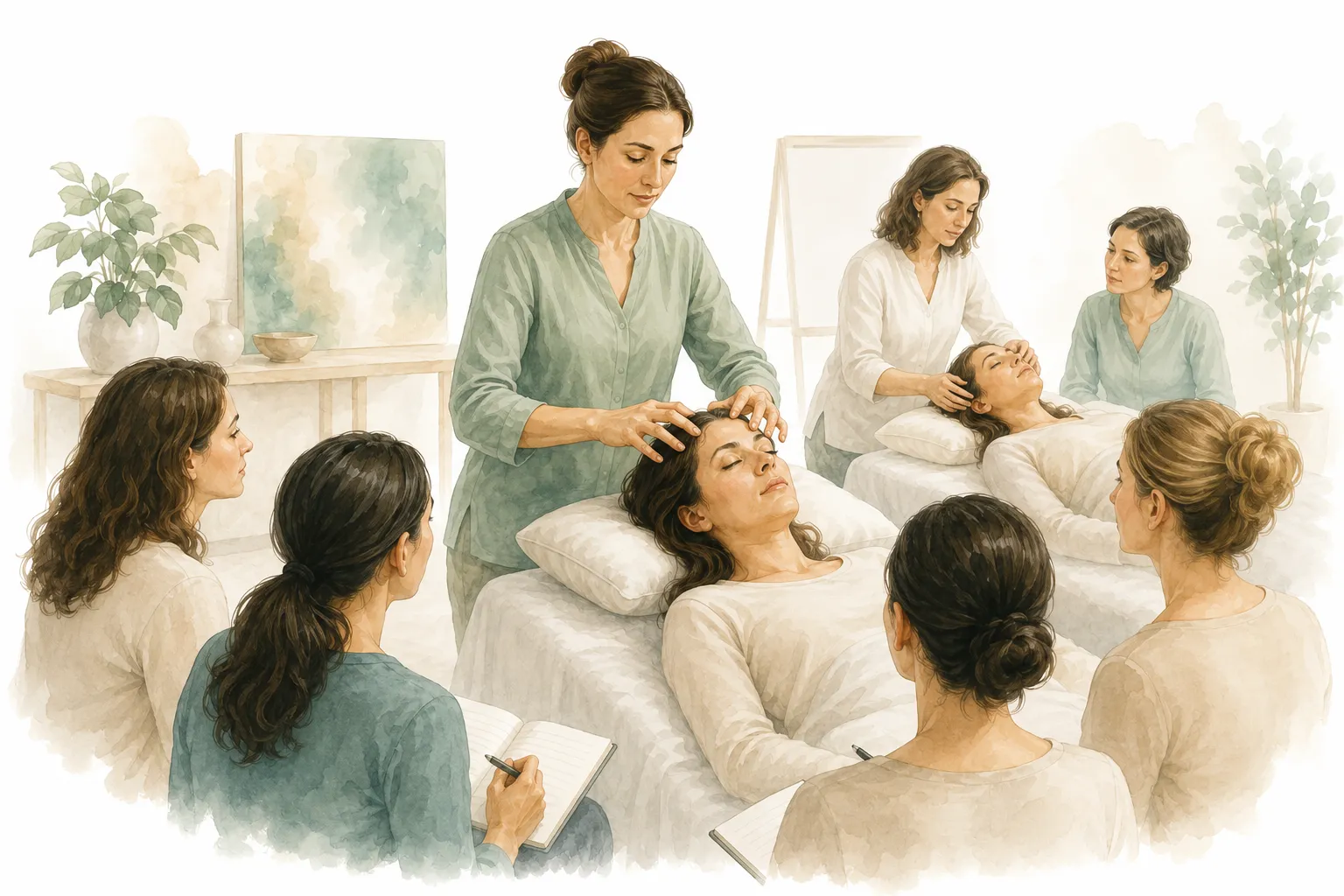
The class covers the practical technique: the 32 points, the session sequence, and how to conduct a complete session. You learn by doing—a significant portion of the day is dedicated to supervised hands-on practice.
At the end of the class, you receive a certificate of completion. This certificate serves as proof that you have completed the training and are qualified to offer Access Bars sessions to clients.
There is no exam or ongoing assessment required for initial certification. The certification is based on attendance and active participation in the class.
Step-by-step certification pathway
The pathway to certification is simple and clear.
1. Find a certified facilitator
Locate an Access Bars facilitator offering the certification class in your area or at a location you can travel to.
Variable.2. Register for the class
Complete registration and payment for the one-day training.
$200–$500 USD. · At registration.3. Attend and complete the class
Participate in the one-day class, learning the technique and practicing with fellow participants under the facilitator's supervision.
Full participation.
8 hours.4. Receive your certificate
Upon completion of the class, you receive your certification.
At the end of the class.5. Begin offering sessions (optional)
With certification, you can offer Access Bars sessions to clients. Many practitioners develop their confidence and skills through continued practice.
Certification.
Access Bars certification costs
The primary cost of certification is the one-day class fee. Additional expenses may apply.
| Certification class | $200–$500 | The standard cost for the one-day Access Bars Practitioner certification class. |
|---|---|---|
| Returning participant | $100–$250 | Discounted rate for practitioners retaking the class. |
| Travel and accommodation | Participants cover their own travel, accommodation (if needed), and meals. | |
| Ongoing professional development | Additional Access Consciousness classes have separate costs. |
- Prices vary by country and region.
- Some facilitators offer early-bird or group discounts.
- Payment is typically required in advance.
What practitioners say about certification
- Practitioner
Practitioners often describe certification as a useful credential that provides credibility when offering sessions. They emphasize that confidence and skill develop after the class.
- Participant
Many who get certified do so to offer sessions to others or to deepen their own understanding of the practice.
- Student
Students typically find the class enjoyable and the certification process straightforward. Some wish there was more ongoing support after the class.
- Facilitator
Facilitators view certification as the starting point of a practitioner's journey, encouraging continued practice and learning.
- Balanced view
These perspectives describe the certification experience, not the validity of the technique itself.
- Evidence view
Certification is a training credential, not clinical accreditation. It does not provide evidence for the technique's claims.
Do not represent certification as a clinical qualification. Practice within the bounds of your training.
Access Bars certification vs. other credentials
Understanding the differences helps set expectations.
Duration
One day (8 hours)
Years of education and supervised practice
Prerequisites
None required
Advanced degrees, licenses, supervised practice
Regulation
Not generally regulated as a credential
Highly regulated by professional bodies
Scope
Offer Access Bars sessions
Diagnose, treat, prescribe, and manage conditions
Re-certification
No ongoing requirements
Typically requires continuing education and renewal
Reality check
Common misunderstandings about Access Bars certification
- Myth
Certification means you're a licensed therapist.
RealityCertification is a training credential, not a clinical license. It does not qualify you to practice therapy.
- Myth
Certification requires years of study.
RealityThe certification class is one day long.
- Myth
You need a healthcare background to get certified.
RealityNo prior experience is required. The class is open to everyone.
- Myth
Certification is only available in certain countries.
RealityThe training is offered globally.
- Myth
Certification guarantees you'll be good at the technique.
RealityCertification indicates you've learned the basics. Confidence and skill develop with practice.
What to remember about Access Bars certification
Certification requires completing a one-day class.
No prior experience is required.
The class is in-person and hands-on.
You learn the technique and practice with others.
Certification allows you to offer Access Bars sessions.
It is a training credential, not a clinical license.
It does not qualify you to diagnose, treat, or practice therapy.
Confidence and skill develop with practice after certification.
Verdict
Our evidence-based verdict on Access Bars certification
insufficient-evidence
Access Bars certification is a straightforward training credential obtained through a one-day class. It indicates you have learned the basic technique and can offer sessions. However, it is not a clinical license and does not qualify you to practice therapy or medicine. The technique's broader claims are not supported by strong independent evidence.
What we know
- Certification requires completing a one-day class.
- No prior experience is required.
- Certification allows you to offer Access Bars sessions.
- The certificate is a training credential, not a clinical license.
What we do not know
- Whether the technique produces specific therapeutic effects.
- Whether certification indicates practitioner competence beyond basic technique.
- Whether the technique works through the proposed mechanism.
Access Bars certification is practical and accessible, but it is a training credential, not a clinical qualification. Approach it as learning a complementary wellness technique.
Bottom line
Certified practitioner, not clinical therapist
Certification is a useful credential for offering Access Bars sessions, but it does not make you a healthcare provider. Understanding the distinction is essential.
Quick answers
Frequently asked questions
What is Access Bars certification?
It is a training credential that shows you have completed the one-day Access Bars Practitioner class and can offer sessions.
How do I become a certified Access Bars practitioner?
Attend and complete a one-day Access Bars certification class led by a certified facilitator.
Is Access Bars certification a medical license?
No. It is a training credential, not a clinical license. It does not qualify you to practice medicine or therapy.
How long is Access Bars certification valid?
There is no official expiration date. Practitioners may choose to continue learning through additional classes.
Can I practice Access Bars without certification?
Certification is the recognized credential for offering Access Bars sessions. Practitioners are generally expected to be certified.
Sources
REPLACE IF AVAILABLE. REPLACE WITH VERIFIED OFFICIAL ACCESS BARS PAGE TITLE. Access Consciousness, REPLACE_IF_AVAILABLE. Accessed YYYY-MM-DD
Use to establish the official certification process and requirements.
REPLACE WITH VERIFIED AUTHORS. REPLACE WITH VERIFIED RESEARCH PAPER TITLE. REPLACE WITH VERIFIED JOURNAL, REPLACE WITH VERIFIED DATE. Accessed YYYY-MM-DD
Use to assess evidence for the technique.