Where the map comes from
A taught system, not a medical chart
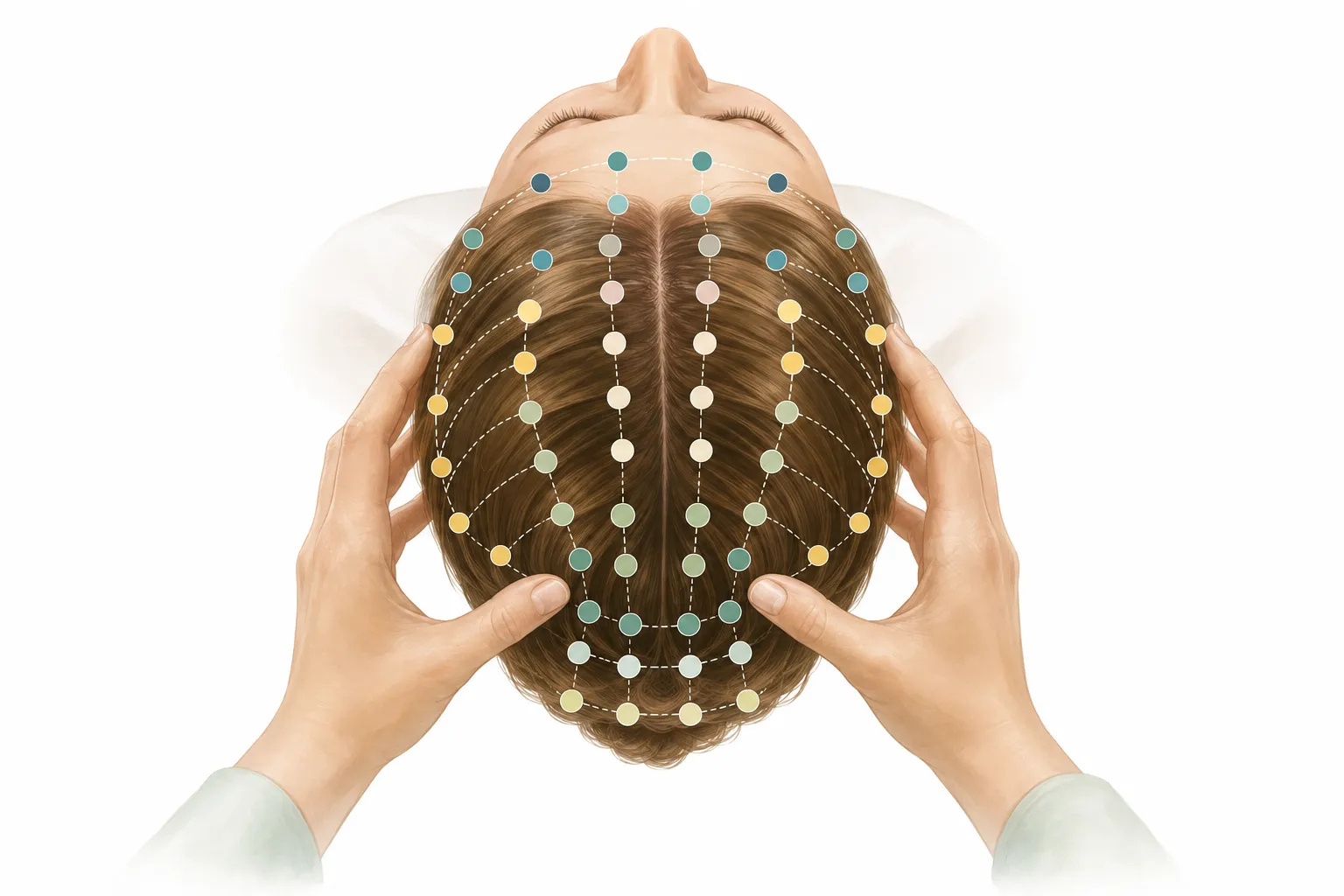
The "32 points" is the central teaching tool of Access Bars. According to Access Consciousness, each point on the head corresponds to a specific area of life — things like money, creativity, control, sexuality, aging, communication, and healing — and each is said to store the accumulated "electromagnetic charge" of thoughts, decisions, and judgments related to that theme.
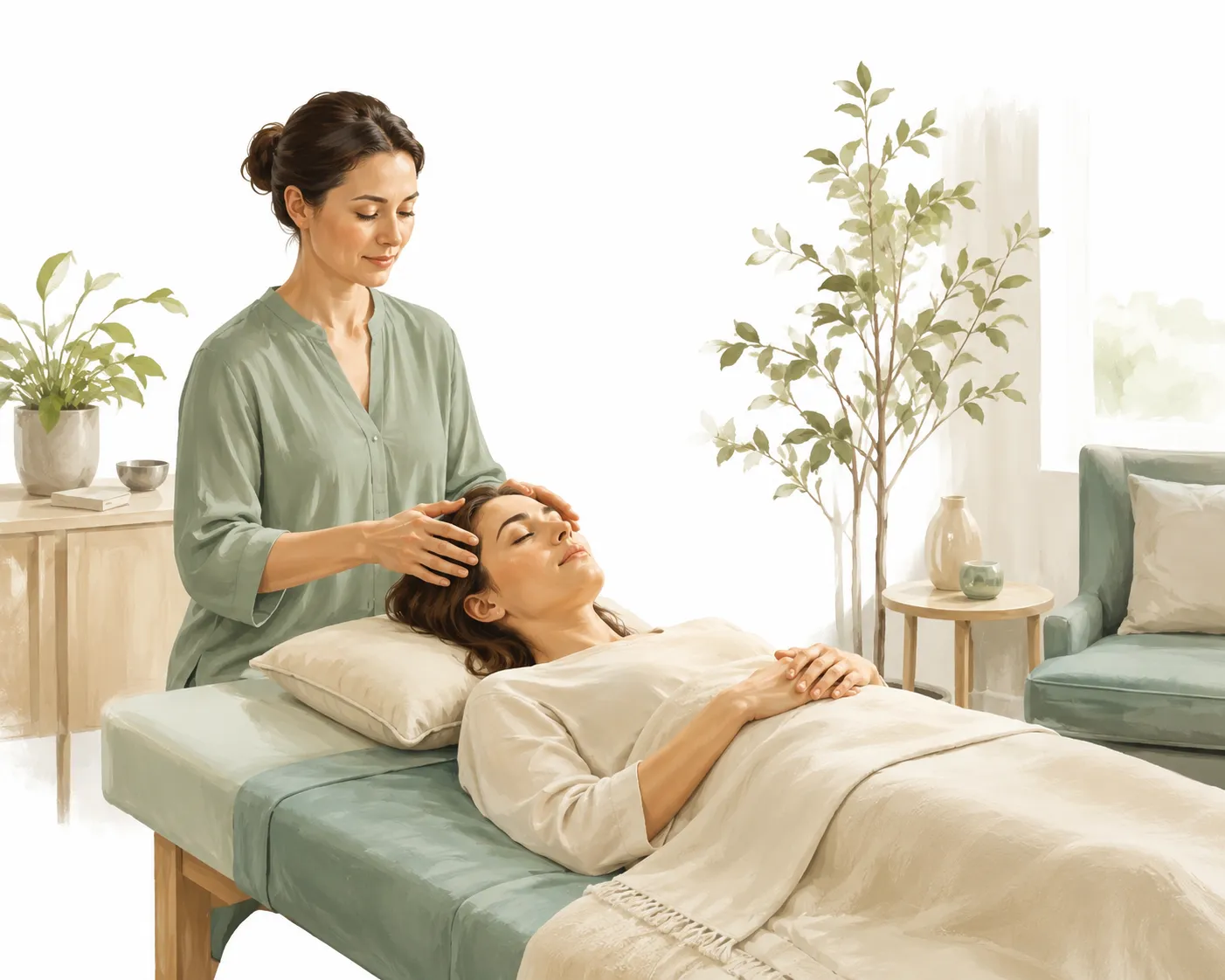
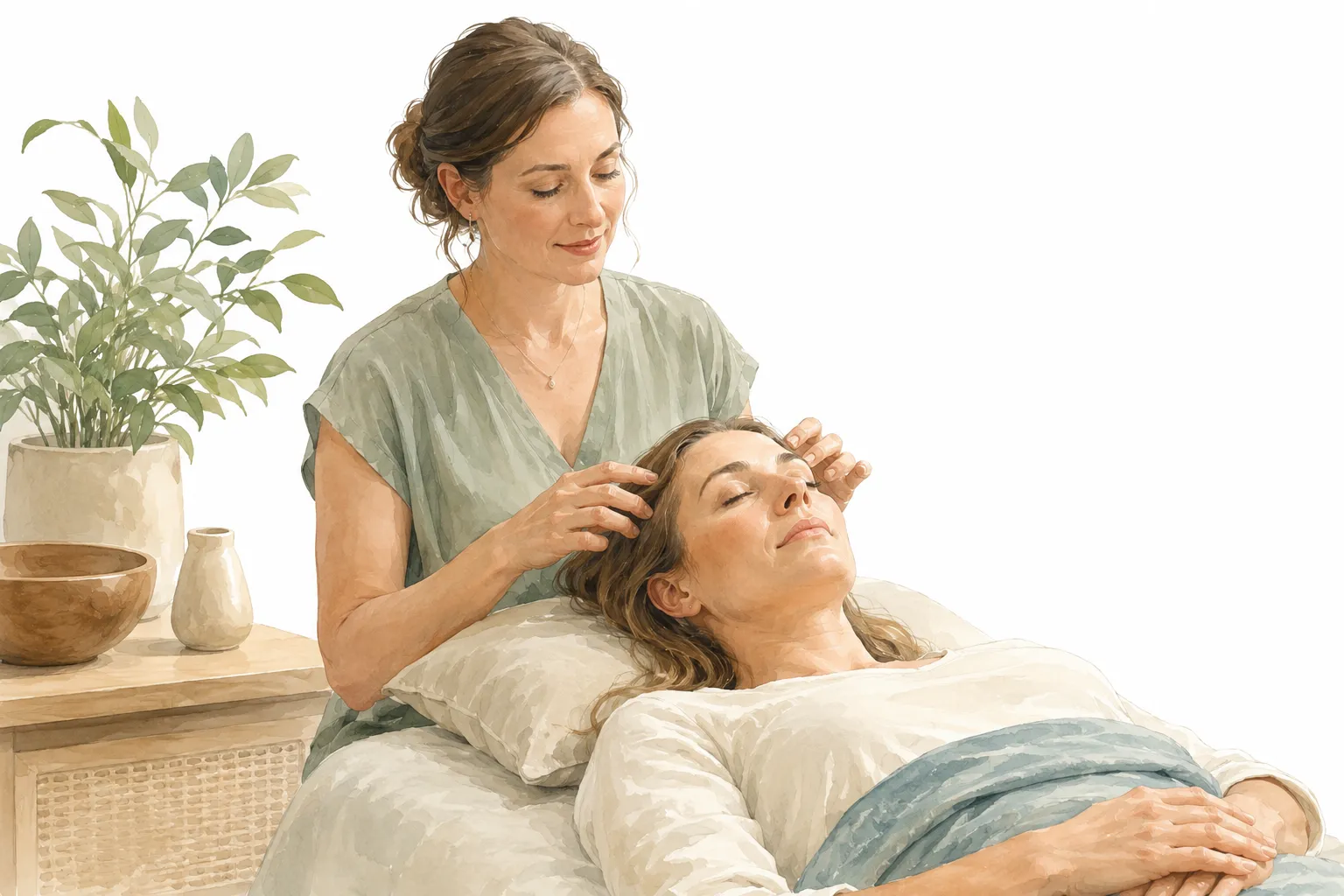
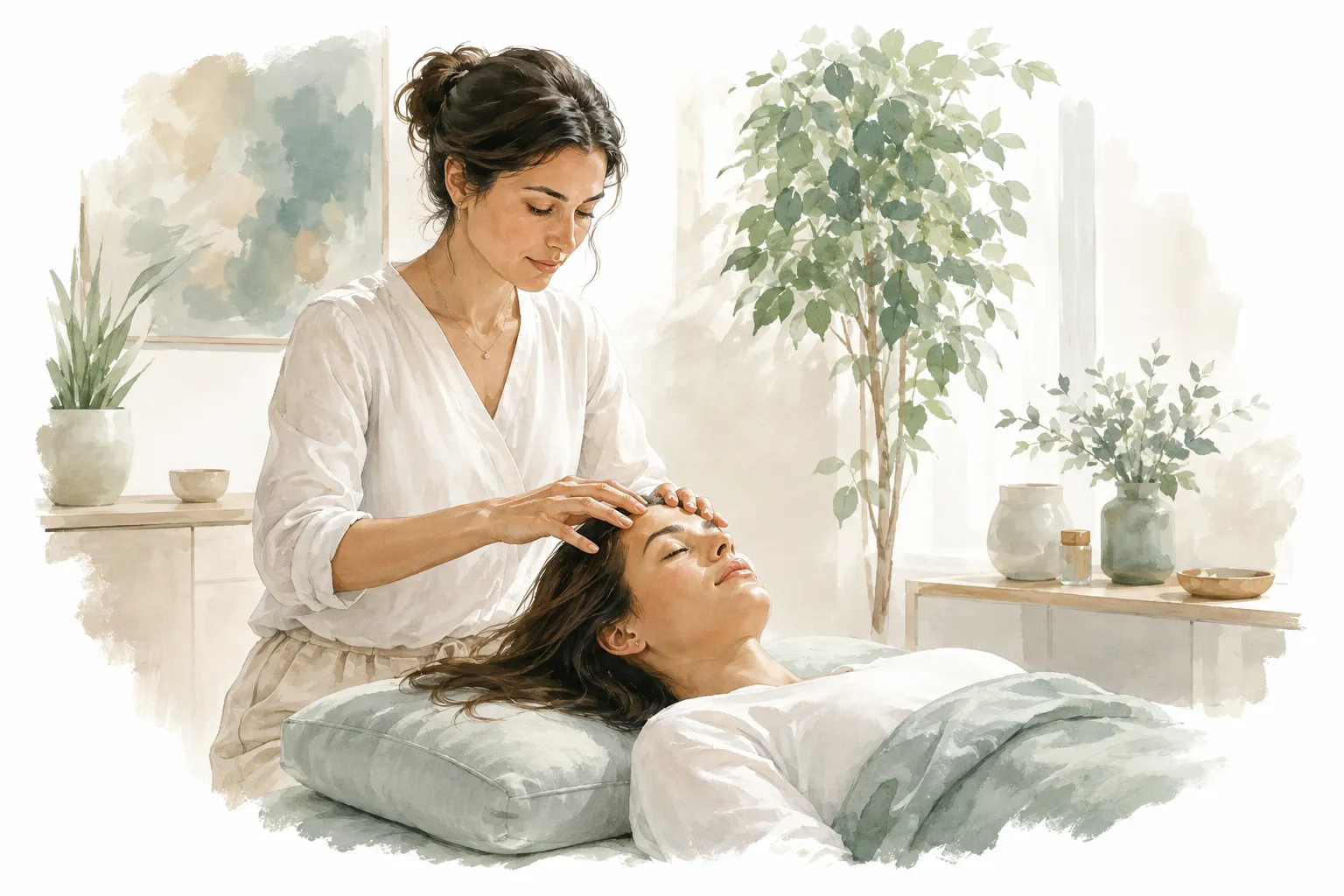
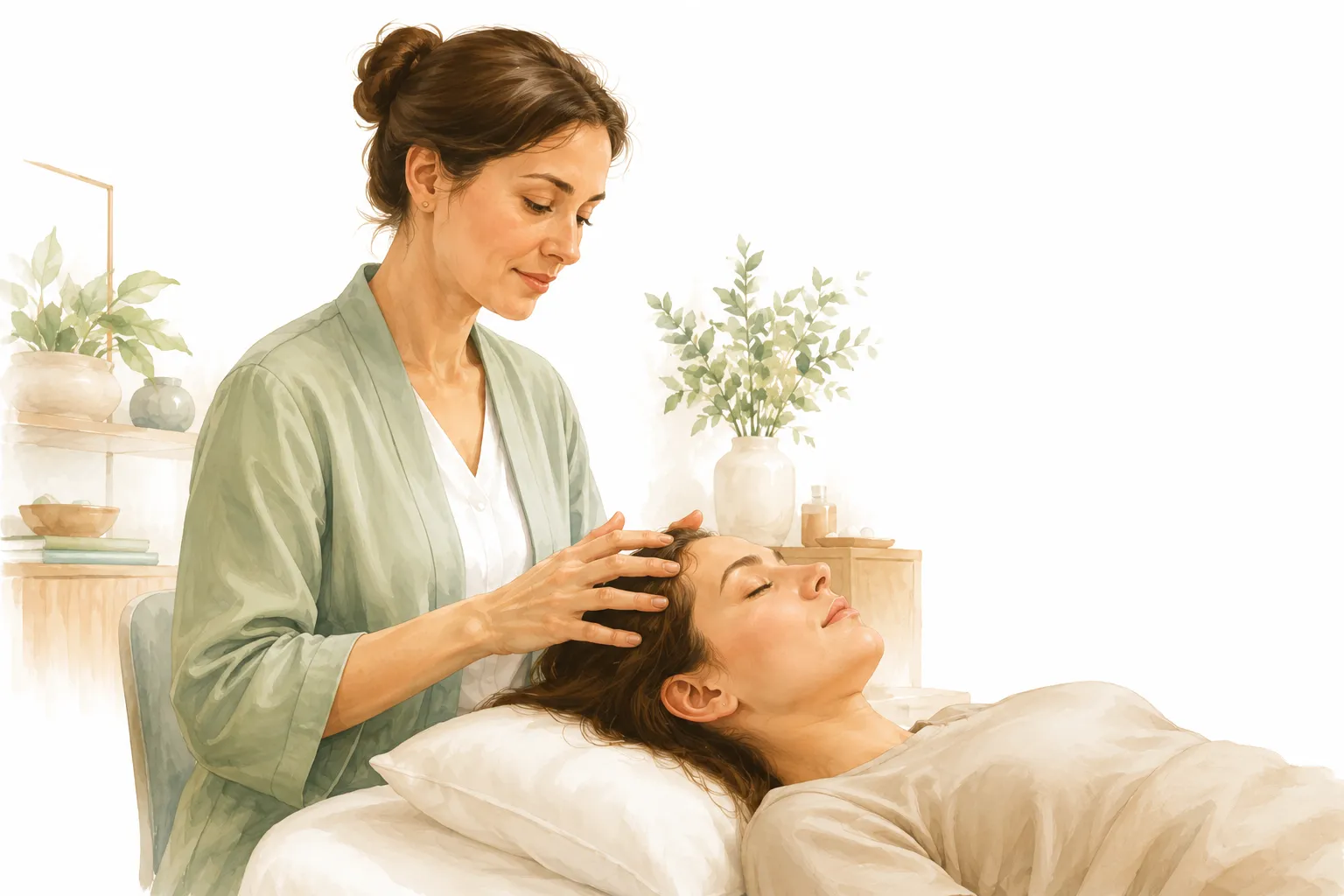
Practitioners learn the location and combinations of these points during a one-day certification class, using a diagram and hands-on practice. During a session, they lightly hold two or more points at once, moving through different combinations over the course of an hour or so.
It's worth being precise about what kind of claim this is. The point map is an internal teaching tool of Access Consciousness — genuinely used and taught the way described — but it isn't a recognized anatomical structure, meridian system, or neurological map validated by independent medicine or neuroscience. Critics, including physicians writing for medical publications, have compared the concept to phrenology, the 19th-century idea that personality traits could be read from the shape of the skull, which has been thoroughly discredited.
That comparison doesn't mean a session can't feel pleasant or relaxing. It means the specific claim — that touching point X reliably addresses theme Y through a verifiable energetic process — hasn't been independently established.
Skim first
Key takeaways
The shortest useful version of this page.
Access Bars is built around 32 head points, each assigned a life theme by Access Consciousness.
Example themes include money, control, creativity, communication, healing, and aging.
The map is taught in a one-day practitioner class using hands-on demonstration.
It is not a recognized anatomical, neurological, or established energy-medicine system.
Independent critics have compared the concept to phrenology.
Commonly cited points and their claimed themes
Access Consciousness materials and practitioner sources describe the 32 points as covering the following representative range of life themes. This is not an exhaustive, independently verified list of all 32 official names and locations — for the complete taught map, Access Consciousness's own materials are the primary source.
These names and meanings come from Access Consciousness's own teaching materials. They are not recognized anatomical structures or medically validated treatment points.
Money
Said to relate to thoughts, judgments, and decisions about money and abundance.
One of the most frequently cited points in practitioner descriptions of the system.
No independent evidence links a specific head location to financial thought patterns.Control
Said to relate to points of view about control and being controlled.
Commonly referenced in introductory descriptions of the point map.
The assigned meaning is internal to the Access Consciousness framework.Creativity
Said to relate to creative expression and creative blocks.
Frequently listed among the core points in practitioner materials.
No study has tested this point for effects on measured creativity.Communication
Said to relate to how a person communicates and is understood by others.
Widely referenced across Access Consciousness descriptions of the system.
The claimed association hasn't been independently tested.Healing
Said to relate to beliefs and judgments about health and the body's capacity to heal.
Cited in several third-party summaries of the point system.
Not linked to any verified physiological healing mechanism.Aging
Said to relate to beliefs about aging and the body's relationship to time.
Referenced in Access Consciousness materials on the Bars and related body processes.
No evidence connects this point to biological aging processes.Sexuality
Said to relate to thoughts, judgments, and decisions about sex and sexuality.
Listed among the core themes in third-party descriptions of the system.
The claimed association is internal to the framework's teachings.Gratitude
Said to relate to a person's capacity for gratitude and appreciation.
Cited in independent summaries describing the range of point themes.
Not independently tested for any measurable effect.
In practice
How practitioners actually use the point map
During a session, a practitioner doesn't simply touch one point in isolation. They work through combinations — often two points held simultaneously — moving methodically across the head over the course of the appointment, following the sequence taught in their certification class.
Practitioners are trained to locate the points primarily by touch and memorized position rather than precise measurement, which means exact placement can vary somewhat from one practitioner to another.
Claimed system vs. established science
It helps to hold these two things side by side.
What Access Consciousness claims
Each of the 32 points stores the electromagnetic charge of thoughts, beliefs, and decisions tied to a specific life theme, and touching it releases that charge.
What's actually observable
A practitioner lightly touches combinations of scalp locations for an extended period in a calm setting.
What established neuroscience says
There is no recognized neurological or physiological basis for specific thoughts or emotional themes being stored at discrete points on the scalp.
Where the comparison to phrenology comes from
Critics note the structural similarity to phrenology — assigning distinct personal traits to specific head locations — a 19th-century idea that has been discredited by modern neuroscience.
Reality check
Common misunderstandings
- Myth
The 32 points are a recognized acupressure or meridian system.
RealityThey come specifically from Access Consciousness's own teachings, not from Traditional Chinese Medicine or acupuncture meridian maps.
- Myth
Because the points have specific names, the system must be scientifically documented.
RealityHaving a named, consistent teaching system is different from having independent scientific validation.
- Myth
Every practitioner touches the exact same 32 locations in the exact same order.
RealityPlacement and sequence can vary somewhat between practitioners, since it's taught through hands-on demonstration rather than precise measurement.
What to remember
There are 32 points, each assigned a specific life theme.
The map is taught in a one-day Access Bars practitioner class.
It is not a recognized medical, anatomical, or established energy-medicine system.
Critics have likened it to phrenology, a discredited 19th-century practice.
Point placement can vary somewhat between practitioners.
Quick answers
Frequently asked questions
How many points does Access Bars use?
32 points on the head, each assigned a specific life theme.
What do the Access Bars points represent?
Themes such as money, creativity, control, communication, healing, and aging, according to Access Consciousness.
Is the 32-point system scientifically validated?
No — it comes from Access Consciousness's own teachings and hasn't been independently validated by anatomy or neuroscience.
Where can I see an official list of all 32 points?
Access Consciousness's own materials are the primary source for the complete, official point list and diagrams.
Sources
What Is Access Bars?. Access Consciousness. Accessed 2026-07-17
Official description of the 32-point system and its claimed function.
Rasputin, Phrenology, and Dark Allegations: The Madness of Access Consciousness. McGill University Office for Science and Society. Accessed 2026-07-17
Independent commentary comparing the point system to phrenology and describing example point themes.
Harriet Hall, MD. Access Consciousness: A New Version of Phrenology?. Science-Based Medicine. Accessed 2026-07-17
Independent physician commentary on the origins and validity of the point system.