The real risk profile
What "safe" actually means for Access Bars
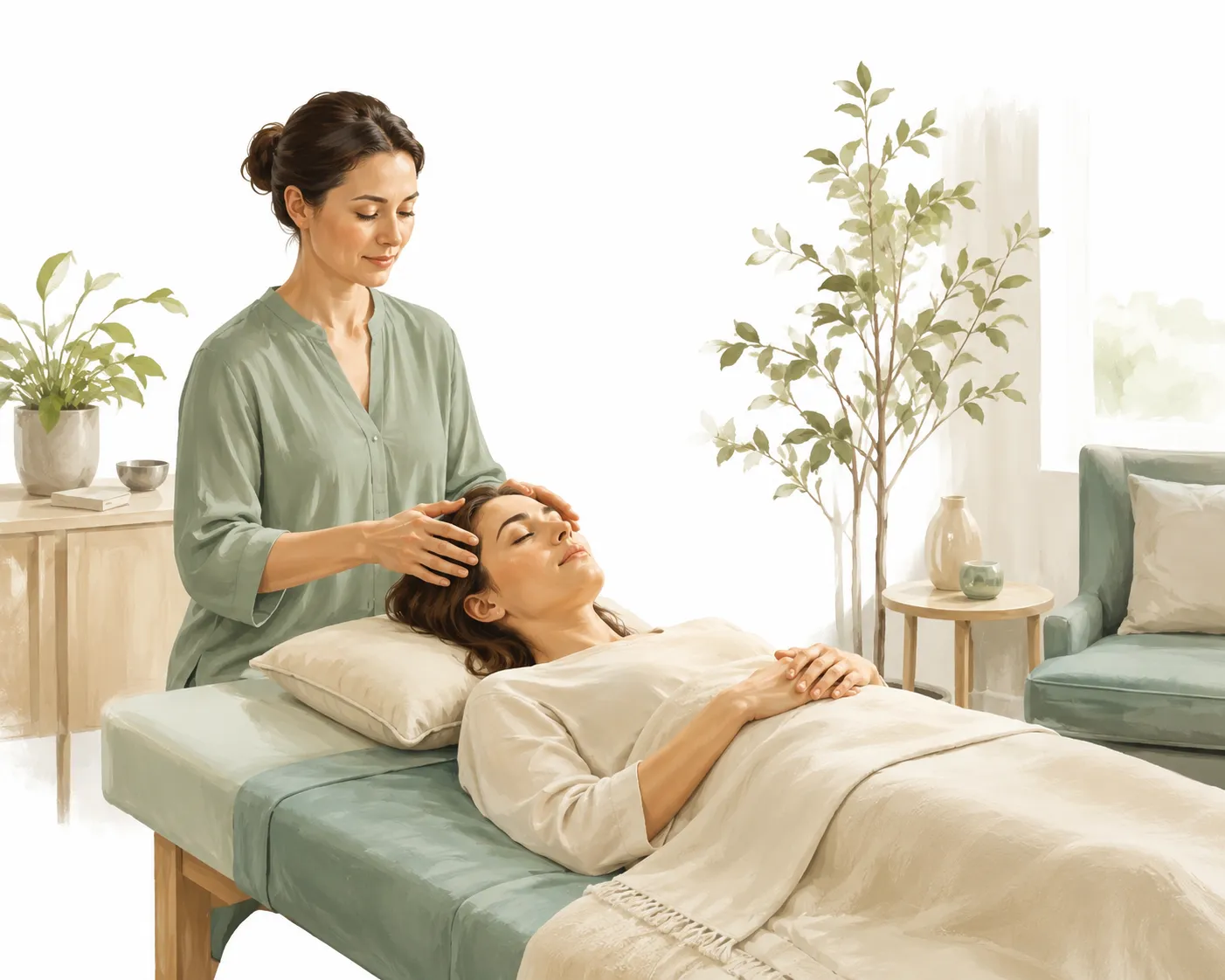
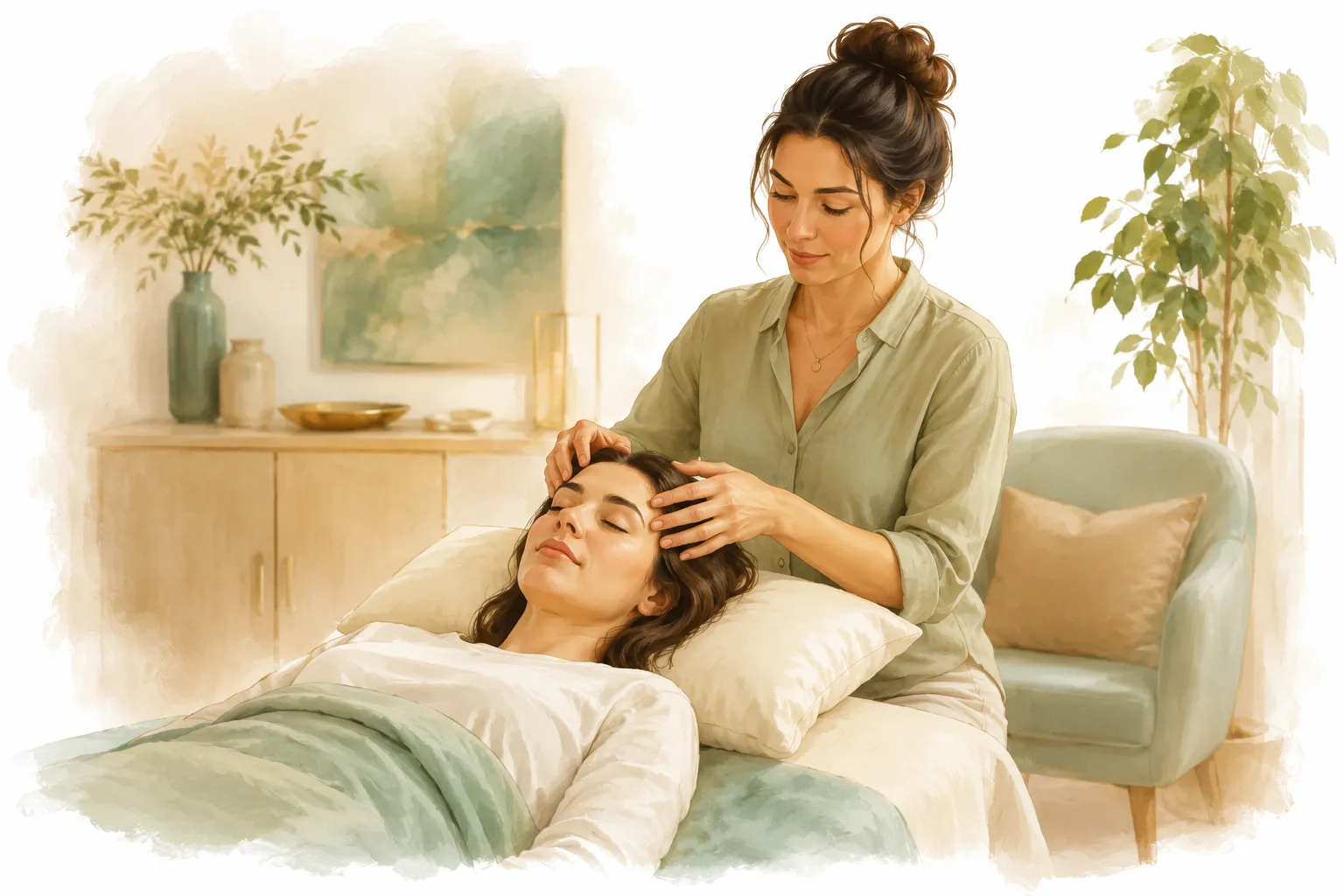
If safety is measured purely by physical intensity, Access Bars sits at the gentle end of complementary practices. There's no deep pressure, no manipulation of joints, no needles, no supplements, and no equipment — just light, sustained fingertip contact on designated areas of the scalp while you remain fully clothed.
That doesn't mean there's nothing to think about. Because Access Bars involves sustained head touch from another person, comfort and consent matter, particularly for anyone who finds head contact uncomfortable or who has experienced trauma involving touch. A good practitioner should discuss this openly beforehand and adjust or stop if you're uncomfortable.
Some people report strong reactions during or after a session — unusual sleepiness, lightheadedness, a rush of emotion, or vivid dreams that night. These are generally described as short-lived and not medically dangerous, but they're worth knowing about in advance, especially if you need to drive immediately afterward.
The most significant safety issue isn't physical at all. Because Access Bars is unregulated and practitioners need no medical or mental-health license, there's a real risk in treating strong claims — about anxiety, depression, or other conditions — as a reason to delay or replace evidence-based treatment.
Skim first
Key takeaways
The shortest useful version of this page.
Access Bars involves light, non-invasive touch with low physical risk.
Mild, temporary reactions such as drowsiness or emotional release are possible.
Practitioners are not required to hold any medical or psychological license.
Consent and comfort with head touch should be discussed before a session.
It should never replace necessary medical or mental-health treatment.
Safety
A closer look at the safety considerations
Access Bars carries minimal direct physical risk. The considerations that matter most involve touch consent, mild emotional or physical reactions, and the limits of an unregulated practice.
Generally low-risk for
- Adults comfortable with light head touch
- People seeking optional relaxation, not medical treatment
- Most healthy adults with no objection to close physical proximity
Use caution if
- You have a recent head or scalp injury, surgery, or infection
- You're uncomfortable with being touched by someone you don't know well
- You have a history of touch-related trauma
- A practitioner suggests stopping prescribed medication or medical treatment
Seek professional help if
- You have persistent, severe, or worsening physical or mental-health symptoms
- You're experiencing a mental-health crisis, including thoughts of self-harm or suicide
- You need an actual diagnosis rather than a subjective wellness session
Access Bars is a complementary wellness practice, not a medical or psychological treatment, and it has not been shown to diagnose, treat, cure, or prevent any condition.
Before the session
Why consent and comfort matter more than people expect
Because the entire technique is built around another person touching your head for an extended period, ordinary touch-consent practices apply just as they would for massage or any other hands-on service. A responsible practitioner will ask about your comfort with touch, explain what to expect, and check in if you seem uneasy.
If you're uncomfortable at any point — with the touch itself, the setting, or the practitioner — you're entitled to ask them to stop or adjust, the same as in any other hands-on wellness setting.
Reality check
Common misunderstandings about safety
- Myth
Because it's "just energy work," there's nothing to be cautious about.
RealityThe touch itself is gentle, but consent, practitioner conduct, and unsupported health claims are all real considerations.
- Myth
Feeling strong emotions during a session means something went wrong.
RealityMild emotional release is commonly reported and generally described as temporary, though you should feel free to pause the session if it becomes distressing.
- Myth
Access Bars practitioners are medically trained.
RealityCertification takes a single day with no prerequisites and doesn't require any healthcare license.
What to remember
The physical touch is gentle and generally low-risk.
Mild, temporary reactions like drowsiness or emotion are possible.
Practitioners are unlicensed and unregulated.
Discuss comfort and consent before the session begins.
Never use it to replace necessary medical or mental-health treatment.
Quick answers
Frequently asked questions
Is Access Bars safe overall?
Physically, yes, in the sense that the touch is gentle and non-invasive; the bigger considerations are consent and not substituting it for needed medical care.
What are the risks of Access Bars?
Mainly mild, temporary reactions like drowsiness or emotion, plus the indirect risk of delaying evidence-based treatment for a real health concern.
Do Access Bars practitioners need a license?
No — certification is a one-day class with no healthcare license required.
Is Access Bars safe during pregnancy?
Some practitioners offer sessions to pregnant clients, but you should check with your own healthcare provider given the lack of regulated safety research.
Sources
Harriet Hall, MD. Access Consciousness: A New Version of Phrenology?. Science-Based Medicine. Accessed 2026-07-17
Independent medical commentary relevant to unsupported claims and lack of clinical regulation.
Rasputin, Phrenology, and Dark Allegations: The Madness of Access Consciousness. McGill University Office for Science and Society. Accessed 2026-07-17
Used for context on unregulated practitioner training and unsupported organizational claims.