Clearing up the terminology
Why people call it "bars treatment"
"Bars treatment" isn't a separate technique from Access Bars — it's simply another way people refer to the same session, often used interchangeably with "Access Bars session," "running the Bars," or "bars therapy." The word "treatment" reflects how many practitioners and spas market it, alongside massage, facials, and other bodywork services.
Using "treatment" is worth pausing on, though, because in a medical or clinical context that word implies a regulated intervention with an evidence base behind it. Access Bars doesn't fit that definition — it's an unlicensed, unregulated complementary practice, and the word here is closer to how "treatment" is used at a spa (a "facial treatment," a "scalp treatment") than how it's used in a hospital.
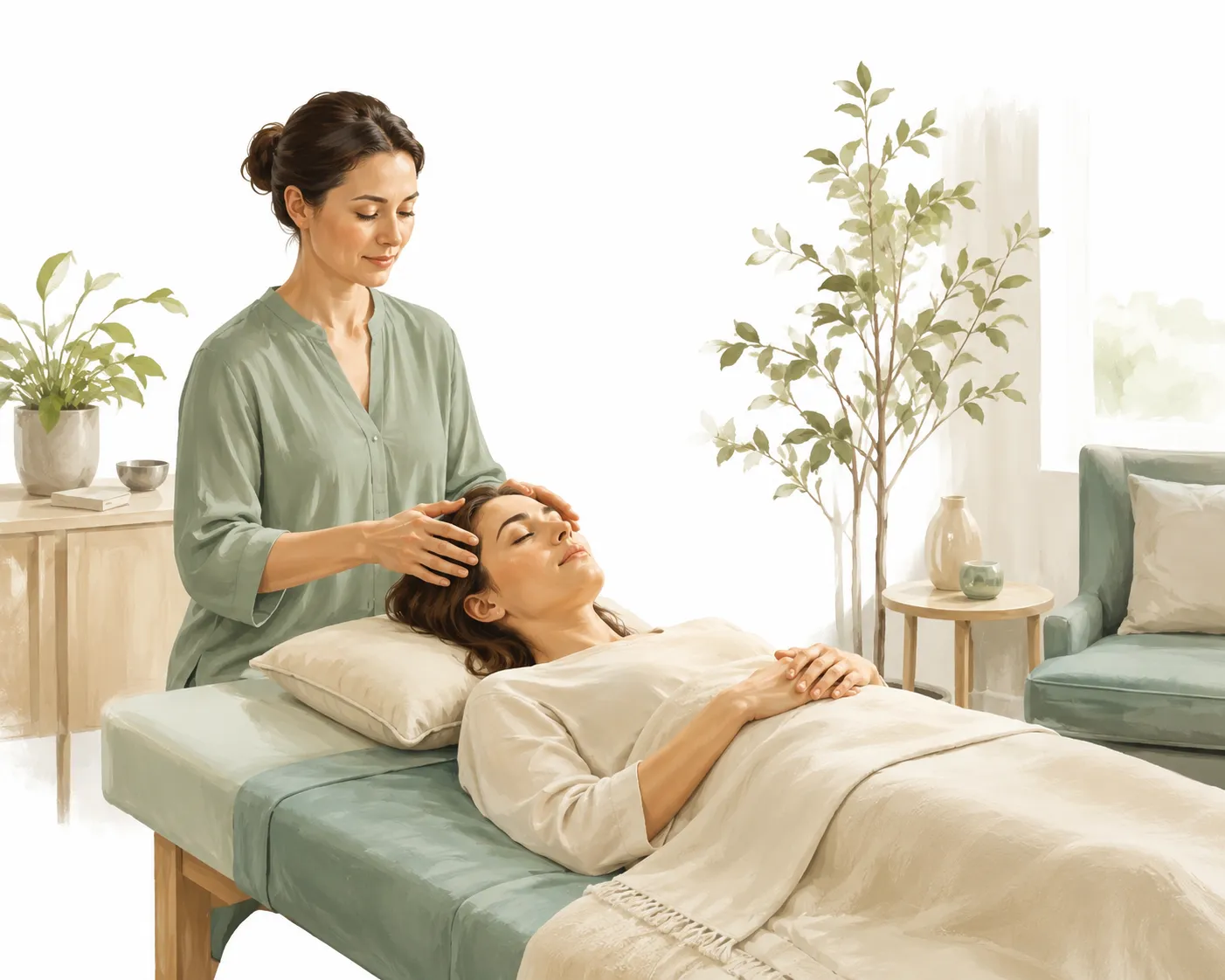
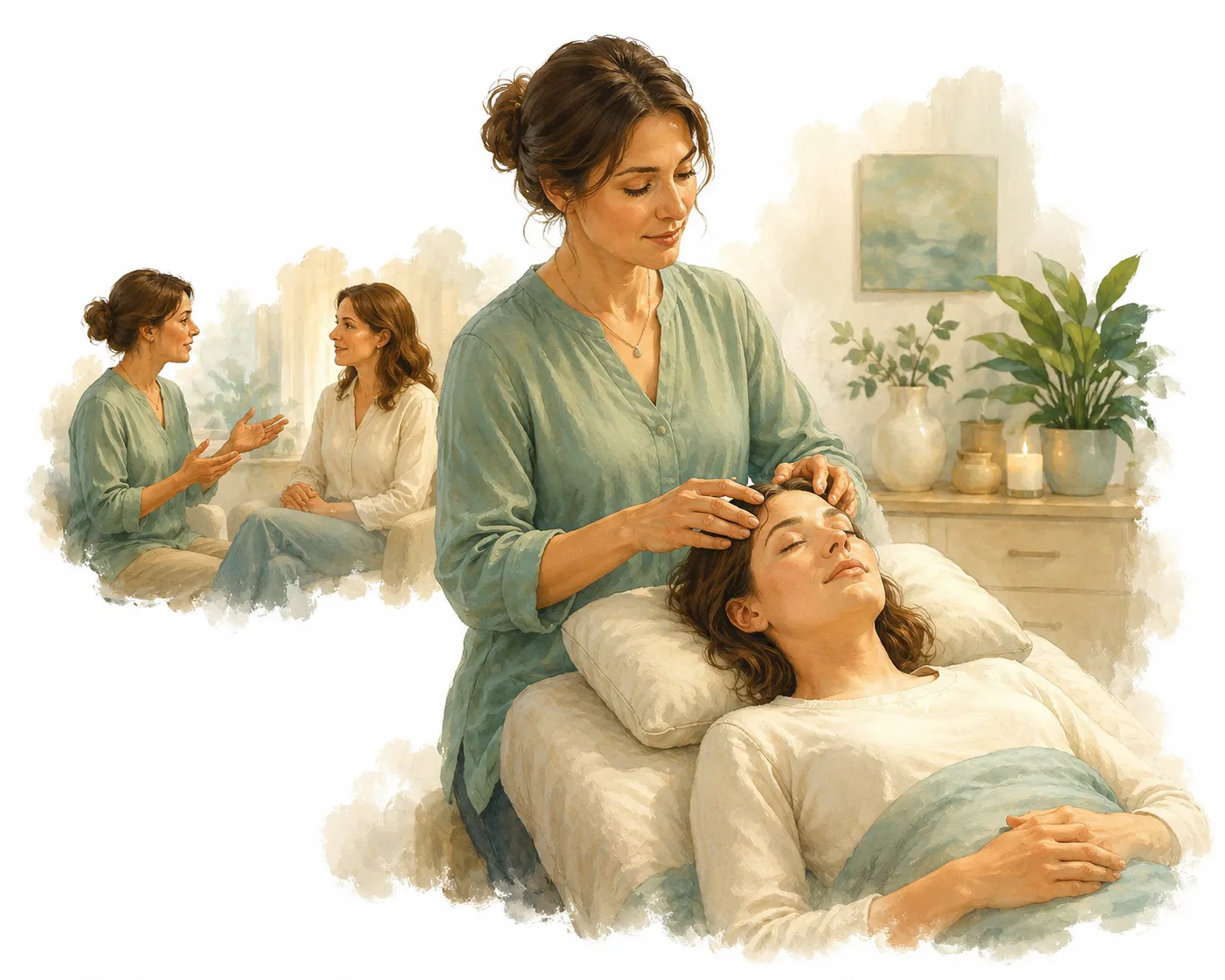
Practically speaking, whether someone calls it "Access Bars," "bars therapy," or "bars treatment," they're describing the same thing: a practitioner spends roughly an hour lightly touching combinations of 32 points on your head while you rest, fully clothed.
Skim first
Key takeaways
The shortest useful version of this page.
"Bars treatment" is another name for an Access Bars session.
It involves light touch on 32 head points, typically for 60–90 minutes.
"Treatment" is used in the spa sense, not the clinical sense.
It isn't a licensed or regulated medical treatment.
Relaxation is the most consistently reported effect.
The session
What actually happens in a bars treatment session
You lie down fully clothed on a treatment table, and the practitioner sits near your head, lightly resting their fingertips on combinations of the 32 designated points. There's no pressure, kneading, or manipulation involved — just sustained, gentle contact.
A session generally runs about 60 to 90 minutes. Some practitioners talk with you throughout; others work mostly in silence. Many people become drowsy or deeply relaxed; some fall asleep.
What "treatment" is supposed to accomplish
Access Consciousness frames the session as releasing stored mental and emotional "charge."
The claimed process
Practitioners describe the light touch as releasing the electromagnetic charge of thoughts, beliefs, and decisions tied to each point's theme.
What's actually measurable
A person rests quietly for an extended period while receiving calm, attentive touch — conditions already associated with relaxation.
The evidence gap
No independent, peer-reviewed research confirms that specific beliefs are stored at these points or released through touch in a measurable way.
Reality check
Common misunderstandings
- Myth
"Bars treatment" is a different, more clinical technique than Access Bars.
RealityIt's the same practice, just described with different, more spa-like wording.
- Myth
Calling it a "treatment" means it's medically regulated.
RealityThe word is used the way it's used for a spa or salon service, not a clinical one.
What to remember
"Bars treatment" and "Access Bars session" describe the same thing.
It involves light touch on 32 head points for roughly an hour.
It isn't a licensed medical treatment, despite the name.
Relaxation is the most commonly reported effect.
Quick answers
Frequently asked questions
What does "bars treatment" mean?
It's a common name for an Access Bars session — light touch on 32 head points while you rest, fully clothed.
Is bars treatment painful?
No — the touch is light and non-invasive.
Who performs bars treatment?
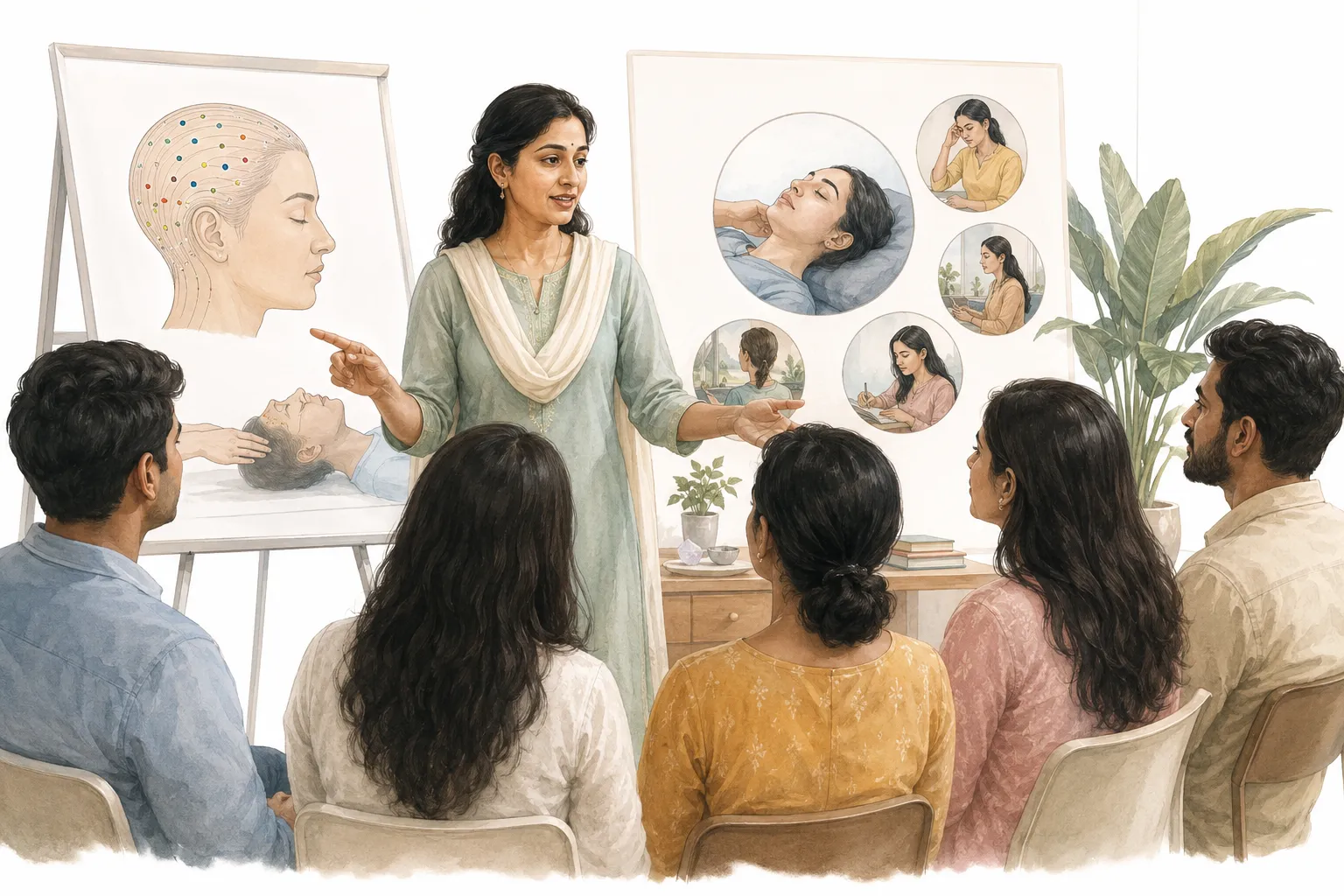
Anyone who has completed a one-day Access Bars practitioner class; no medical license is required.
Is bars treatment covered by insurance?
No — as an unregulated complementary practice, it's not typically covered by health insurance.
Sources
What Is Access Bars?. Access Consciousness. Accessed 2026-07-17
Official description of the session and its claimed purpose.