The practical guide
How to approach self-Bars practice
Running Access Bars on yourself is not the same as receiving from a practitioner, but it is possible to touch some of the points independently. The key is understanding which points you can reach, how to set up a comfortable environment, and what the limitations are.
The Access Bars system uses 32 points around the head. Some of these are at the front, sides, temples, and jawline, areas you can reach with your own hands. Others are at the crown, back of the head, and base of the skull, which are awkward to reach and difficult to hold for extended periods.
Self-Bars is not part of the official Access Bars training. The certification class teaches the technique as a practitioner-on-recipient practice. Anyone attempting self-Bars is experimenting with an unofficial approach.
Because you need to keep your arms raised during self-Bars, you cannot fully relax. This is a significant limitation, as relaxation and rest are central to the reported benefits of receiving Bars.
Which Access Bars points can you reach yourself?
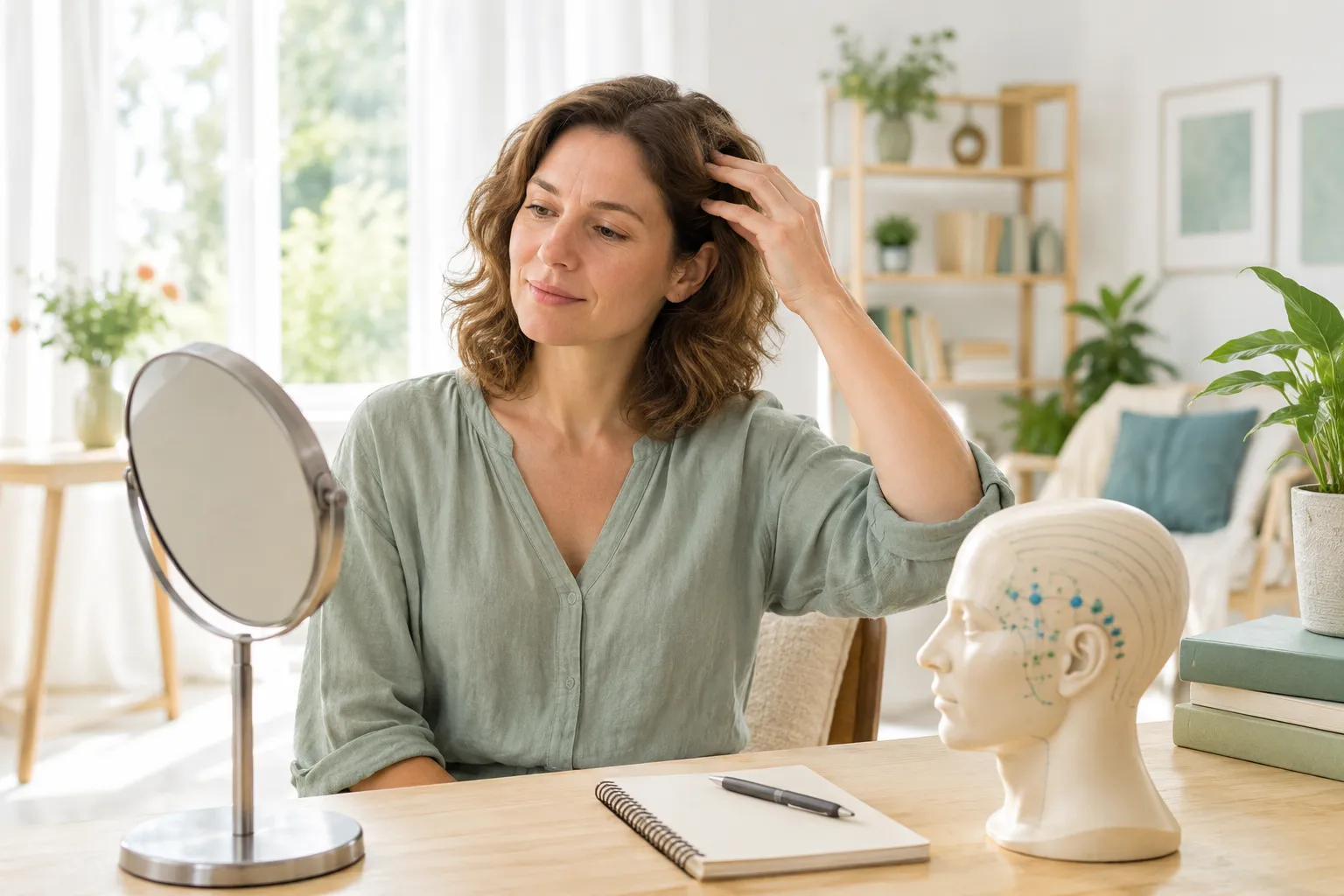
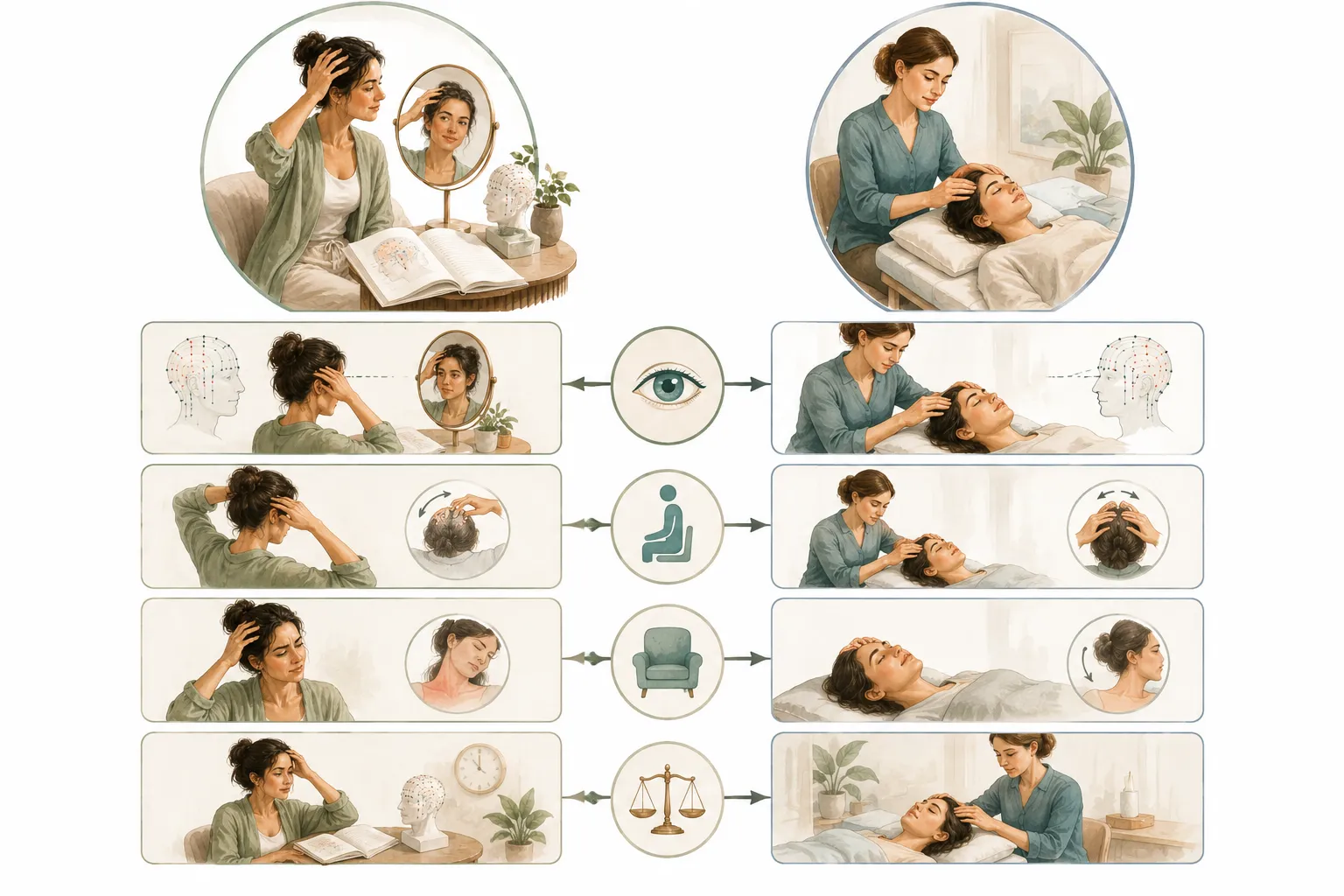
A visual guide showing reachable and difficult-to-reach points for self-Bars practice.
Reachable areas
Front, temple, and side points may be accessible.
Difficult areas
Crown and back points are hard to reach.
Arm position
Arms need to be raised and held in position throughout.
Self-touch limitation
Self-practice prevents full relaxation.
Skim first
Key takeaways
The shortest useful version of this page.
You can reach some Access Bars points on your own head.
Front and side points are generally accessible.
Crown and back points are difficult or impossible to reach.
Self-Bars is not taught in the official training.
You cannot fully relax while performing self-Bars.
Arm fatigue limits the duration of self-sessions.
There is no research on self-administered Access Bars.
Receiving from a practitioner is the standard approach.
Preparation
Preparing for a self-Bars session
Before you begin, find a comfortable position where you can reach your head without straining. Sitting in a supportive chair with armrests can help reduce arm fatigue. Some people try lying down, but this makes reaching points on the back of the head even more difficult.
Allow enough time for a relaxed experience, but be realistic about how long you can hold your arms up without becoming tired. A typical practitioner session lasts 60 to 90 minutes; a self-session will likely be shorter.
If you have received Bars from a practitioner, try to recall the points they touched and the sequence they used. You can attempt to follow a similar pattern with the points you can reach.
Which Access Bars points can you reach yourself?
This guide categorizes the Access Bars points by reachability. Remember that the system teaches 32 points, but you may only access a portion of them.
This is not an official Access Consciousness self-Bars guide. The system does not formally teach self-practice. The information here is based on practical observation of which points are physically reachable.
Front points (various)
Various themes associated with front head points
Many front points are reachable with your fingertips.
Physical reachability does not establish effectiveness.Temple points
Various themes associated with temple areas
Temples are generally easy to reach.
No research on self-application of these points.Side points
Various themes associated with side head areas
Side points are moderately easy to reach.
Self-practice lacks evidence.Crown points
Various themes associated with top of the head
Crown points are difficult to reach and hold.
Very limited self-application potential.Back points
Various themes associated with back of the head
Back points are generally unreachable for self-practice.
Self-practice not possible for these points.
How self-Bars differs from receiving from a practitioner
Understanding the differences between self-practice and receiving from a practitioner helps set realistic expectations.
Physical reach
A practitioner can access all 32 points from a comfortable seated position. You can access only some points and must hold your arms up.
Relaxation state
A recipient can fully relax while a practitioner works. You must remain active and engaged to perform the technique.
Arm fatigue
A practitioner's arms may become tired over a long session, but the recipient experiences no fatigue. Your arms will tire from being held up.
Attention and presence
Within the Access Consciousness system, the practitioner's presence and intent are part of the technique. You cannot provide that same presence for yourself.
Overall experience
Receiving is a passive, restful experience. Self-practice is active and may feel more like a physical exercise than a relaxation session.
What practitioners say about self-Bars
- Practitioner
Most certified practitioners focus on offering sessions to others and do not practice self-Bars regularly. They generally recommend receiving from a practitioner for the full experience.
- Participant
Some people who have received Bars sessions become curious about self-practice. They may try it between sessions to maintain a sense of calm or connection to the practice.
- Student
Students sometimes ask about self-Bars during classes. Facilitators generally explain that the technique is designed to be received and that self-practice is not formally taught.
- Facilitator
Some facilitators may acknowledge that self-touch can be calming, but they do not typically teach it as a substitute for practitioner sessions.
- Balanced view
Practitioner and participant experiences provide personal perspectives, not evidence. Feeling calm from self-touch is a subjective experience, not proof that self-Bars works like practitioner-facilitated sessions.
- Evidence view
There is no independent research on self-administered Access Bars. All available evidence (limited as it is) relates to practitioner-on-recipient sessions.
Do not rely on self-Bars as a substitute for appropriate medical or psychological care. Self-practice is a personal experiment with no established evidence.
Self-Bars vs. practitioner session comparison
Understanding the differences helps you decide which approach is right for your situation.
Points accessible
Limited. Some points unreachable
All 32 points
Relaxation level
Limited (you must stay active
High) you can fully rest
Arm fatigue
Significant
None for recipient
Session duration
Limited by comfort
60 to 90 minutes typically
Official teaching
Not taught
Central to certification
Research evidence
None
Limited but exists
Cost
Free
Session fees apply
Convenience
Available anytime
Requires booking
Reality check
Common misunderstandings about self-Bars
- Myth
You can give yourself a full Access Bars session.
RealityMany points are unreachable, and you cannot fully relax while performing the technique on yourself.
- Myth
Self-Bars works the same way as a practitioner session.
RealityThere is no evidence that self-practice produces the same effects. The physical and experiential differences are significant.
- Myth
Self-Bars is a standard Access Bars practice.
RealityThe official training does not teach self-Bars. It is a personal experiment.
- Myth
If you can reach the points, you're doing Access Bars correctly.
RealityThe system describes the technique as including the practitioner's presence and intent, not just physical touch. Even the official system does not describe it as a self-application method.
What to remember about self-Bars practice
You can reach front and side points on your own head.
Crown and back points are difficult or impossible to access.
Self-Bars is not part of the official training.
Arm fatigue limits session duration.
You cannot fully relax while performing self-Bars.
There is no research on self-administered Access Bars.
Receiving from a practitioner is the standard approach.
Self-practice is a personal experiment, not a proven method.
Verdict
Our evidence-based verdict on self-Bars
insufficient-evidence
Self-Bars is physically possible for some points but not a standard or evidence-based practice. You cannot reach all points, you cannot fully relax, and there is no research on self-administered Access Bars. If you want to experience Access Bars as it is taught, you need to receive it from a practitioner.
What we know
- Some head points are reachable with your own hands.
- Other points are difficult or impossible to access.
- Self-Bars is not taught in the official training.
- Arm fatigue and inability to relax are significant limitations.
What we do not know
- Whether self-Bars produces any specific effects.
- Whether self-Bars works through the proposed mechanism.
- Whether self-Bars has any benefits or risks.
Self-Bars is a personal experiment with no established evidence. The standard approach (and the one recommended by practitioners) is to receive Access Bars from a qualified practitioner.
Bottom line
Some things are better received
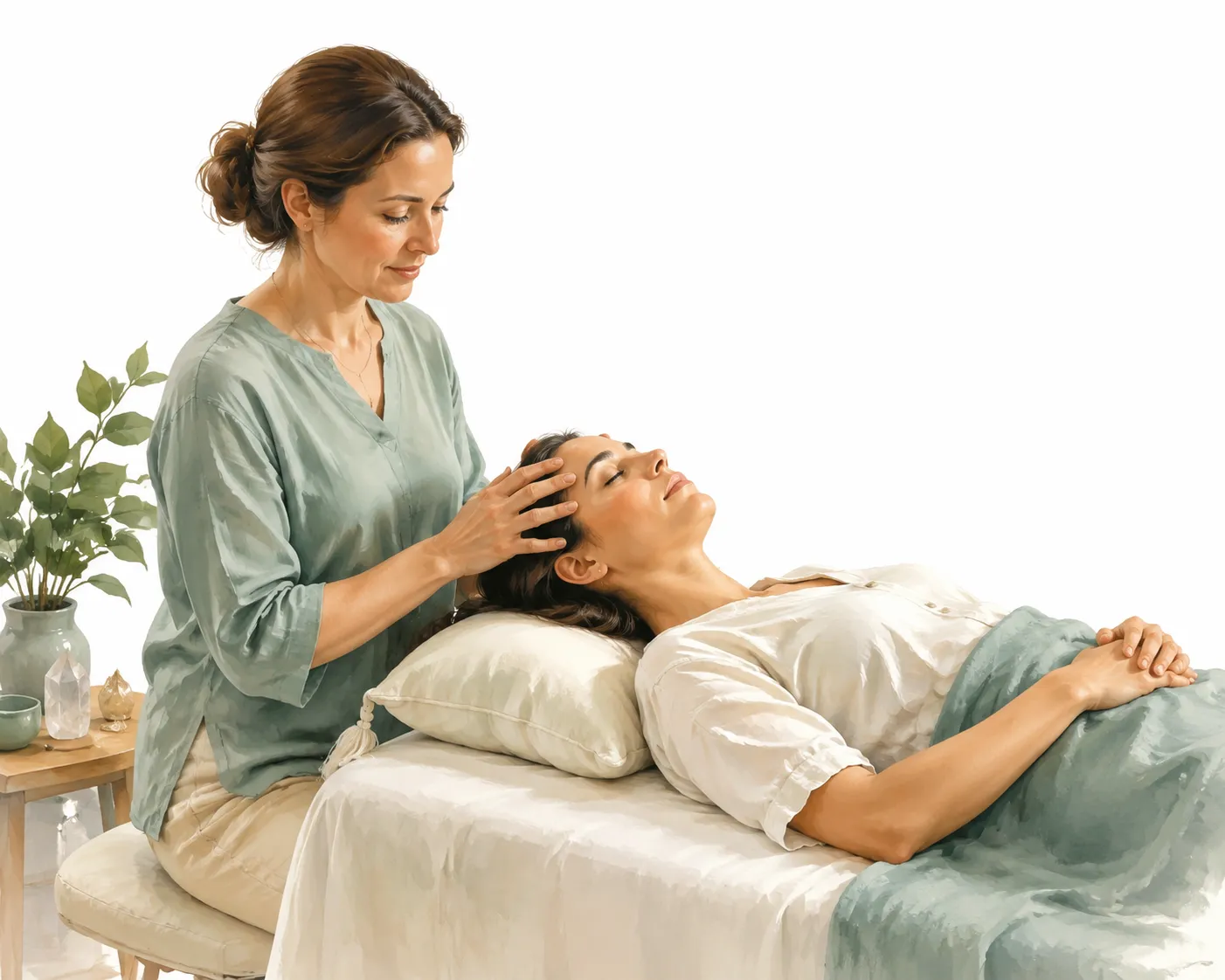
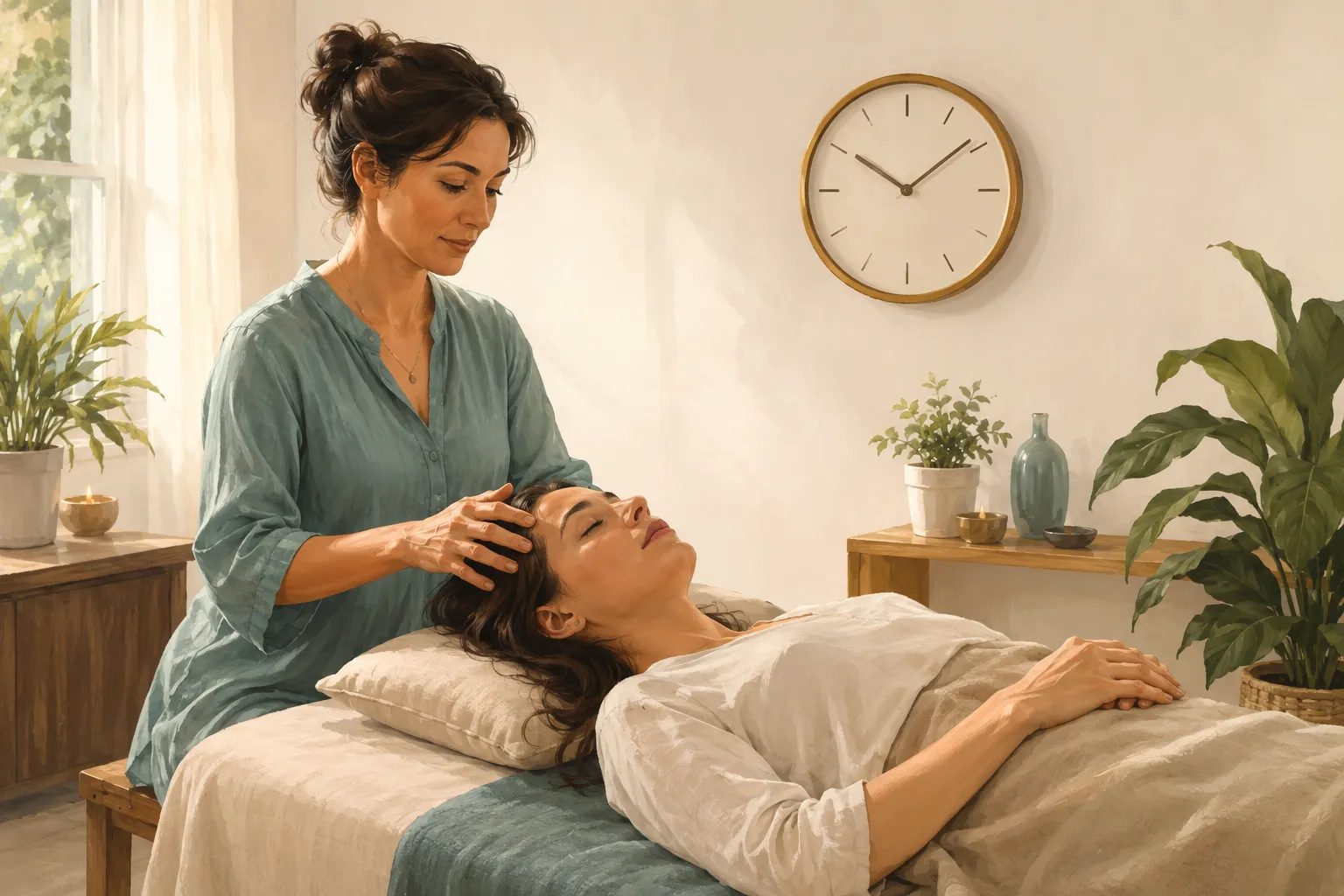
Access Bars is designed as a practice of receiving. Trying to do it on yourself changes the experience fundamentally and leaves out the key elements of rest, presence, and full accessibility.
Quick answers
Frequently asked questions
Can you run Access Bars on yourself effectively?
You can touch some points, but a full session is difficult. The technique is taught as a practitioner-on-recipient practice.
What points can you reach on yourself?
Front, temple, and side points are generally reachable. Crown and back points are difficult or impossible to access.
Why is self-Bars not recommended?
You cannot reach all points, cannot fully relax, and there is no evidence for self-practice effectiveness. The system is designed for practitioner-on-recipient sessions.
Can I do Access Bars on myself while lying down?
Lying down makes reaching some points even harder. Sitting in a supportive chair is generally more practical for self-Bars.
Is there any research on self-Bars?
No. All available evidence (limited as it is) relates to practitioner-on-recipient sessions, not self-practice.
Sources
REPLACE IF AVAILABLE. REPLACE WITH VERIFIED OFFICIAL ACCESS BARS PAGE TITLE. Access Consciousness, REPLACE_IF_AVAILABLE. Accessed YYYY-MM-DD
Use to establish whether the official system teaches or recommends self-practice.
REPLACE WITH VERIFIED AUTHORS. REPLACE WITH VERIFIED RESEARCH PAPER TITLE. REPLACE WITH VERIFIED JOURNAL, REPLACE WITH VERIFIED DATE. Accessed YYYY-MM-DD
Use to assess whether any research exists on self-administered Access Bars.