The practical method
What performing Access Bars actually involves
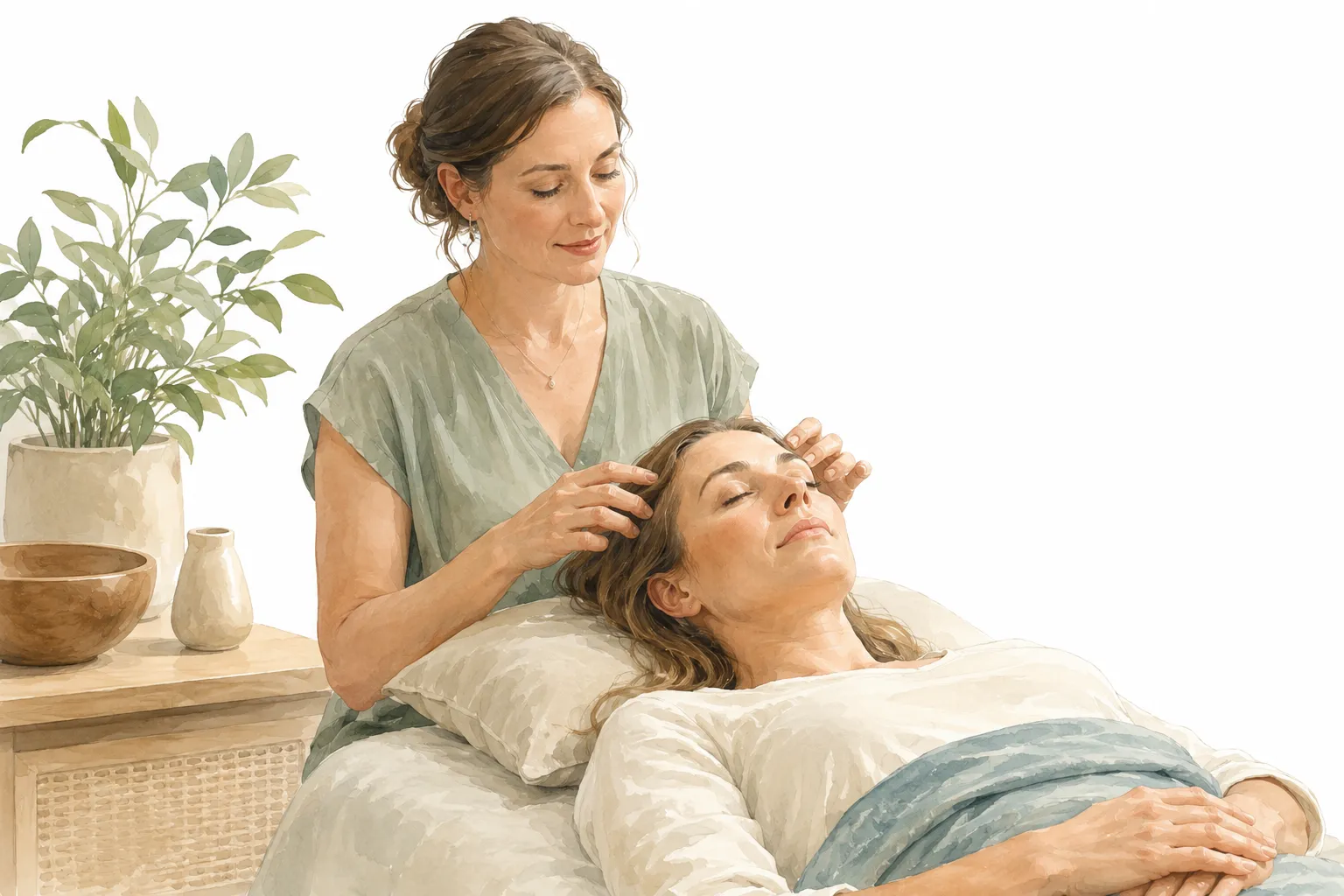
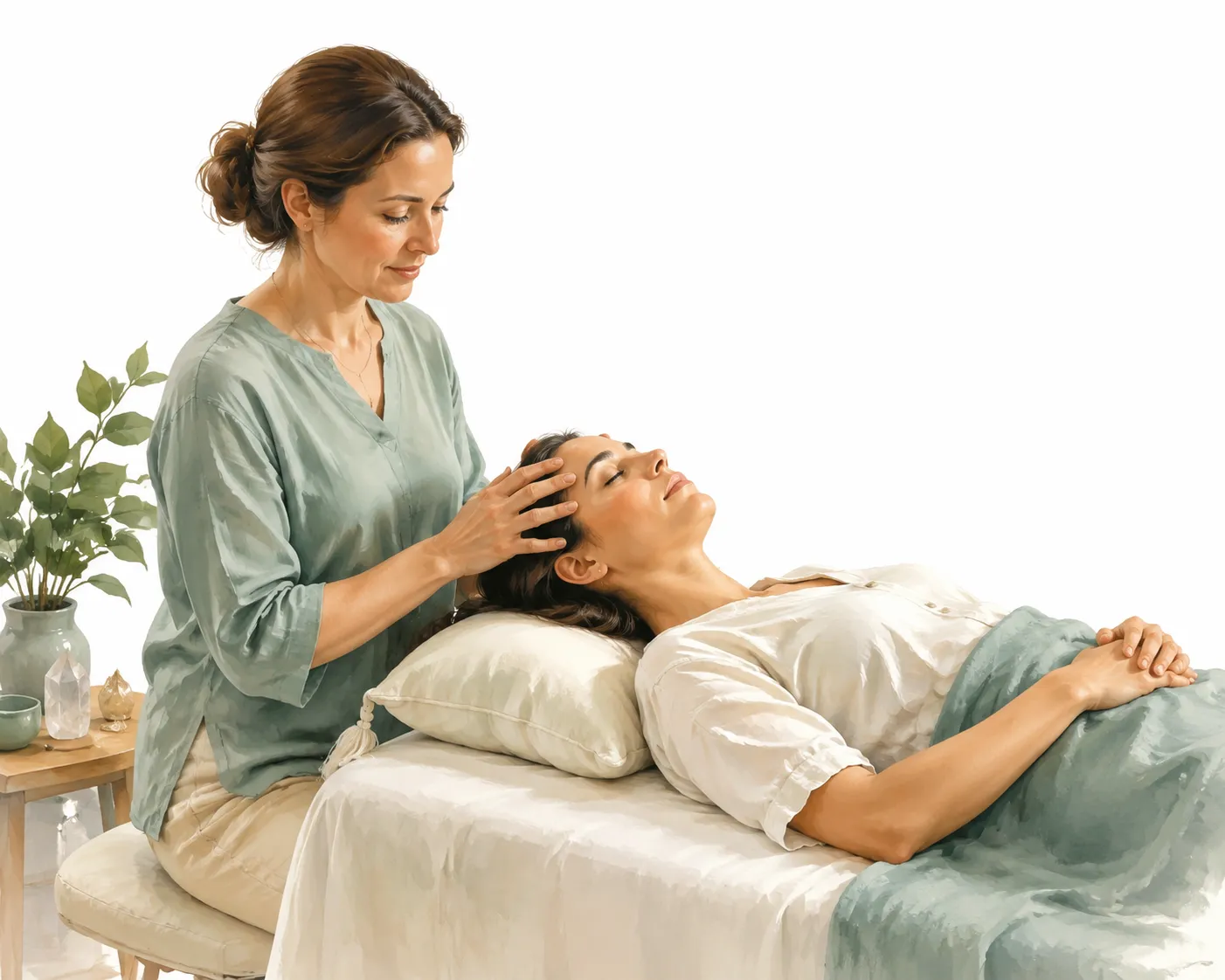
Performing Access Bars is a structured procedure that involves using light touch on specific areas of the head. The practitioner typically works from a seated position near the recipient's head, using their fingertips to make gentle contact with a sequence of designated points.
The physical technique is relatively straightforward: the practitioner touches, holds, and moves through the points. The recipient remains fully clothed and rests on a treatment table.
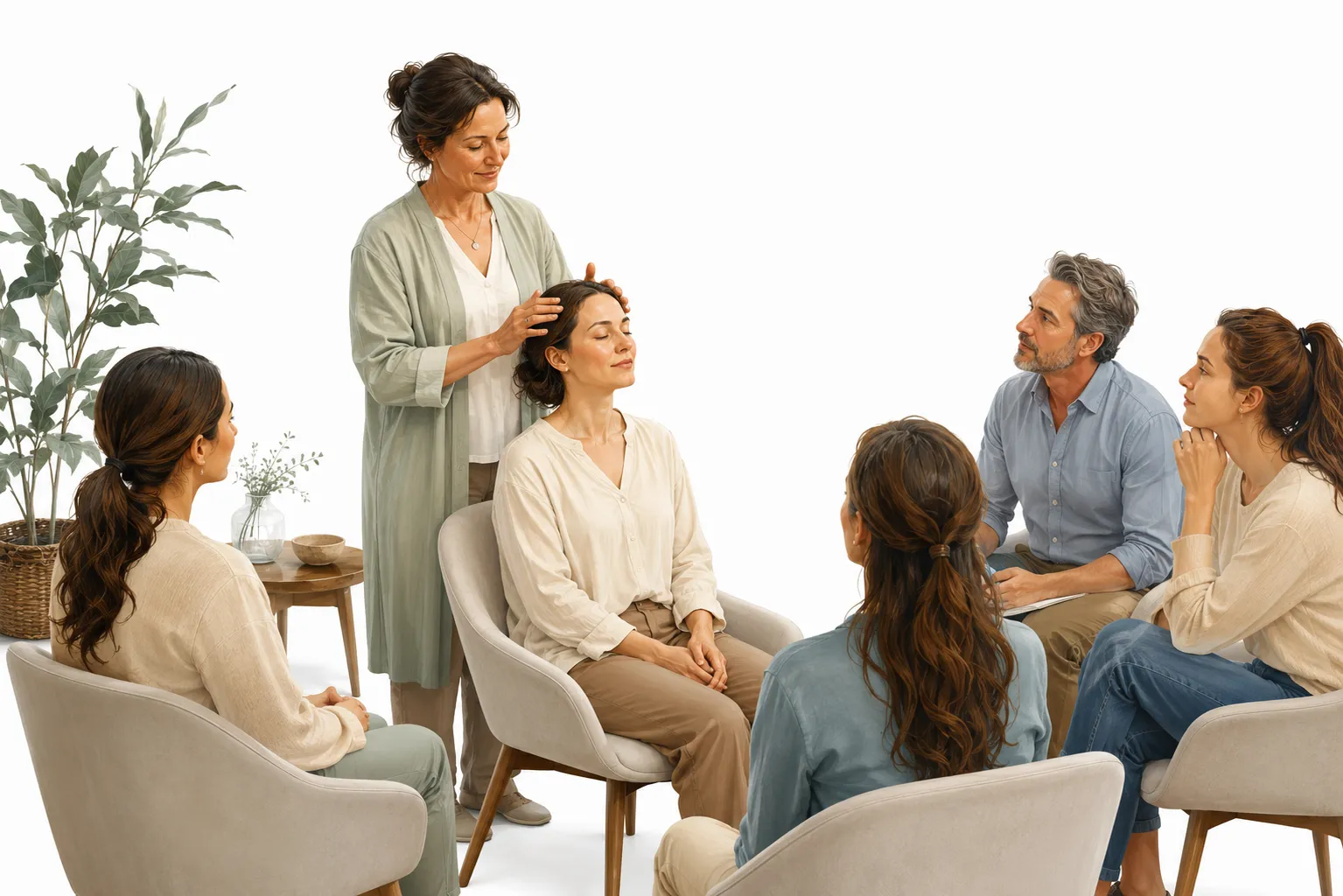
Learning the method requires memorizing the point locations and the sequence in which they are touched. This is typically done through a one-day in-person training class led by a certified Access Bars facilitator.
The procedure itself is simple to describe, but the claims about what it accomplishes (releasing stored thoughts, emotions, and limiting beliefs) are more complex and not scientifically established. Understanding how to perform the technique is separate from evaluating the validity of its proposed mechanism.
How an Access Bars session is performed
A diagram showing the practitioner's seated position, hand placement around the recipient's head, and the general session setup.
Practitioner position
Seated near the head for easy access to all points.
Fingertip contact
Light, gentle touch with no pressure.
Head points
The 32 designated locations are taught in the certification class.
Recipient position
Lying comfortably, fully clothed.
Skim first
Key takeaways
The shortest useful version of this page.
Access Bars is performed using gentle fingertip touch on 32 designated head points.
The recipient lies fully clothed and rests during the session.
A standard session lasts 60 to 90 minutes.
Learning the technique requires a one-day certification class.
The points are assigned life-theme meanings within the Access Consciousness system.
The physical technique is separate from the system's claims about its effects.
Scientific evidence for the proposed mechanism is limited.
Performing Access Bars is not a medical or psychological qualification.
What the practitioner does
The basic Access Bars procedure
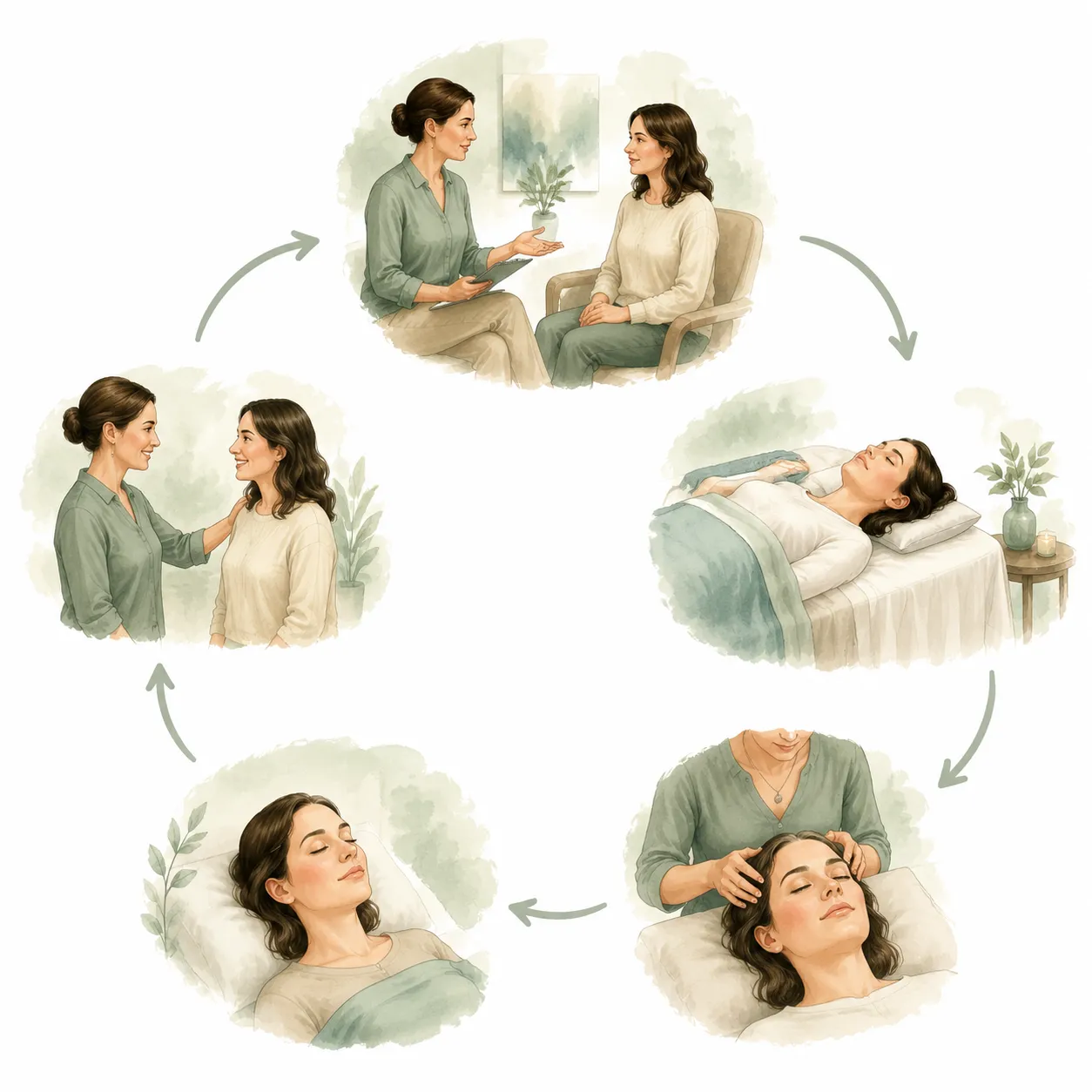
The session begins with the recipient lying down comfortably, usually on a treatment table or similar surface. They remain fully clothed throughout.
The practitioner positions themselves near the recipient's head, either seated or standing. The work is done entirely with the hands, using fingertips to make gentle contact with the taught points.
The practitioner moves through a sequence of points, touching each one lightly and holding it briefly before moving to the next. The exact sequence is taught in the certification training.
Throughout the session, the practitioner maintains consistent, gentle contact rather than applying pressure, kneading, or massaging. The touch is more like resting the fingertips on the skin than manipulating tissue.
How the technique is explained within Access Consciousness
There are two layers to understanding how Access Bars works: the practical technique and the Access Consciousness explanation for what the technique does.
Locating the points
The practitioner touches the 32 designated points on the head that Access Consciousness associates with different themes: money, control, creativity, communication, awareness, healing, sex, body, aging, and others.
Within the system, the points are sometimes compared to "buttons" that correspond to different areas of life.Gentle holding
The practitioner holds each point lightly with their fingertips, often for a few seconds to a minute.
It is similar to resting your fingers on a keyboard without pressing down.Claimed release of energy
Access Consciousness materials describe the touch as releasing the "electromagnetic component" of thoughts, beliefs, decisions, and attitudes stored in the head.
Supporters compare it to deleting old files from a computer.Recipient experience
The recipient may experience relaxation, sleepiness, emotional shifts, mental quiet, or no noticeable change.
Scientific perspective
There is no established scientific mechanism for storing specific thoughts in head points or releasing them through gentle touch.
The system's explanation is a belief-based claim, not a verified biological description.
Structure of a standard Access Bars session
While practitioners may vary their approach, a session generally follows this sequence.
1. Pre-session conversation
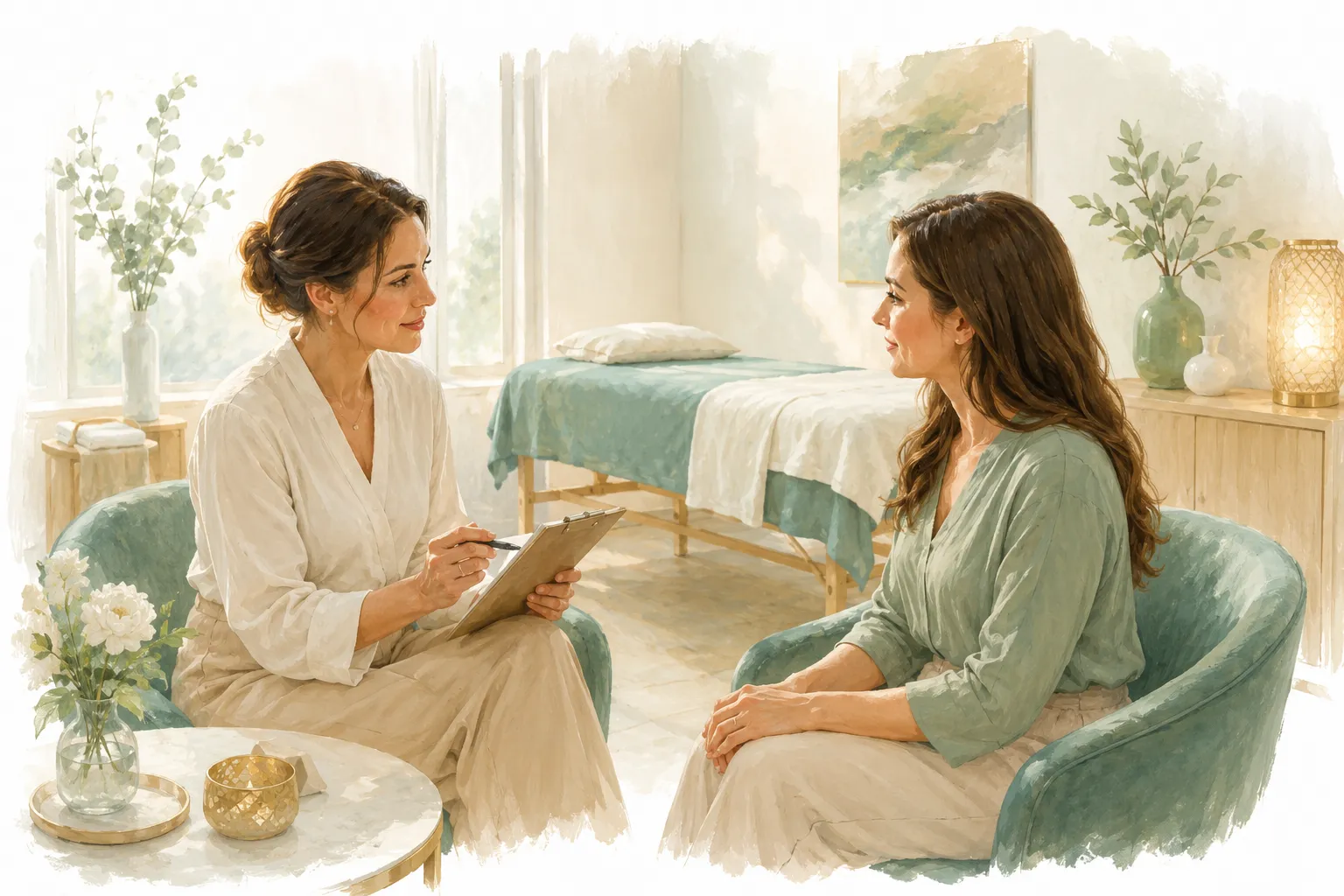
The practitioner discusses the recipient's reasons for the session, explains the process, and establishes consent and touch preferences.
5 to 10 minutes2. Positioning
The recipient lies down fully clothed on a treatment table, often with pillows or a blanket.
2 to 5 minutes3. Point work
The practitioner touches the designated points in sequence, using light fingertip contact and moving from one point to the next.
45 to 70 minutes4. Rest period
The recipient may rest, fall asleep, talk, or simply be present.
Throughout the session5. Closing
The practitioner completes the session and may check in with the recipient.
5 to 10 minutes
What are the 32 Access Bars points?
The Access Bars system uses 32 points or Bars, each associated with a different theme in a person's life.
The names and meanings are part of the Access Consciousness teaching system, not recognized anatomical structures or medically validated treatment points.
Healing
Associated with attitudes toward healing and well-being.
One of the points taught in the Access Bars system.
There is no established scientific evidence that beliefs about healing are stored at a specific head point.Control
Associated with control-related thoughts and patterns.
A named point in the Access Bars map.
The assigned meaning is philosophical, not anatomical.Awareness
Associated with awareness and consciousness.
A point used in the standard Access Bars sequence.
Touching this point has not been shown to increase awareness through a verifiable biological mechanism.Creativity
Associated with creativity and creative blocks.
A point that practitioners may mention during a session.
The claimed association is not scientifically validated.Power
Associated with power and personal authority.
A point in the Access Bars system.
No evidence supports that power-related beliefs are stored at this location.Aging
Associated with attitudes about aging.
A point used in the standard sequence.
There is no evidence that touching this point affects the aging process.Sex
Associated with sexuality and sexual expression.
A point in the Access Bars teaching map.
The claimed association is unverified.Money
Associated with attitudes about money and abundance.
A point commonly referenced in Access Bars sessions.
No evidence shows that financial beliefs are stored at a specific head point.
How practitioners describe performing Access Bars
- Practitioner
Practitioners describe the technique as gentle and accessible, requiring light touch rather than pressure. They emphasize creating a safe, comfortable environment where the recipient can relax and receive.
- Participant
Recipients often report feeling deeply relaxed, sleepy, or mentally quiet. Some describe emotional releases or shifts in perspective.
- Student
Students often find the technique easy to learn initially but say that confidence and flow develop with practice. The one-day class provides the basics, but proficiency comes with repetition.
- Facilitator
Facilitators describe the class as the beginning of a journey, with the Bars technique serving as an entry point to the broader Access Consciousness system.
- Balanced view
These perspectives describe the experience of performing and receiving Access Bars. They do not establish that the technique produces the specific outcomes claimed by the system.
- Evidence view
Independent scientific evidence does not confirm that the technique produces effects beyond relaxation, rest, and non-specific factors associated with gentle touch and attention.
Practitioner descriptions should not be interpreted as medical or therapeutic claims unless supported by appropriate evidence.
Evidence scan
What does the evidence say about the technique?
The question is not whether practitioners perform the technique (they clearly do) but whether the technique produces the specific effects that Access Consciousness claims.
Overall: not enough evidence
Leans in favor
Points that support the claim
Access Bars is a learnable physical technique.
The technique is straightforward to learn through a one-day class and is practiced by trained practitioners worldwide.
Leans against
Points that do not support the claim
Touching the points releases stored thoughts and beliefs.
No established neurological or biological mechanism confirms that specific thoughts are stored in these head points or released by gentle touch.
Access Bars produces reliable therapeutic effects.
Available research is not strong enough to establish that Access Bars produces specific therapeutic outcomes beyond relaxation and non-specific effects.
How to learn to perform Access Bars
Access Bars training is offered through a standardized one-day in-person class, which qualifies participants to offer sessions as certified practitioners.
1. Find a class
Access Bars facilitator classes are offered in many countries through the Access Consciousness network. Classes are typically held in person and last approximately 8 hours.
Open enrollment: no prior experience required.
Approximately $200 to $500 USD depending on location [citation:6]. · 1 day2. Attend the class
The class includes a combination of instruction, demonstration, and hands-on practice. Participants give and receive Bars sessions under the facilitator's guidance.
Willingness to participate in practice sessions.
1 day (typically 9:30 AM - 5:30 PM) [citation:7]3. Complete practice sessions
Participants practice the technique on one another during the class to develop familiarity with the points and the flow of a session.
Active participation.
During the class4. Receive certification
Upon completing the class, participants receive a certificate acknowledging their completion of the Access Bars Practitioner training.
Attendance and participation.
5. Practice independently
Certified practitioners can then offer sessions to clients. Many practitioners continue learning through additional classes and repeated practice.
Certification from an Access Bars facilitator.
What does Access Bars training cost?
The primary cost of learning to perform Access Bars is the one-day certification class. Prices vary by location and the facilitator offering the class.
| New practitioner class | $200 to $500 | The standard cost for the one-day Access Bars certification class [citation:6]. |
|---|---|---|
| Returning practitioner class | $100 to $250 | Discounted rate for practitioners refreshing or retaking the class [citation:6]. |
| Travel and materials | Participants are responsible for their own travel to the class location and any optional materials. | |
| Ongoing professional development | Practitioners may choose to take additional Access Consciousness classes, which have separate fees. |
- Prices vary by country and currency.
- Some facilitators offer discounts for repeat attendance.
- Class prices do not include travel, accommodation, or meals.
What performing Access Bars is, and is not
Comparing the technique to other practices helps clarify what the practitioner actually does.
Access Bars
A gentle head-touch procedure
Uses light fingertip contact rather than pressure
Massage
Different technique and goals
Massage involves pressing and kneading muscles; Access Bars does not
Energy healing
Similar philosophical language used
Energy healing claims are not scientifically established for either practice
Medical treatment
Not a medical procedure
Performing Access Bars is not the same as providing medical diagnosis or therapy
Psychotherapy
Not psychological therapy
The session does not involve clinical assessment or regulated mental health treatment
Reality check
Common misunderstandings about performing Access Bars
- Myth
You need to be a massage therapist to perform Access Bars.
RealityNo prior bodywork experience is required to take the Access Bars class. The technique is taught as a standalone practice.
- Myth
The 32 points are scientifically mapped brain areas.
RealityThey are part of the Access Consciousness teaching system, not recognized anatomical structures.
- Myth
Performing Access Bars requires special spiritual abilities.
RealityThe technique is taught as a practical hands-on method that anyone can learn.
- Myth
Certification means the practitioner is clinically qualified.
RealityCertification indicates completion of the Access Bars training, not clinical licensure or medical qualifications.
- Myth
The technique always produces significant changes.
RealitySome recipients report relaxation or other experiences, while others notice little change. There is no guaranteed outcome.
Safety
Is it safe to perform Access Bars?
The technique involves gentle touch and is generally low in direct physical intensity. However, practitioners should be aware of appropriate boundaries, consent, and the limitations of what they are offering.
Generally low-risk for
- Adults who are comfortable with gentle touch around the head
- People who understand the non-medical nature of the session
- Recipients who have given informed consent
Use caution if
- The recipient has a recent head injury, surgery, or severe pain
- The recipient is distressed or uncomfortable with touch
- The practitioner makes exaggerated health claims
- The recipient is being encouraged to stop prescribed medical treatment
Seek professional help if
- The recipient has persistent or worsening physical symptoms
- The recipient is experiencing severe anxiety, depression, or a mental health crisis
- A medical diagnosis or evidence-based treatment is needed
Access Bars should be considered a complementary wellness practice, not medical or psychological treatment. Practitioners should not diagnose, treat, or advise on health conditions.
What to remember about performing Access Bars
Access Bars uses light fingertip touch on 32 designated head points.
The recipient lies fully clothed on a treatment table.
A session typically lasts 60 to 90 minutes.
Practitioners learn the technique through a one-day certification class.
The system assigns life-theme meanings to the points.
The physical technique is separate from the system's claims about its effects.
Scientific evidence for the proposed mechanism is limited.
Performing Access Bars is not a medical or therapeutic qualification.
Verdict
Our evidence-based verdict on the technique
insufficient-evidence
Performing Access Bars is a learnable, straightforward technique that involves gentle touch on designated head points. The physical procedure is clear and can be taught in a one-day class. However, the broader claims about what the technique accomplishes (releasing stored thoughts, emotions, and limiting beliefs) are not supported by strong independent scientific evidence.
What we know
- The technique uses gentle fingertip contact on specific head points.
- The system includes 32 points associated with different themes.
- Training is available through a one-day certification class.
- Many recipients report feeling relaxed during or after sessions.
What we do not know
- Whether the points store specific thoughts, beliefs, or emotions.
- Whether touching the points releases such material through a biological mechanism.
- Whether the technique produces effects beyond relaxation and non-specific factors.
- Whether the technique is effective for treating medical or psychological conditions.
The technique is learnable and the physical procedure is low risk. Practitioners and recipients should maintain realistic expectations, understanding that the practice is a complementary wellness method rather than an evidence-based treatment.
Bottom line
Learnable technique, unproven claims
Performing Access Bars is not difficult to learn. The challenge is not the physical procedure but the gap between what the technique is and what some claim it can do. Any practitioner should understand both.
Quick answers
Frequently asked questions
How do you perform Access Bars step by step?
The practitioner positions the recipient comfortably, then uses light fingertip touch on a sequence of 32 head points while the recipient rests. The sequence is taught in the certification class.
What qualifications do you need to perform Access Bars?
Completing a one-day Access Bars certification class qualifies you to perform the technique. No prior healthcare or bodywork experience is required.
Can you perform Access Bars on yourself?
Some practitioners attempt self-Bars, but the technique is generally taught and performed with a practitioner working on a recipient, as reaching all the points independently is challenging.
How much does Access Bars certification cost?
The one-day class typically costs between $200 and $500 USD, depending on the facilitator and location.
Is Access Bars scientifically proven?
No strong independent scientific evidence currently establishes that Access Bars produces its claimed effects or works through its proposed mechanism.
Sources
REPLACE IF AVAILABLE. REPLACE WITH VERIFIED OFFICIAL ACCESS BARS PAGE TITLE. Access Consciousness, REPLACE_IF_AVAILABLE. Accessed YYYY-MM-DD
Use to establish how Access Consciousness describes the Bars method and its training structure.
REPLACE WITH VERIFIED AUTHORS. REPLACE WITH VERIFIED RESEARCH PAPER TITLE. REPLACE WITH VERIFIED JOURNAL, REPLACE WITH VERIFIED DATE. Accessed YYYY-MM-DD
Use to assess the evidence base for Access Bars, including study design and limitations.
REPLACE IF AVAILABLE. REPLACE WITH VERIFIED MEDICAL EVIDENCE GUIDANCE. REPLACE WITH RECOGNIZED MEDICAL SOURCE, REPLACE IF AVAILABLE. Accessed YYYY-MM-DD
Use for complementary-care and treatment-substitution context.