The practice and the philosophy
Two layers: a technique, and a worldview
Access Consciousness Bars refers to the head-touch technique developed within Access Consciousness, a broader self-development system founded by Gary Douglas in the early 1990s. The Bars are considered the entry point into the wider Access Consciousness world — many people's first exposure to the organization comes through a single Bars session or a one-day practitioner class.
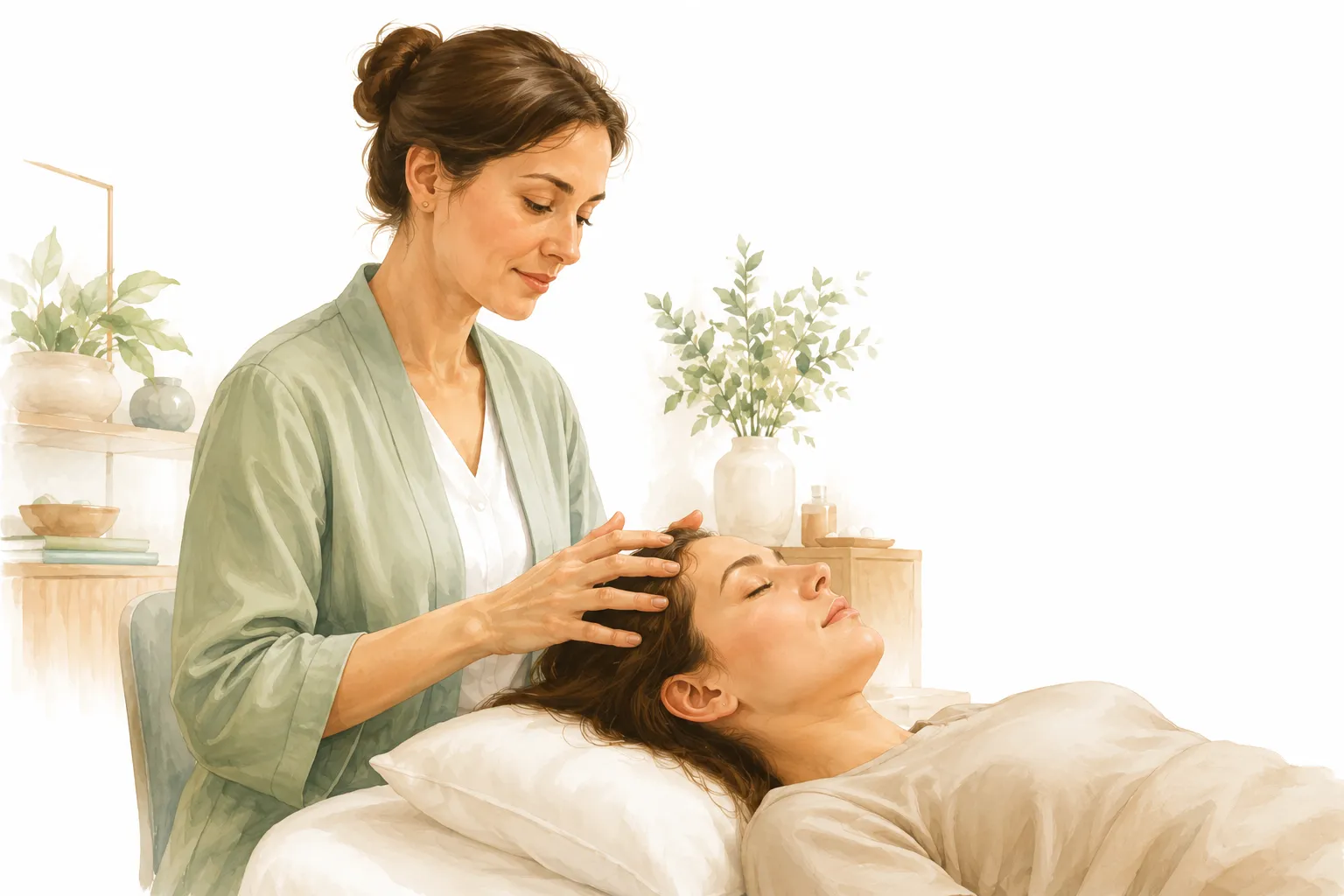
As a technique, it's straightforward to describe: a practitioner lightly touches combinations of 32 points on your head, each assigned to a theme like money, creativity, control, or communication, while you lie fully clothed for roughly an hour.
As a philosophy, Access Consciousness frames the Bars within a larger set of ideas about consciousness, energy, and personal transformation — including the idea that touching these points releases the "electromagnetic charge" of a lifetime of limiting thoughts. That larger framework is where independent verification becomes much harder to find; the physical session is easy to observe, but the claimed mechanism behind it is specific to the organization's own teachings.
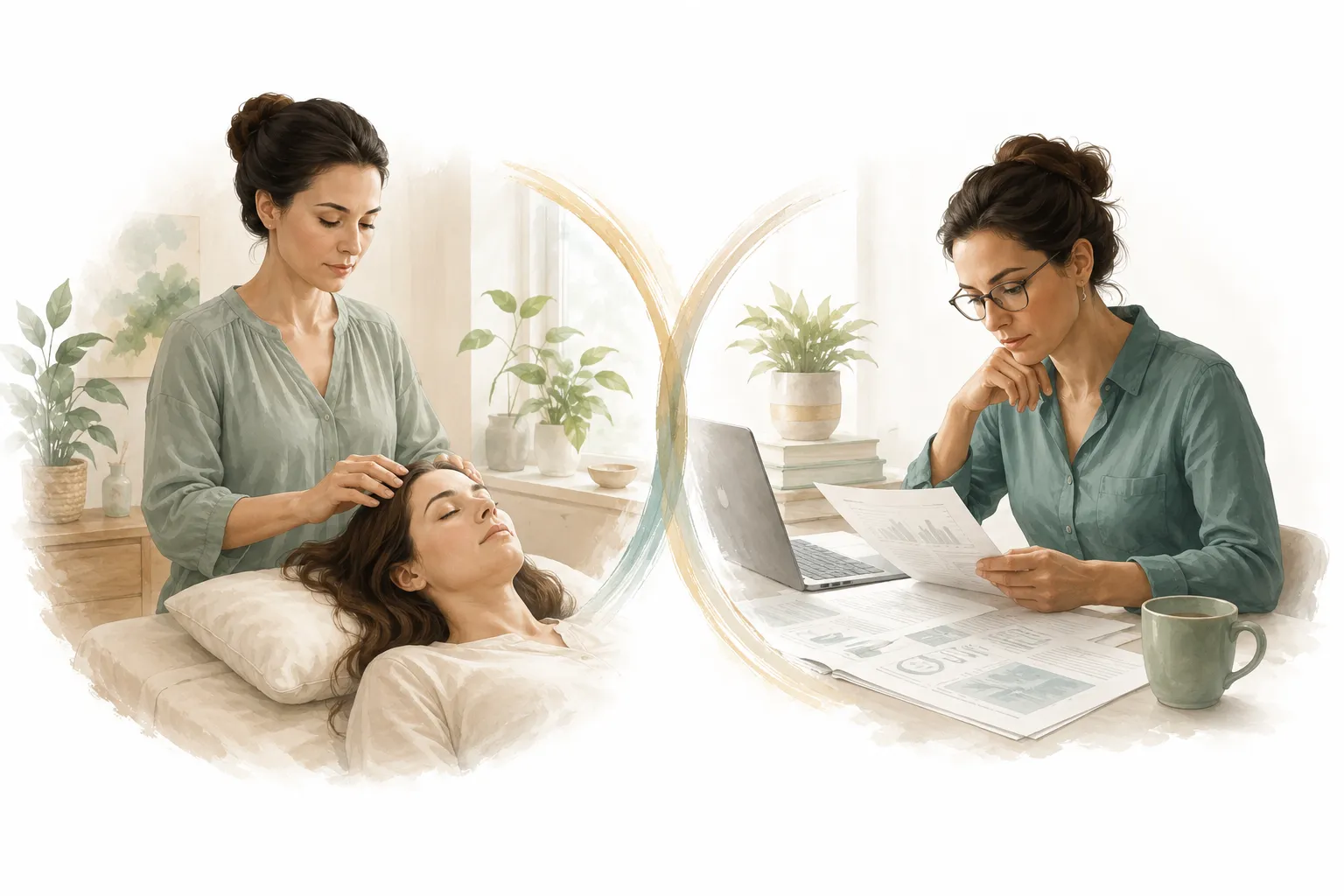
Understanding Access Consciousness Bars well means holding both layers at once: a genuinely offered, teachable relaxation practice, wrapped in a set of claims that go considerably further than current independent science can confirm.
Skim first
Key takeaways
The shortest useful version of this page.
Access Consciousness Bars is the full name for the practice commonly called Access Bars.
It's the signature technique of Access Consciousness, founded by Gary Douglas.
Sessions involve light touch on 32 head points for about an hour.
Relaxation is the most consistently reported outcome.
Broader claims about releasing stored beliefs lack strong independent evidence.
Where it started
Where Access Consciousness Bars comes from
Access Consciousness was founded by Gary Douglas, who has described discovering the Bars points through channeling experiences rather than clinical research or established bodywork traditions. The organization later expanded with contributions from Dr. Dain Heer, who became a co-creator of much of Access Consciousness's public-facing material.
Today Access Bars is taught internationally through one-day practitioner classes with no prerequisites, and sessions are offered by independent practitioners, wellness studios, and some spas.
How Access Consciousness Bars is said to work
The claimed mechanism and the observable procedure are two different things.
Point selection
The practitioner works through a taught map of 32 points, each linked to a specific life theme.
Light touch
Fingertips rest gently on combinations of points without pressure or manipulation.
Claimed release
Access Consciousness describes this as releasing the electromagnetic charge of stored thoughts, beliefs, and decisions.
What's actually observable
A person rests quietly while receiving sustained, calm touch — a combination already associated with relaxation in many contexts.
The unverified step
No independent research confirms that specific beliefs are stored at these points or released through touch in a measurable, replicable way.
Who's behind Access Consciousness Bars
Gary Douglas
FounderFounded Access Consciousness and is credited with originating the Access Bars technique.
Dr. Dain Heer
Co-creatorContributed significantly to the development and expansion of Access Consciousness materials and classes.
Access Consciousness
Parent organizationOwns and licenses the Access Bars trademark and trains practitioners and facilitators worldwide.
Evidence scan
What independent evidence says
Here's how the research and outside commentary on Access Consciousness Bars actually stack up.
Overall: not enough evidence
Unclear or mixed
Not clearly for or against
Access Bars sessions produce measurable relaxation-related brain changes.
Small pilot studies, including EEG work associated with the organization, report shifts toward calmer brainwave patterns, but sample sizes are tiny and unreplicated independently.
Leans against
Points that do not support the claim
The 32-point system is a scientifically validated model of the body's energy or nervous system.
Independent commentators, including physicians, have compared the point system to phrenology and found no anatomical or neurological basis for it.
Reality check
Common misunderstandings
- Myth
Access Consciousness Bars and Access Bars are two different things.
RealityThey're the same practice — "Access Consciousness Bars" is simply the fuller name, reflecting the parent organization.
- Myth
Because it has a scientific-sounding name (electromagnetic charge), it's been validated by physics or neuroscience.
RealityThe terminology comes from the organization's own teachings, not from independent physics or neuroscience research.
What to remember
Access Consciousness Bars is the flagship technique of Access Consciousness.
It involves light touch on 32 head points for roughly an hour.
Founded by Gary Douglas in the early 1990s, with Dr. Dain Heer as co-creator.
Relaxation is the most consistently reported effect.
Independent scientific evidence for its broader claims remains limited.
Quick answers
Frequently asked questions
What is Access Consciousness Bars?
A light-touch head practice, the signature technique of the Access Consciousness self-development system.
What does a session involve?
A practitioner lightly touches combinations of 32 head points while you rest, fully clothed, for about an hour.
Is Access Consciousness Bars a religion?
No — it's a self-development and wellness system, not an organized religion, though some critics describe its structure as cult-like.
Is Access Consciousness Bars scientifically proven?
No strong independent evidence currently supports its broader claims about releasing stored beliefs or energy.
Sources
What Is Access Bars?. Access Consciousness. Accessed 2026-07-17
Official description of the technique, its origins, and its claims.
Harriet Hall, MD. Access Consciousness: A New Version of Phrenology?. Science-Based Medicine. Accessed 2026-07-17
Independent critical assessment, including background on Gary Douglas's account of discovering the Bars.
Access Consciousness. Wikipedia. Accessed 2026-07-17
Background on the organization's founding and key figures.