The method
A learnable physical skill with a much bigger story attached
When people ask about "Access Bars techniques," they're usually asking one of two different things: how do you physically do it, or why is it supposed to work. The physical answer is fairly simple and can be taught in a single weekend class. The "why" answer belongs to Access Consciousness philosophy and is a separate question with a much weaker evidence base.
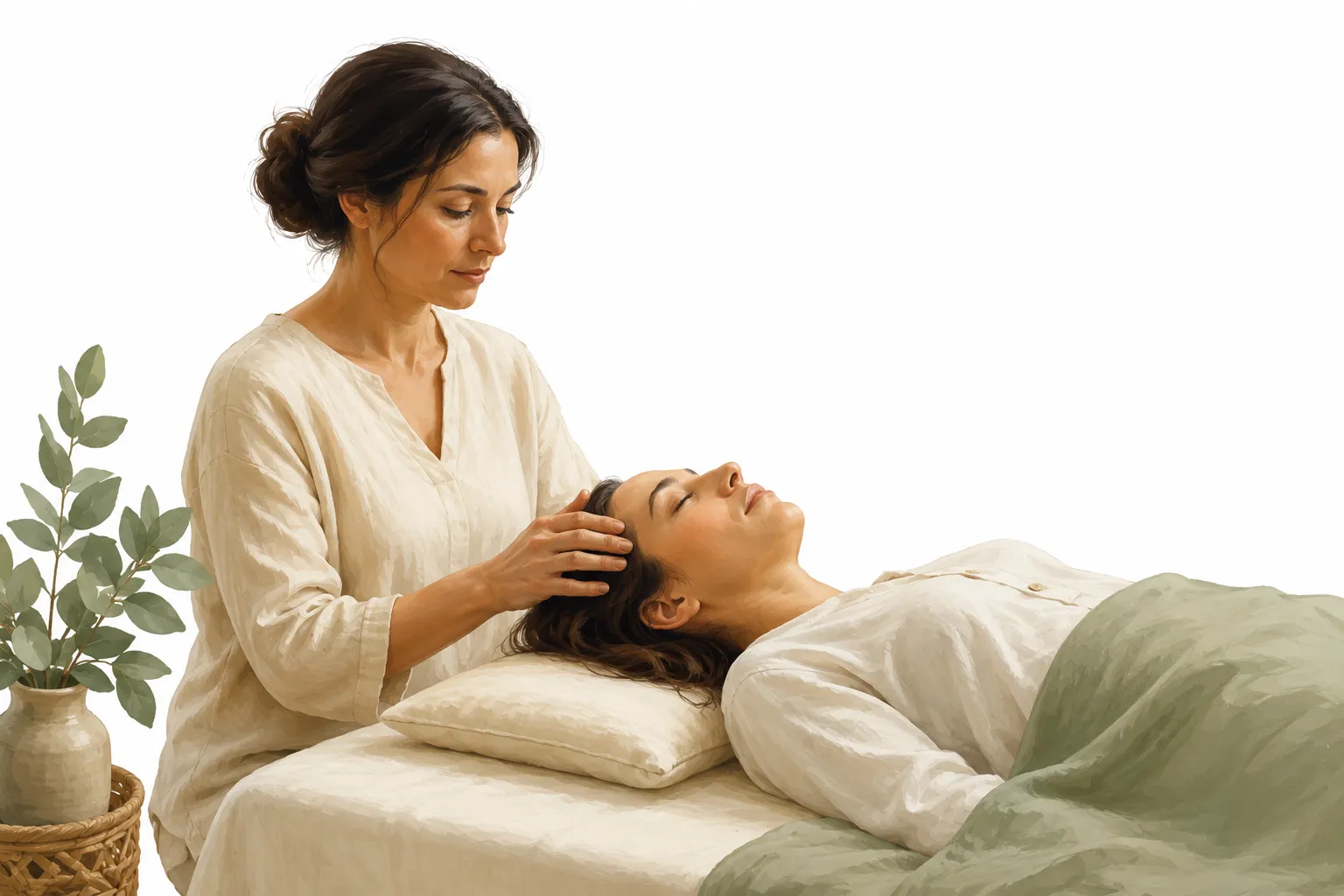
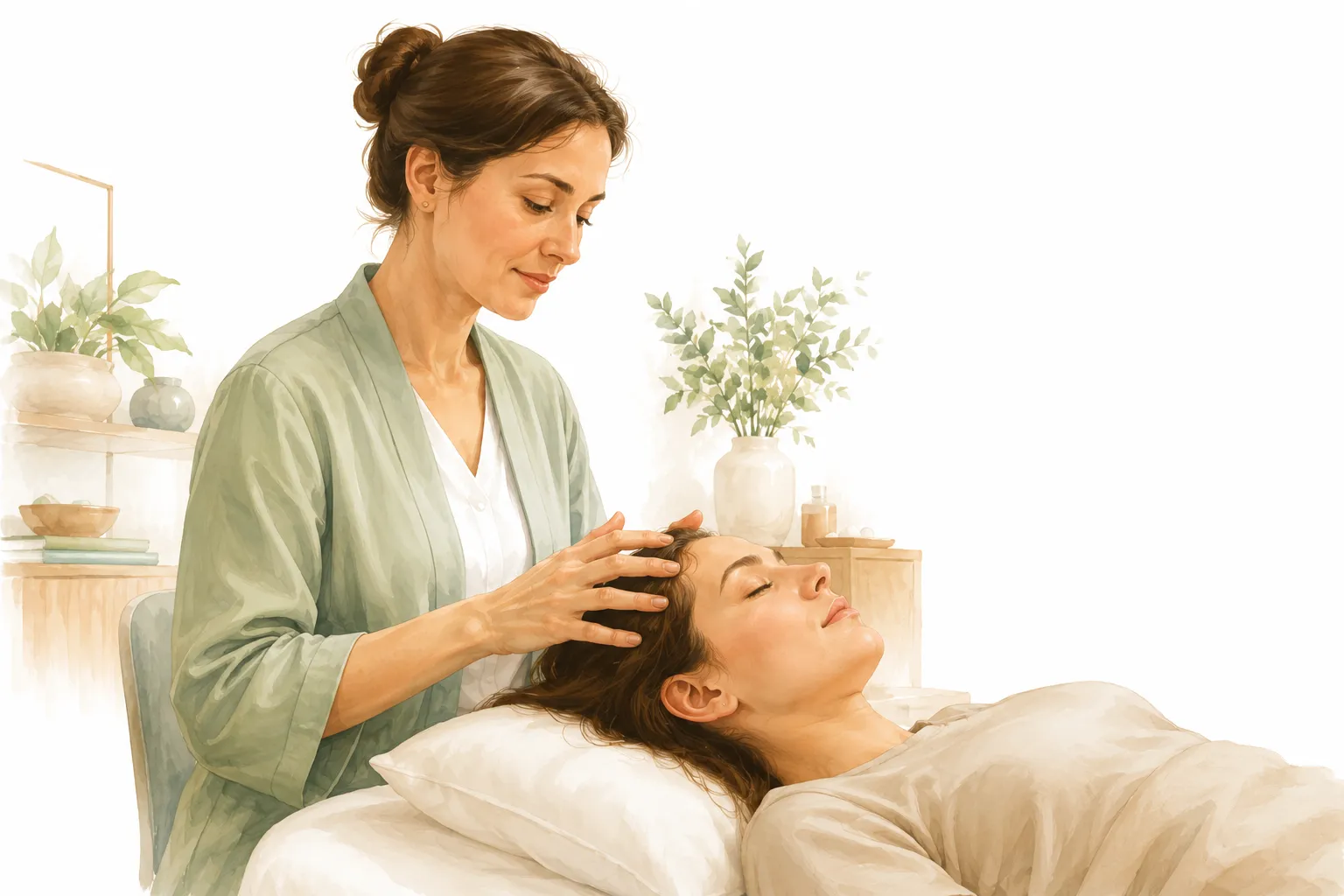
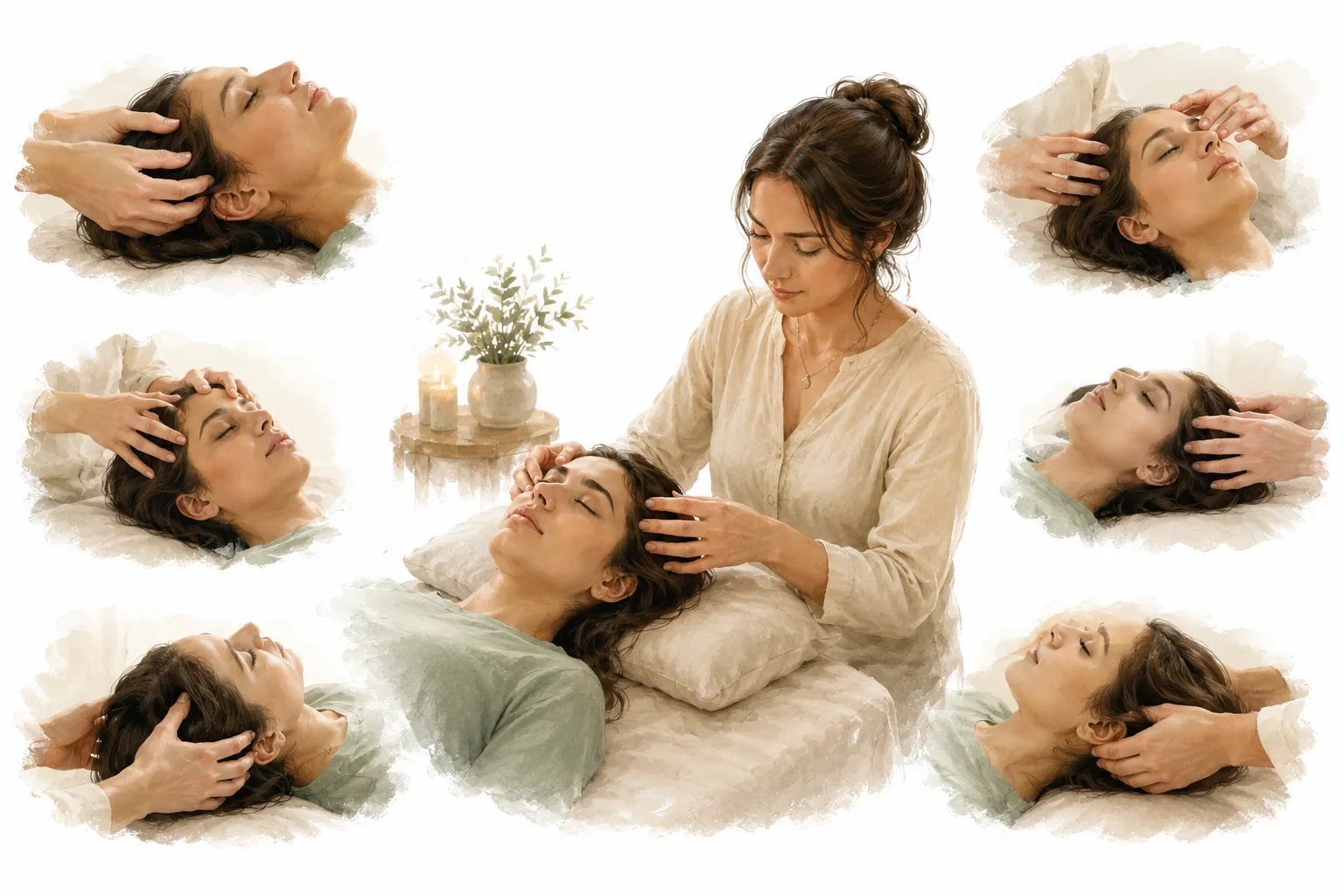
On the physical side, the technique involves learning the location of 32 named points on the head — points with names like Creativity, Control, Money, Sadness — and practicing holding pairs of them lightly and steadily while moving through a taught sequence. Instructors emphasize a light touch, unhurried pacing, and staying present rather than rushing through the points.
Trainees typically practice on each other during class, receiving and giving sessions so they build a feel for the pacing and pressure before working with clients. There's no claim that special physical strength, medical training, or licensing is required — the barrier to entry is intentionally low, which is part of why the practice has spread quickly through informal networks.
What the technique cannot teach, because it isn't something anyone currently knows, is whether the specific points correspond to anything real in the nervous system. The hands-on skill is genuinely learnable and repeatable; the underlying theory remains a claim rather than an established fact.
Skim first
Key takeaways
The shortest useful version of this page.
The Access Bars technique is a learnable set of light hand placements on 32 head points.
It's taught in short practitioner classes, typically over a weekend.
No medical license or credential is required to learn or practice it.
The technique's claimed energetic effects remain independently unverified.
Skill in the technique doesn't equal medical training or authority.
The technique, step by step
This describes the physical method as taught in practitioner classes, not the claimed energetic effect.
Learn the point map
Trainees memorize the location of 32 named points across the head, each assigned a theme by the system.
Practice light contact
Students practice resting fingertips gently on a point without pressing or manipulating tissue.
Hold pairs of points
The technique typically involves holding two points at once, moving through combinations in a taught sequence.
Pace and presence
Instructors emphasize slowing down and staying attentive rather than rushing through the sequence.
More like sitting quietly with someone than performing a fast physical routine.Complete the sequence
A full session typically works through all 32 points at least once, taking roughly an hour.
A few of the points practitioners are trained to locate
Access Consciousness assigns a theme to each of the 32 points. These four are commonly referenced as examples of the naming convention.
These names and themes come from the Access Bars system's own teaching materials, not from recognized anatomy or neuroscience.
Healing
Associated within the system with a person's beliefs and judgments about healing itself.
One of the named points in the standard 32-point map.
No independent evidence links this location to any specific physiological process.Body
Associated within the system with a person's relationship to their own body.
Another named point in the taught sequence.
The assigned meaning is philosophical, not anatomical.Awareness
Associated within the system with general awareness and perception.
Part of the standard sequence taught in practitioner classes.
No established scientific basis for this specific association.
What learning the technique is like, according to practitioners
- Practitioner
Experienced practitioners describe technique as secondary to presence — staying attentive to the client rather than mechanically working through the point list.
- Student
Students often describe the technique itself as easy to pick up, with the harder part being building confidence and a calm, unhurried touch.
- Balanced view
The physical skill is genuinely simple to learn. That simplicity says nothing about whether the underlying theory of what the touch accomplishes is accurate.
A short class does not confer medical training, and technique alone doesn't qualify someone to advise on health conditions.
Reality check
Common misunderstandings about the technique
- Myth
The technique requires special sensitivity or a gift.
RealityIt's taught as a learnable physical skill in short classes, not presented as requiring innate ability.
- Myth
Getting the exact point order wrong ruins the session.
RealityPractitioners generally describe the sequence as a guideline; the core requirement is gentle, attentive contact.
- Myth
Learning the technique means you understand how it works.
RealityThe hands-on skill is separate from the unverified theory about why it might have an effect.
What to remember
The technique is a learnable set of light hand placements on 32 head points.
It's taught in short practitioner classes with no medical prerequisite.
The physical method is separate from the claimed energetic mechanism.
No independent evidence confirms the theory behind the point map.
Learning the technique does not qualify anyone to give medical advice.
Quick answers
Frequently asked questions
What is the Access Bars technique?
A taught method of gently holding pairs of 32 designated head points in sequence for roughly an hour.
How long does it take to learn?
The physical technique is typically taught in a one- or two-day practitioner class.
Is training required before offering sessions to others?
Most practitioners complete an official class before charging for sessions, though this isn't a government-regulated requirement.
Does the technique work the same for everyone?
Practitioners vary in style and pacing, but the core hand placements are taught consistently.
Sources
Access Bars. garymdouglas.com. Accessed 2026-07-17
Official description of the taught technique, point chart, and class format.
Access Consciousness. Wikipedia. Accessed 2026-07-17
Independent background on the organization and how the method is taught and marketed.