The Access Bars points chart
What is the Access Bars points chart?
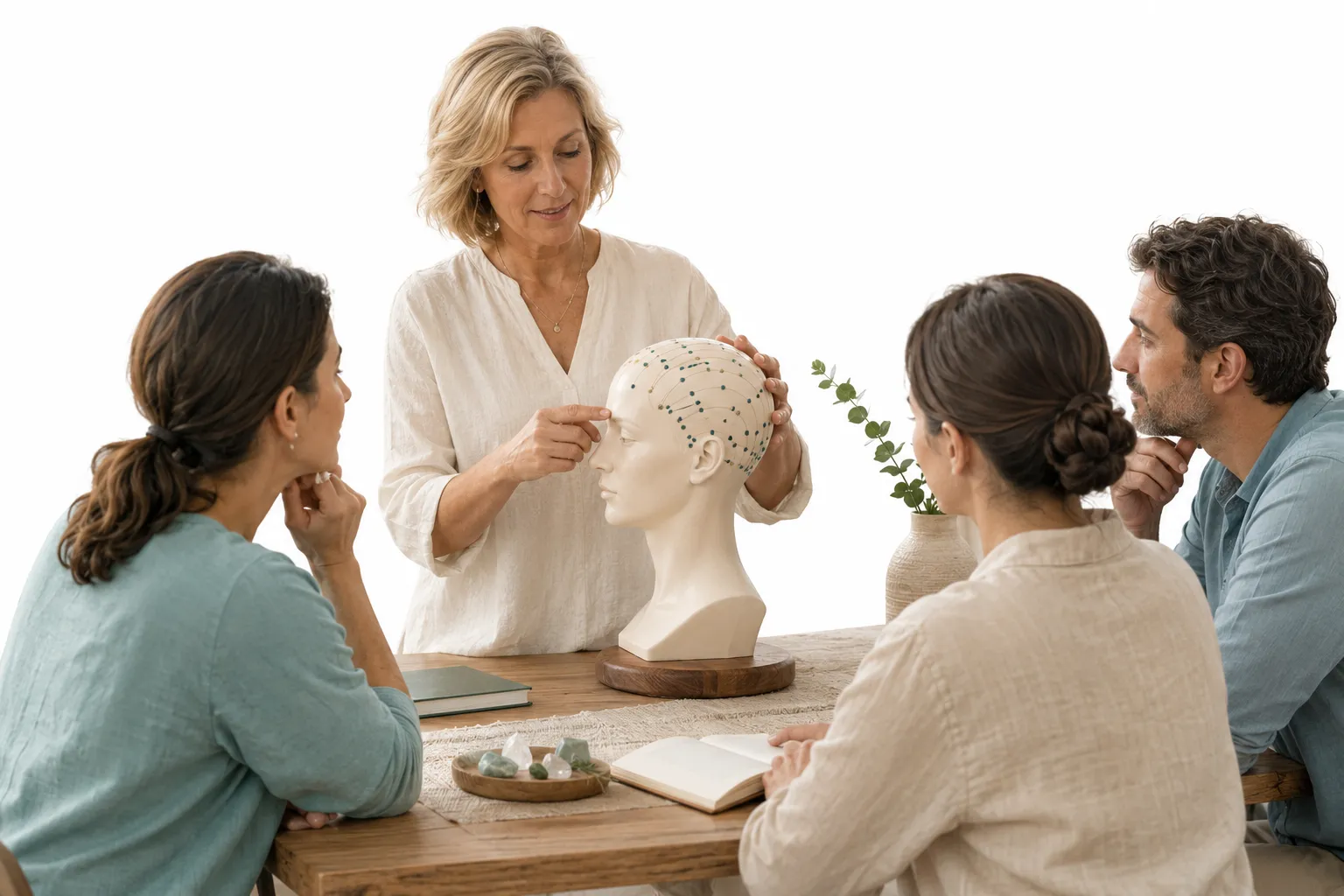
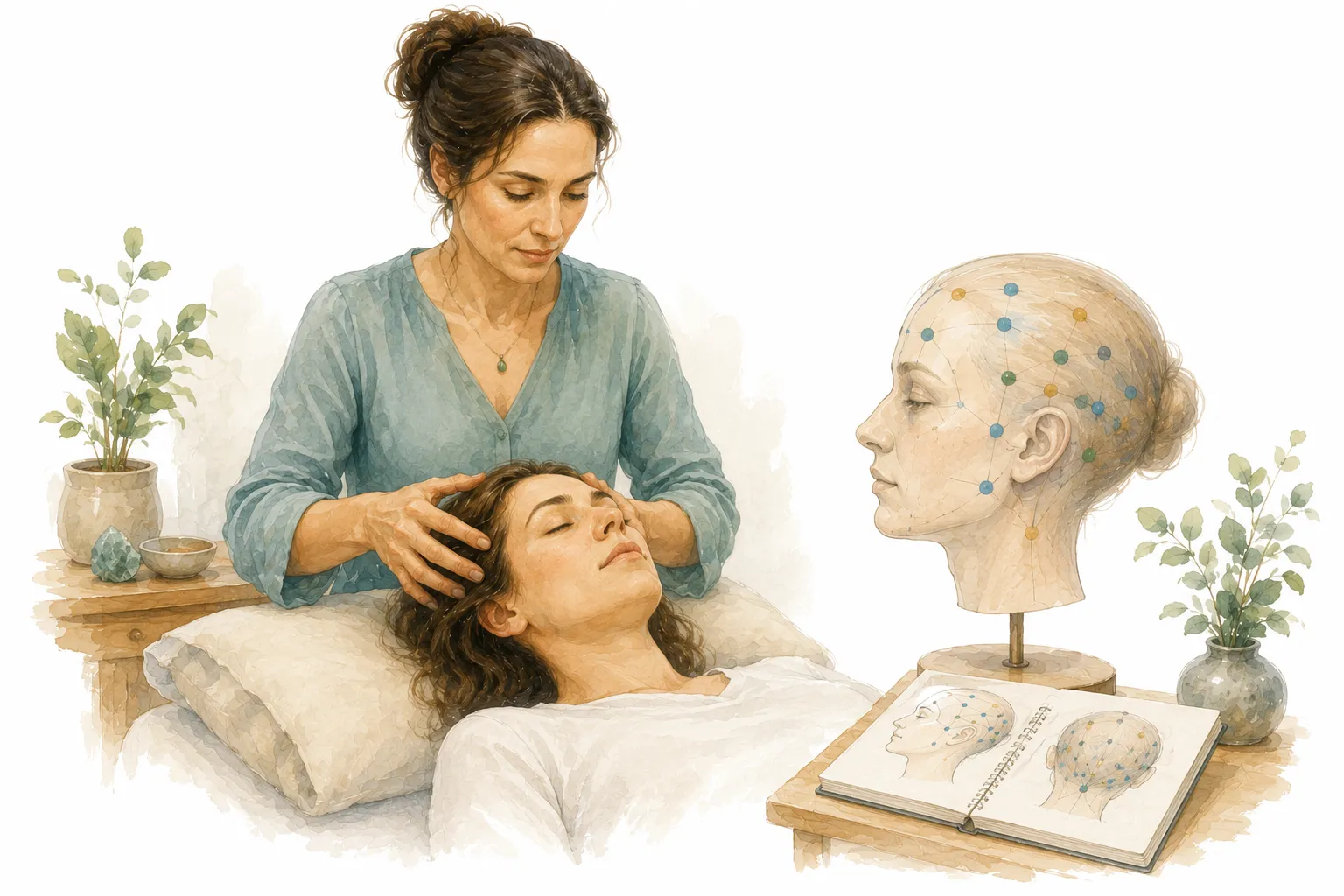
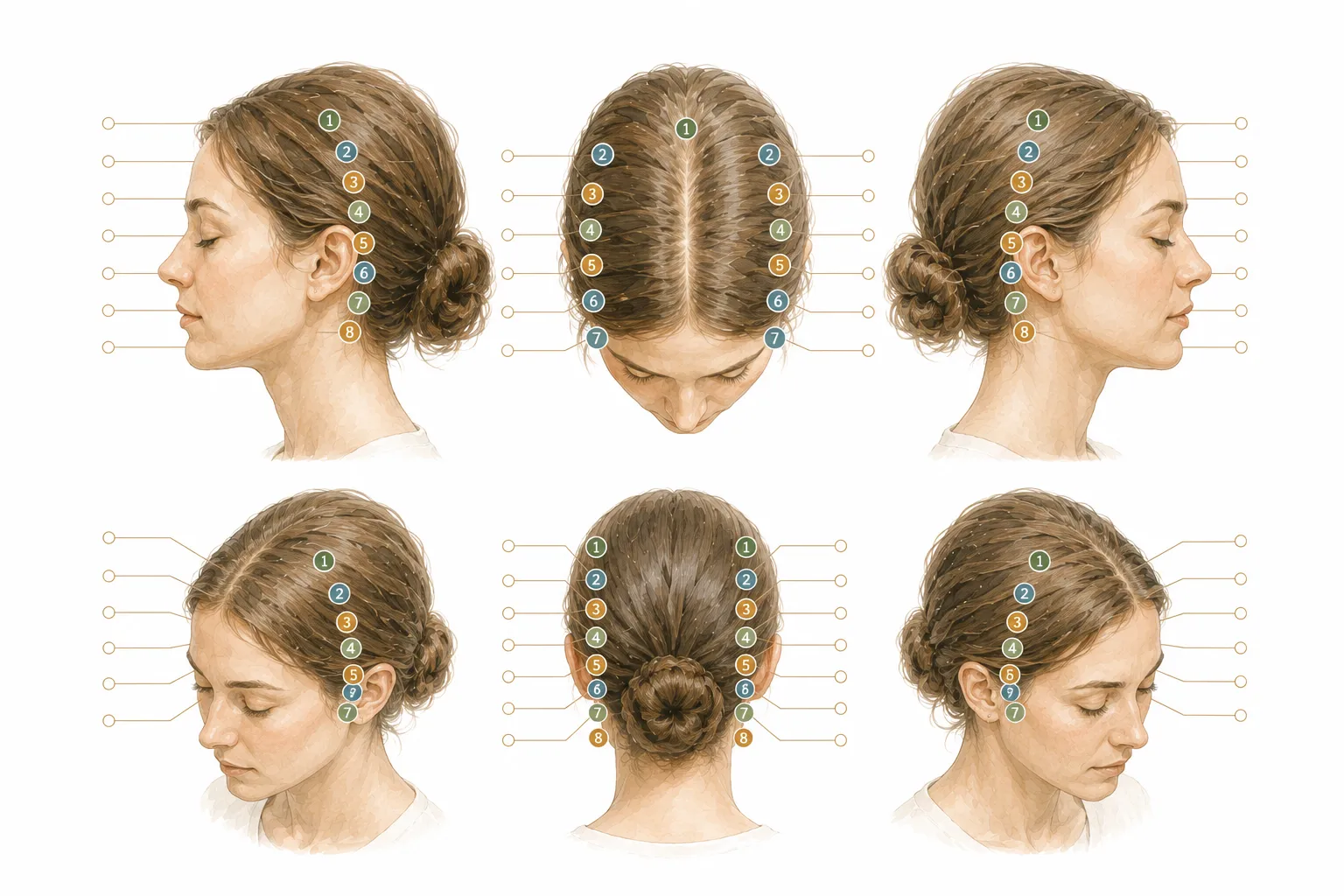
The Access Bars points chart is a visual map showing the 32 points on the head that are used in the Access Bars practice. The chart typically shows the points with their names and generalized locations.
The chart groups the points by area: front, top, sides, and back of the head. Each point is labeled with its name, such as Money, Control, Creativity, or Healing.
The chart is useful for understanding the practice and learning the point locations. It is often used in practitioner training and can be helpful for anyone wanting to understand the system.
However, it is important to remember that the chart is based on the Access Consciousness system, not established anatomy. The point locations are not recognized by science.
Access Bars points chart: general locations
A visual chart showing the generalized location of Access Bars points on the head.
Front points
Money, Control, and other points on the front of the head.
Top points
Awareness and other points on the top of the head.
Side points
Creativity, Communication, and other points on the sides.
Back points
Healing, Body, and other points at the back of the head.
Skim first
Key takeaways
The shortest useful version of this page.
The chart shows 32 points on the head.
Points are grouped by area: front, top, sides, back.
Each point has a name and meaning.
The chart is useful for learning the practice.
The chart is based on the Access Consciousness system.
The locations are not scientifically established.
Where the points chart came from
- Gary Douglas claimed to discover 32 points and created a map of their locations.The points chart became a teaching tool.
- Practitioners were taught using the points chart.A standardized visual guide developed.
- The chart is used by practitioners and searched for by people exploring the practice.The chart remains a key teaching tool.
Access Bars points chart: the 32 points
The following is a chart showing Access Bars points, their names, and what they are claimed to represent within the Access Consciousness system.
The chart is based on the Access Bars system. It is not a recognized anatomical chart.
Money
Thoughts and attitudes about money.
Located on the front of the head.
No established evidence that financial beliefs are stored here.Control
Control-related points of view.
Located on the front of the head.
The meaning is part of the system's philosophy.Creativity
Creativity and related limitations.
Located on the sides of the head.
Touching this point has not been established as a treatment for creative blocks.Healing
Healing and the body.
Located at the back of the head.
The claimed association is not scientifically established.Awareness
Awareness and consciousness.
Located on the top of the head.
The claimed association is part of the system's philosophy.Communication
Communication-related beliefs or patterns.
Located on the sides of the head.
No established evidence for this specific association.Body
The physical body and related limitations.
Located at the back of the head.
The claimed association is part of the system's philosophy.Aging
Aging and time.
Located on the head.
No established evidence for this association.Sexuality
Sexuality.
Located on the head.
The claimed association is not scientifically established.
Using the chart
How should you use the Access Bars points chart?
The Access Bars points chart is best used as a learning tool. It can help you understand where the points are and what they are called.
If you are studying to become a practitioner, the chart can help you memorize the point locations and names.
If you are a recipient, the chart can help you understand what the practitioner is doing.
However, the chart should not be used as a medical tool. The point locations are not recognized by science.
The chart is a map of a philosophy, not a map of anatomy.
How different groups use the points chart
- Practitioner
Practitioners use the chart as a teaching tool and reference for point locations.
- Participant
Recipients may use the chart to understand the practice better.
- Balanced view
The chart is useful for understanding the system but is not scientifically established.
- Evidence view
The chart is based on the Access Consciousness system, not established science.
Do not use the chart as a medical or anatomical reference.
Evidence scan
What does the evidence say about the Access Bars points chart?
The evidence question is whether the chart corresponds to anything established by science.
Overall: not supported by evidence
Unclear or mixed
Not clearly for or against
The chart is a useful teaching tool.
The chart is useful for learning the Access Bars system.
Leans against
Points that do not support the claim
The chart shows accurate anatomical locations.
The chart is based on the Access Consciousness system, not established anatomy.
The chart has scientific validity.
The chart is not recognized as a scientific or anatomical reference.
Reality check
Common misunderstandings about the Access Bars points chart
- Myth
The chart is an anatomical chart.
RealityIt is a teaching tool based on the Access Consciousness system, not established anatomy.
- Myth
The chart shows scientifically verified locations.
RealityThe locations are part of the Access Consciousness philosophy.
- Myth
The chart can be used for medical purposes.
RealityThe chart is not a medical tool.
- Myth
All practitioners use the exact same chart.
RealityPractitioners use the Access Consciousness system, but exact locations may vary.
Access Bars points chart compared to other charts
Understanding how the chart compares to other charts helps clarify what it is.
Origin
Access Consciousness system
Medical science
Traditional Chinese Medicine
Basis
Philosophical system
Scientific anatomy
Energy meridians
Recognition
Not recognized by science
Recognized by science
Limited recognition
Purpose
Teaching tool for Access Bars
Medical reference
Acupuncture reference
Safety
Is the Access Bars points chart safe to use?
The chart is safe to use as a learning tool, but it should not be used for medical purposes.
Generally low-risk for
- Learning about Access Bars
- Studying to become a practitioner
- Understanding the practice
Use caution if
- You are using it for medical purposes
- You are substituting it for professional care
Seek professional help if
- You have symptoms that need medical attention
- You need a diagnosis or treatment plan
The Access Bars points chart is a teaching tool, not a medical reference. Do not use it as a substitute for professional care.
What to remember about the Access Bars points chart
The chart shows 32 points on the head.
Points are grouped by area: front, top, sides, back.
Each point has a name and meaning.
The chart is useful for learning the practice.
The chart is based on the Access Consciousness system.
The locations are not scientifically established.
Verdict
Our evidence-based verdict on the Access Bars points chart
not-supported
The Access Bars points chart is a visual map of the 32 points on the head. It is a useful teaching tool for understanding the Access Bars system but is not an anatomical chart. The chart is based on the Access Consciousness philosophy, not established science.
What we know
- The chart shows 32 points with names and generalized locations.
- The chart is a teaching tool for Access Bars.
- Points are grouped by area on the head.
What we do not know
- Whether the locations are anatomically accurate.
- Whether the points correspond to anything real.
Use the chart as a learning tool, but do not use it as a medical reference or substitute for professional care.
Bottom line
The chart in perspective
The Access Bars points chart is a visual guide to a philosophical system. It is useful for learning, but it is not an anatomical chart. Use it as a teaching tool, not a medical reference.
Quick answers
Frequently asked questions
What is the Access Bars points chart?
It is a visual map showing the 32 Access Bars points on the head.
What does the Access Bars chart show?
It shows the point names and their generalized locations on the head.
Is the Access Bars chart accurate?
It is accurate within the Access Consciousness system but is not an anatomical chart.
Can I use the chart for self-treatment?
No, the chart is a teaching tool, not a treatment guide.
How can I get an Access Bars chart?
Charts are available through Access Consciousness training and some online resources.
Sources
REPLACE IF AVAILABLE. REPLACE WITH VERIFIED OFFICIAL ACCESS BARS CHART TITLE. Access Consciousness, REPLACE_IF_AVAILABLE. Accessed YYYY-MM-DD
Use to establish the official chart and point locations.
REPLACE WITH VERIFIED AUTHORS. REPLACE WITH VERIFIED CRITICAL ANALYSIS TITLE. REPLACE WITH VERIFIED SOURCE, REPLACE WITH VERIFIED DATE. Accessed YYYY-MM-DD
Use to provide a balanced perspective.