Breaking down the method
The technique, apart from the philosophy
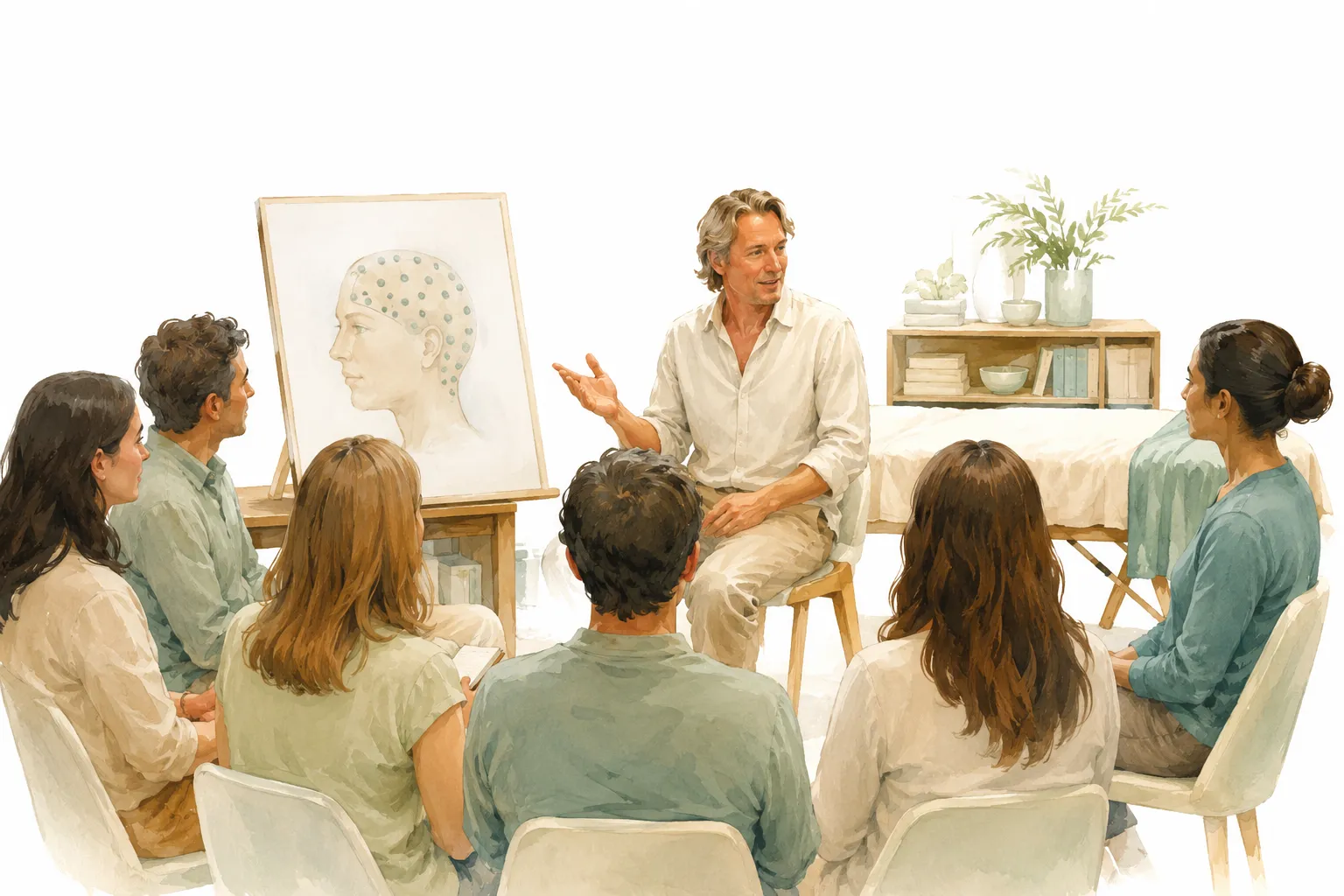
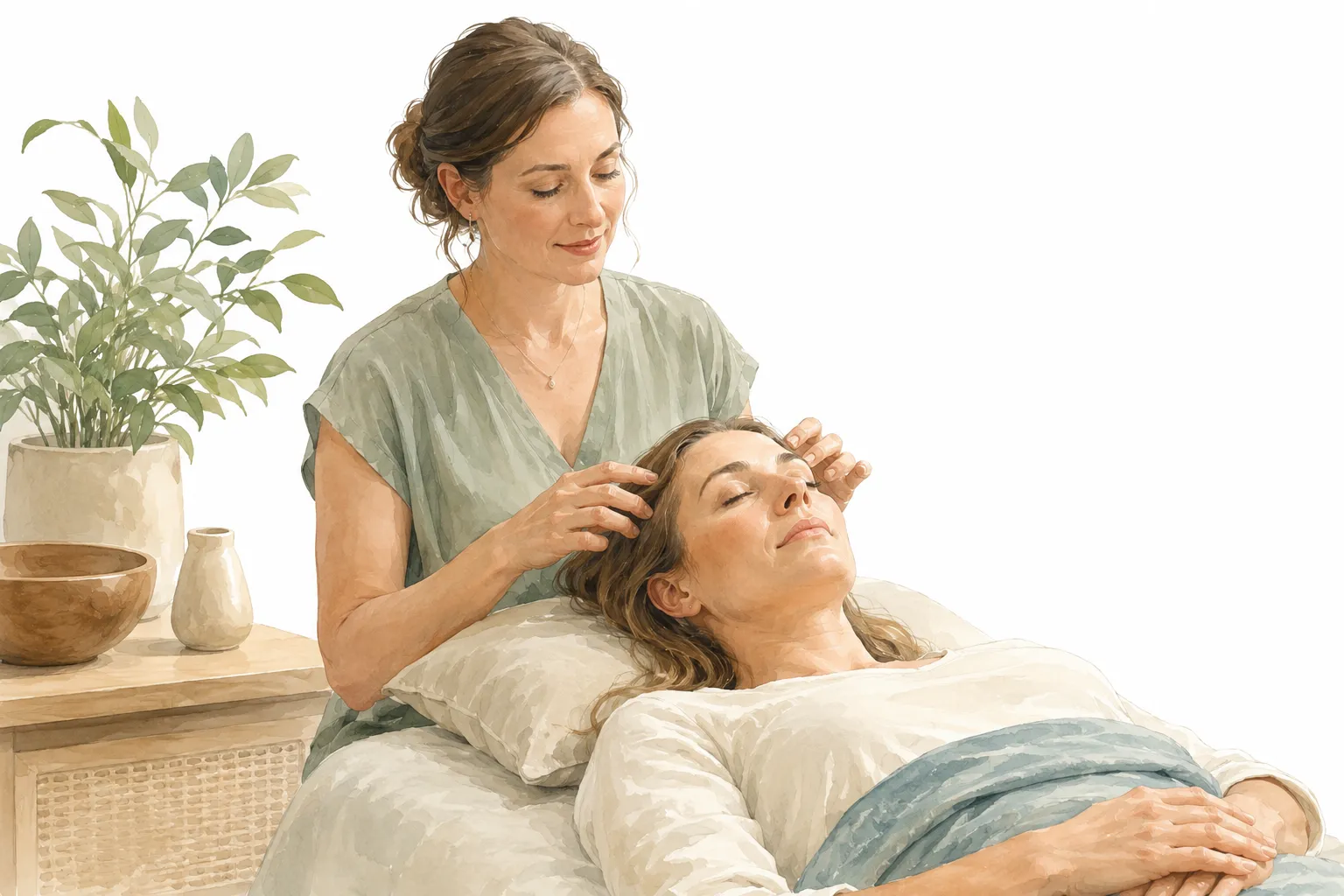
Access Bars practitioners learn a specific physical skill during their one-day certification class: how to locate the 32 named points on the head and how to hold combinations of them using light, sustained fingertip contact rather than pressure, kneading, or manipulation.
While the exact order and pairing of points can vary somewhat between practitioners, most describe working systematically through the points over the course of a session, often returning to certain combinations more than once. The physical skill itself is not complicated to learn, which is part of why one-day certification is standard.
The technique's claimed purpose (releasing stored electromagnetic "charge" tied to thoughts and beliefs) is a concept specific to Access Consciousness. It is useful to describe the technique in purely physical terms (what the hands do) separately from the system's explanation of what that touch is supposed to accomplish.
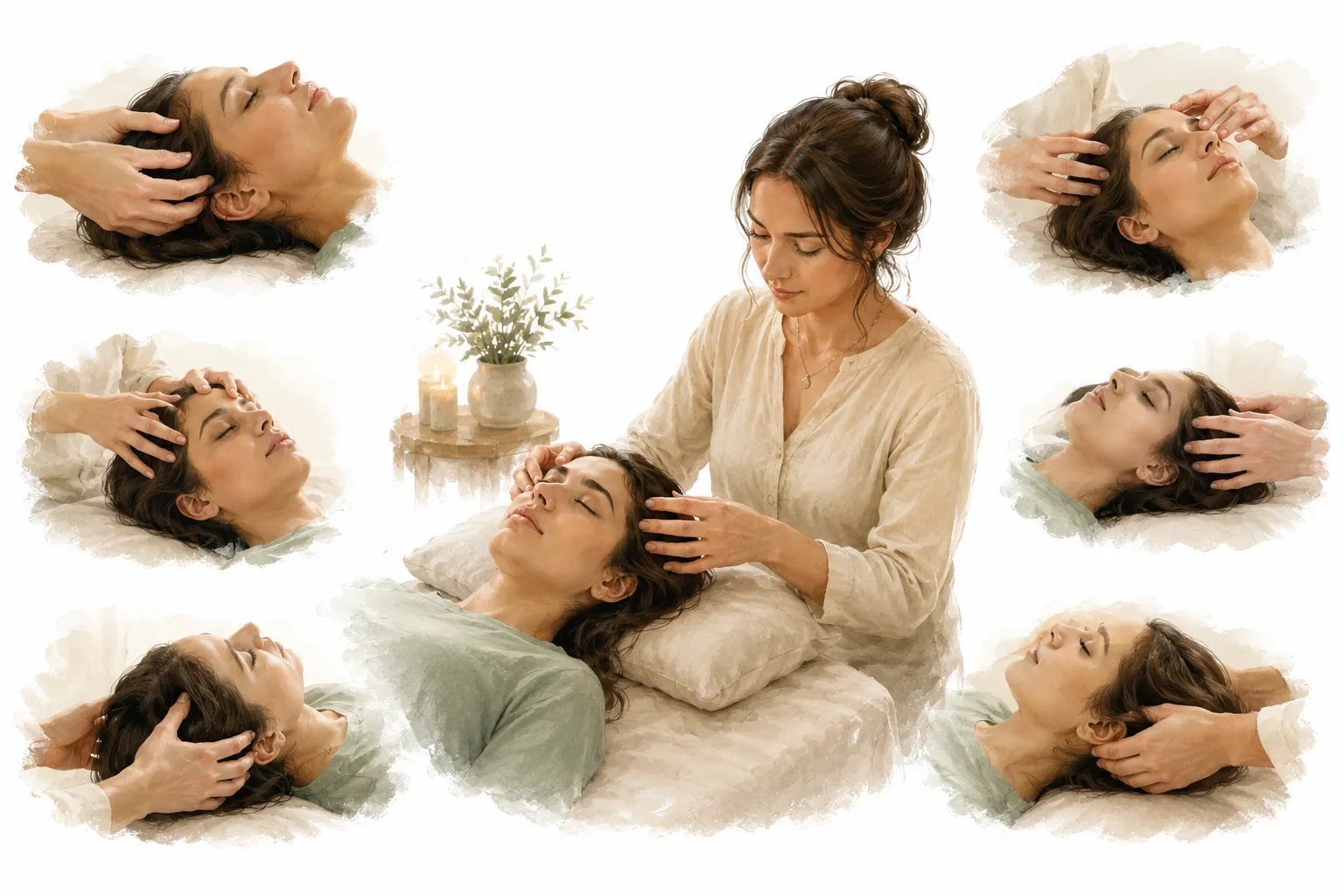
The Access Bars technique at a glance
A neutral sequence showing the practical parts of the technique without treating its claimed mechanism as proven biology.
Settle and consent
The session begins with comfort, touch preferences, and a clear explanation.
Head placement
The practitioner uses light fingertip contact around taught head areas.
Point sequence
The session moves through combinations from the Access Bars teaching map.
Close and observe
The client notices how they feel without treating sensations as a diagnosis.
Skim first
Key takeaways
The shortest useful version of this page.
The Access Bars technique uses light, sustained touch on 32 head points.
Practitioners typically train for one day to become certified.
The physical procedure is simple; the claimed mechanism is unverified.
Sessions typically run 60 to 90 minutes.
The exact point sequence commonly varies between practitioners.
The technique, step by step
This describes the physical procedure taught in standard Access Bars certification classes.
Client positioning
The client lies down fully clothed on a treatment table, usually face up.
Practitioner positioning
The practitioner sits or stands near the client's head, often at the head of the table.
Locating the points
The practitioner identifies combinations of the 32 named points based on the map taught in training.
Light, sustained contact
Fingertips rest gently on the chosen points, without pressing or massaging, typically for a matter of seconds to minutes per combination.
More like resting a hand on someone's shoulder than giving a scalp massage.Working through the sequence
The practitioner moves through further point combinations across the session, following a learned pattern that can vary by practitioner.
Closing
The session ends with the client given time to reorient before sitting up, often with a brief conversation about how they feel.
How the steps fit into a full appointment
Beyond the hands-on technique itself, a typical appointment includes some structure around it.
1. Brief intake
The practitioner may ask what the client hopes to get from the session and discuss comfort and consent.
5 to 10 minutes2. Getting settled
The client lies down fully clothed, often with a blanket or bolster for comfort.
A few minutes3. The Bars technique
The practitioner works through the 32-point sequence using light touch.
45 to 75 minutes4. Reorientation and closing
The client is given time to come back to full alertness before sitting up.
5 to 10 minutes
How practitioners describe learning the technique
- Practitioner
Practitioners often describe the physical skill as easy to learn but say that "running the Bars well" takes practice and attentiveness to the client.
- Student
Students in certification classes typically practice the technique on each other during the one-day class before becoming certified.
- Evidence view
The physical skill of light touch is easy to observe and teach; the claimed effect of releasing stored mental and emotional charge is a belief specific to the system, not an independently confirmed outcome.
A short certification class is not equivalent to medical or mental-health training.
Reality check
Common misunderstandings
- Myth
The technique requires deep pressure to "work."
RealityPractitioners are trained to use light, gentle contact rather than pressure.
- Myth
There is one universally fixed order for touching all 32 points.
RealityWhile training teaches a general approach, practitioners commonly vary the exact sequence and combinations.
What to remember
The technique uses light, sustained fingertip contact on 32 head points.
Certification training is typically completed in one day.
The physical procedure is simple to learn and describe.
The claimed release mechanism is not scientifically established.
Sessions generally last 60 to 90 minutes, start to finish.
Verdict
Our evidence-based verdict
insufficient-evidence
The Access Bars technique is a learnable, low-intensity physical procedure. The claimed mechanism behind it (releasing stored mental and emotional charge) remains a belief specific to the Access Consciousness system rather than a scientifically confirmed process.
What we know
- The technique involves light touch on 32 designated head points.
- Certification is typically a one-day class.
What we do not know
- Whether the touch produces effects beyond ordinary relaxation and attention.
Understanding the technique as a simple physical procedure, separate from its claimed mechanism, helps set realistic expectations.
Quick answers
Frequently asked questions
What is the Access Bars technique, in simple terms?
It's a light-touch method where a practitioner holds combinations of 32 designated points on your head for about an hour.
Is special equipment needed?
No. The technique only requires a treatment table and the practitioner's hands.
How is the technique different from massage?
Massage typically uses pressure and kneading of muscle tissue; the Access Bars technique uses light, largely stationary contact.
Can the technique be self-taught from a video?
Some materials exist for self-practice, but standard certification involves in-person or live-online training.
Sources
Access Consciousness. Wikipedia. Accessed 2026-07-14
Independent overview of the technique and its claimed mechanism.
Terrie Hope. The Effects of Access Bars on Anxiety and Depression: A Pilot Study. Energy Psychology: Theory, Research, and Treatment, 2017. Accessed 2026-07-14
Describes the technique as applied in a small research setting.