
Understanding Access Consciousness blocks
What is a block in Access Consciousness?
In Access Consciousness, a block is any thought, belief, pattern, or point of view that limits a person's ability to create change or experience possibilities. Blocks can be about anything, money, relationships, body, creativity, or any area of life.
The idea is that we've accumulated these blocks over time, often without realizing it. They can be conscious (we know we have them) or unconscious (we're not aware of them). They can also be inherited or learned from family, culture, or society.
Access Consciousness teaches that these blocks can be released through conscious choice, often using specific tools or practices. The goal is to clear the blocks so that new possibilities can emerge.
It's important to understand that "block" is a conceptual term within Access Consciousness. It's not a medical or scientific term. The concept is part of a philosophical framework, not a scientifically established mechanism.
Skim first
Key takeaways
The shortest useful version of this page.
A block is any limiting thought, belief, or pattern.
It's a philosophical concept, not a scientific one.
It can be conscious or unconscious.
It can be released through Access Consciousness practices.
Some people find the concept helpful.
It should not replace professional care.
The concept
What are Access Consciousness blocks?
An Access Consciousness block is anything that limits a person's possibilities. It can be a thought ("I can't do that"), a belief ("I'm not good enough"), a pattern ("I always sabotage myself"), or any point of view that narrows what's possible.
Blocks can be about specific areas of life (such as relationships, money, career, body, or creativity) or they can be more general. They're often described as the things we hold onto that keep us stuck.
The idea is that we're not our blocks. They're something we've accumulated, and we can let them go. This is a central teaching in Access Consciousness: we have the choice to release what's holding us back.
The practical implication is that the tools of Access Consciousness are designed to help identify and release these blocks.
Access Consciousness Block
Access Consciousness Block
A limiting thought, belief, or pattern that restricts a person's possibilities.
Blocks are seen as obstacles to change that can be released through conscious choice.
Identified through awareness and released through Access Consciousness practices.
While this is the official explanation, "block" is a conceptual term. It's not a scientifically established mechanism. Some people find the concept helpful for understanding themselves.
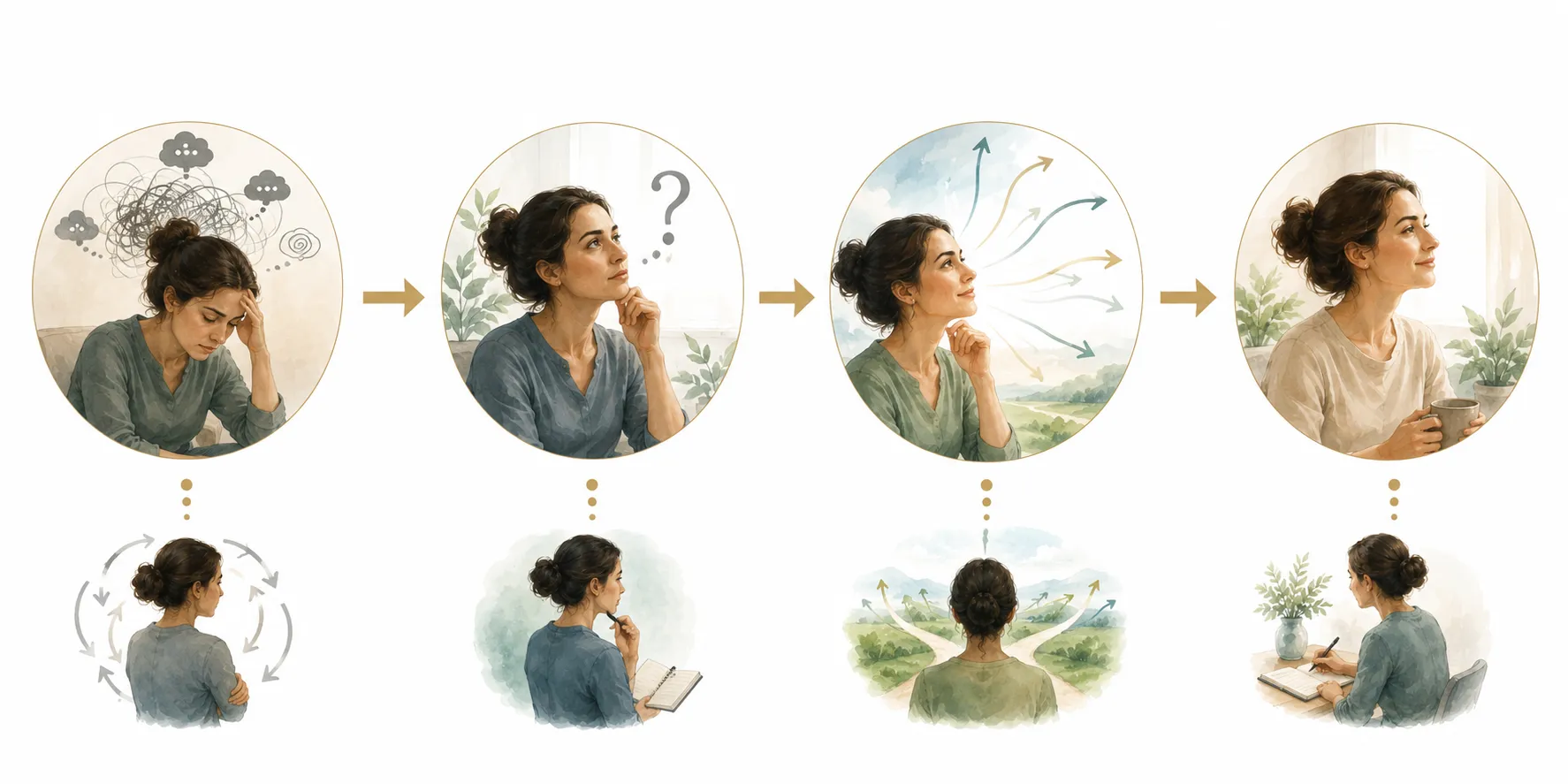
Notice where you feel stuck or limited.
Identify the thought, belief, or pattern involved.
Choose to release it.
Observe what changes.
How practitioners work with blocks
- Practitioner
Practitioners see blocks as the primary target of Access Consciousness work. They help clients identify and release blocks, often using specific tools.
- Participant
Some participants experience release from long-held patterns. Others find the concept confusing or unhelpful.
- Balanced view
These perspectives help explain the concept's appeal. However, it's important to distinguish the conceptual framework from scientific evidence.
- Evidence view
Independent evidence doesn't verify the concept of blocks or the mechanism of their release.
Practitioners should avoid presenting the concept as scientifically established or encouraging clients to abandon professional care.
Reality check
Common misunderstandings about Access Consciousness blocks
- Myth
Blocks are scientifically proven things.
Reality"Block" is a conceptual term within Access Consciousness. It's not a scientifically established mechanism.
- Myth
Blocks are the same as mental health conditions.
RealityBlocks are a philosophical concept, not a mental health diagnosis.
- Myth
Releasing a block is always easy.
RealitySome people find it easy to release blocks, others find it more difficult.
- Myth
Blocks are always conscious.
RealityBlocks can be conscious or unconscious.
Evidence scan
What does the evidence say about Access Consciousness blocks?
The concept of "blocks" is a philosophical one, not a scientific one. There's no scientific evidence that specifically verifies the concept.
Overall: evidence not applicable
Unclear or mixed
Not clearly for or against
Access Consciousness blocks are real things that hold people back.
This is a philosophical claim, not a scientific one. Some people find the concept helpful for understanding themselves.
Leans against
Points that do not support the claim
Access Consciousness practices release blocks through specific mechanisms.
There's no established scientific evidence for this proposed mechanism.
What to remember about Access Consciousness blocks
A block is any limiting thought, belief, or pattern.
It's a philosophical concept, not a scientific one.
It can be conscious or unconscious.
Practitioners work to help clients release blocks.
Some people find the concept helpful.
It should not replace professional care.
Verdict
Our evidence-based verdict
not-applicable
The concept of Access Consciousness blocks is a philosophical framework for understanding limitations. It's not a scientifically established concept.
What we know
- It's a conceptual term within Access Consciousness.
- It's used to describe limiting thoughts, beliefs, or patterns.
- Some people find the concept helpful.
What we do not know
- Whether blocks are scientifically real.
- Whether Access Consciousness practices release blocks through specific mechanisms.
A person may find the concept of blocks helpful for understanding themselves. However, it should not be treated as a scientifically established concept or a substitute for professional care.
Bottom line
A conceptual framework, not a scientific concept
The concept of blocks in Access Consciousness is a philosophical framework for understanding limitations. Some people find it helpful, but it's not scientifically established.
Quick answers
Frequently asked questions
What is an Access Consciousness block?
It's any limiting thought, belief, or pattern that holds a person back.
How do blocks form?
Access Consciousness teaches that blocks accumulate over time, often unconsciously.
How do I release blocks?
Through Access Consciousness practices and tools.
Are blocks scientifically real?
"Block" is a conceptual term, not a scientifically established concept.
Can blocks cause mental health problems?
Blocks are a philosophical concept, not a mental health diagnosis. Professional care should be sought for mental health concerns.
Sources
REPLACE IF AVAILABLE. REPLACE WITH VERIFIED OFFICIAL ACCESS CONSCIOUSNESS BLOCKS PAGE. Access Consciousness, REPLACE_IF_AVAILABLE. Accessed 2026-07-17
Use only to establish how Access Consciousness describes blocks.
REPLACE WITH VERIFIED AUTHORS. REPLACE WITH VERIFIED PHILOSOPHICAL AND PERSONAL GROWTH RESEARCH. REPLACE WITH VERIFIED JOURNAL, REPLACE WITH VERIFIED DATE. Accessed 2026-07-17
Use for general research on personal growth and philosophical frameworks.