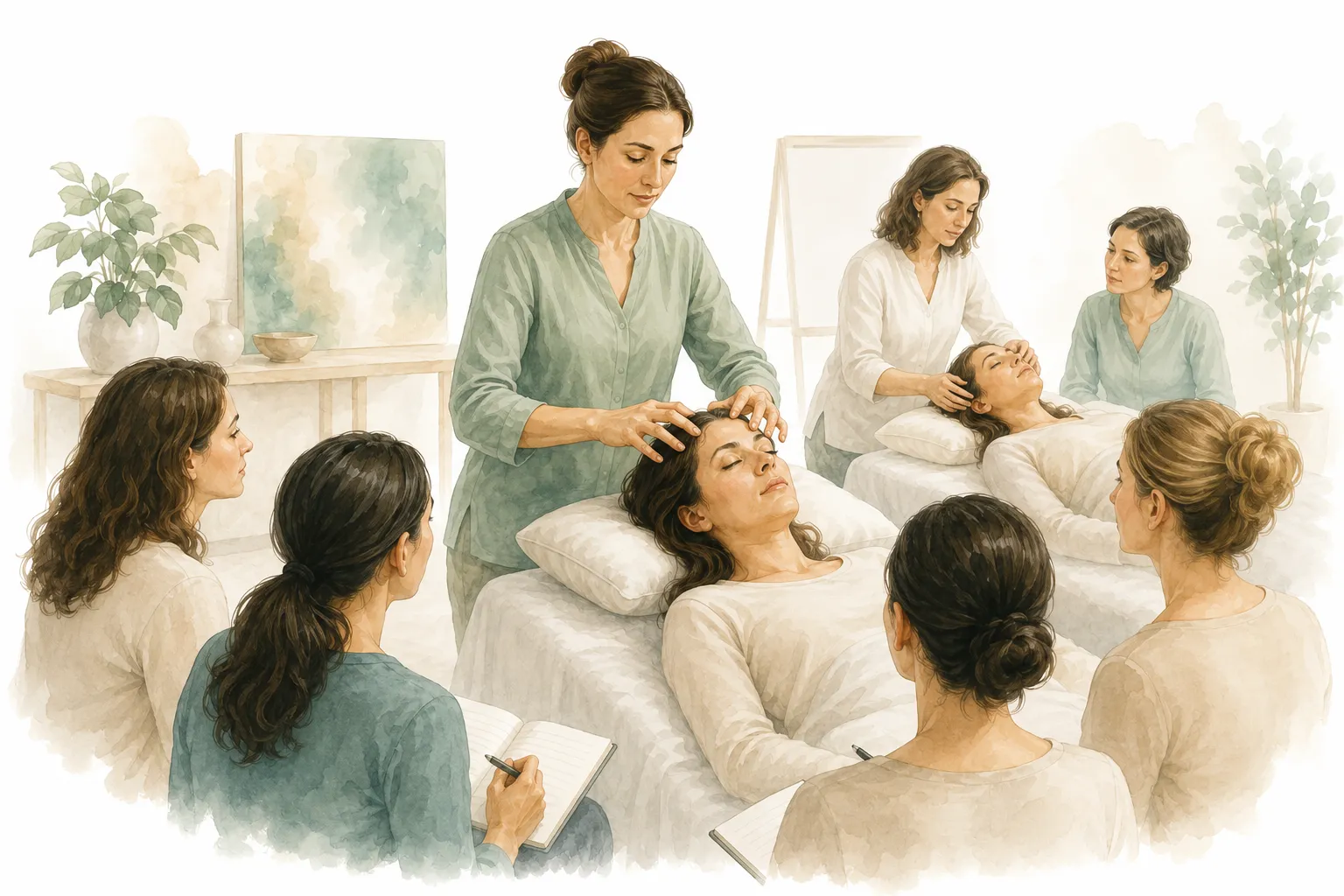
The facilitator role
What does an Access Bars facilitator do?
An Access Bars facilitator is a certified practitioner who has completed additional training to become authorized to teach the Access Bars technique to others. Their primary role is to lead the one-day certification classes that train new practitioners.
Facilitators are not just more experienced practitioners. They hold a specific teaching credential within the Access Bars system. They are authorized by Access Consciousness to offer the formal certification class and to certify new practitioners.
The facilitator's role is educational. They teach the points, the session flow, and how to conduct a complete Bars session. They supervise hands-on practice and provide feedback and guidance to students.
Not all practitioners are facilitators. Becoming a facilitator requires completing advanced training beyond the standard practitioner certification and meeting additional requirements.
Skim first
Key takeaways
The shortest useful version of this page.
Facilitators are practitioners with additional teaching training.
They teach the one-day certification class.
They are authorized by Access Consciousness to teach and certify.
The role is educational, not clinical.
Facilitators are not healthcare providers.
Not all practitioners become facilitators.
Becoming a facilitator requires advanced training.
Key distinction
How is a facilitator different from a practitioner?
The main difference between a practitioner and a facilitator is the level of credential and the scope of what they are authorized to do.
A practitioner has completed the one-day certification class and can offer Access Bars sessions to clients. They are trained to perform the technique on others.
A facilitator has completed the practitioner certification and then additional training that qualifies them to teach the certification class. They are authorized by Access Consciousness to train new practitioners.
Facilitators also have the authority to provide certification to those who complete their classes. They are the gatekeepers for new practitioners entering the Access Bars system.
Think of it this way: a practitioner offers the service; a facilitator teaches others how to provide the service.
How facilitators fit into the Access Consciousness structure
How to become an Access Bars facilitator
Becoming a facilitator requires progressing through multiple levels of training.
1. Complete practitioner certification
First, attend and complete the one-day Access Bars Practitioner class.
None.
$200 to $500 USD. · 1 day.2. Gain experience
Develop your skills by offering Access Bars sessions to clients. Experience is important before pursuing facilitator training.
Practitioner certification.
Variable.3. Complete facilitator training
Take the Access Bars Facilitator class, which is typically a multi-day advanced training program.
Practitioner certification and experience.
Varies. · Variable.4. Meet requirements
Meet any additional requirements set by Access Consciousness to become an authorized facilitator.
Completion of facilitator training.
5. Begin teaching
Once authorized, you can offer the one-day certification class to new practitioners.
Facilitator authorization.
What practitioners and facilitators say about the role
- Practitioner
Practitioners describe facilitators as knowledgeable and supportive teachers who help them learn the technique effectively.
- Participant
Students often appreciate facilitators who create a comfortable learning environment and provide clear guidance.
- Student
New practitioners value facilitators who take time to ensure everyone understands the technique and has enough hands-on practice.
- Facilitator
Facilitators often describe their role as rewarding and enjoyable. They like helping others learn the technique and begin their journey as practitioners.
- Balanced view
These perspectives describe the educational experience, not the validity of the technique's claims.
- Evidence view
Facilitators are trained in teaching the technique, not in clinical evaluation. Their role is educational.
Facilitators should present the technique as a complementary practice, not as an evidence-based therapy.
Facilitator vs. practitioner vs. client
Understanding the different roles in the Access Bars system.
Client
No training required
Receives Bars sessions
Practitioner
One-day certification class
Offers Bars sessions to clients
Facilitator
Practitioner certification + facilitator training
Teaches certification classes to new practitioners
Reality check
Common misunderstandings about facilitators
- Myth
Facilitators are more skilled practitioners.
RealityFacilitators have teaching training, but their role is educational, not necessarily a higher level of practical skill.
- Myth
Facilitators are clinical supervisors.
RealityFacilitators are educators within the Access Consciousness system, not clinical supervisors or licensed professionals.
- Myth
You need to be a facilitator to be a practitioner.
RealityAnyone who has completed the certification class is a practitioner. Facilitators are a subset of practitioners with teaching authorization.
- Myth
Facilitators are doctors or therapists.
RealityFacilitators are Access Bars teachers. They are not healthcare providers.
- Myth
Facilitator certification is the only way to become a practitioner.
RealityYou need a facilitator to certify you, but you don't need to become a facilitator yourself.
What to remember about Access Bars facilitators
Facilitators are certified practitioners with additional training.
They teach the one-day certification class for new practitioners.
They are authorized by Access Consciousness to teach and certify.
Their role is educational, not therapeutic.
Facilitators are not healthcare providers.
Not all practitioners are facilitators.
Becoming a facilitator requires advanced training beyond practitioner certification.
Verdict
Our evidence-based verdict on the facilitator role
not-applicable
An Access Bars facilitator is an educational role within the Access Consciousness system. Facilitators teach the one-day certification class to new practitioners. They are not healthcare providers and do not have clinical authority. The role is one of education, not therapy or clinical practice.
What we know
- Facilitators are certified practitioners with additional teaching training.
- They are authorized to teach Access Bars certification classes.
- Their role is educational, not clinical.
- Facilitators are not healthcare providers.
What we do not know
- Whether facilitators' teaching has any effect on the technique's validity.
- Whether facilitation training adds clinical knowledge.
Facilitators are educators who teach the Access Bars technique to new practitioners. They are not clinical professionals.
Bottom line
Educator, not clinician
An Access Bars facilitator is a teacher. They train new practitioners and certify their completion. They are not therapists or healthcare providers.
Quick answers
Frequently asked questions
What is an Access Bars facilitator?
A certified practitioner with additional training who teaches Access Bars certification classes and certifies new practitioners.
How does a facilitator differ from a practitioner?
A practitioner offers sessions; a facilitator teaches the certification class and trains new practitioners.
Can a facilitator practice clinically?
No. Facilitators are educators, not clinical practitioners.
How do you become a facilitator?
Complete practitioner certification, gain experience, complete facilitator training, and meet Access Consciousness requirements.
Do facilitators need to be practitioners?
Yes. Facilitators are practitioners with additional training.
Sources
REPLACE IF AVAILABLE. REPLACE WITH VERIFIED OFFICIAL ACCESS BARS PAGE TITLE. Access Consciousness, REPLACE_IF_AVAILABLE. Accessed YYYY-MM-DD
Use to establish the official facilitator role and training requirements.