What Access Bars does
A simple practice with layered effects
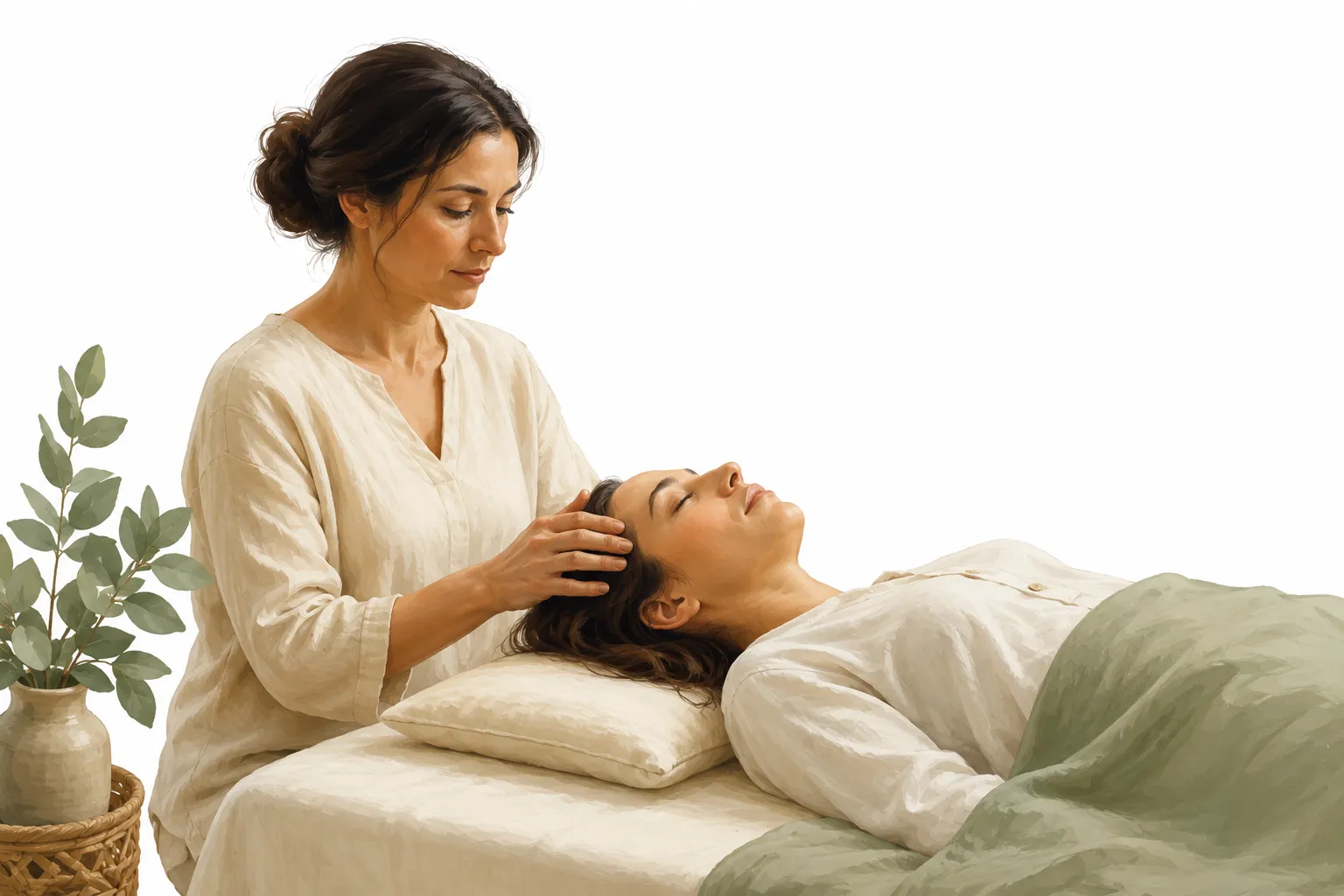
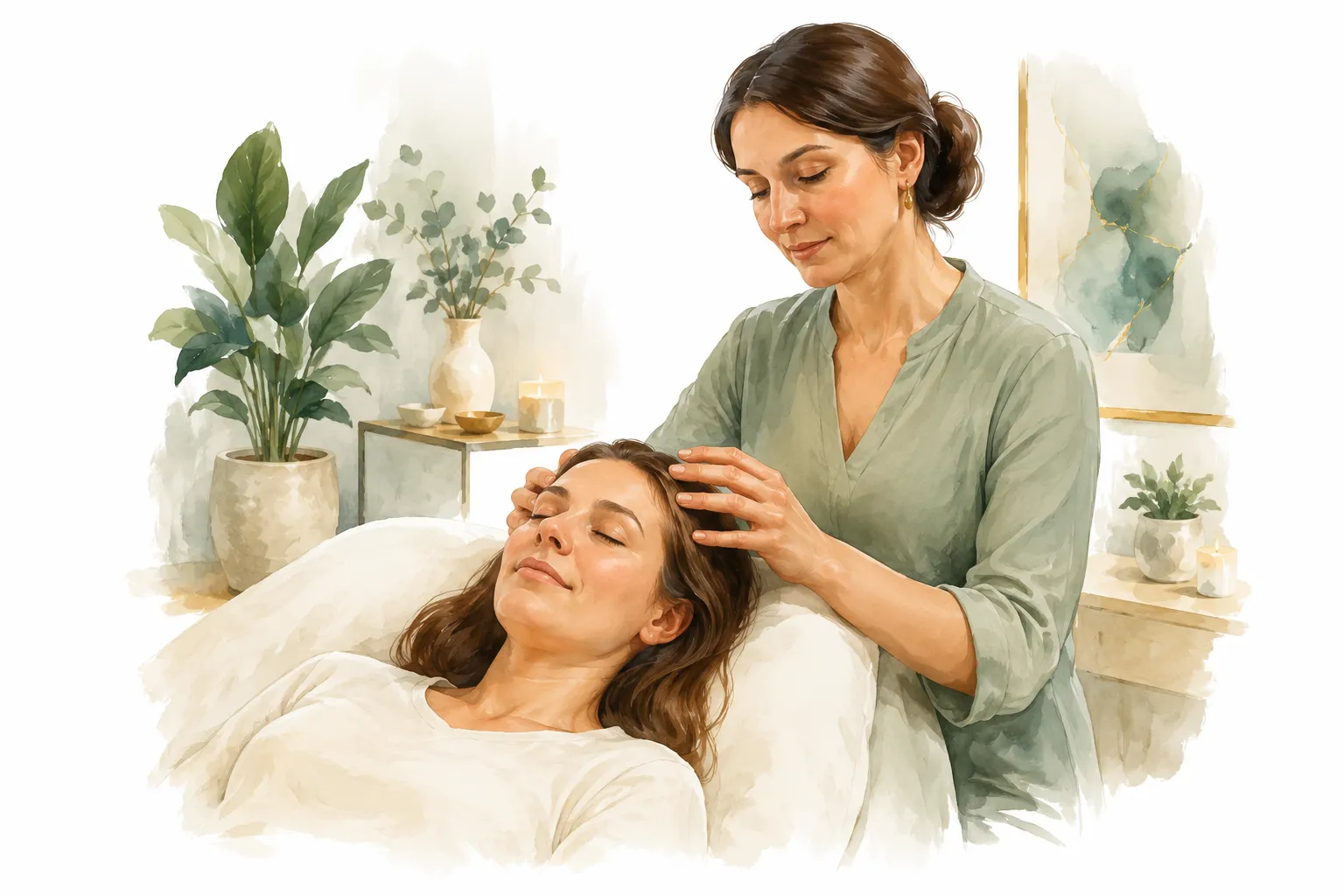
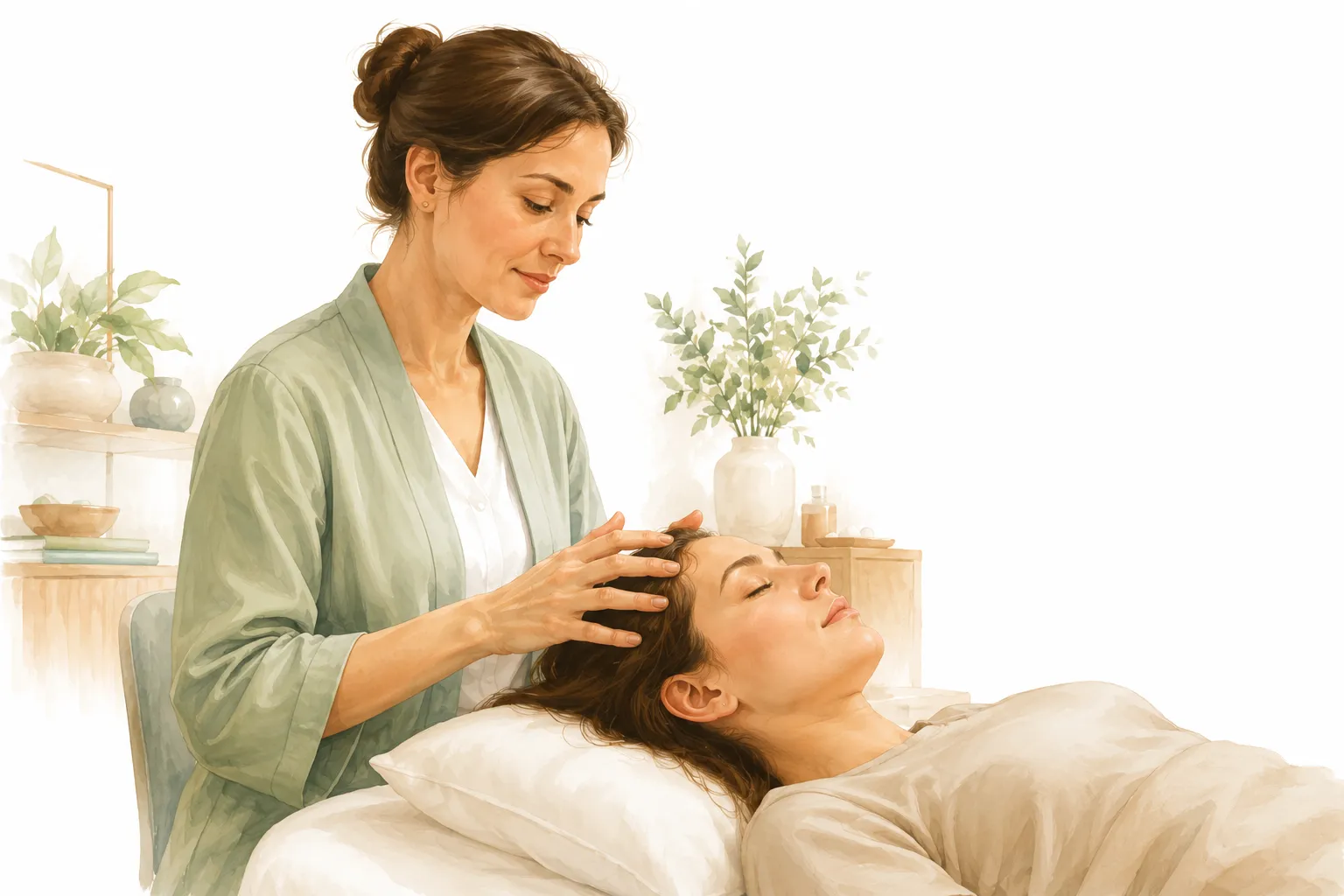
At its most concrete level, Access Bars does something very straightforward: it involves one person gently touching designated areas of another person's head. The recipient lies down fully clothed, the practitioner places their fingertips on specific points, and the session proceeds in a quiet, calm environment.
Beyond that simple description, the question of what Access Bars does gets more complicated. Many recipients report feeling deeply relaxed, mentally clearer, more peaceful, or even euphoric after a session. Some describe emotional releases, vivid dreams, or shifts in perspective.
Practitioners within the Access Consciousness system explain these effects through a particular framework: they say the points hold limiting thoughts, beliefs, and emotions that have accumulated over time, and that touching them releases this stored material. This is a philosophical or energetic explanation, not a neurological one.
Scientific research currently offers a different perspective. While studies have documented subjective improvement and relaxation, they have not confirmed the proposed mechanism or demonstrated that Access Bars does anything beyond what you might expect from a quiet, touch-based, focused attention experience.
The honest answer to what Access Bars does, then, depends on the lens you use: the physical lens, the experiential lens, the philosophical lens, or the scientific lens. Each has something to contribute.
What Access Bars does: A conceptual map
A neutral visual showing the different layers of what Access Bars does: physical action, reported experiences, practitioner claims, and evidence status.
Physical action
The practitioner uses light touch on designated head points.
Participant experiences
People often report relaxation, mental quiet, and improved well-being.
Practitioner claims
The practice is said to release limiting thoughts, beliefs, and emotions.
Evidence status
Limited independent research supports subjective benefit but not the mechanism.
Skim first
Key takeaways
The shortest useful version of this page.
Access Bars involves gentle touch on designated head points.
Many people report feeling relaxed, calm, or mentally clear.
Practitioners claim it releases limiting thoughts and emotions.
Scientific evidence does not currently support the proposed mechanism.
Subjective improvement is real but doesn't prove the specific claims.
Access Bars is complementary wellness, not proven medical treatment.
Always maintain appropriate professional healthcare.
How Access Bars evolved
- Gary Douglas developed Access Bars as part of Access Consciousness.The method spread through training courses and practitioner networks.
- Access Bars became one of the most visible Access Consciousness offerings.The practice reached an international audience seeking alternative wellness approaches.
- Access Bars gained mainstream attention alongside questions about evidence.The gap between participant reports and scientific validation became a central discussion.
The physical reality
What Access Bars does physically
During an Access Bars session, the recipient lies fully clothed on a treatment table while the practitioner works from a position near the head. The practitioner uses their fingertips to gently touch or hold combinations of the 32 designated points or "Bars" on the head.
The touch is generally light rather than deep, more like resting fingers on the skin than pressing or massaging. This makes the experience quite different from massage, which typically involves pressure on muscles and connective tissue.
A session usually lasts between 60 and 90 minutes. The recipient may feel the practitioner's hands moving from point to point, but the pressure is minimal. Some recipients fall asleep. Others remain alert and may talk throughout the session.
From a purely physical perspective, Access Bars does nothing more remarkable than involving gentle touch in a quiet environment. The more significant effects are subjective rather than physical.
What practitioners say Access Bars does
Inside the Access Consciousness system, the mechanism is described in specific, philosophical terms.
Thoughts and beliefs accumulate in the Bars
Practitioners believe that limiting thoughts, emotions, and decisions create energetic blocks in the head points.
Like clutter accumulating in the corners of a room.Gentle touch activates the Bars
Placing fingertips on the points is said to initiate a clearing or releasing process.
Release of stored material
The material stored in the Bars is discharged, allowing the recipient to feel lighter and more free.
Like opening a window to let stale air out.Subjective effects follow
After the release, recipients often report feeling calmer, clearer, or more at peace.
What practitioners and recipients say Access Bars does
- Practitioner
Practitioners often describe Access Bars as a tool for releasing limiting thoughts, beliefs, and patterns. They may use language like "clearing," "unblocking," or "expanding consciousness."
- Participant
Recipients frequently report feeling more relaxed, calm, mentally clear, or emotionally lighter after sessions. Some describe a sense of peace that lasts for days. Others experience vivid dreams or emotional releases in the days following.
- Student
Students learning the practice often describe it as transformative, saying it helps them feel more present and less burdened by past experiences.
- Facilitator
Experienced facilitators may emphasize the practice's potential to shift long-standing patterns of thinking and behaving.
- Balanced view
These perspectives describe what practitioners and participants believe and experience. They are valuable as subjective reports, but they do not constitute scientific evidence for the proposed mechanism.
- Evidence view
The evidence for the proposed mechanism is currently limited. Subjective improvement is real, but its cause is not yet scientifically established.
Practitioner and participant reports should not be mistaken for clinical evidence or medical advice.
Evidence scan
What does evidence say Access Bars does?
The evidence question is not whether anyone has ever felt better after an Access Bars session. Many people clearly have. The question is whether the practice does anything beyond the effects of rest, gentle touch, attention, and expectation.
Overall: not enough evidence
Unclear or mixed
Not clearly for or against
Access Bars induces relaxation and reduces stress.
Many participants report relaxation and stress reduction, but these effects are non-specific and could occur with any relaxing experience.
Regular Access Bars sessions improve mental health.
Research is too limited to draw reliable conclusions about mental health benefits.
Leans against
Points that do not support the claim
Access Bars releases stored thoughts and emotions from head points.
No established scientific evidence supports the existence of thought or emotion storage in specific head locations.
Access Bars effectively treats medical conditions.
Current evidence does not support Access Bars as a treatment for any medical condition.
Reality check
Common myths about what Access Bars does
- Myth
Access Bars is a type of massage.
RealityIt uses light touch on the head but doesn't involve muscle manipulation or deep pressure like massage.
- Myth
The 32 Bars are scientifically recognized brain regions.
RealityThey are part of the Access Consciousness system, not established neuroanatomy.
- Myth
Feeling relaxed proves the energy mechanism is real.
RealityRelaxation is genuine but can occur through many pathways, including rest and attention.
- Myth
Access Bars can cure illness.
RealityThere is no strong evidence that Access Bars treats or cures medical conditions.
- Myth
No effect means the session failed.
RealitySome people experience no noticeable change. This is normal and doesn't indicate failure.
How Access Bars compares to similar practices
Access Bars shares features with other touch-based wellness approaches, but each has distinct characteristics.
Access Bars
Light touch on head points
Releases stored thoughts and emotions
Limited independent evidence
Massage
Pressure on muscles and tissues
Relaxes muscles, improves circulation
Well-established for muscle relaxation
Reiki
Light or no touch
Transfers healing energy
Limited evidence for energy claims
Craniosacral therapy
Very light touch on skull and spine
Restores cerebrospinal fluid flow
Limited evidence
Acupuncture
Needle insertion at meridians
Balances energy (qi)
Some evidence for specific conditions
What happens during an Access Bars session
A typical session follows a predictable structure that contributes to the overall experience.
1. Initial discussion
The practitioner may ask about your intentions, explain the session, and discuss consent and comfort.
5-10 minutes2. Positioning
You lie down fully clothed on a treatment table, often with cushions or blankets for comfort.
2-3 minutes3. Light touch sequence
The practitioner works through the 32 points using light touch, typically holding each combination for 5-15 seconds.
60-80 minutes4. Rest and integration
You rest while the points are held, often in a quiet or softly spoken environment.
Throughout the session5. Closing conversation
The practitioner may check in with you and answer any questions.
5 minutes
Safety
Safety considerations for Access Bars
The physical procedure is generally low risk, but other aspects require consideration.
Generally low-risk for
- Adults comfortable with gentle touch around the head
- People seeking optional relaxation experiences
- Those who understand the practice's limitations
Use caution if
- You have a head injury or condition requiring medical advice
- A practitioner makes exaggerated health promises
- You are being encouraged to stop prescribed treatment
Seek professional help if
- You have symptoms needing diagnosis
- You are in a mental health crisis
- You need evidence-based treatment for any condition
Access Bars is a complementary practice, not a substitute for medical or psychological treatment.
What to remember about what Access Bars does
The physical action is light touch on designated head points.
Many people report feeling relaxed, calm, or mentally clear.
Practitioners describe the process as releasing limiting thoughts and emotions.
Subjective experiences are real but don't prove the proposed mechanism.
Scientific evidence does not currently confirm the broader claims.
Access Bars should not replace professional healthcare.
Approach it as a complementary wellness experience, not a treatment.
Verdict
Our evidence-based verdict
insufficient-evidence
Access Bars provides a structured, gentle touch experience that many people find relaxing and subjectively beneficial. However, the distinctive claims about releasing stored thoughts, beliefs, and emotions from specific head points are not currently supported by strong scientific evidence.
What we know
- Access Bars involves light touch on designated head points.
- Many recipients report feeling calmer, clearer, and more relaxed.
- The practice is offered as a complementary wellness session.
- Rest, gentle touch, and focused attention can influence how people feel.
What we do not know
- Whether thoughts or emotions are stored in specific head points.
- Whether touching these points releases such material.
- Whether Access Bars effectively treats any condition.
If you're considering Access Bars, approach it as an optional relaxation experience rather than a medical treatment. If it helps you feel better, that's valuable, just don't mistake it for proven healthcare.
Bottom line
Relaxation without proof is still relaxation
It's possible to genuinely relax during an Access Bars session without needing to accept every claim attached to it. The experience can be meaningful even if the mechanism isn't scientifically established. The important thing is to hold both the experience and the evidence honestly.
Quick answers
Frequently asked questions
What does Access Bars do to your brain?
Practitioners claim it releases stored thoughts and emotions. Neuroscience does not currently support this specific mechanism.
Does Access Bars actually work?
Many people report subjective benefits, especially relaxation. Evidence for broader claims is limited.
Can Access Bars change your life?
Some people find it transformative. Others notice no effect. It depends on your expectations and experience.
How long do Access Bars effects last?
Effects vary widely. Some people feel calm for days, others for only a few hours. Some notice no lasting change.
Sources
Access Consciousness. Access Consciousness Official Bars Description. Access Consciousness, REPLACE_IF_AVAILABLE. Accessed 2026-07-17
Use to establish how Access Consciousness describes the Bars method.
REPLACE WITH VERIFIED AUTHORS. REPLACE WITH VERIFIED RESEARCH PAPER TITLE. REPLACE WITH VERIFIED JOURNAL, REPLACE WITH VERIFIED DATE. Accessed 2026-07-17
Use to assess the evidence for Access Bars effects.
REPLACE IF AVAILABLE. REPLACE WITH VERIFIED MEDICAL CONTEXT SOURCE. REPLACE WITH RECOGNIZED MEDICAL SOURCE, REPLACE IF AVAILABLE. Accessed 2026-07-17
Use for appropriate complementary-care context.