Understanding the Peace Bar
The Peace Bar: calm in a point?
The Peace Bar is one of the 32 points in the Access Bars system. Within Access Consciousness, it is described as holding the capacity for peace, stillness, and the absence of inner conflict. Practitioners say that gently touching this area can help release what blocks a person from experiencing peace.
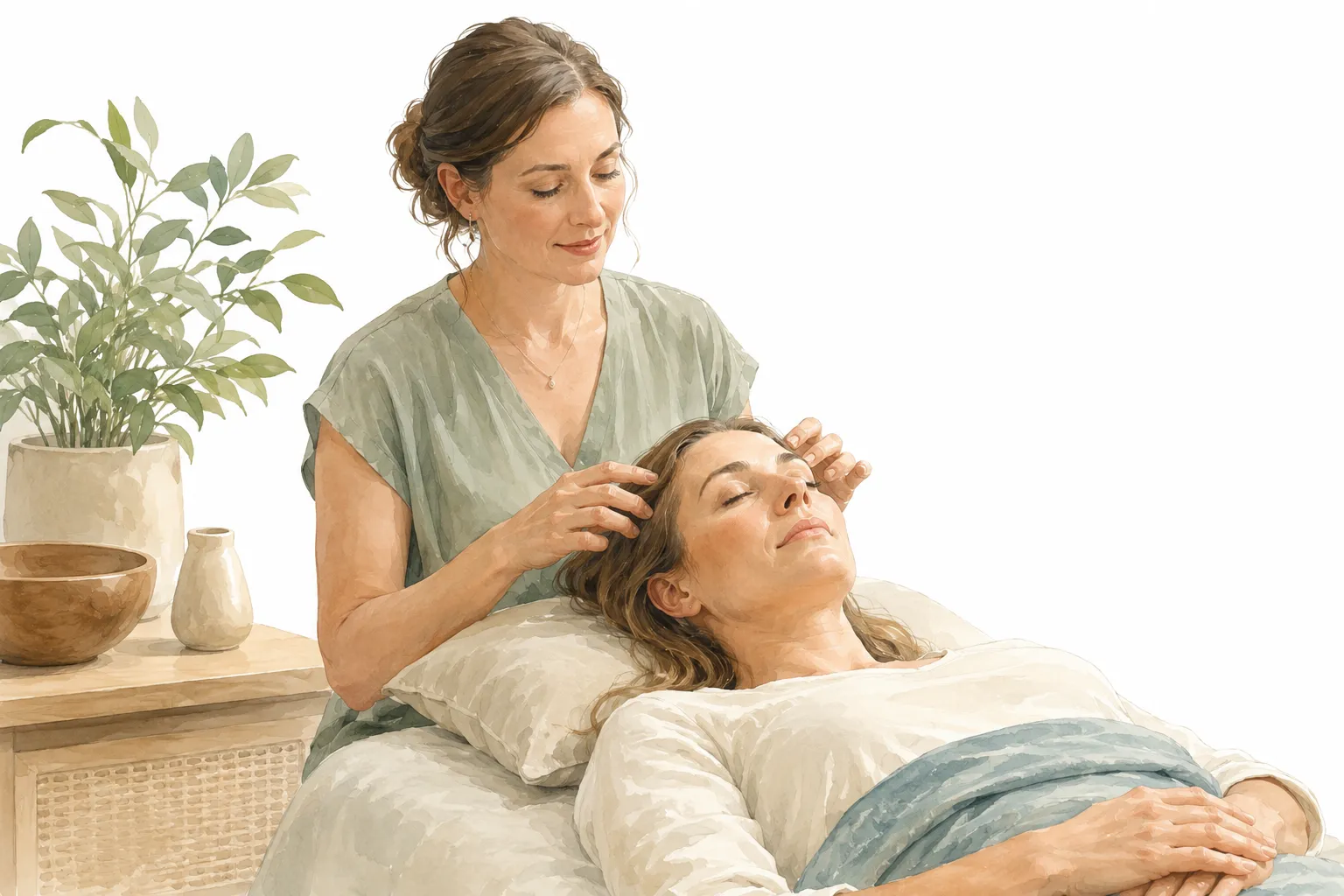
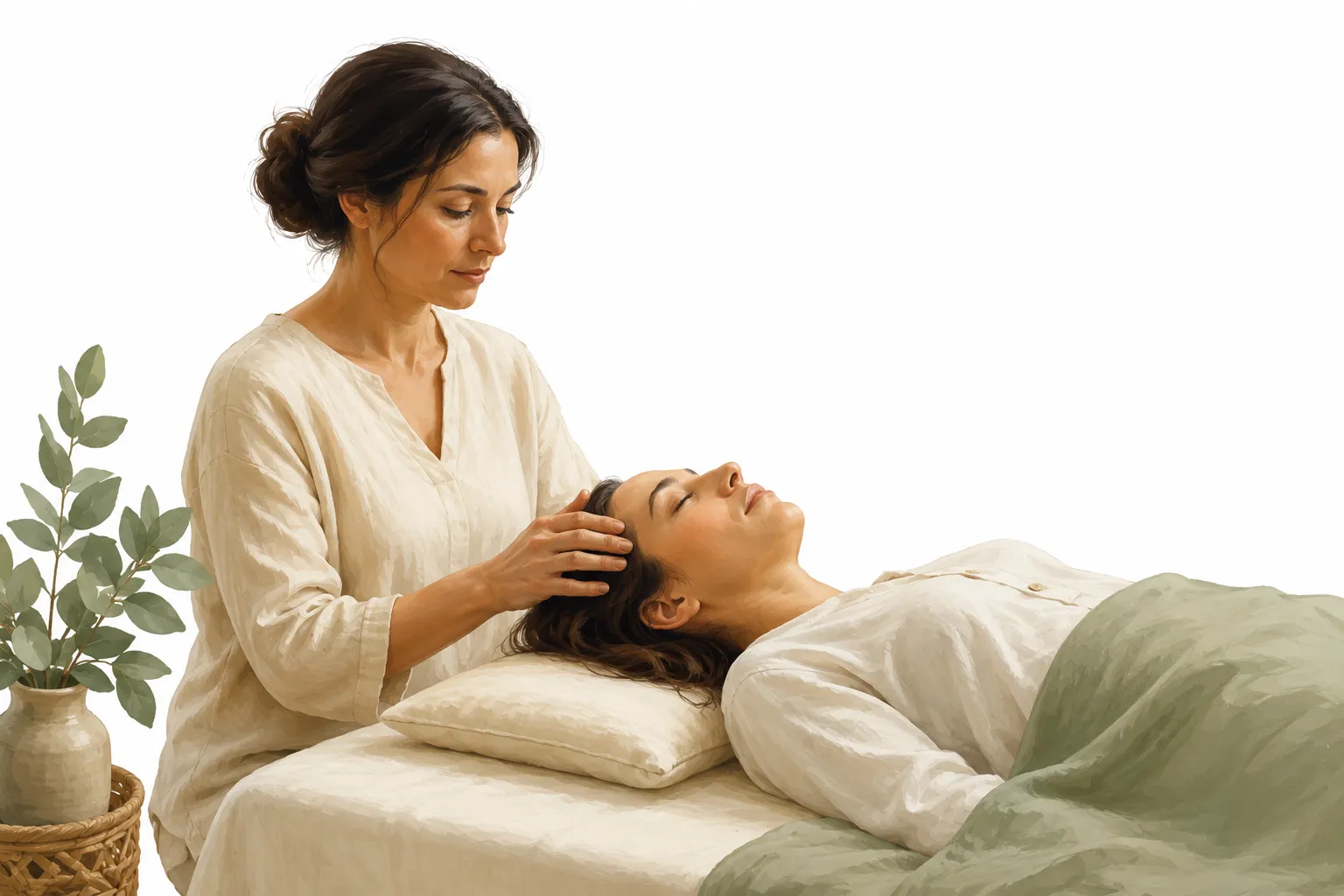
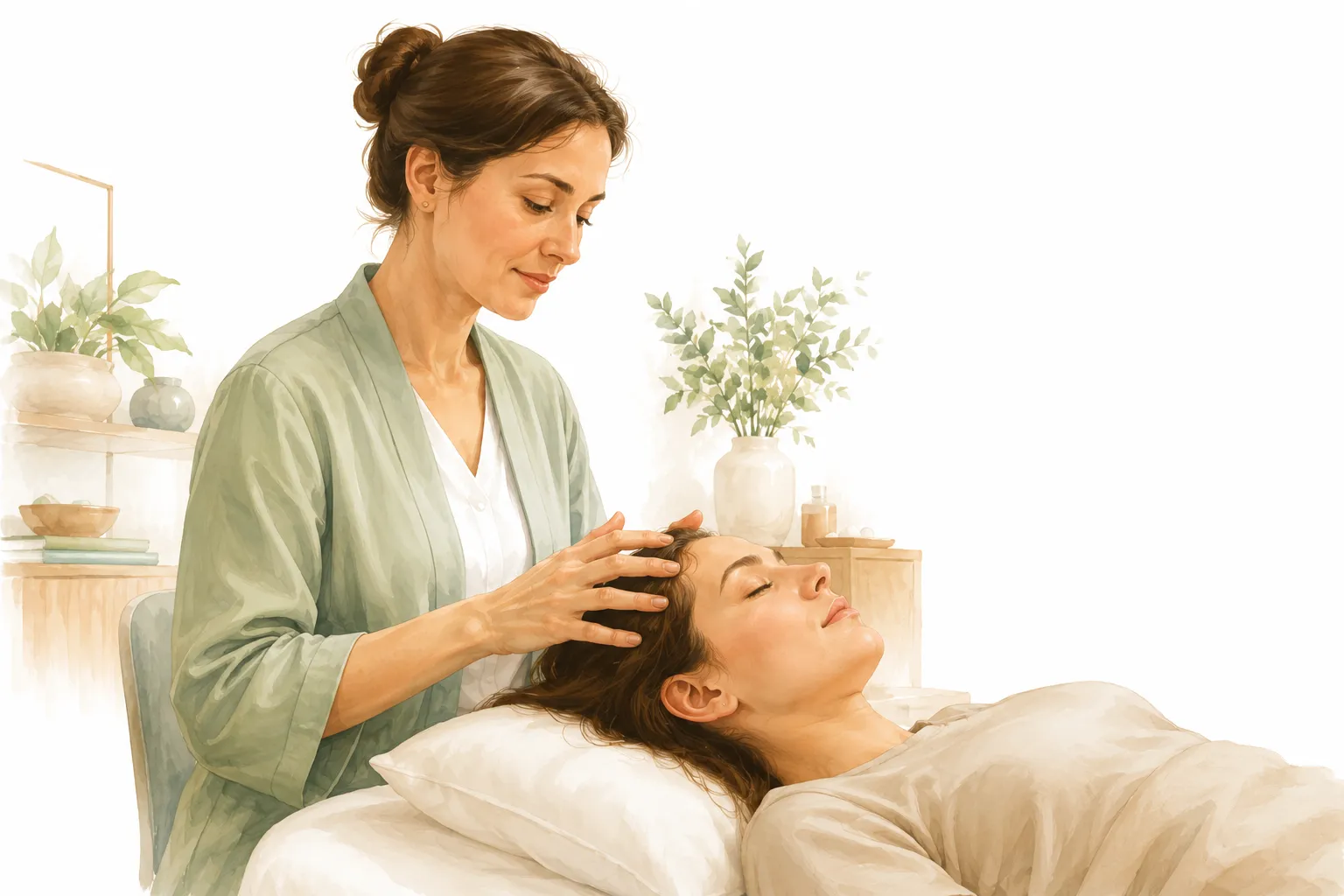
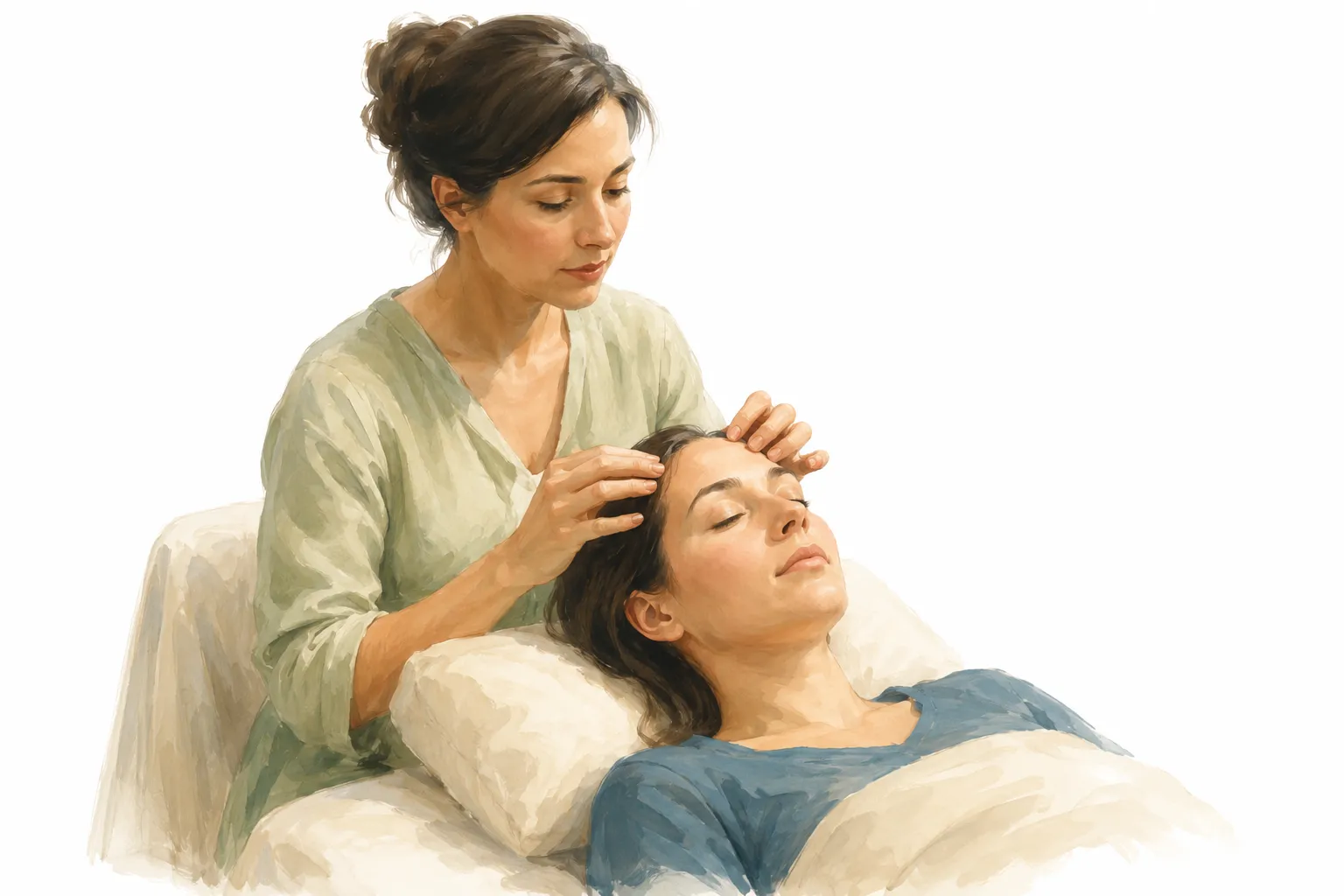
The physical location of the Peace Bar is taught during practitioner training, and like other Bars points, it is gently touched during a session. The touch is light—just fingertips making contact—and the recipient usually lies down fully clothed.
The idea that a single point on the head can help a person find peace is appealing. However, peace is a complex experience involving thoughts, emotions, environment, and personal circumstances. There is no scientific evidence that peace is stored at a specific head location.
That said, people sometimes do feel calmer after an Access Bars session. This could be due to rest, quiet attention, the relaxation of lying down, or the expectation of feeling better. A calming experience is real—but it doesn't necessarily confirm the Peace Bar's claimed mechanism.
Where the Peace Bar is located
A neutral diagram showing the general head area associated with the Peace Bar in the Access Bars system.
Head area
The general location of the Peace Bar as taught in Access Bars training.
Light touch
Practitioners use gentle fingertip contact rather than pressure.
No anatomical claim
The location is part of the Access Bars teaching map, not established neuroanatomy.
Skim first
Key takeaways
The shortest useful version of this page.
The Peace Bar is one of 32 Access Bars points.
It is associated within Access Consciousness with peace and stillness.
Practitioners claim touching it releases barriers to peace.
Some recipients report feeling calmer.
Personal experiences do not confirm the claimed mechanism.
There is no strong evidence for the specific effect of the Peace Bar.
Access Bars is not a substitute for professional mental health care.
How the Peace Bar fits into Access Bars
- The Peace Bar was included in the original Access Bars point map developed within Access Consciousness.It established the association with calm and inner stillness.
- As Access Bars training spread globally, the Peace Bar became part of the standard curriculum.A consistent vocabulary for peace-related work was created.
- Practitioners continue to work with the Peace Bar as part of their sessions, often alongside other points.The point remains a focus for those seeking calm.
Defining the point
What exactly is the Peace Bar?
The Peace Bar is a specific point on the head that practitioners gently touch during an Access Bars session. It is one of the 32 points taught in Access Bars training, and its name reflects its claimed association with peace, stillness, and inner calm.
Within the Access Consciousness system, each of the Bars is said to hold thoughts, emotions, and decisions related to a particular life theme. The Peace Bar, as the name suggests, is associated with the capacity for peace and the barriers that may block it.
Practitioners describe touching this point as helping to release what prevents a person from experiencing peace, potentially making the recipient feel calmer or more at ease. The touch is light—just fingertips making gentle contact—and the recipient usually lies down fully clothed.
It is worth noting that this is a teaching within Access Consciousness, not a claim supported by neuroscience. The map of points is conceptual, not anatomical.
How is the Peace Bar supposed to work?
The explanation differs depending on whether you are looking at it from the Access Consciousness perspective or a scientific one.
Barriers to peace
Access Consciousness teaches that experiences, thoughts, and decisions can accumulate and block a person's experience of peace.
Like a wall that blocks the view of a beautiful landscape.Touch releases the blocks
Practitioners say that gently holding the Peace Bar helps release these blocks.
Like removing stones from the wall one by one.Recipients feel calmer
Some recipients report feeling more peaceful, still, or at ease after the Peace Bar is touched.
Like the quiet after a storm passes.The scientific view
From a research standpoint, rest, gentle touch, and focused attention can all influence emotional state. Whether something specific is happening with the Peace Bar has not been demonstrated.
The honest position
Reported calm may be genuine but does not confirm the proposed mechanism.
Different views on the Peace Bar
- Practitioner
Practitioners often describe the Peace Bar as a gentle but profound point that helps clients feel more still, grounded, and at ease.
- Participant
Recipients report a variety of experiences: feeling peaceful, falling asleep, feeling emotionally open, or noticing no particular change.
- Balanced view
These experiences are meaningful to the people having them. However, they are personal reports, not clinical evidence.
- Evidence view
No independent scientific evidence currently supports the specific claim that touching the Peace Bar creates peace.
If you are experiencing persistent anxiety or stress, Access Bars should not replace professional support.
Reality check
Common myths about the Peace Bar
- Myth
The Peace Bar is a recognized meditation point.
RealityIt is part of the Access Bars system, not a recognized meditation or relaxation technique.
- Myth
Touching the Peace Bar cures anxiety.
RealityThere is no evidence for this. Anxiety is a complex condition requiring professional treatment.
- Myth
If you don't feel peaceful during a session, the point isn't working.
RealityExperiences vary. Feeling nothing doesn't mean nothing happened—and feeling peaceful doesn't necessarily mean the claimed mechanism is at work.
- Myth
The Peace Bar only holds your own blocks to peace.
RealityWithin Access Consciousness, some practitioners also discuss inherited or collective blocks—but this is a philosophical concept, not a scientific one.
Evidence scan
What does the evidence say about the Peace Bar?
The question is not whether anyone has ever felt calmer after a session. It is whether the Peace Bar specifically creates peace through a verifiable mechanism.
Overall: not enough evidence
Unclear or mixed
Not clearly for or against
Recipients report feeling calmer after having the Peace Bar touched.
These reports exist anecdotally, but do not establish a specific mechanism.
Leans against
Points that do not support the claim
Touching the Peace Bar releases blocks to peace.
This claim has not been verified by independent research. The mechanism remains theoretical.
The Peace Bar can help treat anxiety or stress.
Current evidence is insufficient to support this claim.
The Peace Bar in context
Understanding what the Peace Bar is helps to see it alongside other approaches to calm.
Access Bars Peace Bar
Light touch on the head
Insufficient evidence
Mindfulness meditation
Focused attention and awareness
Moderate to strong evidence
Cognitive Behavioral Therapy
Changing thought patterns
Strong evidence for anxiety
Relaxation techniques
Breathing, progressive muscle relaxation
Moderate evidence
Exercise
Physical activity reducing stress
Strong evidence
Safety
Is the Peace Bar safe?
The physical touch is gentle and low-risk. The larger risk is treating it as a substitute for professional anxiety or stress treatment.
Generally low-risk for
- People seeking relaxation or calm
- People who understand the session is not anxiety treatment
- People maintaining professional mental health care
Use caution if
- You are experiencing severe anxiety or panic—seek professional support
- You are relying on the Peace Bar instead of evidence-based treatment
- You feel pressured to feel peaceful before you are ready
Seek professional help if
- You have persistent anxiety affecting your daily life
- You are experiencing panic attacks or significant distress
- You need professional mental health support
Access Bars is not a treatment for anxiety, stress, or any mental-health condition. If you are struggling, please seek help from a qualified professional.
What to remember about the Peace Bar
The Peace Bar is one of 32 Access Bars points.
It is associated with peace, stillness, and inner calm.
Practitioners claim it releases barriers to peace.
Some recipients report feeling calmer.
These reports are subjective, not scientific evidence.
The proposed mechanism is unverified.
It should not replace professional anxiety or stress support.
Verdict
Our evidence-based verdict on the Peace Bar
insufficient-evidence
The Peace Bar is a point in the Access Bars system associated with peace and calm. While some recipients report feeling more relaxed after sessions, the specific mechanism of creating peace through this point has not been scientifically verified.
What we know
- The Peace Bar is taught as part of Access Bars training.
- Practitioners use light touch on this area.
- Some recipients report feeling calmer after sessions.
- A relaxing environment can influence emotional state.
What we do not know
- Whether peace is stored in this specific location
- Whether touching the point creates peace through a distinct mechanism
- Whether the Peace Bar can reliably help with anxiety or stress
If you are curious, trying the Peace Bar as part of an Access Bars session may provide a relaxing experience. But if you are dealing with significant anxiety or stress, seek professional support.
Bottom line
A point named for peace—but not a guarantee of it
The Peace Bar is a concept within Access Consciousness that some people find comforting. Its name promises something deeply desirable: inner stillness and calm. But names are not proof. The real question is whether the point delivers what it promises. On that question, the evidence is quiet.
Quick answers
Frequently asked questions
What does the Peace Bar do?
Practitioners claim it releases blocks to peace and calm. Some people report feeling more relaxed afterward.
Where is the Peace Bar located?
It is a specific point on the head taught in Access Bars training. The exact location is part of the practitioner's training.
Can the Peace Bar cure anxiety?
No. Anxiety is a complex condition requiring professional treatment. Access Bars is not a cure.
Is the Peace Bar scientifically proven?
No. There is no strong scientific evidence for its specific mechanism.
Should I use the Peace Bar for stress?
You may find it relaxing, but it should not replace professional treatment for anxiety or stress.
Sources
REPLACE IF AVAILABLE. REPLACE WITH VERIFIED OFFICIAL ACCESS BARS PEACE BAR PAGE. Access Consciousness, REPLACE_IF_AVAILABLE. Accessed YYYY-MM-DD
Use to describe the official Access Consciousness teaching on the Peace Bar.
REPLACE WITH VERIFIED AUTHORS. REPLACE WITH VERIFIED RESEARCH PAPER ON ACCESS BARS. REPLACE WITH VERIFIED JOURNAL, REPLACE WITH VERIFIED DATE. Accessed YYYY-MM-DD
Use for evidence assessment.
REPLACE IF AVAILABLE. REPLACE WITH VERIFIED MENTAL HEALTH RESOURCE ON ANXIETY AND STRESS. REPLACE WITH RECOGNIZED MEDICAL SOURCE, REPLACE IF AVAILABLE. Accessed YYYY-MM-DD
Use for professional mental health guidance.