The Control Bar within Access Bars
What the Control Bar represents—and what it doesn't
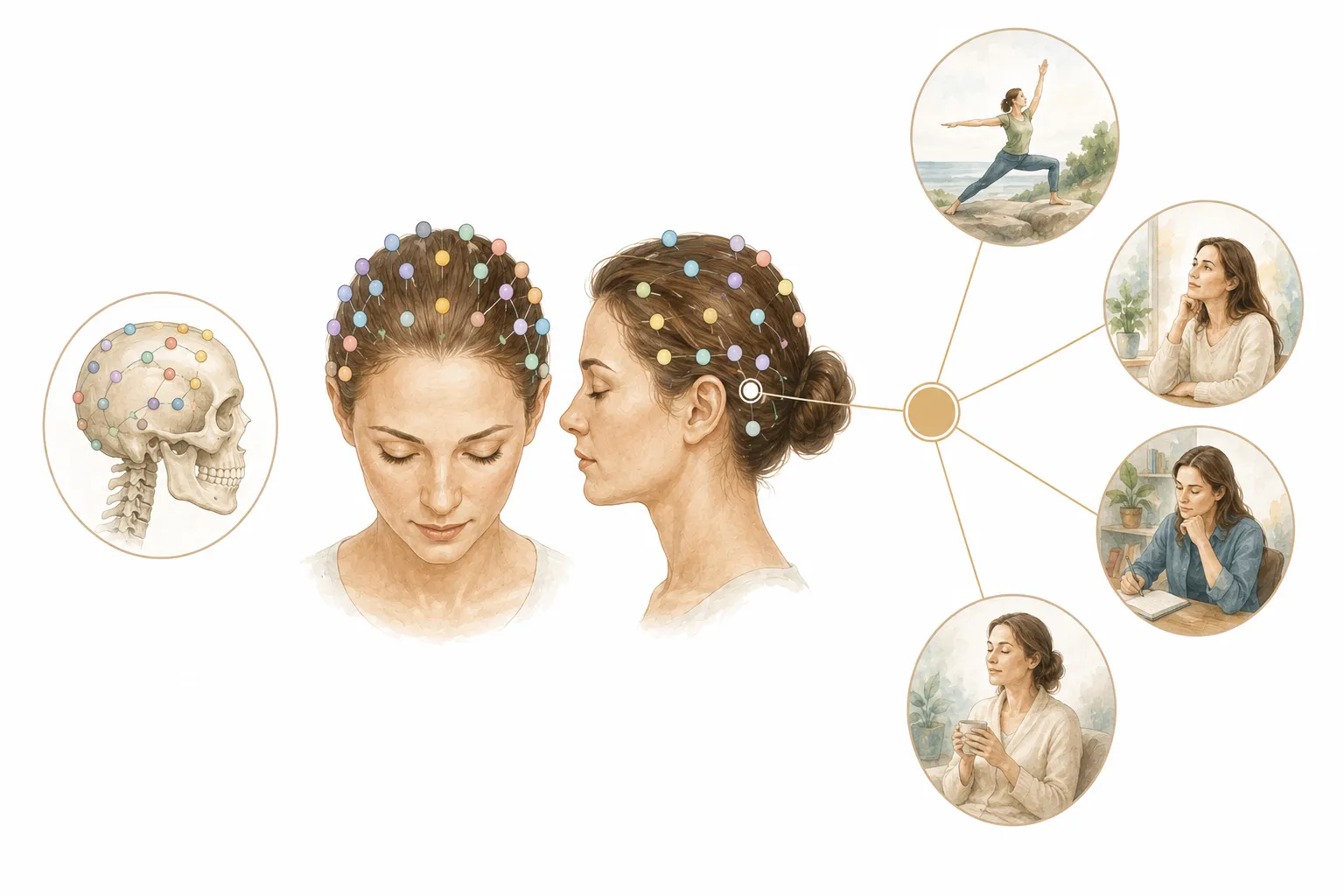
The Control Bar is part of the Access Bars system, which identifies 32 points on the head associated with different themes or areas of life. The Control Bar is the point practitioners associate with control, control patterns, and the need to control outcomes, people, or situations.
Within the Access Consciousness framework, "control" is understood as a pattern of trying to manage or direct outcomes. A control block, in this view, is any limiting thought or pattern that prevents a person from allowing things to unfold naturally.
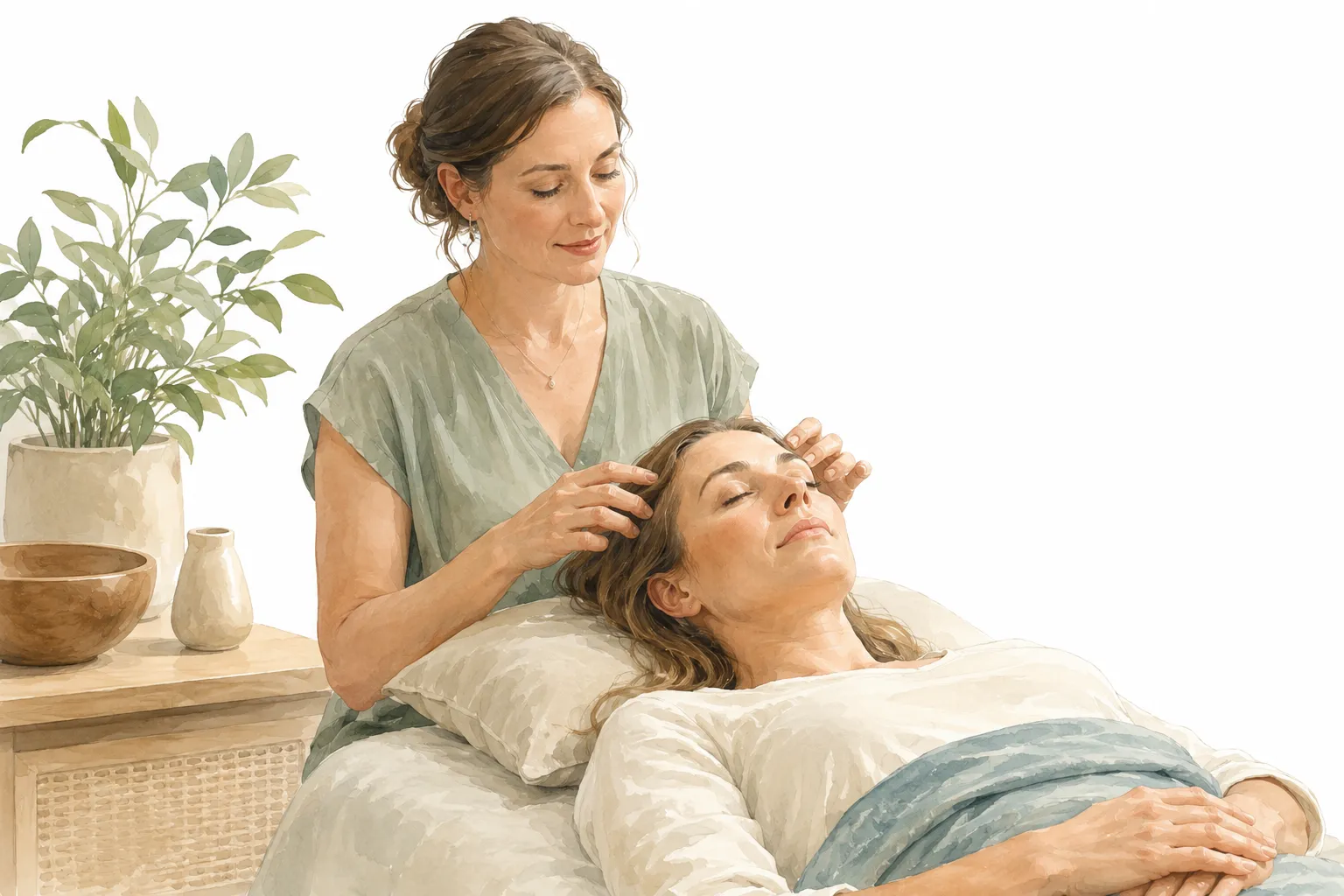
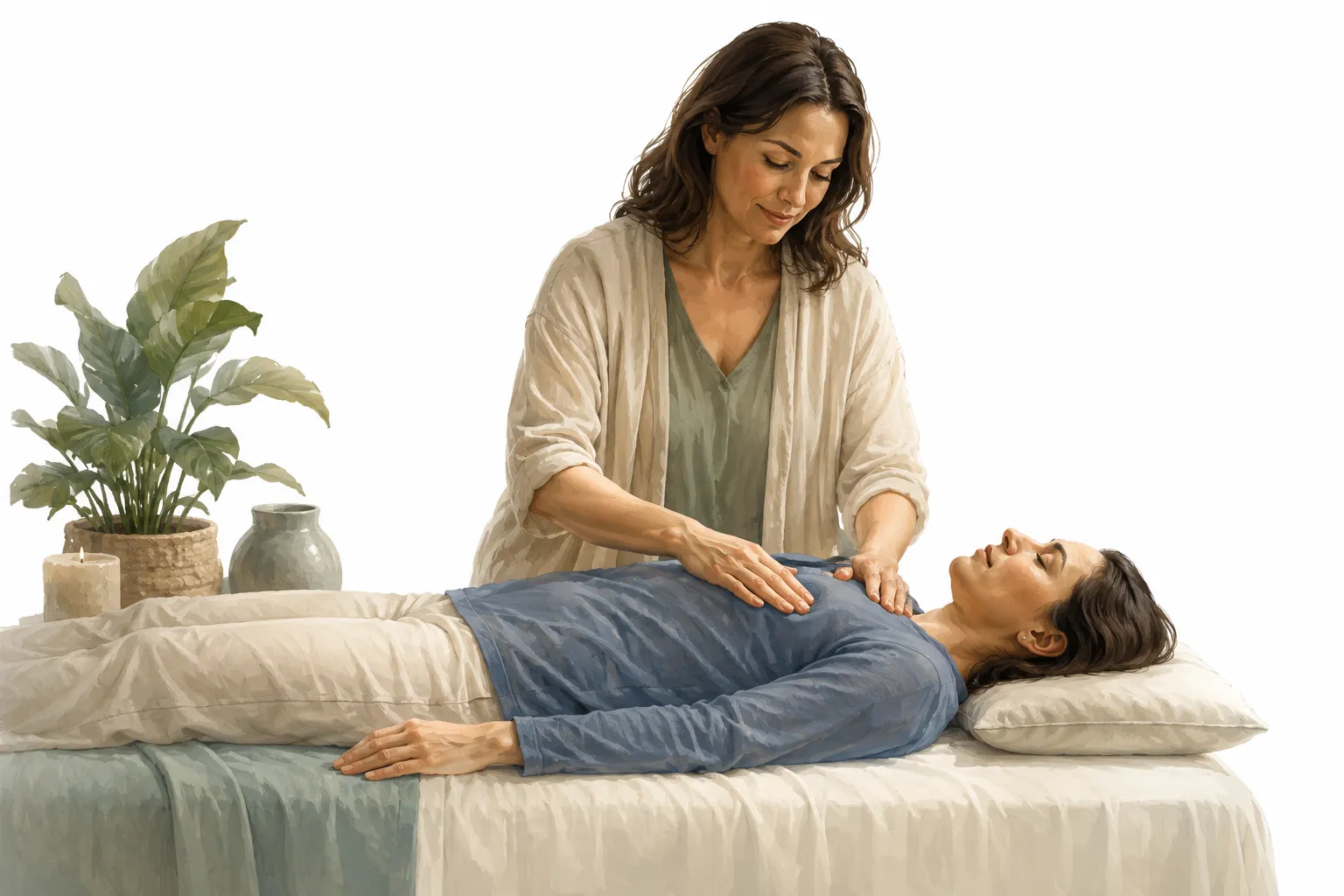
In practice, the Control Bar is worked with in the same way as the other 31 points: the practitioner uses gentle fingertip touch on a designated area of the head. The session is otherwise identical to a standard Access Bars appointment.
It is important to separate the descriptive label from the empirical claim. The point is named "Control" within the system, but that does not mean research has established that control-related function is located at or controlled by that specific head area.
The Control Bar in the Access Bars map
A neutral diagram showing the location of the Control Bar among the 32 Access Bars points.
Control Bar location
One of the 32 points on the head map.
Access Bars points
The full system of 32 designated areas.
How it's touched
Gentle fingertip contact during a session.
System context
Part of the wider Access Consciousness framework.
Skim first
Key takeaways
The shortest useful version of this page.
The Control Bar is one of 32 points in the Access Bars system.
It's associated with control patterns and the need to control.
It's worked with through light touch during a standard session.
Some people report feeling more relaxed or less controlling.
These experiences are subjective and not scientifically proven.
There's no established mechanism for how it might work.
Professional mental health support should be sought for control issues.
The claimed purpose
What does the Control Bar do?
According to Access Consciousness materials, the Control Bar helps release thoughts, emotions, or beliefs that drive a person's need to control. This can include the need to control outcomes, people, situations, or even one's own emotional state.
The idea is not that the point contains control itself, but that it holds patterns or energy related to control. By touching the point, the practitioner is said to help the recipient let go of what's in the way.
Recipients may report feeling more relaxed, less anxious, or more willing to allow things to unfold naturally after a session. Some describe feeling lighter or more at ease.
There is no established scientific mechanism for how touching a specific head point could release control patterns. However, the subjective experience of relaxation can, for some people, create conditions that feel conducive to letting go.
Control Bar
Control Bar
In Access Bars, the Control Bar is one of 32 points associated with control patterns and the need to control.
Practitioners work with this point to help clients release thoughts, feelings, or beliefs that may be driving the need to control.
The Control Bar is touched during a standard Access Bars session, typically as part of a sequence of points. The practitioner holds the area lightly for a period of time.
While this is the official framework explanation, the effects are subjective and not scientifically verified. People may genuinely feel less controlling after a session, but this doesn't establish that the specific point is responsible through the proposed mechanism.
The practitioner locates the Control Bar point on the head.
Gentle fingertip contact is applied to the area.
The point is held for a period of time, often as part of a sequence.
The recipient rests and may experience relaxation or other sensations.
How the Control Bar fits into Access Bars
The Control Bar is just one of 32 points in the Access Bars system, each with a different associated theme.
The names and meanings belong to the Access Bars system and should not be interpreted as recognized anatomical structures or medically validated treatment points.
Control Bar
Associated with control patterns, the need to control, and controlling behaviors.
One of the named themes in the Access Bars teaching map, worked with through light touch.
There is no established scientific evidence that control-related function is located at this specific head point.Creativity Bar
Associated with creative expression and creative blocks.
Another named theme within the Access Bars framework.
The assigned meaning is part of the system's philosophy rather than established neuroanatomy.Aging Bar
Associated with attitudes toward aging, the body, and the aging process.
A theme practitioners may refer to while explaining the point map.
The claimed association has not been verified as a distinct biological mechanism.Body Bar
Associated with thoughts, feelings, and beliefs about the body.
Another named theme in the Access Bars framework.
The claimed association is part of the system's teaching, not established biology.
How practitioners and participants describe the Control Bar
- Practitioner
Practitioners often describe the Control Bar as a valuable point for helping clients let go of the need to control, reduce anxiety, and become more comfortable with uncertainty.
- Participant
Recipients sometimes report feeling more relaxed, less anxious, or more at ease after a session. Others feel nothing specific but experience general relaxation.
- Balanced view
These perspectives help explain why the Control Bar attracts interest. However, personal reports do not establish that the specific mechanism proposed by Access Consciousness is verified.
- Evidence view
Independent evidence is currently too limited to verify that working with the Control Bar specifically reduces control patterns.
Practitioners should avoid promising breakthroughs or encouraging clients to abandon professional mental health support for control issues.
Reality check
Common misunderstandings about the Control Bar
- Myth
The Control Bar is where control is stored in the brain.
RealityThere is no scientific evidence that control-related function is localized to this specific head point. It is a named point within the Access Bars teaching system.
- Myth
Touching the Control Bar will instantly release all control patterns.
RealitySome people may feel more relaxed after a session, but this is subjective and not guaranteed.
- Myth
The Control Bar is a proven treatment for control issues.
RealityThere is currently insufficient evidence to support this claim.
- Myth
The point works the same way for everyone.
RealityExperiences with Access Bars points vary widely; no universal effect has been established.
Evidence scan
What does the evidence say about the Control Bar?
The evidence for the Control Bar specifically is essentially anecdotal. Research into Access Bars generally has not focused on individual points.
Overall: not enough evidence
Unclear or mixed
Not clearly for or against
The Control Bar helps release control patterns.
Anecdotal reports suggest some people feel more relaxed or less controlling after sessions. These reports do not establish a specific mechanism.
Leans against
Points that do not support the claim
Touching the Control Bar reduces the need to control through a specific mechanism.
No established scientific evidence confirms this proposed mechanism.
The Control Bar has unique effects separate from general relaxation.
Current evidence does not distinguish the Control Bar from other Access Bars points in terms of effect.
What to remember about the Control Bar
It's one of the 32 points in the Access Bars system.
It's associated with control patterns and the need to control.
It's worked with through light touch during a session.
Some people report feeling more relaxed or less controlling.
These experiences are subjective and not scientifically proven.
There's no established mechanism for how the point might work.
It should be approached as optional wellness support, not a guaranteed solution.
Verdict
Our evidence-based verdict
insufficient-evidence
The Control Bar is best understood as a named point within the Access Bars system that practitioners associate with control patterns and the need to control. While some people report positive experiences, there is currently insufficient evidence to support specific claims about its effectiveness.
What we know
- It's one of the 32 Access Bars points.
- It's associated with control in the Access Consciousness framework.
- It's worked with through gentle touch.
- Some participants report feeling more relaxed or less controlling.
What we do not know
- Whether the point has a specific effect on control patterns.
- Whether the point works through a distinct mechanism.
- Whether the point is more effective than general relaxation for control issues.
A person may choose to explore the Control Bar as part of an Access Bars session if they're curious about its potential effects on control patterns. However, expectations should be realistic, and professional mental health support should be sought for persistent control issues.
Bottom line
A point named for control—but not a proven control solution
The Control Bar is an interesting concept within the Access Bars system. Some people find it helpful for feeling more relaxed and less controlling. But like many complementary practices, the subjective experience doesn't automatically prove the proposed mechanism.
Quick answers
Frequently asked questions
What is the Control Bar in Access Bars?
It's one of the 32 head points in the Access Bars system, associated with control patterns and the need to control.
Where is the Control Bar located?
It's one of the designated points on the head, though the specific location is taught in Access Bars training.
Does the Control Bar work?
Some people report feeling more relaxed or less controlling after sessions. However, scientific evidence for specific effects is lacking.
Is the Control Bar scientifically proven?
No. There's currently insufficient evidence to support specific claims about the Control Bar.
Can the Control Bar help with anxiety?
Some practitioners claim it can. Some people find it helpful for relaxation, which may indirectly support anxiety reduction. However, it's not a proven treatment.
Sources
REPLACE IF AVAILABLE. REPLACE WITH VERIFIED OFFICIAL ACCESS BARS PAGE TITLE. Access Consciousness, REPLACE_IF_AVAILABLE. Accessed 2026-07-17
Use only to establish how Access Consciousness describes the Control Bar and its own claims.
REPLACE WITH VERIFIED AUTHORS. REPLACE WITH VERIFIED RESEARCH PAPER TITLE. REPLACE WITH VERIFIED JOURNAL, REPLACE WITH VERIFIED DATE. Accessed 2026-07-17
Use to assess the design, limitations, and findings of available Access Bars research.
REPLACE IF AVAILABLE. REPLACE WITH VERIFIED MENTAL HEALTH CONTEXT. REPLACE WITH RECOGNIZED SOURCE, REPLACE IF AVAILABLE. Accessed 2026-07-17
Use for appropriate mental health and control pattern context.