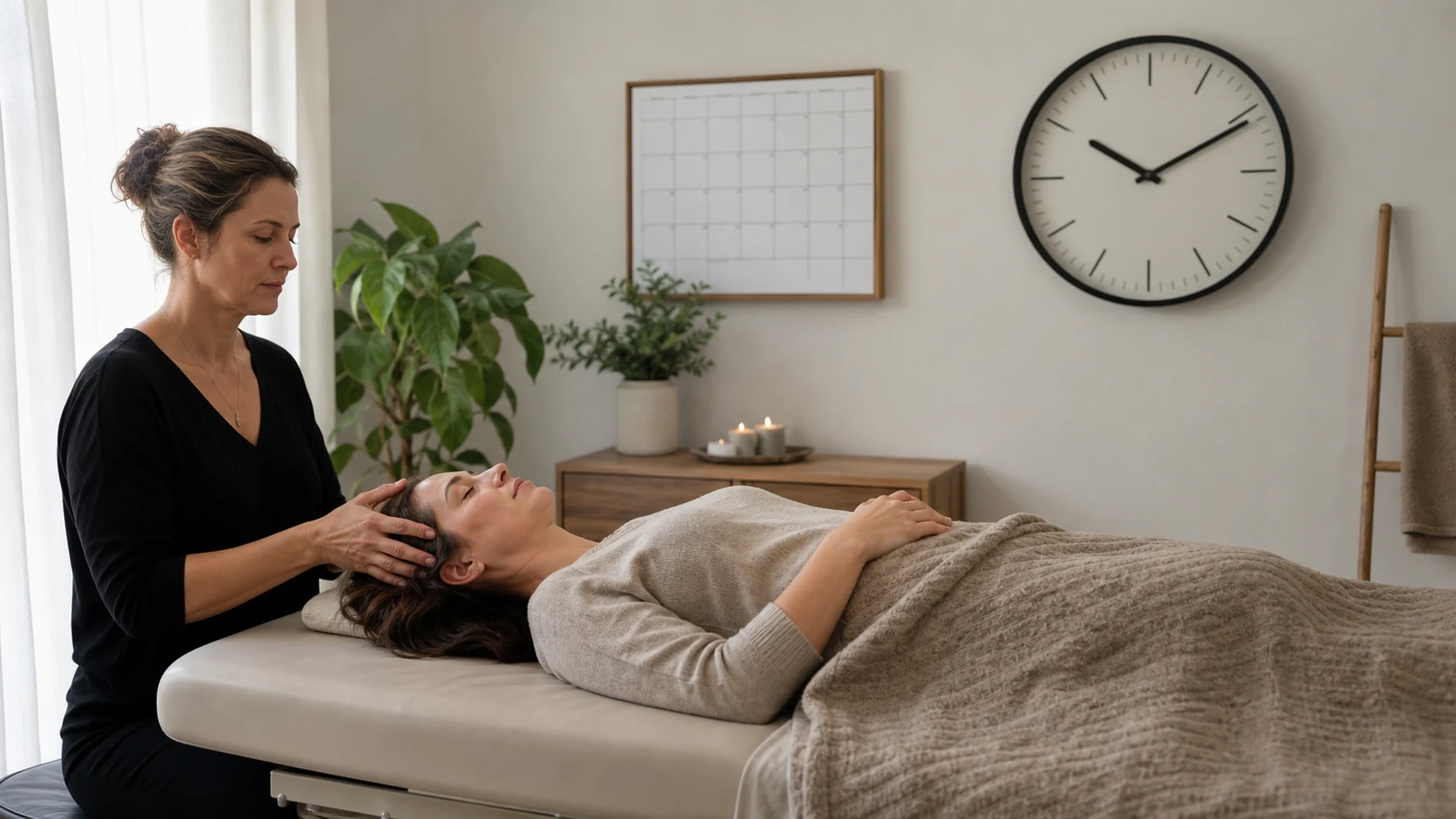
Why frequency is left open
A rhythm you choose, not one that's prescribed
Ask how often you should have your Bars run, and both official materials and individual practitioners tend to answer with a question of their own: how much ease, calm, or change would you like in your life? The frequency isn't treated as a fixed dosage but as a personal choice tied to how much someone values the experience and how often they're willing to invest the time and cost.
In practice, this leaves people landing in a few common patterns. Some choose weekly sessions as part of an ongoing self-care routine. Others space sessions every three weeks, describing that as enough time to notice the previous session's effect fade before getting another one. Still others treat it more like an occasional tool, booking a session specifically after a stressful event, a big transition, or a rough patch.
Because no controlled research has established an optimal frequency tied to a specific measurable outcome, all of these patterns are equally "supported" by the same amount of evidence , which is to say, mostly personal preference and practitioner tradition rather than a clinical guideline.
Skim first
Key takeaways
The shortest useful version of this page.
There's no single recommended frequency for Access Bars sessions.
Weekly, every-three-weeks, monthly, and as-needed are all commonly cited patterns.
These patterns reflect personal preference and practitioner tradition, not clinical research.
No study has compared frequencies against a measured outcome.
A comfortable, sustainable rhythm is more important than matching a specific schedule.
The frequency patterns people commonly describe
While there's no fixed rule, a handful of patterns show up repeatedly across practitioner and client accounts.
Weekly
Some regular clients book a session every week as part of an ongoing self-care habit.
Every three weeks
A commonly cited alternative, often described as enough space to notice the previous session's effect wear off.
Monthly
Common among people using it as light, ongoing maintenance rather than intensive practice.
As-needed
Some people book a session specifically after a stressful event, major transition, or particularly difficult stretch.
Practitioner tradition, not clinical evidence
What this recommendation is actually based on
It's worth being direct about the evidentiary status here: no independent study has compared different frequencies of Access Bars sessions against a measured outcome. The variety of accepted patterns (weekly, every three weeks, monthly, or as-needed) reflects the absence of a validated protocol rather than a range of options all separately proven effective.
That doesn't mean any of these choices is unreasonable. If a session genuinely helps someone unwind and they enjoy repeating it, a personal rhythm based on preference is a perfectly sensible way to use a low-risk complementary practice. It simply shouldn't be confused with a clinically established treatment schedule.
How practitioners and clients frame frequency
- Practitioner
Practitioners often frame frequency as a reflection of how much ease and change someone wants in their life, encouraging clients to choose based on personal preference rather than a fixed schedule.
- Participant
Clients describe landing on whatever rhythm fits their routine and budget , weekly, occasional, or purely as-needed.
- Balanced view
The openness around frequency is honest about the lack of a prescribed protocol, but it also means no specific frequency can be described as more "correct" or evidence-based than another.
Reality check
Common misunderstandings about frequency
- Myth
There's a scientifically optimal frequency for Access Bars sessions.
RealityNo controlled research compares frequencies; the common patterns reflect practitioner tradition and personal preference, not clinical evidence.
- Myth
You have to commit to a fixed weekly schedule to see any benefit.
RealityOccasional or as-needed sessions are also commonly described as worthwhile by people who use the practice that way.
What to remember
No single frequency is presented as the "correct" one.
Weekly, every three weeks, monthly, and as-needed are all commonly cited patterns.
Frequency choices reflect personal preference and practitioner tradition, not clinical evidence.
A comfortable, sustainable rhythm matters more than matching any particular schedule.
Quick answers
Frequently asked questions
How often do most people get Access Bars done?
Commonly cited patterns include weekly, every three weeks, and monthly sessions, though it varies widely by individual.
Should I do Access Bars every day?
Daily sessions aren't a common recommendation, though some enthusiasts have described doing so; there's no research indicating this is necessary or more effective.
Can I book a session only when I'm stressed?
Yes, using it as an as-needed tool during stressful periods is a commonly described approach.
Sources
HOW MANY SESSIONS SHOULD I HAVE?. Access Consciousness. Accessed 2026-07-17
Official framing of frequency as a personal choice.
Access Bars Therapy & Healing Guide - Benefits & Techniques. Bodhi Holistic Hub. Accessed 2026-07-17
Describes varied frequency patterns among individuals, from weekly to monthly maintenance.