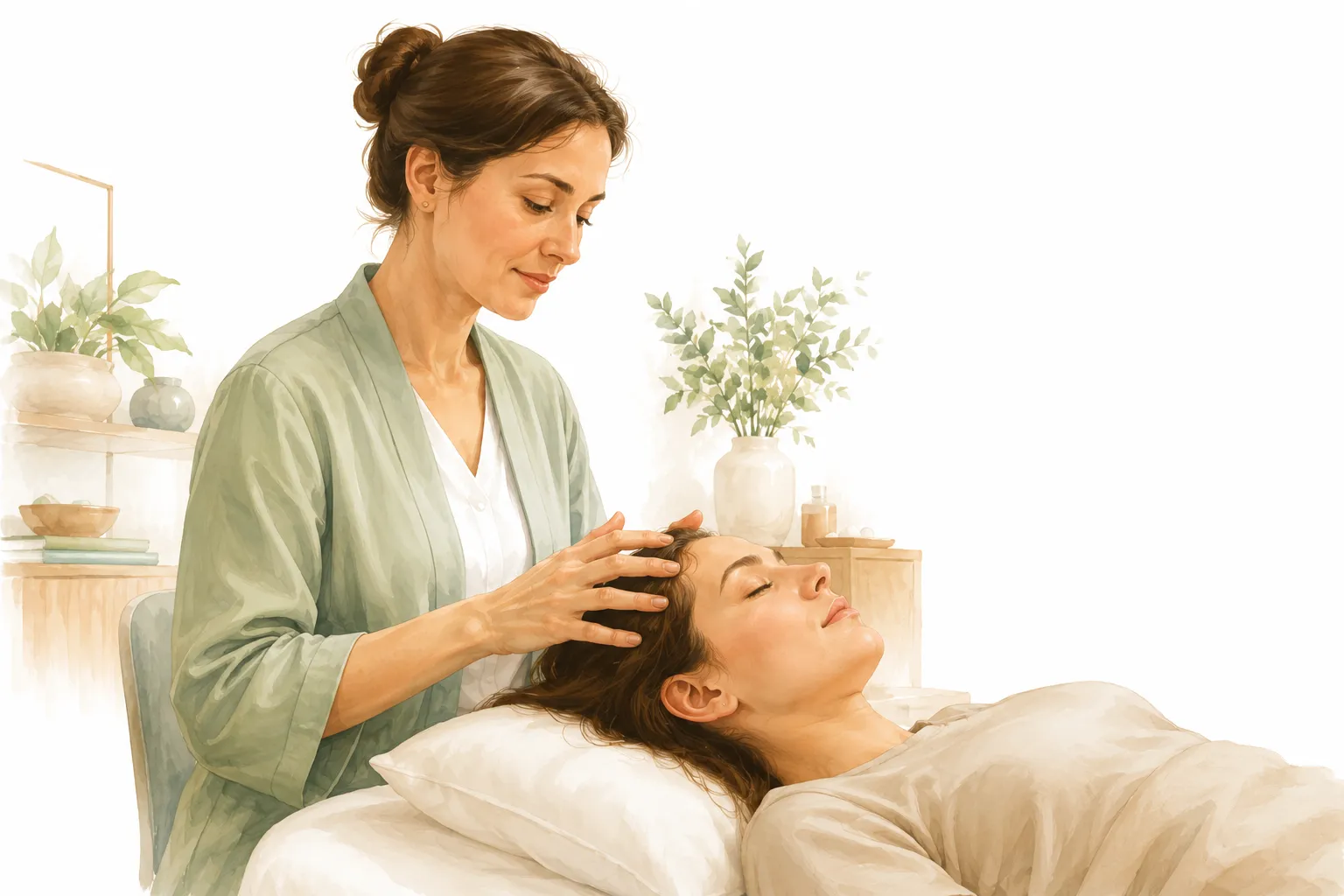
Safety first
Who Should Not Get Access Bars?
Access Bars is generally considered a low-risk practice because the physical contact is gentle and non-invasive. However, 'low risk' is not the same as 'no risk,' and there are situations where participation may be inadvisable.
The most important contraindications relate to head injuries, serious medical conditions, and situations where the practice might delay needed professional care. Anyone with a recent head injury, severe headache, or neurological condition should seek medical advice before participating.
Psychological contraindications also exist. People with severe anxiety about touch, certain mental health conditions, or who are in crisis should prioritize professional care over complementary practices. Access Bars is not a substitute for therapy, medication, or other evidence-based treatment.
This article covers both absolute contraindications (where Access Bars should be avoided) and relative contraindications (where caution is needed). It also addresses situations where Access Bars may be safe but requires additional considerations.
Access Bars Contraindications and Precautions
A visual showing absolute contraindications, relative contraindications, and situations requiring professional advice.
Absolute contraindications
Avoid Access Bars entirely: recent head injury, severe medical conditions.
Relative contraindications
Use caution: touch sensitivity, anxiety, certain conditions.
Professional advice needed
Consult a doctor if uncertain.
Not a substitute
Never replace professional medical or psychological care.
Skim first
Key takeaways
The shortest useful version of this page.
Access Bars is safe for most healthy adults.
Absolute contraindications: recent head injury, severe medical conditions.
Relative contraindications: touch sensitivity, migraines, certain conditions.
Always consult a healthcare provider if you are unsure.
Access Bars should never replace professional care.
Be honest with your practitioner about your health.
When in doubt, do not participate without professional advice.
How safety considerations have developed
- Safety considerations were less formalized, with emphasis on the practice's gentle nature.Early practitioners often emphasized that Access Bars was safe for everyone.
- Increased awareness of individual differences and medical contexts led to more caution.Practitioners began advising caution for certain groups.
- A more nuanced understanding: Access Bars is safe for most but not appropriate for all.Current guidance emphasizes individual assessment and professional consultation.
When to avoid
Absolute Contraindications: When to Avoid Access Bars
Absolute contraindications are situations where Access Bars should be avoided entirely. These are conditions or circumstances where the practice may cause harm or interfere with necessary medical care.
Recent head injury or surgery is a clear absolute contraindication. Touching areas around the head could interfere with healing, cause pain, or worsen symptoms. Wait until cleared by a doctor before considering any touch-based practice.
Severe uncontrolled medical conditions may also be absolute contraindications. If you have a serious condition that could be worsened by touch, stress, or the focus on the head, Access Bars should be avoided until you have professional medical advice.
Any situation where Access Bars is being used as a replacement for professional medical or psychological treatment is also an absolute contraindication. Access Bars should never delay or replace emergency care, medical treatment, therapy, or medication.
When to be cautious
Relative Contraindications: When Caution Is Needed
Relative contraindications are situations where Access Bars may be safe for many people but requires caution. These involve conditions that may be worsened or where the practice may be unhelpful.
Touch sensitivity or anxiety around the head is a common relative contraindication. People who are uncomfortable with touch, who have had negative experiences, or who simply do not like being touched on the head may find Access Bars distressing rather than relaxing.
Certain mental health conditions may also be relative contraindications. People with severe anxiety, panic disorder, or post-traumatic stress may find the session triggers symptoms. Professional advice is recommended.
People with severe migraines or chronic headache conditions should be cautious. The gentle touch could potentially trigger or worsen pain. A doctor or specialist should be consulted first.
Safety
Access Bars Safety Guidelines
Access Bars is generally a low-risk practice, but careful adherence to safety guidelines is essential for responsible use.
Generally low-risk for
- Healthy adults who are curious about complementary wellness practices.
- People who understand that Access Bars is not a medical treatment.
- Those who maintain realistic expectations about potential outcomes.
- People who continue their medical and psychological care.
Use caution if
- You have a recent head injury or head surgery.
- You have severe, uncontrolled migraines or headaches.
- You have a serious or chronic medical condition.
- You are sensitive or anxious about touch around the head.
- You are in a mental health crisis or have severe psychological distress.
- You are pregnant (consult your doctor first).
Seek professional help if
- You have any uncertainty about whether Access Bars is safe for you.
- You have a head injury or surgery.
- You have a condition requiring medical diagnosis or treatment.
- You are experiencing mental health crisis or severe distress.
- You are considering Access Bars as a replacement for professional care.
Access Bars is a complementary wellness practice, not a medical treatment. Always consult a qualified healthcare provider for any health concerns. Do not delay seeking professional medical or psychological care.
Reality check
Common Misunderstandings About Access Bars Safety
- Myth
Access Bars is safe for absolutely everyone.
RealityAccess Bars is safe for most healthy adults, but certain conditions require caution. It is not appropriate for everyone, especially those with head injuries or serious medical conditions.
- Myth
Because the touch is light, Access Bars cannot cause harm.
RealityWhile physical harm from the touch itself is unlikely, the practice can still cause harm indirectly by delaying necessary medical care or by triggering psychological distress.
- Myth
Access Bars can replace medical treatment.
RealityNo. Access Bars is a complementary wellness practice, not a substitute for medical treatment. It should never replace therapy, medication, or professional healthcare.
- Myth
If a practitioner says Access Bars is safe, it must be true.
RealityPractitioners are not medical professionals. They may not know your complete health history. Always consult your own healthcare provider.
Contraindications and Precautions Compared
A summary of who should avoid Access Bars, who should be cautious, and who can participate safely.
Absolute contraindications
Recent head injury; severe uncontrolled conditions; instead of treatment
Avoid entirely; seek medical advice
Relative contraindications
Touch sensitivity; severe migraines; mental health conditions
Use caution; consult professional
Generally safe
Healthy adults; realistic expectations; continuing care
Can participate; maintain awareness
How Practitioners and Participants View Contraindications
- Practitioner
Many practitioners are aware of basic contraindications and may ask about head injuries and medical conditions. However, they are not medical professionals and their screening may be limited.
- Participant
Participants may not be aware of contraindications and may not think to ask. Some may not share relevant health information.
- Balanced view
Practitioners and participants both have responsibility: practitioners should ask, participants should disclose, and both should refer to medical professionals when in doubt.
Never rely on practitioner assessment instead of medical advice. Practitioners are not qualified to diagnose, treat, or clear you for medical conditions.
What to Remember About Contraindications
Access Bars is safe for most healthy adults.
Avoid Access Bars if you have a recent head injury or head surgery.
Use caution if you have severe migraines, medical conditions, or touch sensitivity.
Always consult a healthcare provider if you are unsure.
Never replace medical or psychological treatment with Access Bars.
Disclose your complete health history to your practitioner.
When in doubt, do not participate without professional advice.
Verdict
Our Safety Verdict
partially-supported
Access Bars is generally safe for healthy adults who have realistic expectations and continue professional medical and psychological care. However, it is not appropriate for everyone. Important contraindications include recent head injury, serious medical conditions, and situations where it delays necessary treatment. Consult your healthcare provider if you are unsure.
What we know
- The physical procedure is gentle and low-intensity.
- Most healthy adults can participate safely.
- Certain conditions require caution or avoidance.
- Access Bars should never replace professional care.
What we do not know
- The full range of risks for people with specific conditions.
- How Access Bars interacts with medications or treatments.
- The long-term safety of regular practice.
- The safety of Access Bars for children, pregnant women, and specific health conditions.
Access Bars can be a safe complementary practice if you are a healthy adult with realistic expectations. If you have any health conditions, are pregnant, or are uncertain, consult your healthcare provider first. Never use Access Bars as a substitute for professional medical or psychological care.
Bottom line
Safety Requires Honesty
The safest approach to Access Bars is honest self-assessment, open communication with practitioners, and professional medical guidance when needed. Do not minimize health conditions, and do not let anyone persuade you to neglect professional care. Your health is too important.
Quick answers
Frequently asked questions
Who should not get Access Bars?
People with recent head injury, severe uncontrolled medical conditions, and anyone using it as a substitute for professional care. Consult a healthcare provider if you are unsure.
Is Access Bars safe for people with migraines?
People with severe migraines should be cautious. Touch on the head may trigger pain. Consult your doctor first.
Can Access Bars worsen medical conditions?
In most cases no, but certain conditions may be worsened. This is why consulting a healthcare provider is important.
Is it safe to do Access Bars if I have anxiety?
Some people with anxiety find Access Bars helpful, but others may find it distressing. Discuss with your healthcare provider and only participate if you are comfortable.
Should I stop therapy to do Access Bars?
No. Access Bars should complement, not replace, therapy or any other professional care.
Sources
REPLACE IF AVAILABLE. REPLACE WITH VERIFIED MEDICAL SAFETY GUIDANCE. REPLACE WITH RECOGNIZED MEDICAL SOURCE, REPLACE IF AVAILABLE. Accessed YYYY-MM-DD
Use for appropriate complementary-care, safety, and treatment-substitution context.
REPLACE IF AVAILABLE. REPLACE WITH VERIFIED OFFICIAL ACCESS BARS DESCRIPTION. Access Consciousness, REPLACE IF AVAILABLE. Accessed YYYY-MM-DD
Use to establish how Access Consciousness describes its own method and claims.
REPLACE WITH VERIFIED AUTHORS. REPLACE WITH VERIFIED RESEARCH PAPER. REPLACE WITH VERIFIED JOURNAL, REPLACE WITH VERIFIED DATE. Accessed YYYY-MM-DD
Use for any available safety or contraindication research.