Safety considerations
What to consider before trying Access Bars during pregnancy
Pregnancy is a unique time when the body undergoes significant changes, and safety considerations shift. What might be fine outside pregnancy may require extra thought during pregnancy.
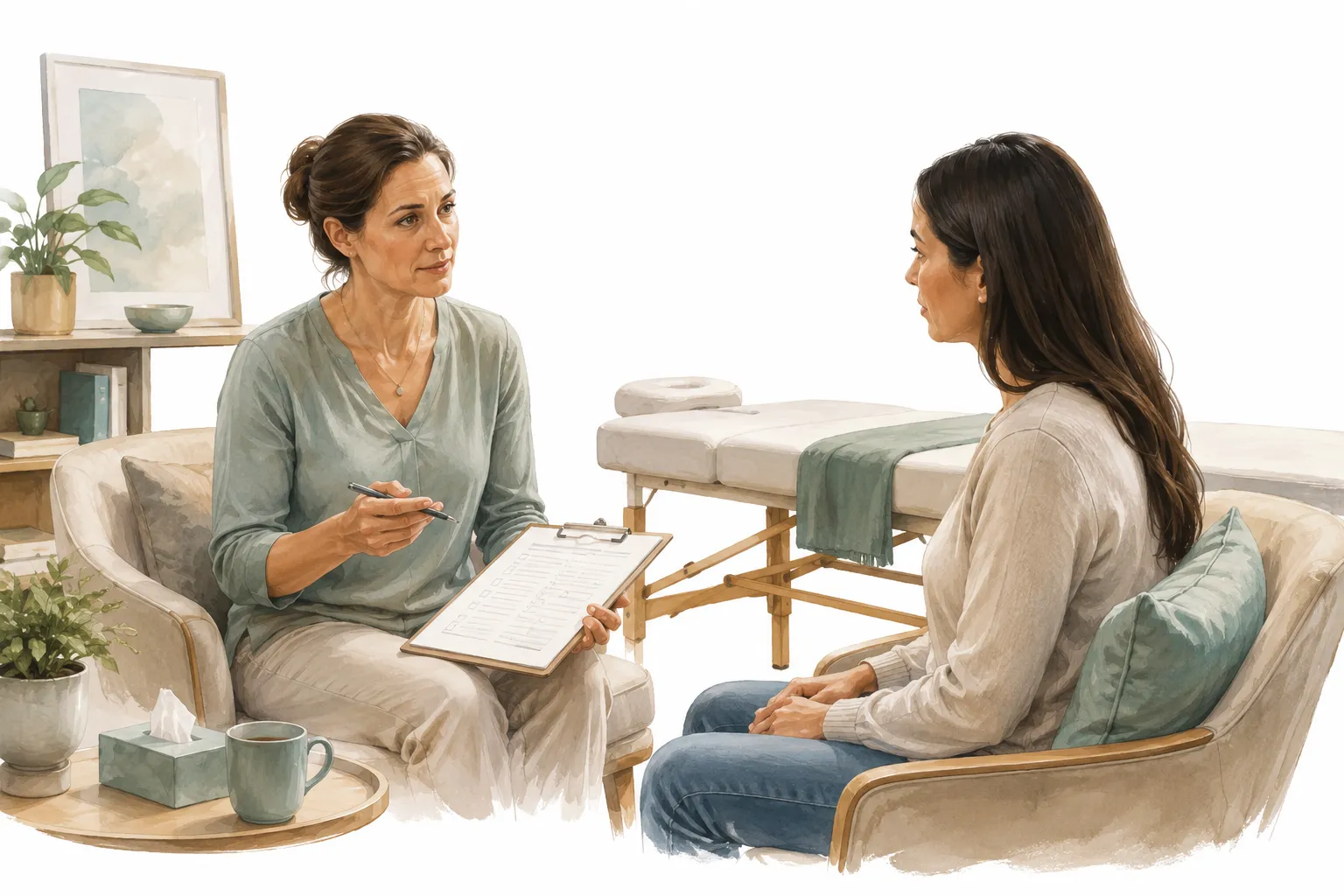
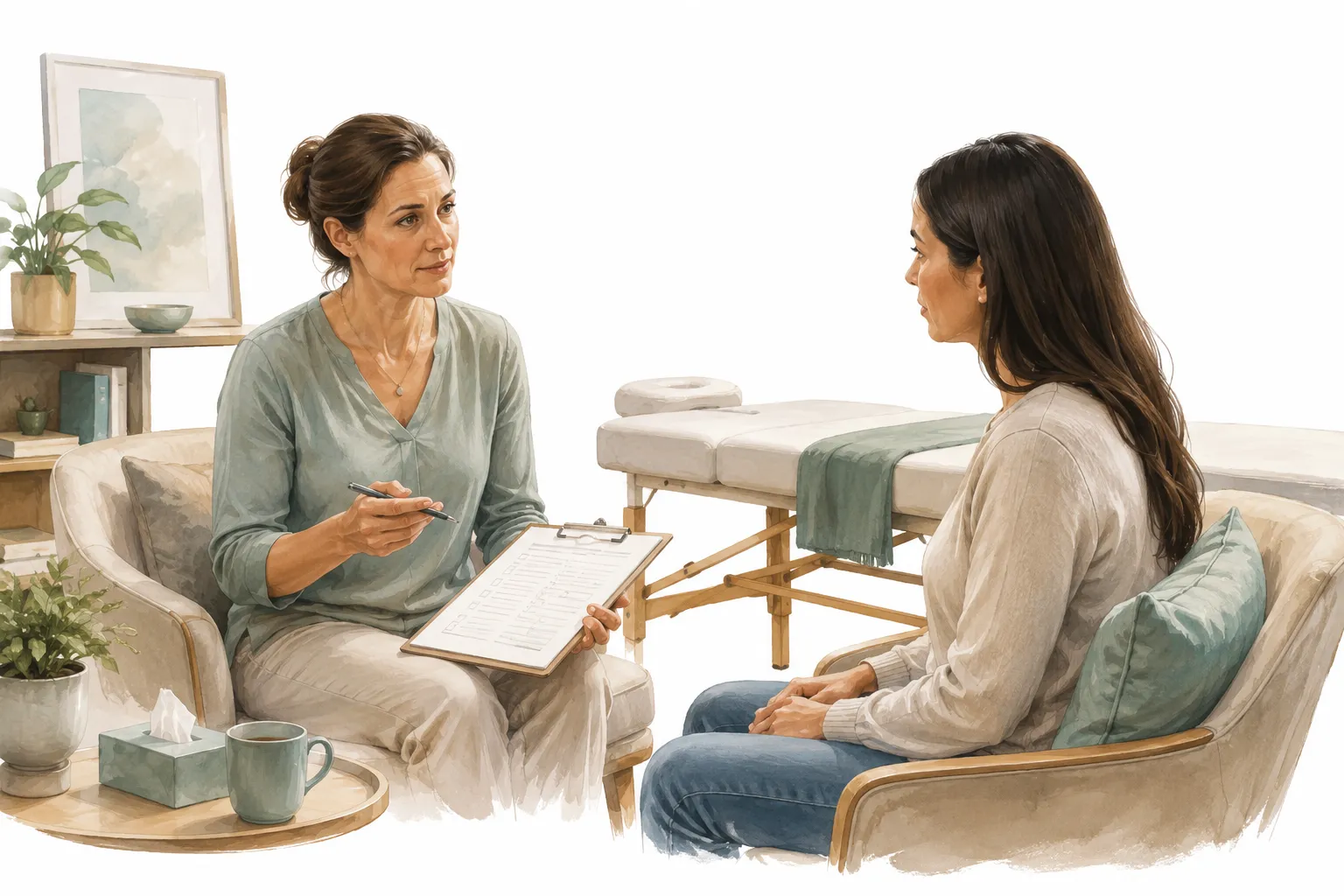
Access Bars is a gentle practice involving light touch on the head. It does not involve pressure, manipulation, or anything invasive. At its most basic level, this makes it relatively low in physical intensity.
However, several factors warrant attention: lying on the back can be problematic in later pregnancy, the effects on a pregnant body are unknown, and there is no research on Access Bars specifically during pregnancy.
The safest approach is to treat Access Bars during pregnancy as requiring professional guidance. Always consult your obstetrician, midwife, or healthcare provider before trying any complementary practice.
Skim first
Key takeaways
The shortest useful version of this page.
Consult your healthcare provider before trying Access Bars during pregnancy.
Positioning matters—avoid back-lying in later pregnancy.
No research exists on Access Bars during pregnancy.
Do not replace prenatal care with Access Bars.
Be cautious of practitioners who make health promises.
Your provider knows your specific health context.
What to consider
Understanding the safety landscape for Access Bars during pregnancy
The Access Bars procedure itself is straightforward: a practitioner lightly touches specific areas on the head while the recipient rests. This is not a massage, and it does not involve pressure or manipulation of the body.
Given this low-intensity nature, the direct physical risk of the touch itself may be minimal. However, pregnancy is a time when even minor practices can have unexpected considerations.
The most immediate practical concern is positioning. In later pregnancy, lying flat on the back can reduce blood flow to the baby and cause discomfort for the pregnant person. Many practitioners recommend side-lying positions instead.
Beyond positioning, there is simply no research on Access Bars during pregnancy. Without data, caution is the appropriate stance.
Safety
Safety guidance for Access Bars during pregnancy
Access Bars is generally low-intensity, but pregnancy requires modifications and professional consultation.
Generally low-risk for
- Pregnant people who have received clearance from their healthcare provider
- Those comfortable with gentle touch on the head
- Those who can be positioned safely (e.g., side-lying in later pregnancy)
Use caution if
- You are in the later stages of pregnancy (back-lying position may be unsafe)
- You have high-risk pregnancy conditions (pre-eclampsia, gestational diabetes, etc.)
- You have a history of preterm labor or complications
- You are uncomfortable with touch or head contact during pregnancy
Seek professional help if
- You are unsure about whether Access Bars is safe for your specific pregnancy
- You have any pregnancy complications or concerns
- You experience discomfort or unusual symptoms during or after a session
- You have questions about complementary practices during pregnancy
Always consult your obstetrician, midwife, or healthcare provider before trying Access Bars or any complementary practice during pregnancy.
What practitioners and healthcare providers say
- Practitioner
Some practitioners are willing to work with pregnant clients, often modifying positions and keeping sessions gentle. They may emphasize the relaxation benefits.
- Participant
Some pregnant people report that Access Bars sessions help them relax, sleep better, or feel calmer. Others feel no benefit or are uncomfortable.
- Balanced view
Practitioners may be eager to serve pregnant clients, but their enthusiasm should not replace medical advice.
- Evidence view
There is no research on Access Bars during pregnancy. Professional medical guidance is essential.
Practitioners who claim Access Bars can help with pregnancy-related issues without medical evidence should be viewed with skepticism.
Reality check
Common misunderstandings about Access Bars and pregnancy
- Myth
Access Bars is completely safe for all pregnant people.
RealitySafety depends on individual health, positioning, and medical advice. Always consult your provider.
- Myth
Access Bars can help with pregnancy complications.
RealityThere is no evidence for this. Pregnancy complications require professional medical care.
- Myth
You can just lie on your back during a session in late pregnancy.
RealityBack-lying in late pregnancy can be unsafe. Modify positions as needed.
- Myth
Access Bars is a good substitute for prenatal care.
RealityNo. Prenatal care is essential. Access Bars is not a replacement.
What to remember about Access Bars and pregnancy
Always consult your healthcare provider first.
Positioning matters—avoid lying on your back in later pregnancy.
No research exists on Access Bars during pregnancy.
Consider Access Bars optional relaxation, not medical care.
Be cautious of practitioners who make strong promises.
Your healthcare provider knows your specific situation.
Verdict
Our evidence-based verdict on Access Bars during pregnancy
insufficient-evidence
Access Bars may be safe for some pregnant people with medical clearance and proper positioning, but there is insufficient research to make a general recommendation. Professional medical guidance is essential.
What we know
- The practice involves gentle head touch, which is low intensity.
- Positioning can be modified to avoid back-lying in later pregnancy.
- Some pregnant people find it relaxing.
What we do not know
- Whether Access Bars is specifically safe during pregnancy.
- What effects, if any, it may have on pregnancy or the baby.
- Whether it interacts with pregnancy conditions or treatments.
Consult your healthcare provider before trying Access Bars during pregnancy. If you get clearance, ensure proper positioning and realistic expectations. Never replace prenatal care.
Bottom line
Caution is the right approach
Pregnancy is a time for careful choices. Access Bars might be safe, but the lack of research means caution is warranted. The most important step is talking to your healthcare provider.
Quick answers
Frequently asked questions
Is Access Bars safe during pregnancy?
There is no specific research. Consult your healthcare provider for personalized guidance.
Can I do Access Bars while pregnant?
With medical clearance and proper positioning, some pregnant people do. Always consult your provider first.
Can Access Bars harm my pregnancy?
There is no evidence of harm, but also no evidence of safety. Professional guidance is essential.
Sources
REPLACE IF AVAILABLE. REPLACE WITH VERIFIED PRENATAL CARE GUIDELINES. REPLACE WITH RECOGNIZED MEDICAL ORGANIZATION, REPLACE IF AVAILABLE. Accessed 2026-07-17
Use for prenatal care and safety standards.