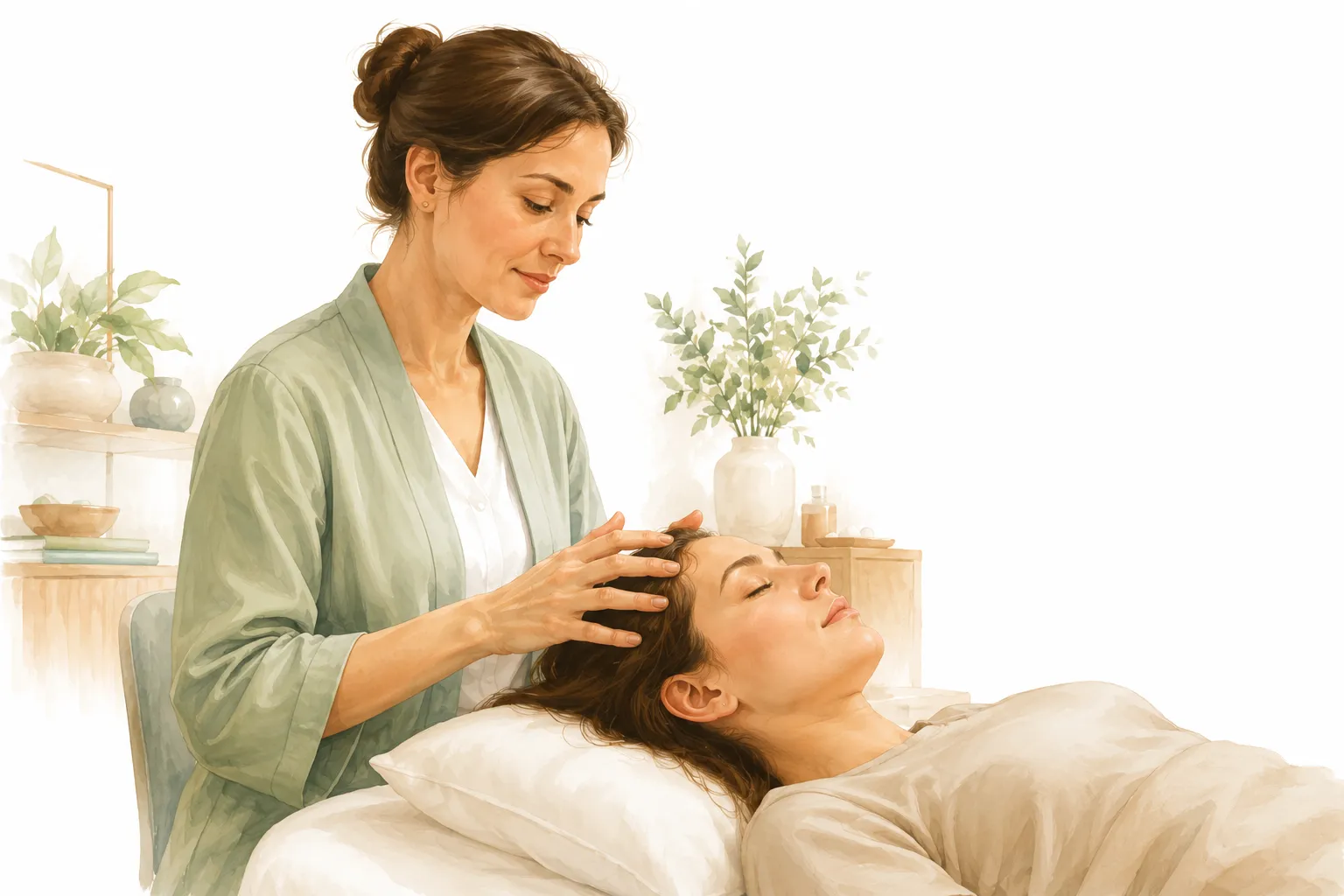
Life changes and Access Bars
How Access Bars has affected real people
The internet is full of personal stories about Access Bars. Some people describe it as a turning point, helping them release anxiety, sleep better, or see life more clearly. Others say it did nothing for them.
These stories are real and valid. They represent people's genuine experiences. But they are subjective. They reflect what people felt, not what science can prove.
A person's life can change after Access Bars for many reasons: the relaxation, the attention, the expectation, the personal meaning they assign to the experience. That doesn't mean the change came from a specific physiological mechanism.
The question "How did Access Bars change my life?" is personal. It depends on who you are, what you're looking for, and how you interpret your experience.
Skim first
Key takeaways
The shortest useful version of this page.
Some people report life changes from Access Bars, but many notice no effect.
Changes are subjective experiences, not clinical evidence.
Multiple factors may contribute to any changes.
The changes are valid even if the mechanism isn't proven.
Realistic expectations are essential.
Maintain professional care alongside any complementary practice.
What people say
Stories of how Access Bars changed people's lives
People who report positive changes from Access Bars often describe similar experiences: reduced anxiety, better sleep, increased mental clarity, and a sense of emotional release. Some say they feel "lighter" or "more present" after sessions.
Others describe more profound changes. They say Access Bars helped them break patterns of thinking, release trauma, or see their lives differently. These stories often carry a lot of emotional weight.
However, many people also report no change at all. They enjoyed the session but didn't notice any lasting effect. This response is completely normal and doesn't mean the session was done incorrectly.
The truth is, Access Bars is a subjective experience. What works for one person may not work for another, and that's okay.
Different perspectives on life change
- Practitioner
Practitioners often describe Access Bars as a tool for transformation. They may tell stories of clients who changed their lives, relationships, or careers after sessions.
- Participant
Recipients describe a wide range of experiences, from life-changing to no effect at all. Each person's story is valid.
- Student
Students learning the practice often experience their own changes during training, which can shape their belief in the practice.
- Facilitator
Facilitators share success stories as inspiration and evidence of the practice's power.
- Balanced view
These stories are inspiring, but they don't prove a specific mechanism. People can change for many reasons.
- Evidence view
Subjective stories are valuable for understanding people's experiences but are not scientific evidence.
Don't compare your experience to others'. Your experience is valid regardless of how it compares.
Why might Access Bars cause life changes?
There are several possible explanations for why Access Bars might feel life-changing, and they're not all about the Bars themselves.
Relaxation and stress reduction
Lying in a quiet room with gentle touch can trigger the body's relaxation response, reducing stress hormones and promoting calm.
Like the calm after a long bath or massage.Focused attention and care
Receiving one-on-one attention in a safe, supportive environment can feel deeply nurturing and validating.
Expectation and belief
If you expect to change, you're more likely to notice changes. This is the power of expectation and belief.
Personal meaning
The Access Consciousness framework can give people new language and concepts to describe their experiences, which can be empowering.
The Access Consciousness explanation
Practitioners say the Bars release stored thoughts, emotions, and beliefs, leading to transformation. This is a claim, not a proven mechanism.
Reality check
Common myths about Access Bars life changes
- Myth
If Access Bars doesn't change your life, you did it wrong.
RealityNo effect is normal. People are different, and experiences vary.
- Myth
Dramatic life changes are the norm.
RealitySome people change, others don't. Dramatic changes are relatively rare.
- Myth
Life changes prove the mechanism is real.
RealityChange can happen through many pathways. The fact of change doesn't prove how it happened.
- Myth
You need multiple sessions to see any change.
RealitySome people see change after one session, others after many, and others never. More isn't necessarily better.
How Access Bars life changes compare to other experiences
Here's how Access Bars life changes compare to other personal growth experiences.
Access Bars
Relaxation, mental clarity, emotional release
Subjective; limited evidence for mechanism
Massage
Relaxation, reduced muscle tension
Well-established for relaxation
Therapy
Resolution of psychological issues
Evidence-based for many conditions
Meditation
Reduced stress, improved focus
Well-established for relaxation
Personal development retreat
Perspective shift, new insights
Subjective; limited evidence
Safety
Safety considerations around life changes
While most changes are positive or neutral, some people may experience distress.
Generally low-risk for
- People seeking subjective experiences
- Those comfortable with emotional sensitivity
Use caution if
- You are looking for a quick fix for serious issues
- You are vulnerable to unrealistic expectations
- You are being pressured to make major life decisions based on the experience
Seek professional help if
- You experience significant distress
- You are in a mental health crisis
- You need professional support for any issues
Access Bars is not a substitute for professional mental health treatment.
What to remember about Access Bars and life change
Some people report significant life changes.
Others notice no change at all. This is normal.
Changes are subjective experiences, not clinical evidence.
Multiple factors may contribute to any changes.
The change is valid even if the mechanism isn't proven.
Expectations should be realistic.
Maintain professional care alongside any complementary practice.
Verdict
Our verdict on Access Bars and life change
insufficient-evidence
Access Bars can be a meaningful experience for some people, leading to reported changes in relaxation, mental clarity, and emotional well-being. However, there's no guarantee of change, and many people notice no effect at all. The changes are subjective and not currently explained by a proven scientific mechanism.
What we know
- Some people report significant life changes.
- Others notice no change at all.
- Changes are subjective experiences.
- Multiple factors may contribute to change.
What we do not know
- Whether Access Bars specifically causes these changes.
- Which factors predict who will experience change.
If you're considering Access Bars, approach it as a relaxation experience with no guaranteed outcomes. Enjoy it if it feels good, but don't expect a life transformation.
Bottom line
Change is possible, but not guaranteed
Access Bars can be a meaningful experience for some people. For others, it's just a relaxing session. Both outcomes are normal. The key is approaching it with open eyes and realistic expectations.
Quick answers
Frequently asked questions
What changes do people report after Access Bars?
Common changes include reduced anxiety, better sleep, mental clarity, and emotional release.
Can Access Bars help with depression?
Some people report mood improvements, but Access Bars is not a treatment for depression. Consult a mental health professional.
How many sessions do I need to see change?
It varies. Some people see change after one session, others after many, and others never.
What if Access Bars doesn't change anything?
That's completely normal. Many people enjoy the session without experiencing lasting change.
Sources
Various practitioners. Access Bars Practitioner Testimonials. Practitioner websites. Accessed 2026-07-17
Compilation of practitioner and participant reports of life changes from Access Bars.
Access Consciousness. Access Consciousness Official Description. Access Consciousness. Accessed 2026-07-17
Official Access Consciousness description of what the Bars process is.