Elderly care and comfort
How is Access Bars used in elderly and end-of-life care?
For elderly individuals, especially those with chronic conditions or cognitive decline, comfort and quality of life become central concerns. In end-of-life care, the focus is on dignity, pain management, and emotional peace.
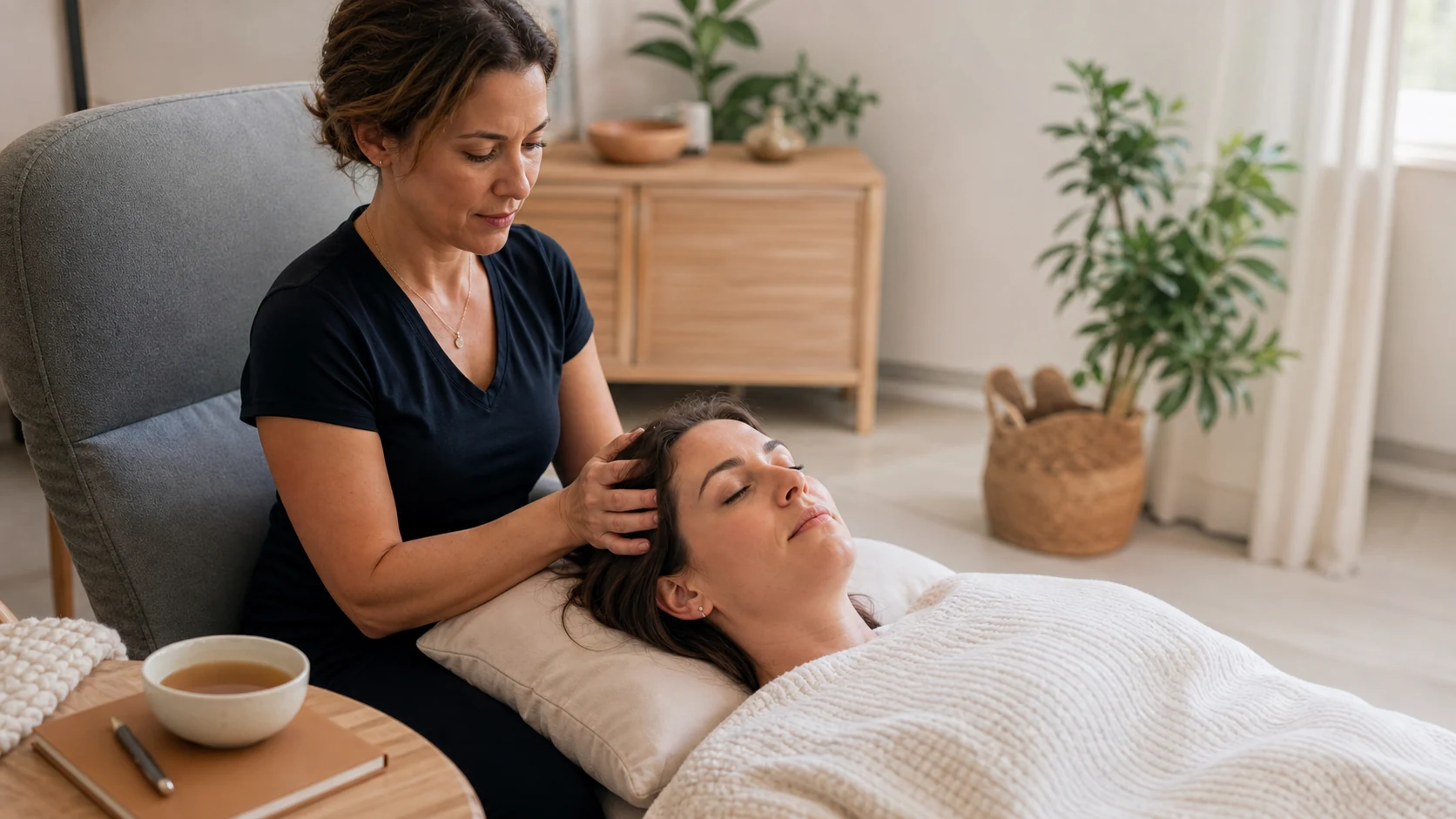
Access Bars has been suggested by some practitioners as a gentle, non-invasive way to provide comfort. The light touch on the head is simple and can be adapted for people who are bedridden or have limited mobility.
Claimed benefits include reducing anxiety, promoting relaxation, and creating a sense of peace and connection. Some families report that their loved ones seem calmer and more comfortable after sessions.
These reports are anecdotal. There is no scientific evidence that Access Bars provides specific benefits in elderly or end-of-life care. However, gentle touch is widely recognized as a valuable source of comfort, and Access Bars may be a way to offer that touch.
Access Bars in elderly and end-of-life care
A diagram showing how Access Bars can be integrated into comfort care.
Access Bars
Gentle touch on head points as a comfort practice.
Medical and Palliative Care
The primary care provided by medical professionals.
Comfort and Quality of Life
The goal of combining medical care and comfort practices.
Skim first
Key takeaways
The shortest useful version of this page.
Access Bars can be used as a gentle comfort practice.
There is no evidence that it treats any condition.
Gentle touch and presence are valuable in care settings.
Medical and palliative care must remain the priority.
Use it only as an optional comfort practice.
Access Bars in elderly care
- Access Bars developed as a general wellness practice.It wasn't designed specifically for elderly care.
- Some practitioners began offering Access Bars in care settings.It was adopted as a comfort practice in some facilities.
- Access Bars is sometimes offered as a complementary comfort practice.It may be used alongside medical and palliative care.
Comfort in care
What does comfort mean in elderly and end-of-life care?
In elderly care and end-of-life settings, comfort is a primary goal. This includes managing pain, reducing anxiety, maintaining dignity, and providing emotional and spiritual support.
Palliative care focuses on quality of life, not just treating disease. It addresses physical, psychological, social, and spiritual needs.
Complementary practices are sometimes used in these settings to provide additional comfort. Gentle touch, massage, music therapy, and other approaches can help people feel more at ease.
Access Bars can be considered a gentle touch practice that may offer comfort. However, it is not a substitute for medical care or professional palliative support.
The Access Bars explanation
How does Access Bars claim to help elderly and end-of-life individuals?
Within Access Consciousness, practitioners claim that touching the 32 Bars points can release stored thoughts, beliefs, and emotions. This is said to promote relaxation, reduce anxiety, and create a sense of peace.
For elderly individuals, especially those with cognitive decline or terminal illness, this is described as a way to provide comfort without medication or physical intervention.
This explanation is part of the Access Consciousness framework. There is no evidence that thoughts or beliefs are stored in specific head points or that touching them releases them.
A simpler explanation is that Access Bars provides gentle touch and relaxation, which can be comforting to anyone, especially those in vulnerable situations.
What do practitioners and caregivers say?
- Practitioner
Some practitioners offer Access Bars in elderly care and hospice settings. They describe it as a gentle way to provide comfort, reduce anxiety, and create a peaceful environment.
- Participant
Caregivers and family members report that their loved ones seem calmer, more peaceful, and more comfortable after sessions. Some say it helps with anxiety and agitation.
- Balanced view
These reports are genuine but anecdotal. The presence of a caring person and gentle touch can be comforting, regardless of the specific practice used.
- Evidence view
Independent evidence for Access Bars in elderly care is essentially nonexistent. No rigorous studies have been conducted.
Access Bars should not replace medical, palliative, or hospice care. It should be used only as an optional comfort practice with the consent of the individual and their caregivers.
Evidence scan
What does the evidence say?
The evidence for Access Bars in elderly and end-of-life care is limited to anecdotal reports.
Overall: not enough evidence
Leans in favor
Points that support the claim
Gentle touch and presence are comforting in end-of-life care.
This is well-established in palliative care. Access Bars may provide gentle touch and presence.
Unclear or mixed
Not clearly for or against
Access Bars reduces anxiety in elderly or end-of-life individuals.
Some caregivers report this anecdotally. There is no independent research to confirm or quantify these effects.
Leans against
Points that do not support the claim
Access Bars provides specific therapeutic benefits for elderly individuals.
There is no evidence that Access Bars treats any condition or provides specific therapeutic benefits in this population.
Reality check
Common misunderstandings about Access Bars for the elderly
- Myth
Access Bars can cure elderly health conditions.
RealityThere is no evidence. It is a comfort practice, not a cure.
- Myth
Access Bars replaces hospice or palliative care.
RealityNo. It should only be used alongside medical care.
- Myth
If someone seems calmer, it proves the practice works.
RealityGentle touch and presence can be calming without confirming a specific mechanism.
- Myth
Access Bars is a proven therapy for dementia.
RealityIt is not a proven therapy for any condition.
Safety
Is Access Bars safe for elderly and end-of-life individuals?
The gentle touch procedure is generally safe, with low physical risk.
Generally low-risk for
- Elderly individuals who are comfortable with gentle touch
- Those in end-of-life care who desire comfort
- Those continuing their medical and palliative care
Use caution if
- The person is uncomfortable with touch
- The person has dementia and may not understand the session
- A practitioner promises specific improvements
Seek professional help if
- There are medical concerns that require professional attention
- Palliative or hospice care is not being provided
Access Bars is not a medical treatment. It should be used only as an optional comfort practice alongside professional care.
What to remember about Access Bars for the elderly
Access Bars can be used as a gentle comfort practice.
There is no evidence that it treats any condition.
Gentle touch and presence are valuable in care settings.
Medical and palliative care must remain the priority.
Use it only as an optional comfort practice.
Verdict
Our verdict on Access Bars for the elderly
insufficient-evidence
Access Bars is not an evidence-based therapy for elderly individuals. It may offer gentle touch and relaxation as a comfort practice, but it should not replace medical or palliative care.
What we know
- Access Bars is a gentle touch practice.
- Gentle touch and presence are recognized as valuable in care settings.
- It is generally low-risk as optional comfort.
What we do not know
- Whether Access Bars produces any specific benefits for elderly individuals.
- Whether it affects anxiety, pain, or quality of life in a measurable way.
Access Bars may be used as a comfort practice for elderly individuals, but it should always be alongside medical and palliative care. Focus on proven comfort measures and professional support.
Bottom line
Gentle touch can be comforting, but it's not a cure
In elderly and end-of-life care, comfort is everything. Access Bars may offer a gentle moment of peace. But the real care comes from medical professionals, hospice teams, and the presence of loved ones. Use it as a small addition, not a replacement.
Quick answers
Frequently asked questions
Can Access Bars help elderly people relax?
Some caregivers report that it helps. There is no evidence, but gentle touch can be comforting.
Is Access Bars used in end-of-life care?
Some practitioners offer it as a comfort practice in hospice and palliative settings.
Does Access Bars treat dementia?
No. There is no evidence that Access Bars treats dementia or any other condition.
Should I ask my doctor about Access Bars for my elderly parent?
Yes, it is always good to involve the healthcare team in decisions about complementary practices.
Sources
Access Consciousness. Access Consciousness Official Website - About Access Bars. Access Consciousness, REPLACE_IF_AVAILABLE. Accessed 2026-07-17
Use to establish official claims about Access Bars.
REPLACE WITH AUTHOR IF AVAILABLE. REPLACE WITH VERIFIED PALLIATIVE CARE GUIDANCE. REPLACE WITH PUBLISHER, REPLACE_IF_AVAILABLE. Accessed 2026-07-17
Use for evidence-based information on palliative and end-of-life care.